
Jump to Recipe
Pici all’aglione is a Tuscan pasta built on garlic instead of onion, hand-rolled dough strands tossed in a sauce reduced until it clings to every strand.
Aglione refers to a mild, oversized garlic grown around Val di Chiana, but regular garlic works fine here. I use eight cloves for 700g of tomato passata, which sounds like a lot until the long simmer mellows it into something closer to sweet than sharp.
The dough is just flour, water, and salt. No eggs, no machine. You roll each piece between your palms into a thick rope, closer to a breadstick than spaghetti, and that thickness is what holds the sauce.
The one thing that will ruin this dish: burnt garlic. Once it turns from pale gold to brown it turns bitter, and there’s no fixing it after. Pull the pan off heat the second it smells fragrant.
Why You’ll Love This Recipe
- Uses pantry staples, flour, garlic, and canned tomatoes
- No pasta machine needed, just hands and a work surface
- Sauce and dough both freeze ahead for busy weeks
- Garlic mellows into sweetness instead of sharpness after simmering
Ingredient Notes
- flour: Use 00 flour if you have it for a smoother dough, but all-purpose works fine and gives a slightly rougher, more rustic strand.
- garlic: Aglione is a mild, oversized Tuscan variety, but regular garlic cloves sliced thin give the same result.
- tomato passata: Smooth strained tomatoes give the cleanest sauce. Canned whole San Marzano tomatoes crushed by hand work too, for a chunkier texture.
- chili flakes: Optional but common in versions from southern Tuscany, adds background heat without turning the sauce spicy.
- pecorino romano: Traditional finish, salty and sharp. Leave it off for a dairy-free plate, or swap in a vegan hard cheese alternative.
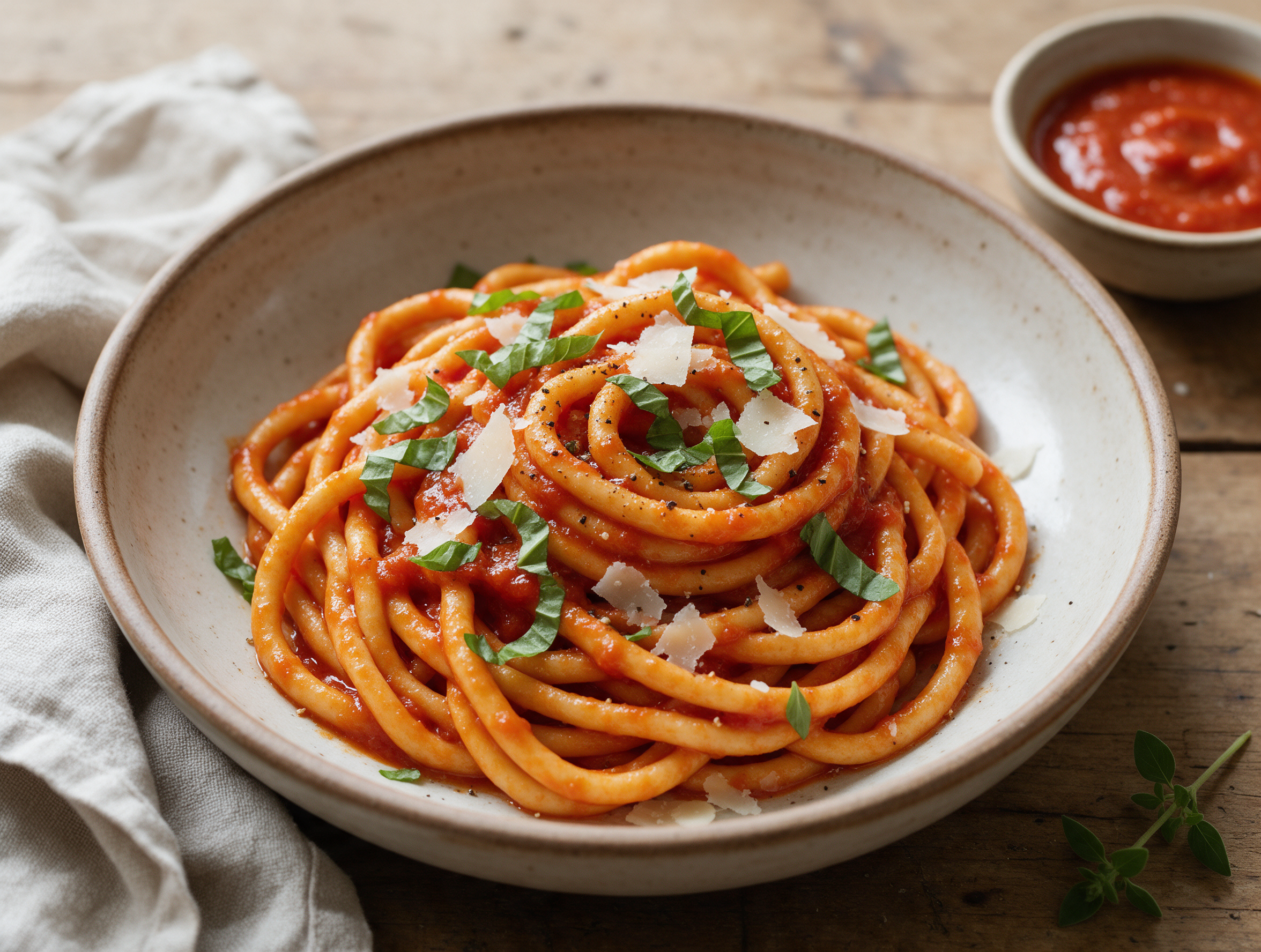
Hand-Rolled Pici all’Aglione Tuscan Garlic Pasta
Ingredients
Method
- Mound the flour and salt in a large bowl or on a work surface, make a well, and pour in the warm water and olive oil. Mix with a fork, then your hands, until a shaggy dough forms.
- Knead 8 to 10 minutes until smooth and elastic, the dough should spring back when pressed. Cover with a bowl or plastic wrap and rest 30 minutes at room temperature.
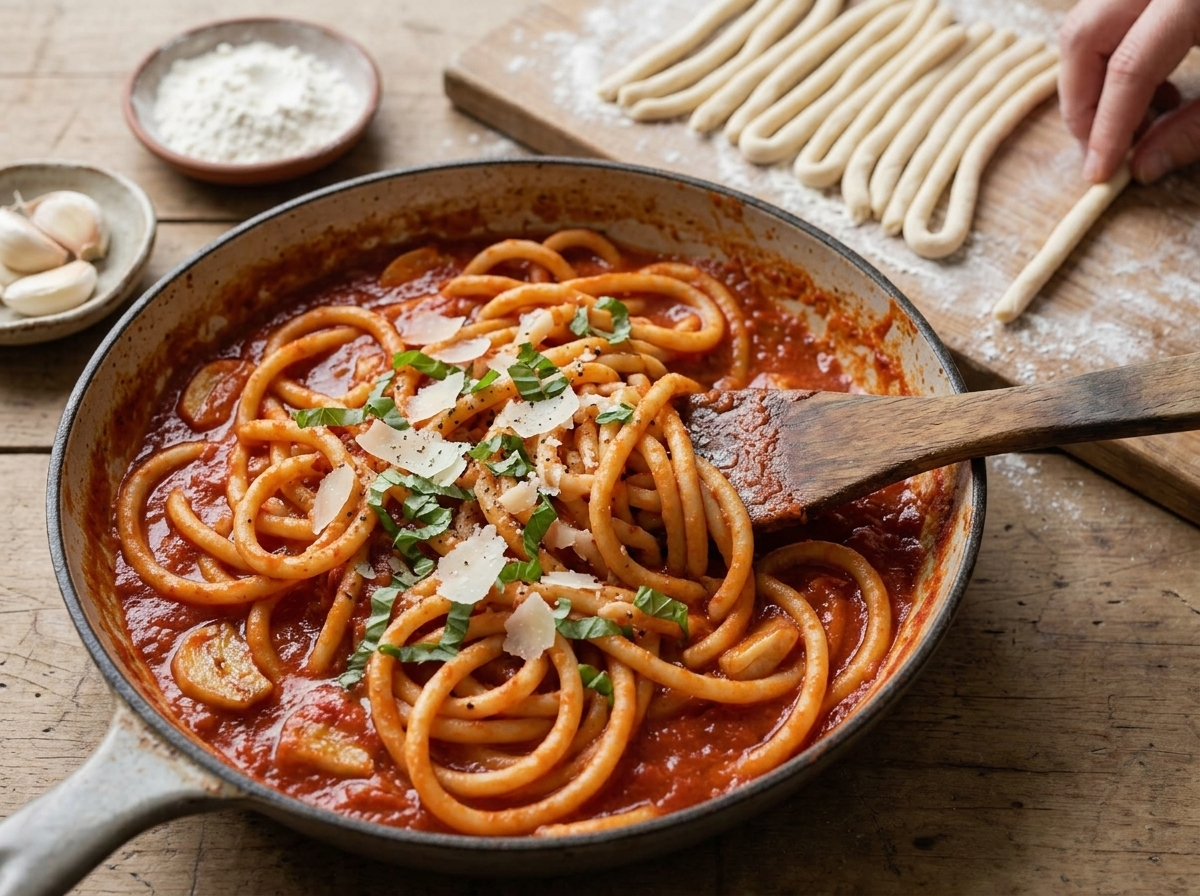
- Cut the dough into 4 pieces. Roll one piece at a time under your palms into a thick rope about 4-5 mm across, then cut into 25-30 cm strands. Dust with flour and set on a floured tray. Repeat with remaining dough.
- Warm the olive oil in a 12-inch / 30 cm skillet over medium-low heat. Add the sliced garlic and chili flakes, cooking 2 to 3 minutes, stirring constantly, until pale gold and fragrant. Pull the pan off heat immediately if it starts to brown.
- Pour in the tomato passata and add the salt, stirring to combine. Simmer uncovered over medium-low heat for 20 to 25 minutes, stirring occasionally, until the sauce thickens enough to coat the back of a spoon.
- Bring a 6-quart / 5.7 L pot of well-salted water to a boil. Add the pici, stirring gently so strands don't stick, and cook 6 to 8 minutes until tender with a slight chew. Reserve 1 cup of pasta water, then drain.
- Add the drained pici directly to the skillet with the sauce. Toss over low heat for 1 to 2 minutes, adding splashes of pasta water until the sauce clings to the strands.
- Stir in the torn basil and black pepper. Plate and top with grated pecorino if using. Serve right away.
Notes
- Slice garlic instead of mincing to control browning more easily.
- Dough should be firm, not sticky, add water a spoon at a time.
- Sauce should coat a spoon before pasta goes in, not run off it.
- Fresh pici cooks in 6-8 minutes, taste at the low end first.
Tips for Success
- Slice garlic thin instead of mincing so it cooks evenly and you can pull it before it browns.
- Rest the dough the full 30 minutes, cold dough tears when you try to roll it into strands.
- Keep a cup of pasta water before draining, it’s what pulls the aglione sauce together on the strands.
- Simmer the passata uncovered so it reduces to sauce, not thin soup, about 20 to 25 minutes.
- Roll pici strands slightly uneven on purpose, that rustic thickness is what separates it from machine pasta.
Variations
- Add a pinch of Calabrian chili flakes for heat, common in versions from southern Tuscany toward Umbria.
- Swap half the passata for fresh San Marzano tomatoes, peeled and crushed by hand, for a chunkier sauce.
- Stir in a few anchovy fillets with the garlic for depth, they melt into the oil and won’t taste fishy.
Storage and Reheating
Pici all’aglione keeps in an airtight container in the fridge for 3-4 days, sauce and pasta together.
Reheat in a skillet over medium-low heat with a splash of water or broth, stirring until warmed through, about 4-5 minutes. Microwave works too, covered, at 70 percent power in 1-minute bursts.
The dough itself freezes well before cooking. Shape the strands, freeze flat on a tray, then bag them once solid. Cook straight from frozen in boiling water, adding 1-2 minutes to the usual boil time.
Serving Suggestions
Pici all’aglione is a full plate on its own, but a simple side balances the garlic. A bitter green salad, radicchio or arugula with lemon, cuts through the richness.
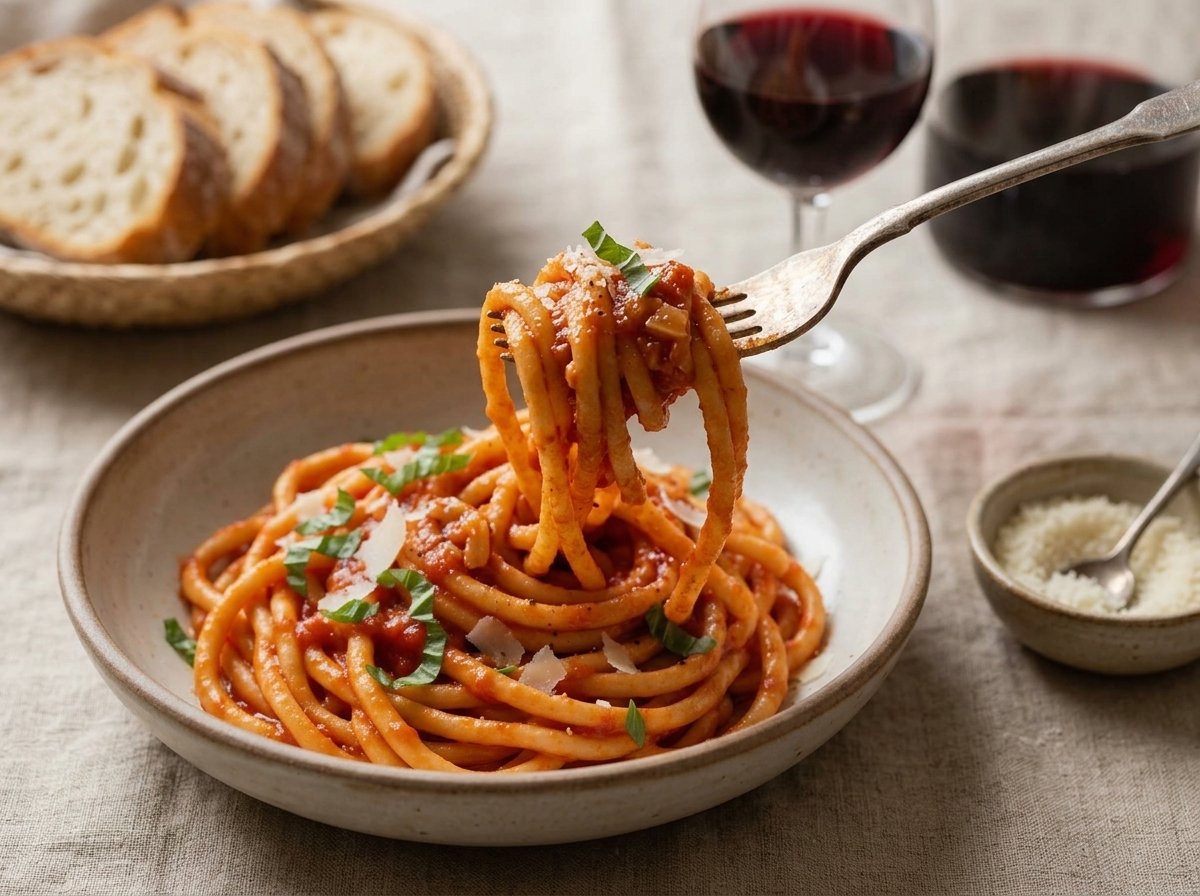
Pour a young Chianti or another Sangiovese-based red, the acidity matches the tomato without fighting the garlic.
For a full Tuscan meal, start with crostini topped with chicken liver pate, bring out the pici as the primo, and finish with a plain roasted meat.
FAQ
Why is my aglione sauce bitter instead of sweet?
Bitter aglione sauce almost always means the garlic browned past golden before the tomatoes went in. Once garlic turns brown it releases compounds that taste sharp and burnt, and simmering won’t fix it. Pull the pan off heat the moment the garlic smells fragrant and looks pale gold, then add the passata right away.
Can I use store-bought spaghetti instead of hand-rolled pici?
Yes, dried bucatini or spaghetti work if you don’t want to hand-roll dough. Boil according to the package, usually 9-11 minutes for al dente, then toss with the same aglione sauce. You’ll lose the chewy, rustic bite that thick hand-rolled pici gives, but the garlic and tomato flavor carries either way.
Can I freeze pici dough before boiling it?
Yes, shape the strands, dust them with semolina, and freeze flat on a tray until solid. Transfer to a freezer bag once firm and they’ll keep for about 2 months. Cook straight from frozen in boiling water, adding 1-2 extra minutes over the fresh cook time of 6-8 minutes.
What pairs well with pici all’aglione besides pecorino?
A bitter green salad, like radicchio or arugula dressed with lemon, cuts through the garlic and olive oil. A young Chianti or other Sangiovese-based red matches the tomato’s acidity without fighting the sauce. Crusty bread for mopping up extra sauce rounds out the plate.
Is pici all’aglione dairy free if I skip the pecorino?
Yes, pici all’aglione is dairy free once you leave off the pecorino at the end. The dough is just flour, water, and salt, and the sauce is garlic, olive oil, and tomato passata with no butter or cream. Season with extra black pepper or a drizzle of oil instead.
What’s the difference between aglione sauce and a regular tomato sugo?
Aglione sauce skips onion entirely and leans on a much larger amount of garlic, often 6-8 cloves per batch of tomatoes. A regular tomato sugo usually starts with a soffritto of onion, carrot, and celery, with garlic playing a smaller role. Aglione tastes sweeter and more direct once the garlic mellows in the simmer.