Jump to Recipe
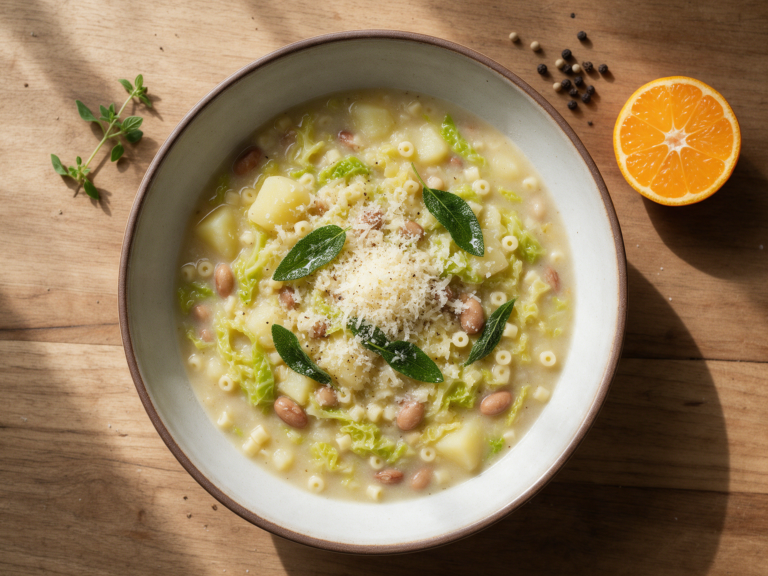
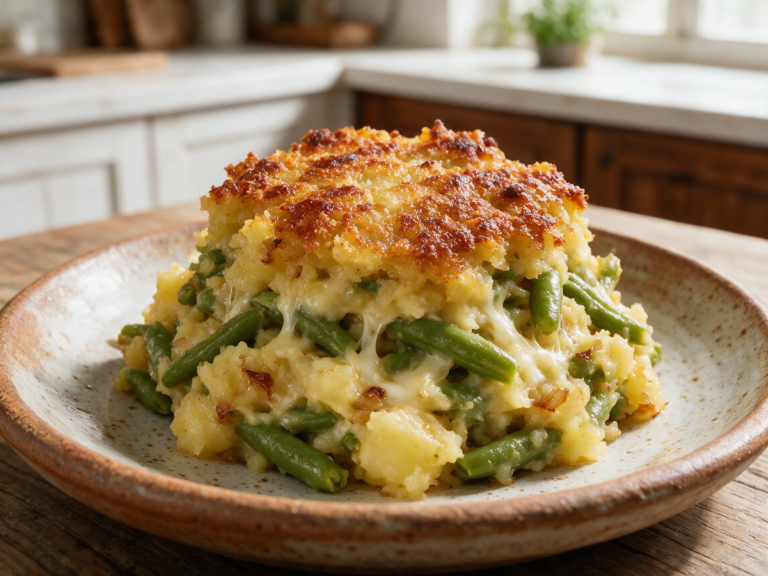
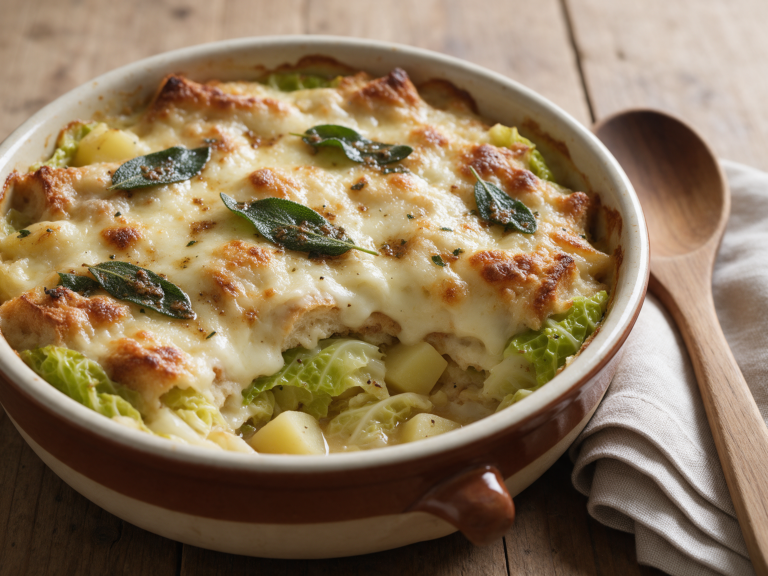
Zuppa di magro della Valchiavenna is a baked bread soup from the Chiavenna valley in northern Lombardy, built from toasted stale bread, Savoy cabbage, potatoes and local Casera cheese. “Magro” means lean, so the broth is vegetable and there’s no meat in the dish.
It sits somewhere between a soup and a casserole. The bread absorbs the broth, the cheese melts through the layers, and the top turns deep gold with a slightly crisp edge.
The one thing that goes wrong is the bread. If it isn’t toasted completely dry first, it turns to paste under the broth instead of holding its slices.
Plan on about 30 minutes of hands-on work and 1 hour 45 minutes from start to table. It feeds six, and the leftovers reheat well.
Why You’ll Love This Recipe
- Turns stale bread and cheap vegetables into a full meal
- Meatless, yet deeply savory thanks to browned sage butter
- Assembles a day ahead and bakes while you set the table
- Soft, soaked center under a crisp, cheesy top
Ingredient Notes
- Stale rustic bread: Use a sturdy country loaf with a firm crumb, not sandwich bread. Day-old is ideal, and the toasting step dries it fully either way.
- Valtellina Casera: This semi-hard cow’s milk cheese from the neighboring valley melts smoothly and tastes mild and slightly sweet. Fontina or young Asiago are the closest substitutes.
- Parmigiano Reggiano: It adds salt and a sharper edge to the browned top. If you find Bitto DOP, use it here instead for a more authentic Valtellina flavor.
- Savoy cabbage: Its crinkled leaves turn tender and sweet without going sulfurous. Regular green cabbage works but needs 3 to 4 extra minutes in the pan.
- Vegetable broth: Homemade is best, but a low-sodium store-bought broth is fine. The cheese is salty, so taste before you season the layers.
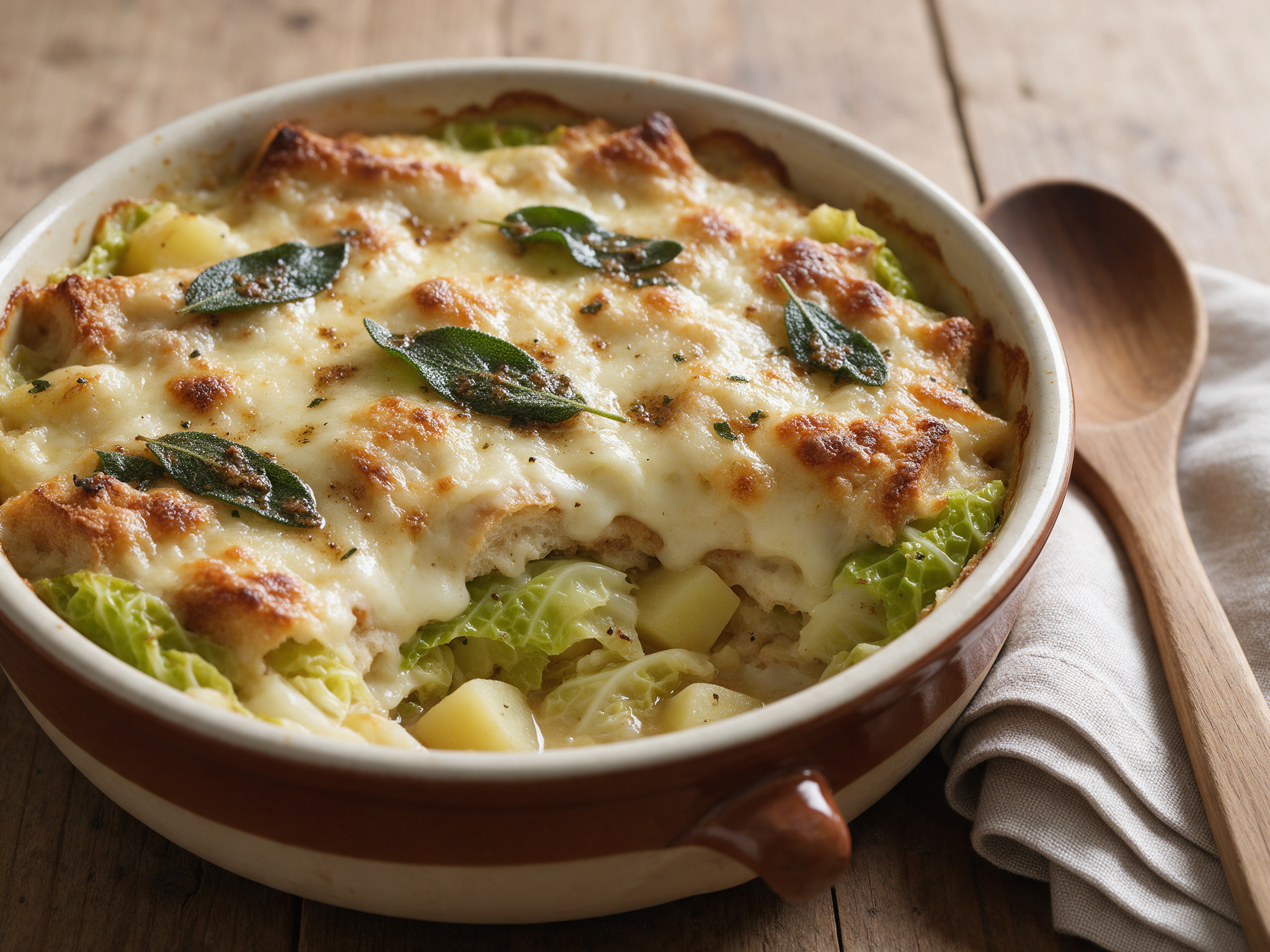
Baked Valchiavenna Zuppa di Magro with Cabbage and Casera
Ingredients
Method
- Heat the oven to 190 C / 375 F. Spread the bread slices in a single layer on a 33 x 46 cm / 13 x 18 inch sheet pan and toast for 8 to 10 minutes, turning once, until dry, pale gold and crisp at the edges. Set aside.
- Melt 50 g of the butter in a 30 cm / 12-inch deep skillet over medium heat. Cook the onion for 6 minutes until soft and translucent. Add the cabbage, salt, pepper and nutmeg, then cook for 10 to 12 minutes, stirring often, until the cabbage has wilted by about half and turned glossy.
- While the cabbage cooks, bring the broth to a simmer in a 3-quart / 2.8 L saucepan. Add the potato slices and simmer for 6 to 8 minutes, until a knife meets slight resistance. Lift them out with a slotted spoon and keep the broth hot over low heat.
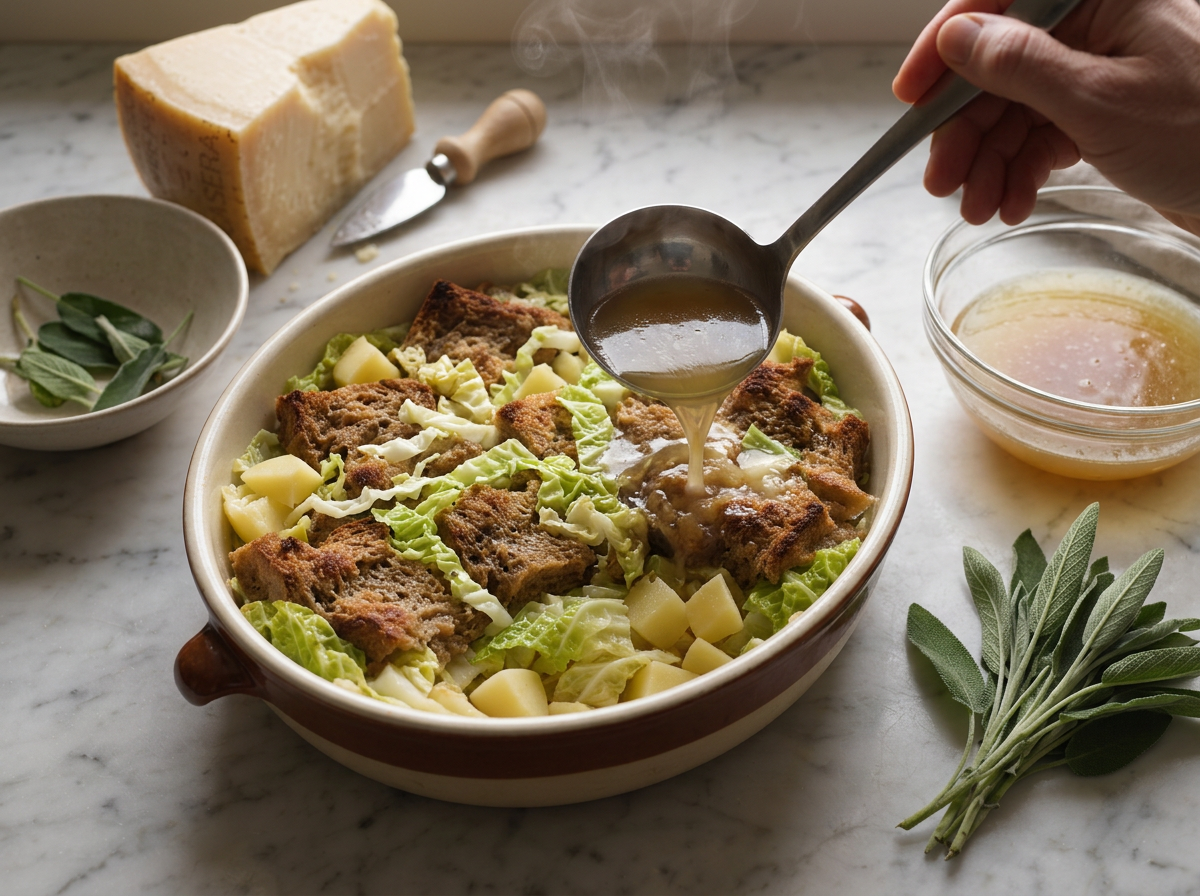
- Butter a 24 x 32 cm / 9 x 13 inch baking dish, at least 6 cm / 2.5 inches deep, with the remaining 10 g butter. Layer one-third of the bread, half the cabbage, half the potatoes and one-third of the Casera. Repeat once, then finish with the last of the bread, the remaining Casera and the Parmigiano.
- Ladle about 1 liter of the hot broth slowly over the dish, letting the bread soak it up, until the liquid reaches just below the top layer. Keep the rest of the broth warm. Cover tightly with foil and bake for 25 minutes.
- While the dish bakes, melt the 30 g butter in a 1-quart / 1 L small saucepan over medium heat. Add the sage and garlic and cook for 2 to 3 minutes, until the butter foams and smells nutty and the sage turns crisp. Remove the garlic.
- Remove the foil and spoon the sage butter over the top. Bake uncovered for 20 minutes, until the top is deep golden and the cheese bubbles at the edges. Rest in the dish for 10 minutes, then cut into squares and serve.
Notes
- Toast the bread until it snaps, not just until it browns.
- Pour the broth slowly so the top layer of bread soaks evenly.
- Keep an extra 200 ml of hot broth nearby in case the corners dry out.
- Pull the sage butter off the heat as soon as it smells nutty.
- Let the dish rest 10 minutes so the squares hold together.
Tips for Success
- Slice the bread 1 cm thick and toast it until it snaps, so it holds its shape under 1 liter of broth.
- Shred the cabbage about 5 mm thin and cook it until reduced by half, so the dish doesn’t release extra water in the oven.
- Slice potatoes 5 mm thick with a sharp knife or mandoline so they soften at the same pace as the cabbage layers.
- Season each layer lightly, because Casera, Parmigiano and store-bought broth all carry salt. Taste the broth before you pour.
- Rest the baked dish for 10 minutes before cutting, then use a sharp knife so each square holds together.
Variations
- Add a layer of sauteed porcini or mixed mushrooms between the potatoes and cheese for a deeper, earthier flavor.
- Swap half the Savoy cabbage for sliced Swiss chard or black kale, and use leeks in place of the onion.
- Replace one-third of the white bread with dark rye for a denser, slightly sour layer that suits Alpine cheese.
Storage and Reheating
Zuppa di magro keeps for 3 to 4 days in the refrigerator in an airtight container. The bread keeps soaking up liquid as it sits, so the texture turns denser and more sliceable on day two.
Reheat portions on a baking tray covered with foil at 180 C / 350 F for 20 minutes, then uncover for 5 minutes to bring back the crisp top. Add a spoonful of warm broth if a piece looks dry.
To freeze, cut the cooled dish into squares and wrap them individually for up to 2 months. Thaw overnight in the refrigerator before reheating. The potatoes soften a little, but the flavor holds.
Serving Suggestions
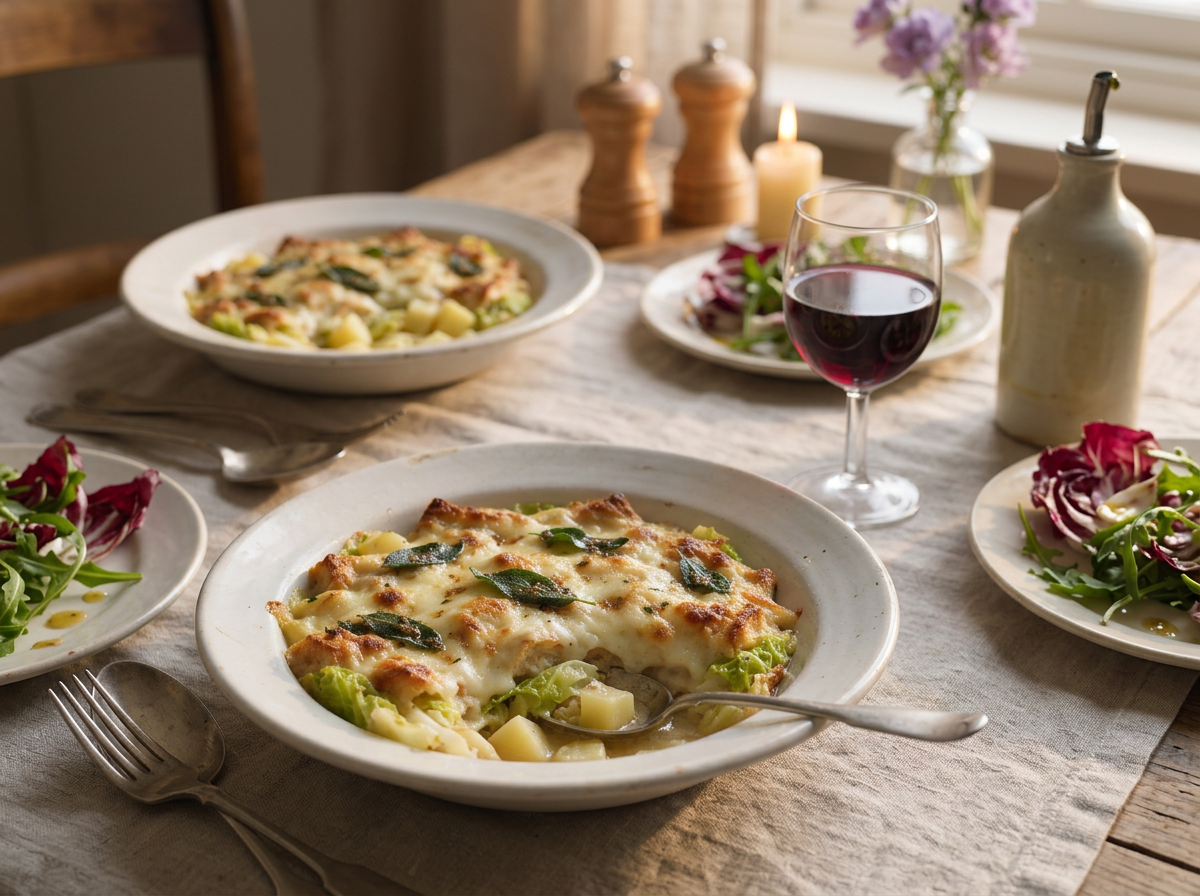
Serve zuppa di magro in warm, shallow bowls with a spoon, so you catch the soft center and the broth that pools at the bottom. A few extra shavings of Casera on top melt right into the crust.
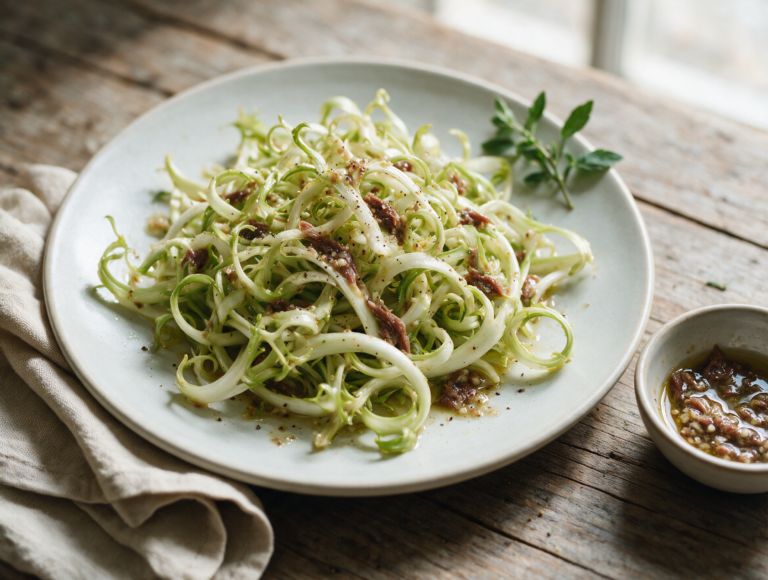
A bitter salad of radicchio or escarole with lemon and olive oil cuts through the butter and cheese. It also makes the plate feel balanced without adding a starch.
For a glass, pour a Rosso di Valtellina, a light, high-acid red from the same part of Lombardy. Follow with fruit rather than a heavy dessert.
FAQ
How do I know when zuppa di magro della Valchiavenna is done baking?
The top should be deep golden with cheese bubbling at the edges, and a knife should slide through the potatoes without resistance. Very little loose liquid should remain in the corners. If the top browns too early, cover the dish loosely with foil for the last 5 minutes.
Can I use Fontina instead of Casera in zuppa di magro?
Yes. Fontina melts softer and tastes milder, so keep the Parmigiano on top for sharpness. Bitto is the closest match to the original, and young Asiago also works if you slice it thin. Skip pre-shredded cheese, which melts greasy and doesn’t bind the layers.
Can I assemble zuppa di magro the night before and bake it the next day?
Yes. Layer the toasted bread, cabbage, potatoes and cheese, cover the dish, and refrigerate for up to 24 hours. Keep the broth separate and reheat it before pouring. Add about 10 minutes to the covered baking time because the dish starts cold.
What do you serve with zuppa di magro della Valchiavenna?
A bitter salad such as radicchio or escarole dressed with lemon and olive oil cuts the richness of the cheese and butter. A glass of Rosso di Valtellina fits alongside. The dish is a full meal on its own, so you don’t need a side starch.
Is zuppa di magro vegetarian, and can I make it gluten free?
It’s vegetarian when made with vegetable broth, which is the point of magro, meaning lean. Casera and Parmigiano use animal rennet, so strict vegetarians should check labels. It isn’t gluten free because of the bread, but a sturdy gluten-free loaf toasted fully dry works.
What is the difference between zuppa di magro and zuppa alla Valpellinese?
Both are baked Alpine bread and cabbage soups. Zuppa alla Valpellinese comes from the Aosta Valley, uses Fontina, and is often made with a meat broth. The Valchiavenna version is meatless, uses Casera or Bitto, and gets its body from potatoes and browned sage butter.