Jump to Recipe
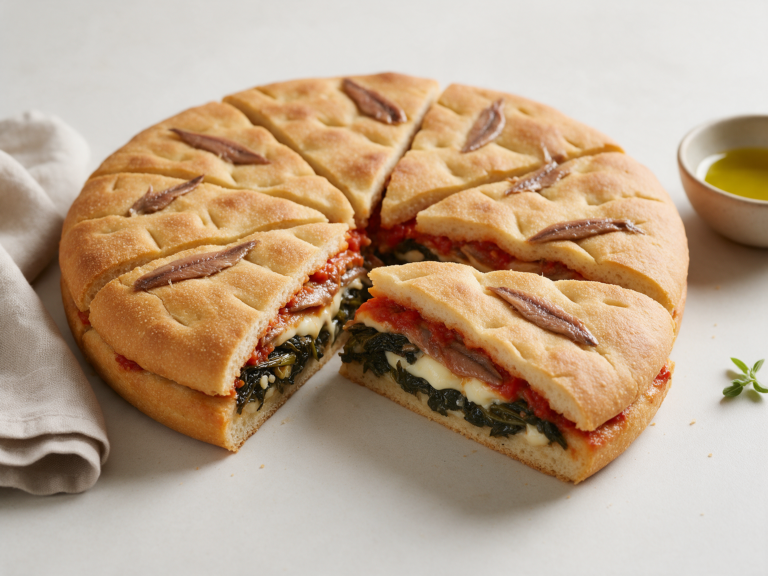
Focaccia messinese is a double-crust focaccia from Messina in Sicily, filled with escarole, tuma, and anchovy and baked at 220 C / 430 F for 30 minutes. The crust is crisp on the outside and tender where it meets the filling.
Half the flour here is semola rimacinata, which gives a sturdy, slightly sweet dough that holds a moist filling better than all-white flour. The escarole is bitter, the anchovy is salty, and the tuma is mild and milky, so each bite balances out.
One thing goes wrong more than any other: wet greens. If you don’t squeeze the blanched escarole hard, the steam softens the bottom crust and the wedges won’t slice cleanly.
Most of the 2 hours 40 minutes is hands-off. The dough rises while you cook the filling, and leftovers reheat well.
Why You’ll Love This Recipe
- Semolina dough stays crisp outside and tender inside
- The dough rises while you cook the filling
- One pan and mostly pantry staples
- Slices cleanly and reheats well for lunches
Ingredient Notes
- tuma: Tuma is a fresh, mild Sicilian cheese that softens in the oven without turning stringy. Primosale or young caciotta swap in one to one, or use 170 g low-moisture mozzarella plus 50 g grated pecorino.
- semola rimacinata: This is twice-milled durum flour, fine and pale yellow. Don’t use coarse pasta semolina. If you can’t find it, use 500 g bread flour and drop the water to 320 ml for a softer crust.
- escarole: Look for a tight head with pale inner leaves, which taste less bitter. Curly endive or broccoli rabe work if you blanch them the same way.
- anchovy fillets: Oil-packed fillets melt into the garlic oil and season the greens without tasting fishy. Salted anchovies work too, but rinse them and pat them dry.
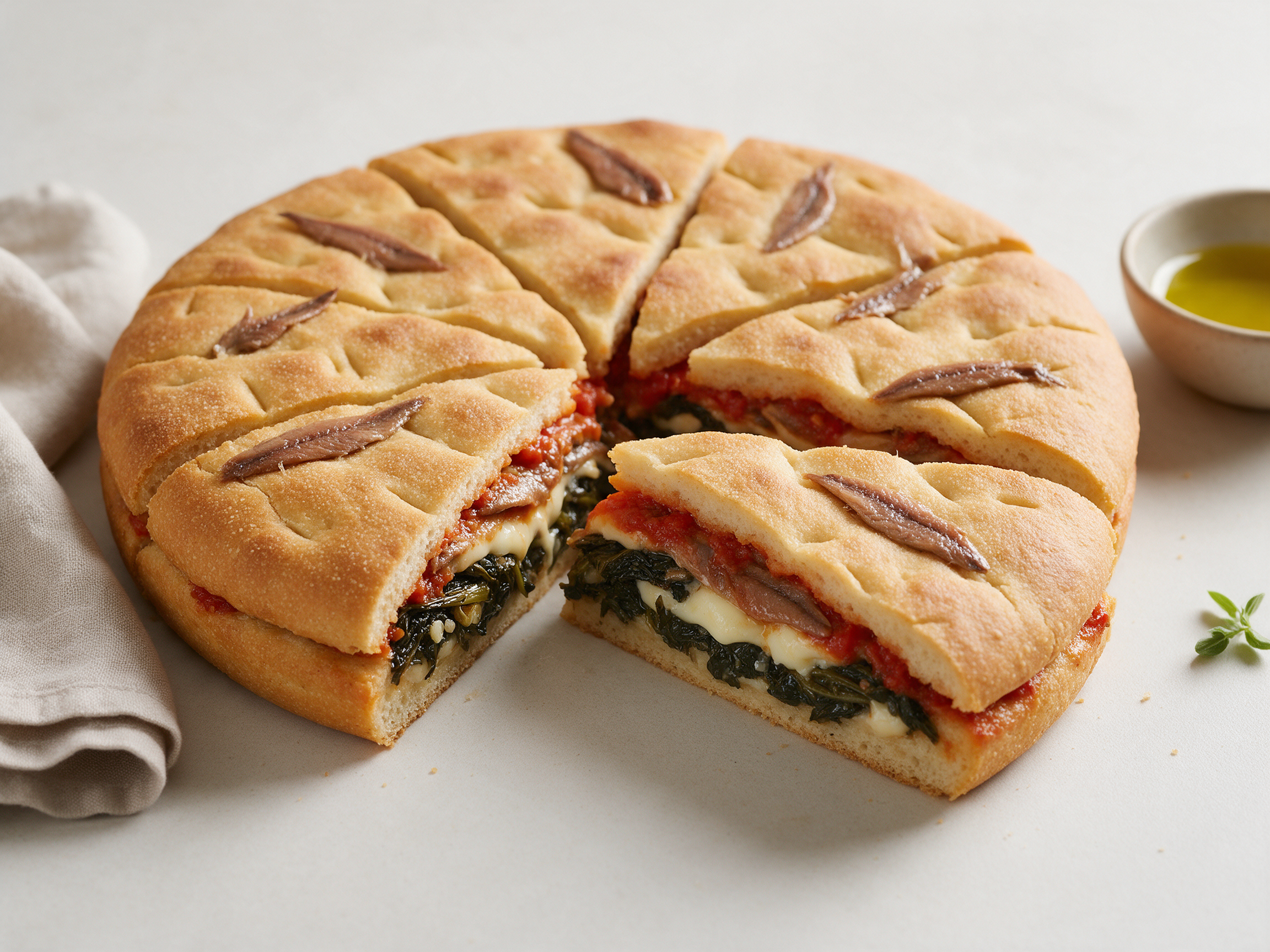
Focaccia Messinese with Escarole, Tuma, and Anchovy
Ingredients
Method
- Whisk the semola, bread flour, and yeast in a large bowl. Add the salt, lukewarm water, and 2 tbsp olive oil, and mix until a shaggy dough forms. Knead on a lightly oiled surface for 8 to 10 minutes until smooth and slow to spring back when pressed. Return it to the oiled bowl, cover, and let it rise at room temperature for 90 minutes, until nearly doubled.
- Bring 4 liters of water and 1 tbsp salt to a boil in a 5-quart / 4.7 L pot. Wash the escarole, blanch it for 3 minutes, then drain and rinse under cold water. Squeeze it in a clean kitchen towel until no liquid drips out. This is the step that keeps the bottom crust crisp.
- Heat 2 tbsp olive oil in a 28 cm / 11-inch skillet over medium heat. Cook the garlic, 4 anchovy fillets, and the pepper flakes for about 2 minutes, stirring, until the anchovies dissolve. Add the escarole and cook 4 to 5 minutes until dry and glossy. Season with the black pepper, spread on a plate, and cool completely, about 20 minutes.
- Put a rack in the lowest position and heat the oven to 220 C / 430 F. Brush a 30 cm / 12-inch round baking pan with 1 tbsp olive oil. Divide the risen dough into two pieces, about 580 g and 290 g. With oiled hands, press the larger piece across the pan and up the sides, leaving a 1 cm overhang.
- Layer half the tuma over the base, leaving a 2 cm border. Spread the escarole over it, then the tomato slices, then the rest of the tuma. Lay the 4 remaining anchovy fillets on top.
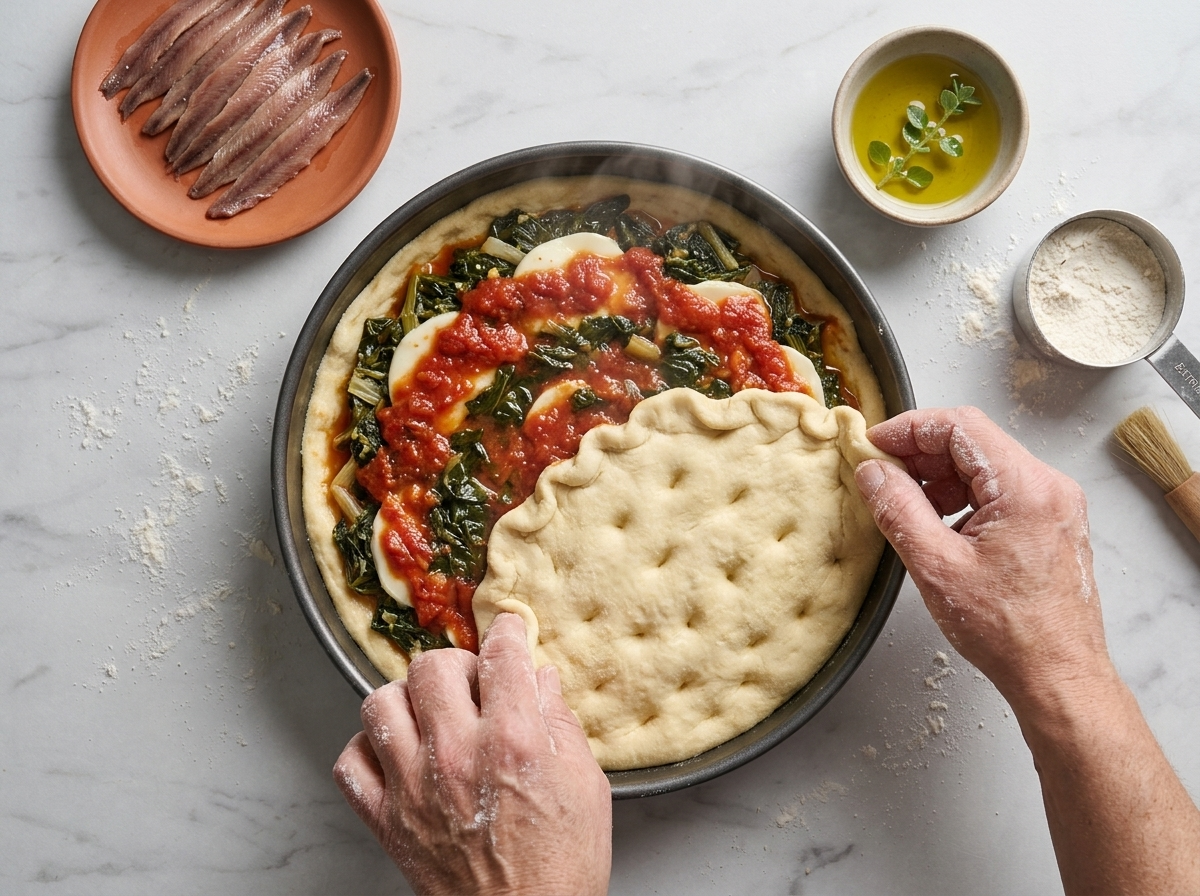
- On an oiled surface, stretch the smaller piece into a 30 cm round with oiled hands and lay it over the filling. Pinch the edges together, fold the bottom overhang over the top, and crimp firmly. Brush with 1 tbsp olive oil and poke 6 to 8 steam holes with a fork.
- Bake for 30 minutes, until the top and edges are deep golden brown and the bottom crust is golden and firm when you lift an edge with a spatula. Cool in the pan for 10 minutes, slide onto a rack, and cut into 8 wedges.
Notes
- Squeeze the blanched escarole hard before cooking it with garlic and anchovy.
- Use fine semola rimacinata, not coarse semolina sold for pasta.
- Rest the baked focaccia 10 minutes in the pan so the cheese sets.
- Pat the tomato slices dry before layering them over the cheese.
Tips for Success
- Squeeze the blanched escarole in a clean kitchen towel until nothing drips out, since leftover water is what softens the bottom crust.
- Pat the tomato slices dry with paper towels before layering so they don’t leak juice into the cheese.
- Oil your hands and the work surface when stretching the dough, because semolina dough sticks and tears if you add dry flour.
- Fold the bottom overhang over the top dough and crimp it firmly so the cheese can’t leak out during baking.
- Bake on the lowest oven rack so the bottom crust browns before the top gets too dark.
Variations
- Swap the escarole for broccoli rabe, blanched 3 minutes, for a sharper bitter edge against the mild tuma.
- Leave out the anchovy and add 1 tbsp drained capers and 1 tbsp chopped black olives for a vegetarian version.
- Scatter 30 g grated pecorino between the tuma layers for a saltier, sharper filling.
Storage and Reheating
Focaccia messinese keeps for 3 to 4 days in the refrigerator, wrapped tightly in foil or stored in an airtight container. Don’t leave it at room temperature for more than 2 hours before wrapping.
To reheat, put wedges on a baking sheet in a 180 C / 350 F oven for 10 to 12 minutes, until the crust crisps and the cheese is soft. A dry 26 cm / 10-inch skillet over medium-low heat also works, about 3 to 4 minutes per side. Skip the microwave, which turns the crust chewy.
For longer storage, wrap wedges individually and freeze for up to 2 months. Reheat from frozen at 180 C / 350 F for about 20 minutes.
Serving Suggestions
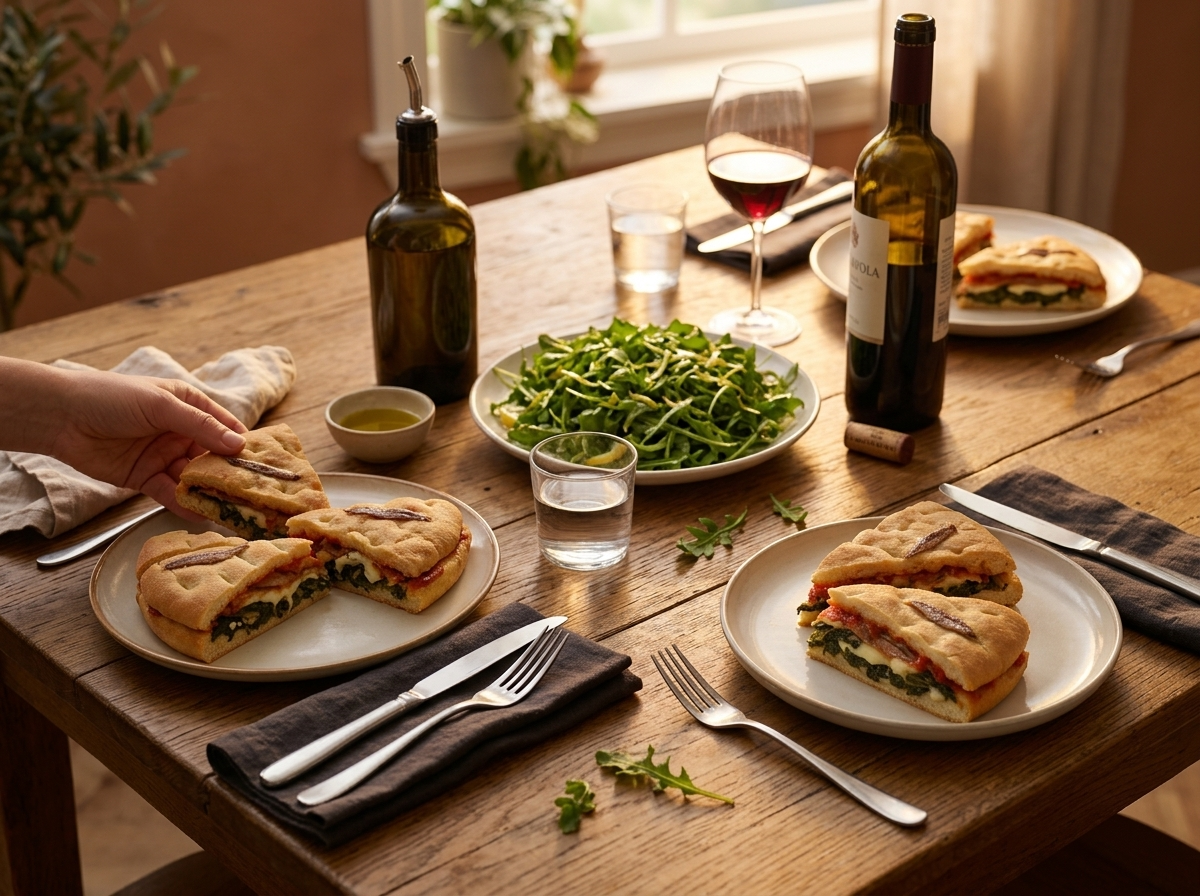
Serve focaccia messinese warm after the 10-minute rest, cut into 8 wedges. It also holds at room temperature, so it travels well to a picnic or a packed lunch.
A lemony arugula salad or a fennel and orange salad cuts through the cheese and anchovy. For a heavier meal, put a wedge next to lentil or white bean soup.
A glass of Etna Rosso or another light red suits the salty, bitter filling.
FAQ
Why is the bottom of my focaccia messinese soggy?
Wet filling is almost always the cause, usually escarole that wasn’t squeezed hard enough or tomato slices that weren’t patted dry. Squeeze the blanched greens in a towel until nothing drips, then bake on the lowest rack at 220 C / 430 F. A bottom crust that’s golden and firm when you lift an edge is done.
Can I use mozzarella instead of tuma in focaccia messinese?
Yes, but use low-moisture mozzarella, not fresh. Swap 220 g tuma for 170 g mozzarella plus 50 g grated pecorino to bring back the salt and tang. Fresh mozzarella releases too much water and makes the filling wet. Primosale or young caciotta also work as a one-to-one swap.
Can I freeze focaccia messinese after baking?
Yes, it freezes well for up to 2 months. Cool it fully, cut it into wedges, and wrap each one in foil or freezer wrap. Reheat from frozen on a tray at 180 C / 350 F for about 20 minutes, until the crust is crisp and the center is hot.
What goes well with focaccia messinese for dinner?
A lemony arugula salad or a fennel and orange salad cuts through the cheese and anchovy. For a heavier meal, serve a wedge next to lentil or white bean soup. A light red such as Etna Rosso suits the salty, bitter filling.
Is focaccia messinese vegetarian, and how do I change it?
Not as written, because of the anchovy. Leave out all 8 fillets, add 1 tbsp drained capers and 1 tbsp chopped black olives to the escarole, and season with an extra 1/4 tsp salt. The filling stays savory, though it loses some depth.
What is the difference between focaccia messinese and focaccia genovese?
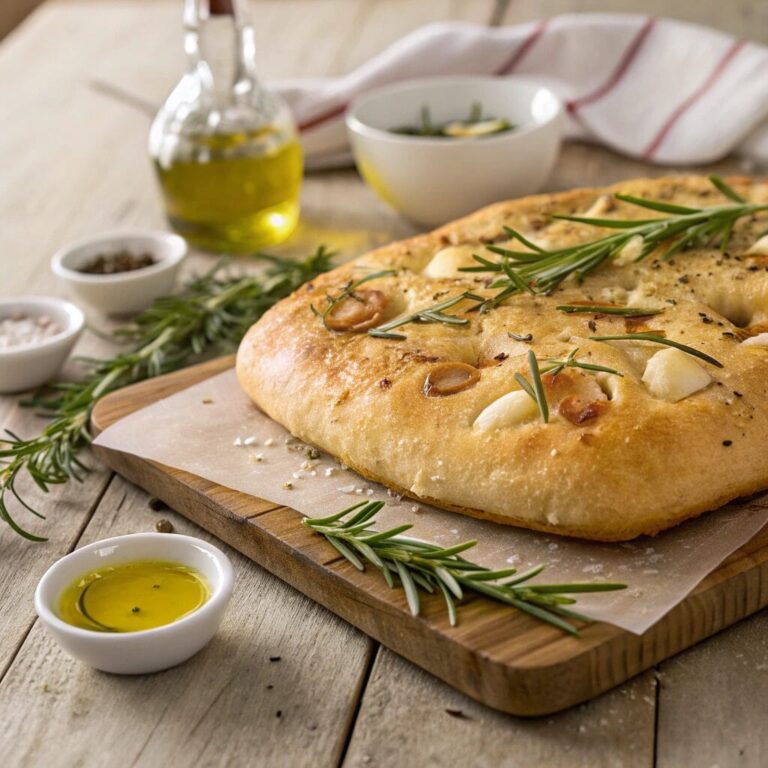
Focaccia messinese is a closed, double-crust bread stuffed with greens, cheese, and anchovy, made with semolina and baked in a deep pan. Focaccia genovese is a single open flatbread, dimpled and topped with olive oil and salt brine, usually made with soft white flour and no filling.