
Jump to Recipe
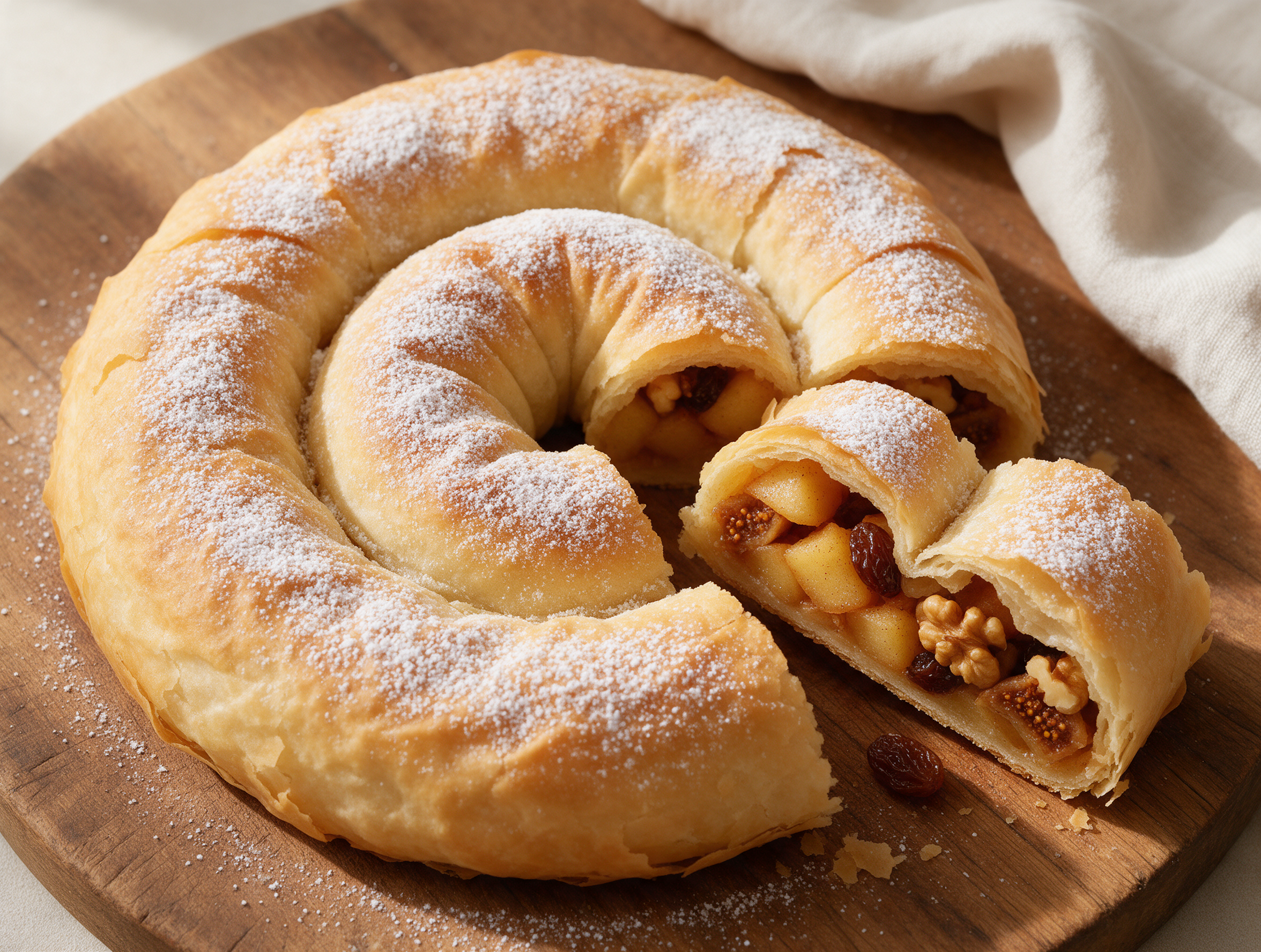
Rocciata umbra is a rolled pastry from Umbria, a coil of thin dough wrapped around apples, walnuts, raisins, and dried figs, baked until the crust turns deep gold and crackly. It’s the region’s cousin of apple strudel, built with olive oil and wine instead of butter, and shaped into a spiral rather than a straight log.
The dough is the part cooks get wrong. It needs to rest before rolling, or it fights back and springs to half the size you want. Roll it thin enough to see the weave of your kitchen cloth through it, and you’re in the right territory.
The filling stays loose and fruity rather than jammy. Toasted breadcrumbs soak up the juice the apples release in the oven, so the base of the coil doesn’t turn soggy.
In Umbria this shows up around Christmas and at weddings, sliced thin and served with coffee. It travels well, keeps for days, and tastes better on day two once the flavors settle.
Why You’ll Love This Recipe
- Uses olive oil and wine, no butter needed
- Coiled shape looks impressive with minimal shaping skill
- Keeps well for days, tastes better the next day
- Naturally dairy free and easy to make egg free
Ingredient Notes
- flour: Plain 00 flour gives the smoothest dough. All-purpose flour works fine too, just knead a touch longer.
- olive oil: Use a mild, everyday olive oil in the dough, not your best bottle. Save the peppery one for finishing drizzles elsewhere.
- dry white wine: Adds tenderness and a faint acidity. Swap in water if you’d rather skip the alcohol.
- apples: Firm, slightly tart apples like Golden Delicious or Renetta hold their shape better than soft varieties.
- walnuts: Chop by hand rather than in a food processor, so you keep some texture instead of walnut dust.
- dried figs: Soften hard, dry figs by soaking them with the raisins if they feel leathery.
- dry breadcrumbs: Toasting them in olive oil first stops them from turning gummy once they meet the apple juice.
- rum: A traditional touch for soaking raisins. Extra wine or apple juice works if you skip alcohol.
Rocciata Umbra: Umbria’s Rolled Apple Nut Pastry
Ingredients
Method
- In a large bowl, whisk the flour, 1 tbsp sugar, and salt together. Make a well in the center and pour in the olive oil and wine.
- Mix with a fork until shaggy, then turn onto a work surface and knead for 8 to 10 minutes until smooth and elastic. Cover with an upturned bowl and rest for 30 minutes at room temperature.
- Soak the raisins in the rum (or extra wine) for 15 minutes, then drain.
- Toast the breadcrumbs in 1 tbsp olive oil in a small skillet over medium heat for 2 to 3 minutes until golden. Set aside to cool.
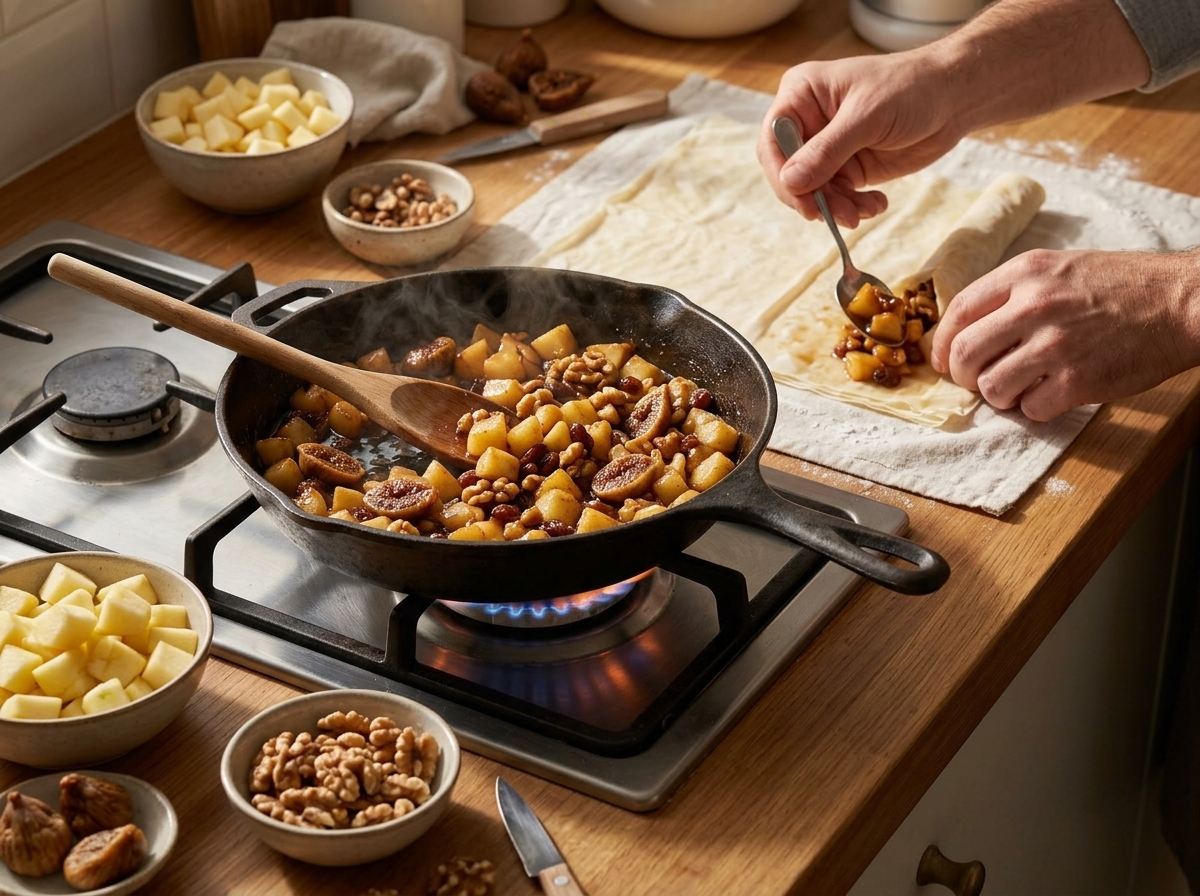
- In a large bowl, combine the diced apples, walnuts, drained raisins, figs, pine nuts, 60 g sugar, cinnamon, lemon zest, and cooled breadcrumbs. Toss until evenly coated.
- Heat the oven to 180C / 350F and line a 33 x 46 cm / 13 x 18 inch sheet pan with parchment.
- On a lightly floured cloth, roll the rested dough into a thin rectangle roughly 40 x 50 cm / 16 x 20 inch, thin enough to see the weave of the cloth through it.
- Spread the filling evenly over the dough, leaving a 3 cm / 1-inch border on all sides.
- Starting from one long edge, roll the dough into a log using the cloth to guide it. Pinch the seam and ends closed.
- Curl the log loosely into a spiral (a chiocciola) on the prepared pan. Brush the top with the remaining 1 tbsp olive oil.
- Bake for 40 to 45 minutes, until the crust is deep gold and sounds hollow when tapped. Tent loosely with foil for the last 10 minutes if it browns too fast.
- Cool on the pan for 15 minutes, then dust with powdered sugar and slice.
Notes
- Rest the dough a full 30 minutes or it springs back when rolled.
- Dice apples no bigger than 1 cm so the filling cooks evenly.
- Drain soaked raisins well, excess liquid makes the dough soggy.
- Coil the log loosely, tight spirals bake unevenly in the center.
- Tent with foil if the top browns before 40 minutes are up.
Tips for Success
- Roll the dough thin enough to see the counter pattern through it, or the center bakes doughy.
- Toast the breadcrumbs before mixing them in, so they soak apple juice instead of turning gummy.
- Soak raisins in warm rum or wine for at least 15 minutes so they plump instead of drying the filling.
- Dice apples no larger than 1 cm so they cook through evenly without turning to mush at the edges.
- Coil the log loosely on the pan, a tight spiral bakes unevenly and stays pale in the center.
Variations
- Swap half the walnuts for hazelnuts, a combination used in villages near Terni and Spoleto.
- Use dried apricots instead of figs for a lighter sweetness and a brighter, tangier filling.
- Brush the baked coil with warm honey thinned with water instead of olive oil for a glossier crust.
Storage and Reheating
Rocciata umbra keeps at room temperature, loosely wrapped, for 2 to 3 days. It actually improves on day two, once the apple moisture settles into the dough.
For longer storage, wrap slices tightly and refrigerate for up to 5 days. Warm them in a 160C / 320F oven for 8 to 10 minutes to bring the crust back to crisp before serving.
To freeze, cool the baked pastry fully, wrap in foil and a freezer bag, and freeze whole or sliced for up to 2 months. Thaw at room temperature, then reheat in the oven at 160C / 320F for 10 to 12 minutes.
Serving Suggestions
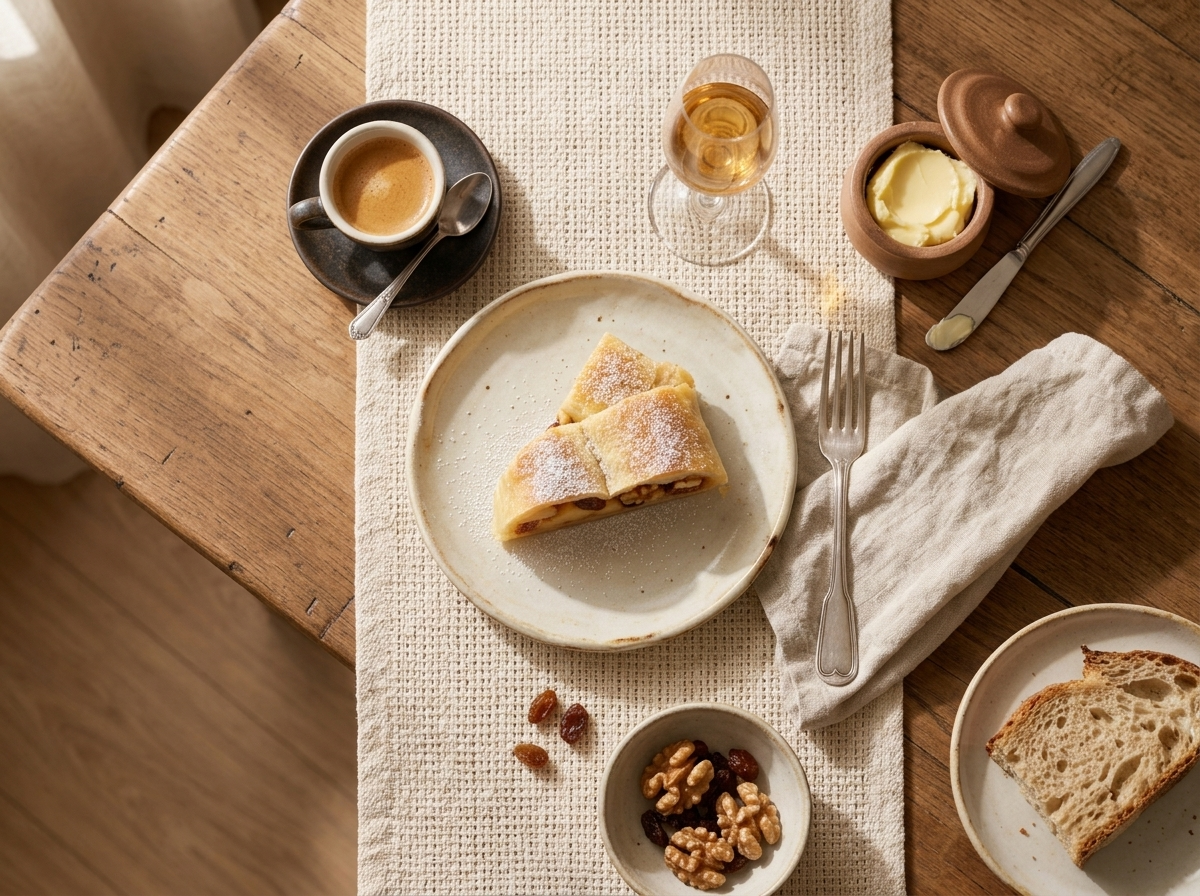
Serve rocciata umbra sliced thin, dusted with powdered sugar, alongside strong coffee or espresso. It works as a breakfast pastry as easily as a dessert.
For an after-dinner version, pour a small glass of vin santo alongside a slice, Umbrian style. A scoop of vanilla gelato or a dollop of mascarpone turns it into a proper dessert plate.
Leftover slices are good cold from the fridge, straight out of hand, no reheating needed if you like the denser, chewier texture.
FAQ
Why did my rocciata umbra dough tear when I rolled it?
It usually means the dough didn’t rest long enough or got rolled too fast in one spot. Give it the full 30 minutes covered before rolling, and stretch it gradually from the center outward instead of pressing hard in one place. A small tear can be patched with a scrap of dough pressed on.
Can I use store-bought puff pastry instead of homemade rocciata dough?
You can, but the texture changes completely, puff pastry gives a flakier, richer result closer to strudel than to traditional rocciata. The thin, olive oil-based dough is what makes rocciata umbra chewy rather than flaky. If you’re short on time, puff pastry is a fair shortcut, just expect a different bite.
Can I freeze rocciata umbra after baking?
Yes, baked and fully cooled rocciata umbra freezes well for up to 2 months wrapped in foil and a freezer bag. Thaw it at room temperature, then warm in a 160C / 320F oven for 10 to 12 minutes to recrisp the crust before slicing and serving.
What goes well with a slice of rocciata umbra?
Strong coffee or espresso is the everyday pairing in Umbria, since the pastry is only lightly sweet. For dessert, a small glass of vin santo or a scoop of vanilla gelato rounds it out. Both work because the filling stays fruity and nutty rather than heavily sugared.
Is rocciata umbra dairy free?
Yes, this recipe uses olive oil and wine in the dough instead of butter, and no dairy in the filling, so it’s dairy free as written. It’s also egg free, since the coil gets brushed with olive oil rather than an egg wash before baking.
What’s the difference between rocciata umbra and Austrian apple strudel?
The dough and shape set them apart. Strudel dough is stretched paper-thin with butter layered through it and rolled into a straight log, while rocciata umbra uses an olive oil and wine dough coiled into a spiral, giving it a chewier bite and a less rich, less sweet filling.