
Jump to Recipe
Risotto ai fiori di zucca is a Northern Italian risotto built on a light vegetable broth, soffritto, and fresh zucchini blossoms folded in at the end so they keep their color and shape. Most versions add a pinch of saffron and a spoon of mascarpone or butter for a silky, pale-gold finish. The blossoms cook fast, about 2 minutes, so timing matters more than any other step here.
I make this in early summer when zucchini plants throw off more blossoms than they do fruit. Farmers market bags of squash blossoms are cheap this time of year, and the risotto is a good way to use a big handful without wilting them under a heavier sauce.
The technique is standard risotto, the same one-pot method used for this creamy risotto with savoy cabbage: toast the rice, add wine, then ladle in hot broth a bit at a time while stirring often. What’s different is the finish. Half the blossoms melt into the broth partway through cooking and turn it a soft yellow-green. The rest go in raw at the end, torn by hand, so you get whole ribbons of color and texture on top.
Why You’ll Love This Recipe
- Uses a full handful of squash blossoms without wilting all of them
- Saffron and mascarpone give it a pale gold color and glossy finish
- Standard risotto method, no special equipment beyond a wide pan
- Good use for a farmers market bag of blossoms before they wilt
Ingredient Notes
- Carnaroli rice: Carnaroli holds its bite better than arborio and is more forgiving if you overcook it slightly. Arborio works fine too and cooks a bit softer.
- Zucchini blossoms: Male blossoms without a baby zucchini attached work best here since they’re less watery. Buy them the same day you plan to cook, they wilt within 24 hours.
- Saffron threads: Steep the threads in warm broth for 5 minutes before adding, this pulls out more color and flavor than dropping them in dry.
- Mascarpone: Adds a rounder, less sharp creaminess than butter alone. You can leave it out and use an extra 20 g butter instead.
- Vegetable broth: Use a light, clear broth so it doesn’t compete with the blossoms. Check the label if you need this gluten free, some bouillon cubes add wheat fillers.
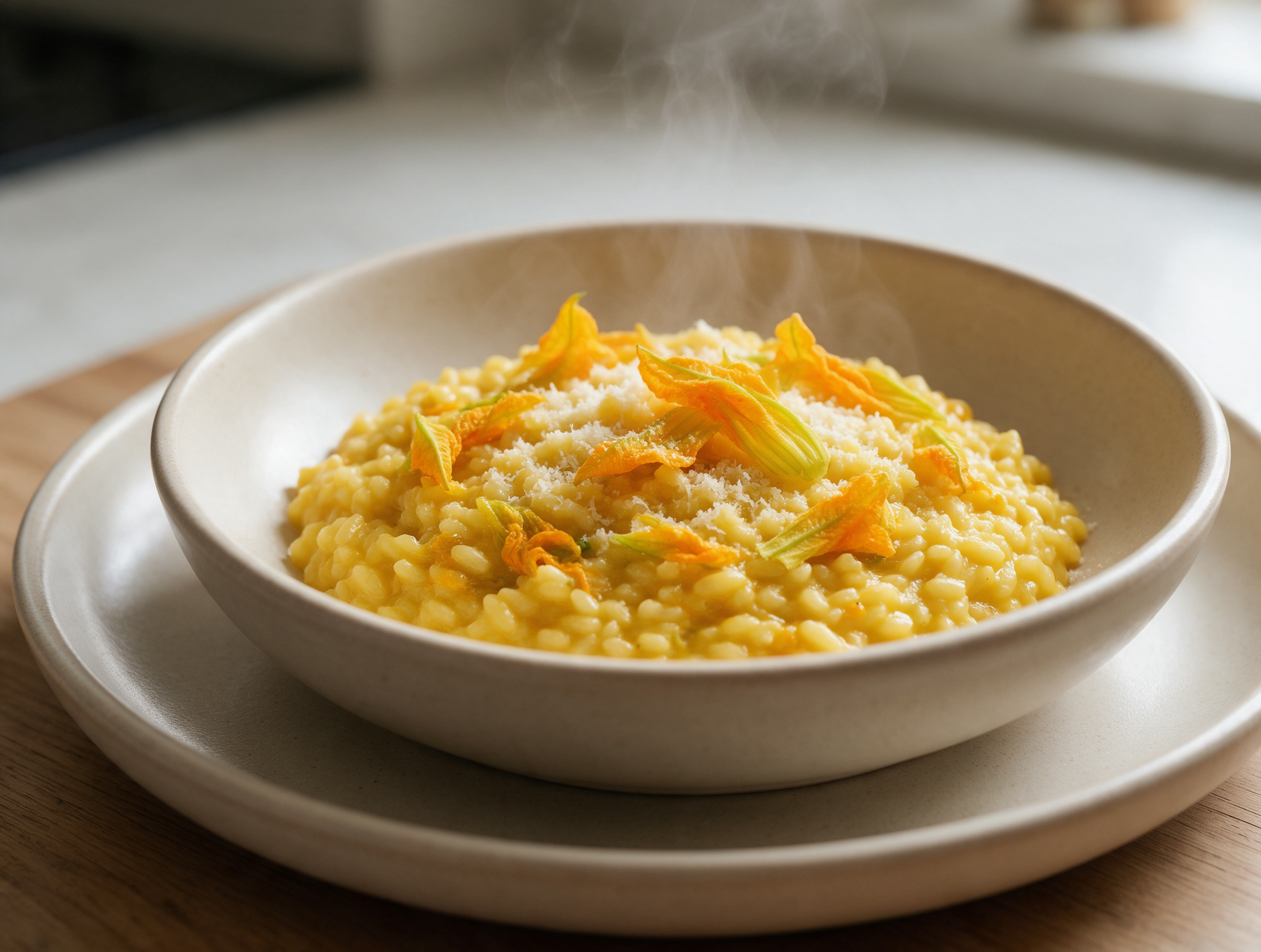
Risotto ai Fiori di Zucca (Squash Blossom Risotto)
Ingredients
Method
- Gently pull the stamen out of each blossom and pinch off the tough green sepals at the base. Wipe each one clean with a damp paper towel rather than rinsing under water, since they bruise fast.
- Tear half the blossoms into 2 to 3 strips and set the rest aside whole.
- Steep the saffron threads in 2 tbsp of warm broth for 5 minutes, then set aside.
- Heat the vegetable broth in a 2.8 L saucepan and keep it at a bare simmer, about 85 C / 185 F, on a back burner.
- Melt half the butter with the olive oil in a 30 cm / 12-inch pan over medium heat. Add the shallot and cook 3 to 4 minutes until soft and translucent, not browned.
- Add the rice and stir to coat in the fat. Toast for 2 minutes, until the grains look glassy at the edges and smell nutty.
- Pour in the wine and stir until fully absorbed, about 1 to 2 minutes.
- Stir in the saffron broth, then begin ladling in hot broth one ladle at a time, stirring often and waiting for each addition to absorb before adding the next. Continue for 16 to 18 minutes total.
- At the 10-minute mark, fold in the torn blossom strips so they melt into the broth and tint it pale gold-green.
- Taste the rice at 17 to 18 minutes total. It's done when it's al dente with a slight bite in the center and the risotto spreads slowly when you tilt the pan.
- Remove from the heat. Stir in the remaining butter, parmesan, and mascarpone vigorously for 30 seconds until glossy.
- Fold in the reserved whole blossom pieces gently so they keep some shape. Cover and rest off heat for 2 minutes, then season with salt and pepper and plate.
Notes
- Wipe blossoms clean, washing under running water makes them soggy and hard to tear.
- Keep broth at a bare simmer the whole time so the rice temperature never drops.
- Stir in mascarpone off heat only, it can split if the pan is still hot.
- Save a few whole blossoms to scatter on top after plating.
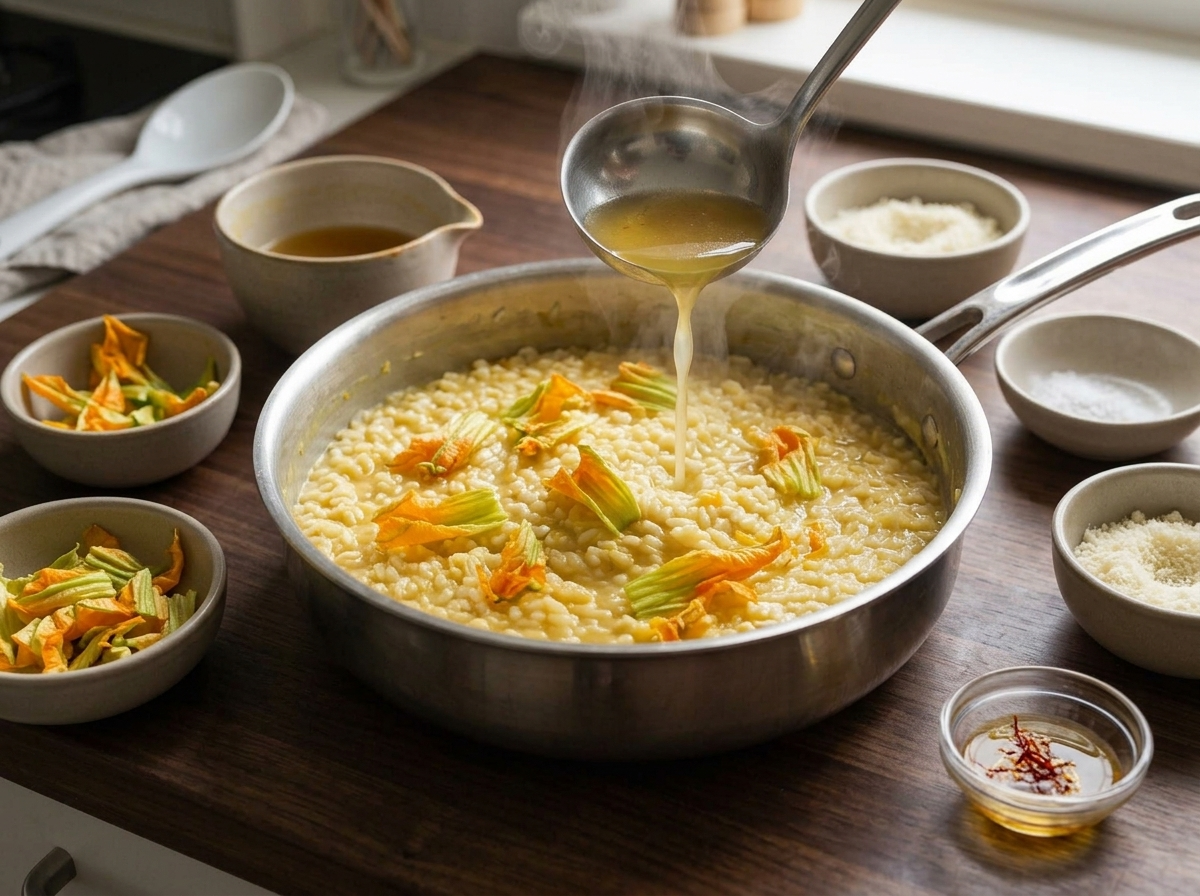
Tips for Success
- Wipe zucchini blossoms clean with a damp paper towel instead of rinsing them under water.
- Keep the broth at a bare simmer on a back burner so each ladleful doesn’t cool the rice.
- Stir constantly for the first 10 minutes, then ease off toward the end so the risotto stays loose, not gluey, the same principle behind this creamy artichoke risotto.
- Fold in half the blossoms partway through cooking for color and add the rest raw at the finish for texture.
- Loosen the risotto with a splash of hot broth right before serving, it thickens fast as it sits.
Variations
- Swap saffron for a handful of fresh basil stirred in at the end for a greener, herbal version.
- Use pumpkin blossoms in early fall, they’re slightly sturdier and hold their shape a bit longer in the pot.
- Stir in crumbled ricotta salata instead of parmesan for a saltier, drier finish.
Storage and Reheating
Risotto ai fiori di zucca keeps 3 days in the fridge in an airtight container. The texture firms up as it cools, that’s normal for any risotto.
Reheat it in a 12-inch skillet over medium-low with a splash of broth or water, stirring often, 4 to 5 minutes until it loosens and turns creamy again. A microwave works too, add a splash of water, cover loosely, and heat in 30-second bursts, stirring between each.
Freezing isn’t worth it here. The blossoms lose their color and the creamy texture separates once thawed.
Serving Suggestions
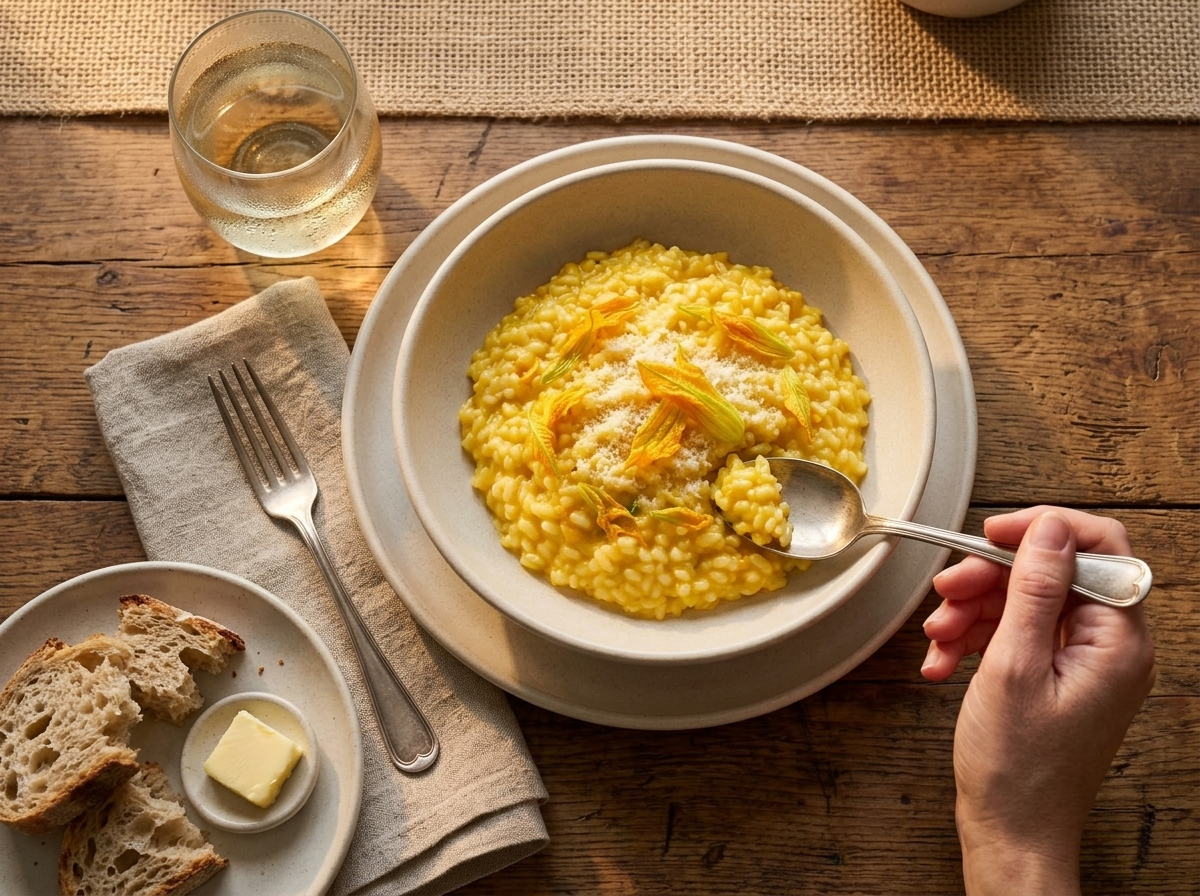
Serve risotto ai fiori di zucca as a primo, in shallow bowls, before a light secondo like pan-seared fish or a simple veal scaloppine.
A crisp white wine on the side, Vermentino or a dry Pinot Grigio, cuts through the butter and mascarpone. A small green salad with lemon and olive oil works well after, in the Italian order of things.
Scatter a few reserved raw blossom strips and extra grated parmesan over each bowl right before it goes to the table.
FAQ
Why did my risotto ai fiori di zucca turn out gluey instead of creamy?
Gluey risotto usually means the rice cooked too long or you added broth too fast, releasing more starch than the dish can carry. Keep the broth at a bare simmer, add it one ladle at a time, and pull the rice off heat as soon as it’s al dente. The finished texture should spread on its own when you tilt the pan, not sit in a mound.
Can I use pumpkin blossoms instead of zucchini blossoms for this risotto?
Yes, pumpkin blossoms work the same way and are common in early fall when zucchini plants slow down. They’re a touch sturdier, so they hold their shape a minute or two longer in the hot broth. Clean and tear them the same way, removing the stamen and any tough green sepals before cooking.
Can I prep risotto ai fiori di zucca ahead and finish it later?
Yes, cook the rice about 80 percent of the way, roughly 12 minutes into the ladling, then spread it on a sheet pan to cool and stop the cooking. Refrigerate up to a day, then finish with hot broth, the blossoms, and the butter and cheese right before serving so the texture stays loose.
What wine pairs well with risotto ai fiori di zucca?
A crisp, unoaked white works best here, something like Vermentino, Falanghina, or a dry Pinot Grigio. The acidity cuts through the butter and mascarpone without fighting the delicate flavor of the blossoms. Use the same wine in the pot for deglazing so the flavors match front to back.
Is risotto ai fiori di zucca gluten free?
Yes, risotto ai fiori di zucca is naturally gluten free since it’s built on rice, broth, butter, and squash blossoms. Just double check your vegetable broth label, since some bouillon cubes add wheat-based fillers or malt extract. Everything else in this recipe is naturally free of gluten.
What’s the difference between risotto ai fiori di zucca and risotto alla milanese?
Both use saffron, but risotto alla milanese is built on beef marrow and bone broth and is traditionally served alongside ossobuco. Risotto ai fiori di zucca is lighter, made with vegetable broth and finished with fresh squash blossoms folded in at the end. The blossoms give it a floral note milanese doesn’t have.