
Jump to Recipe
Kaiserschmarrn is a fluffy shredded pancake from Austria, torn into pieces partway through cooking and caramelized in butter and sugar until the edges turn deep gold and crisp. It’s built from a light egg batter, baked briefly until barely set, then finished on the stovetop so every piece picks up a bit of char.
I make this when I want something sweet for breakfast that doesn’t feel like dessert, though it works just as well after dinner with a glass of something sweet.
The technique is what separates it from a regular pancake. Whipped egg whites go into the batter, the pan goes into a hot oven to puff the whole thing up, then you tear it apart with two forks and toss it back over heat with butter and sugar until it catches color.
Rum-soaked raisins are traditional, not unlike the dried fruit packed into Bisciola Valtellinese fig and walnut bread, though I’ve made it plenty of times with just a pinch of cinnamon and no raisins at all when that’s what’s in the pantry. Serve it hot, dusted with powdered sugar, next to a spoonful of stewed plums.
Why You’ll Love This Recipe
- Ready in under 40 minutes with pantry staples
- Crisp caramelized edges against a soft custardy center
- Six eggs make it a genuinely filling sweet breakfast
- Easy to adapt gluten-free or alcohol-free with simple swaps
Ingredient Notes
- eggs: Use large eggs and separate them cleanly, since any yolk in the whites keeps them from whipping to full volume.
- whole milk: Whole milk gives the batter body. 2% works but the result is a touch less rich.
- all-purpose flour: Standard flour keeps the crumb light. A 1:1 gluten-free blend works but the center takes slightly longer to set.
- raisins: Soak them so they plump and don’t dry out during baking. Golden raisins or chopped dried apricots work as swaps.
- dark rum: Rum is traditional for soaking raisins, but warm apple juice or orange juice work fine if you want it alcohol-free.
- butter: Butter is what caramelizes the sugar into crisp edges. Don’t swap in oil, it won’t brown the same way.
- granulated sugar: Split between the batter and the caramelizing step, since each does a different job.
- powdered sugar: Dust it on right before serving, not earlier, or it melts into the warm pancake.
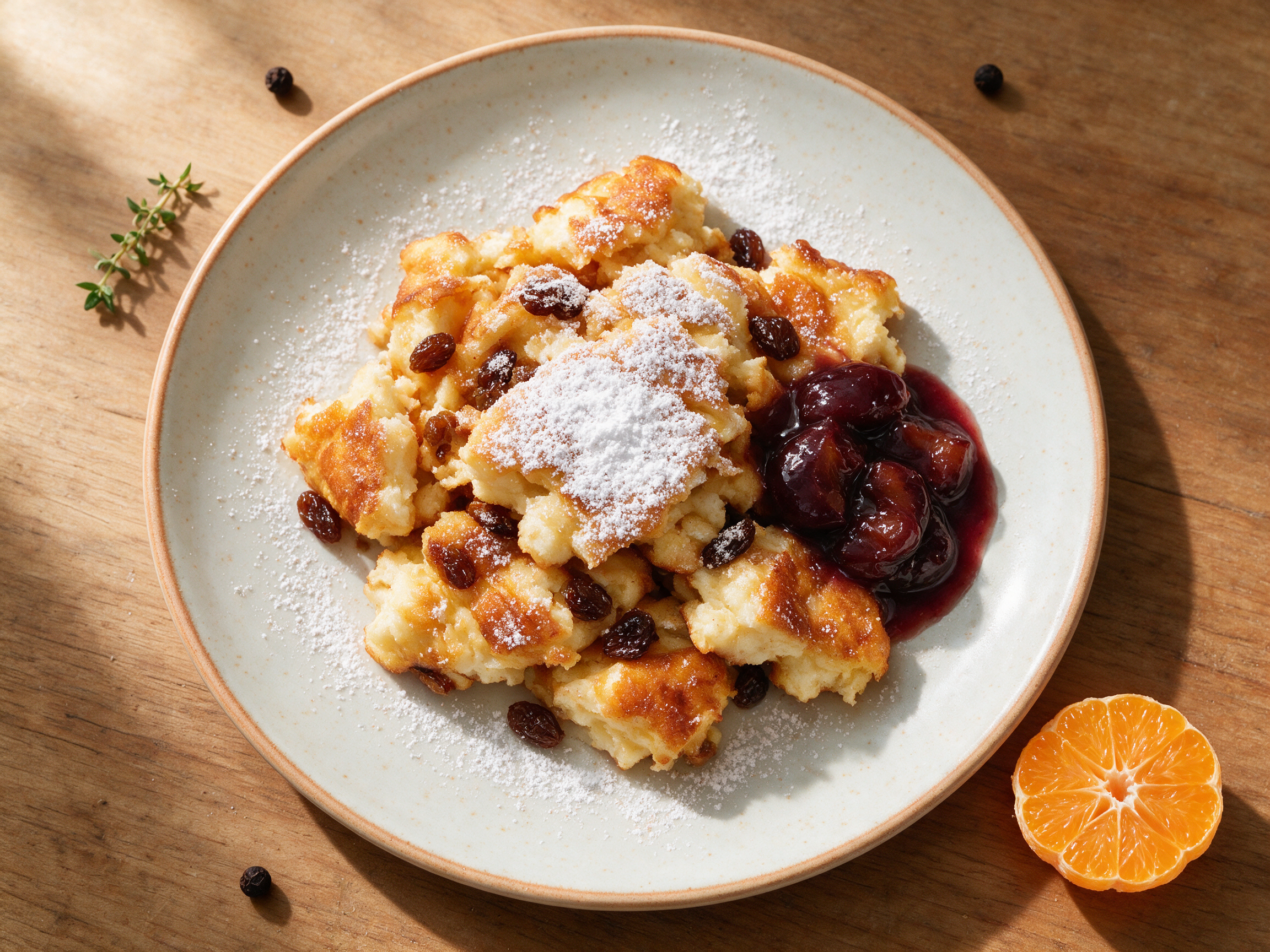
Fluffy Kaiserschmarrn with Caramelized Raisins and Plums
Ingredients
Method
- Soak the raisins in the rum (or warm apple juice) for 15 minutes while you make the batter.
- Separate the eggs, putting whites and yolks into two mixing bowls.
- Whisk the egg yolks with the milk, flour, 2 tbsp sugar, salt, vanilla, and lemon zest until smooth and lump-free.
- Whip the egg whites with a hand mixer until they hold a stiff peak when the beater is lifted.
- Fold the whipped egg whites into the yolk batter in two additions, working gently so you don't knock the air out.
- Heat the oven to 200 C / 390 F.
- Melt half the butter (20 g) in a 26 cm / 10-inch oven-safe nonstick skillet over medium heat. Pour in the batter and scatter the drained raisins over the top.
- Cook on the stovetop for 3 to 4 minutes, undisturbed, until the underside is set and pale gold.
- Transfer the skillet to the oven and bake for 8 to 10 minutes, until puffed and set through with no wet batter left in the center.
- Remove the skillet carefully (the handle is hot) and use two forks to tear the pancake into rough, irregular pieces right in the pan.
- Add the remaining butter and sprinkle over the 3 tbsp sugar. Return to the stovetop over medium-high heat and toss for 2 to 3 minutes, until the edges caramelize and turn deep gold.
- Pile onto plates, dust heavily with powdered sugar, and serve immediately with stewed plums or applesauce.
Notes
- Whip whites to stiff peaks before folding, not soft peaks.
- Use a nonstick or well-seasoned skillet so caramelized sugar releases cleanly.
- Watch the sugar closely once it hits the hot pan, it burns fast.
- Drain raisins well or the batter turns soggy on the bottom.
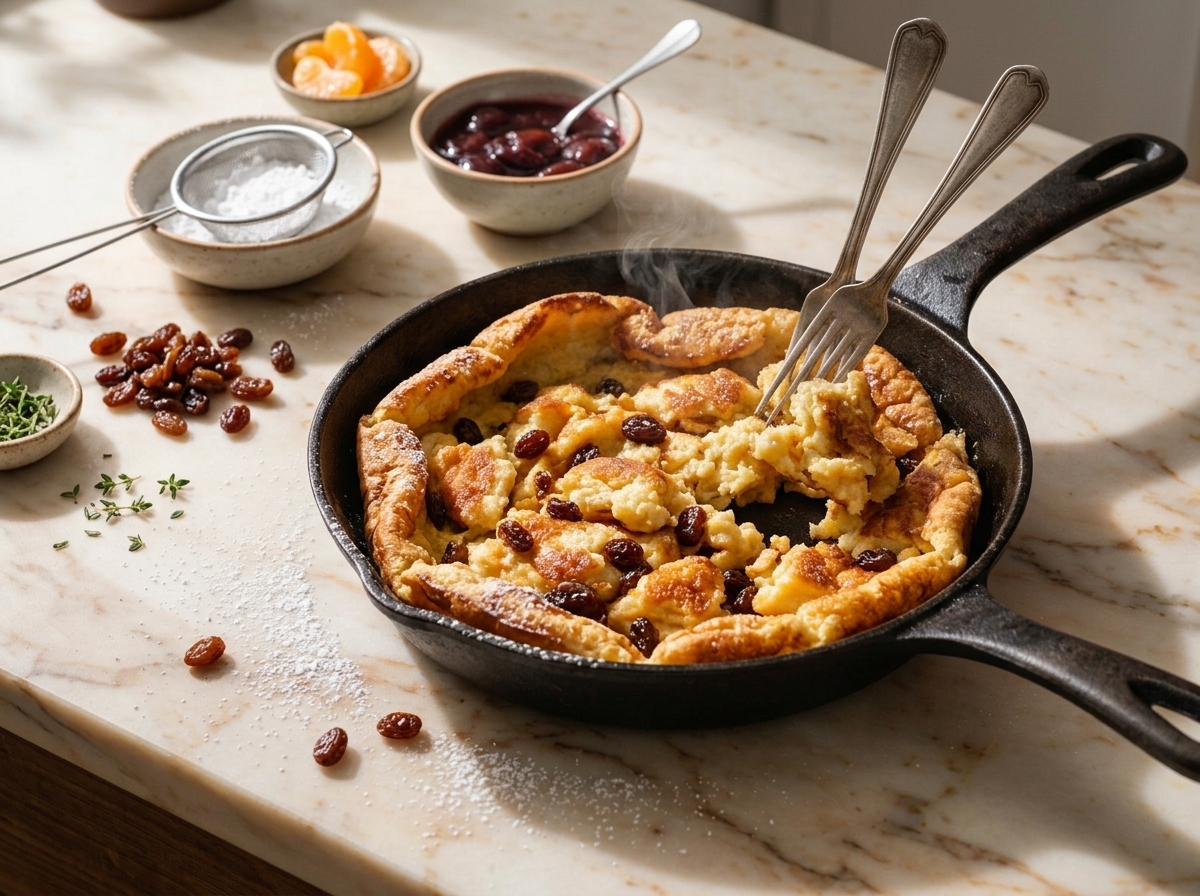
Tips for Success
- Whip the egg whites to stiff peaks before folding, or the batter won’t puff properly in the oven.
- Use a 26 cm / 10-inch oven-safe skillet so the batter cooks evenly and moves straight from stovetop to oven.
- Drain the raisins well before scattering them in, or the batter turns soggy on the bottom.
- Tear the pancake with two forks while it’s still warm and soft, not once it cools and toughens.
- Toss the torn pieces constantly once the sugar hits the hot pan, since it goes from gold to burnt fast.
Variations
- Swap raisins for chopped dried apricots or cherries soaked in orange juice instead of rum.
- Fold a spoonful of quark or ricotta into the yolk batter for a slightly denser, tangier version.
- Skip the raisins entirely and serve with warm cherry compote instead of stewed plums.
Storage and Reheating
Leftover Kaiserschmarrn keeps in an airtight container in the fridge for up to 2 days. It won’t stay as fluffy as fresh, but it’s still good.
Reheat it in a skillet with a small pat of butter over medium heat for 3 to 4 minutes, tossing occasionally, until the edges recrisp. Skip the microwave, it turns the pieces rubbery instead of caramelized.
The batter itself doesn’t hold well once the whipped whites go in, so if you want to prep ahead, mix the yolk base and soak the raisins earlier in the day, then whip the whites and fold everything together right before cooking.
Serving Suggestions
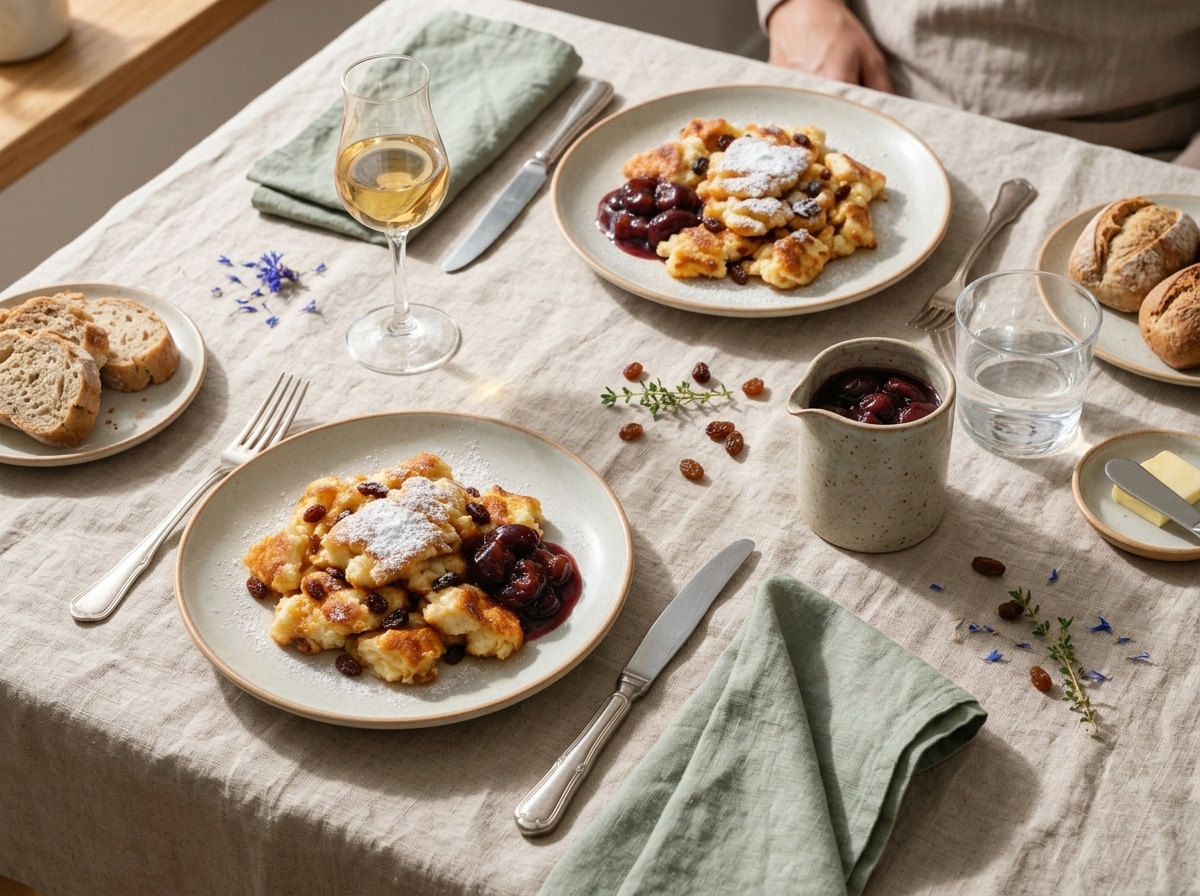
Stewed plums (Zwetschgenroster) are the classic pairing, spooned warm right over the top. Applesauce works just as well if plums aren’t in season.
A light dusting of powdered sugar is non-negotiable, much like the sugar-dusted finish on Bomboloni alla Crema doughnuts, and a small pitcher of vanilla sauce or lightly sweetened whipped cream on the side turns it into more of a dessert.
For breakfast or brunch, I serve it with a strong coffee. For dessert, a small glass of something sweet alongside works well.
FAQ
Why is my Kaiserschmarrn dense instead of light and fluffy?
Dense Kaiserschmarrn usually means the egg whites weren’t whipped to stiff peaks, or you folded them in too hard and knocked out the air. Undercooking is another culprit, since it needs the full 8 to 10 minutes in a 200 C / 390 F oven to set through and hold its lift. Check that the center isn’t wet before you pull it out.
Can I use raisins soaked in apple juice instead of rum for Kaiserschmarrn?
Yes, apple juice works fine and keeps the dish alcohol-free without changing the technique. Warm the juice slightly before soaking so the raisins plump in the same 15 minutes the rum version needs. Orange juice or strong black tea are good stand-ins too.
Can I store leftover Kaiserschmarrn or make the batter the night before?
Leftovers keep in an airtight container in the fridge for up to 2 days, reheated in a skillet with a little butter for 3 to 4 minutes to recrisp the edges. The batter itself doesn’t hold well once the whipped egg whites go in, so mix the yolk mixture ahead but whip and fold the whites right before cooking.
What goes well with Kaiserschmarrn besides stewed plums?
Applesauce is the other classic pairing, and a spoonful of vanilla sauce or lightly sweetened whipped cream also works well. Fresh berries cut the richness if you want something brighter on the plate. A strong coffee alongside is standard in Austria.
Is Kaiserschmarrn gluten free, and can I make a gluten-free version?
Standard Kaiserschmarrn isn’t gluten free since it relies on 200 g of wheat flour for structure. A 1:1 gluten-free flour blend swaps in fine, though the batter turns slightly gummier, so bake it the full 10 minutes to make sure the center sets through.
What’s the difference between Kaiserschmarrn and a French crepe or American pancake?
Kaiserschmarrn is baked as one thick pancake with whipped egg whites folded in for lift, then torn apart and caramelized in butter and sugar, so the texture is closer to a souffle than a flat crepe or pancake. Crepes and pancakes, like thin buckwheat cheese crepes, cook flat on the stovetop and stay whole. The tearing and caramelizing step is what sets this dish apart.