
Jump to Recipe
Budino di riso is a small Tuscan tartlet built on two textures: a short, buttery pastry shell and a dense filling of rice cooked slowly in milk, then bound with eggs and sugar. Bakeries across Florence and Prato sell them plain, dusted with powdered sugar, and locals eat them cold with coffee.
The filling isn’t a custard in the usual sense, nothing like the wobbly set of a classic vanilla panna cotta. The rice itself thickens the mixture as it bakes, so the result sits between a rice pudding and a flan, dense enough to hold a slice.
I use the same Arborio rice used in risotto al limone because it releases starch as it cooks, which gives the filling its body. A splash of dark rum and orange zest cut through the richness, the same rum that flavors a no-bake salame di cioccolato, though you can skip the rum and lean on vanilla instead.
These bake in individual 10 cm / 4-inch tartlet tins, about 25 to 30 minutes at 180C / 350F, until the tops turn pale gold and the centers barely jiggle.
Why You’ll Love This Recipe
- Rice filling thickens on its own, no extra thickener needed
- Pastry shell holds up well for 3 to 4 days
- Freezes baked, so you can bake ahead for guests
- Uses pantry basics: flour, milk, rice, eggs, sugar
Ingredient Notes
- Arborio rice: Releases starch as it cooks, which is what gives the filling its dense body. Carnaroli or Originario rice work the same way.
- Whole milk: Gives the filling richness. Low-fat milk works but the filling ends up looser and less custardy.
- Dark rum: Traditional in Tuscan bakeries. Swap in 1 tsp amaretto or extra vanilla extract if you want it alcohol-free.
- Orange zest: Use a microplane and avoid the white pith underneath, which turns bitter when baked.
- Raisins: Soak in warm water for 10 minutes before adding so they plump instead of drying out in the oven. Skip them entirely if you prefer a plain filling.

Budino di Riso: Baked Tuscan Rice Tartlets with Rum
Ingredients
Method
- In a mixing bowl, whisk the flour, 80 g sugar, and a pinch of salt. Add the cold cubed butter and rub in with your fingertips until the mixture looks like coarse crumbs.
- Add the egg, egg yolk, and lemon zest. Mix until the dough just comes together, then turn onto the counter and shape into a disk. Wrap and chill for 30 minutes.
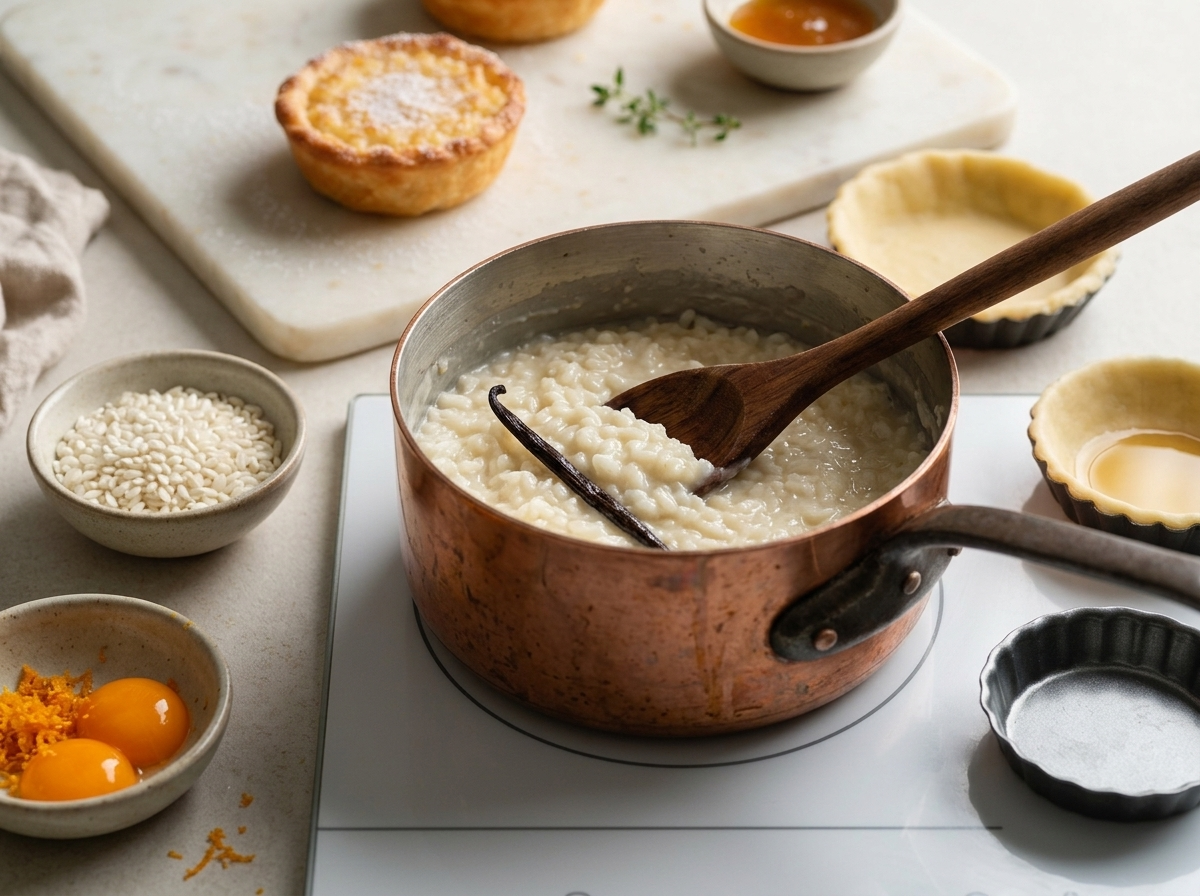
- Bring the milk to a gentle simmer in a 2-quart / 1.9 L saucepan with the vanilla bean and orange zest. Stir in the rice, reduce heat to low, and cook uncovered for 18 to 20 minutes, stirring occasionally, until the rice is tender and the mixture looks like loose porridge, not dry.
- Remove the vanilla bean pod. Stir in the 60 g sugar and let the mixture cool for 10 minutes off the heat.
- Beat the 2 eggs in a separate bowl, then stir them into the cooled rice mixture along with the rum and drained raisins.
- Heat the oven to 180C / 350F. Butter the 8 tartlet tins.
- Roll the chilled dough on a floured surface to 3 mm thickness. Cut rounds to fit the tins, press gently into place, and trim excess pastry flush with the rim.
- Divide the rice filling evenly among the tartlet shells, about 65 g each, filling to just below the rim.
- Bake for 25 to 30 minutes, until the pastry edges are golden and the filling is set with only a slight jiggle in the center.
- Cool the tartlets in the tins for 10 minutes, then transfer to a wire rack. Dust with powdered sugar before serving.
Notes
- Chill dough at least 30 minutes before rolling for a crisper shell.
- Cook rice until porridge-loose, not dry, since it firms up baking.
- Don't skip the raisin soak, or they dry out in the oven.
- Trim pastry edges flush with the tin rim to avoid burnt overhang.
Tips for Success
- Chill the dough for a full 30 minutes before rolling so the butter stays firm and the pastry bakes flaky, not tough.
- Stop cooking the rice while the mixture still looks loose and slightly soupy, since it thickens further in the oven.
- Soak raisins in warm water for 10 minutes before adding them, so they plump instead of drying out during baking.
- Use a fine grater for the orange zest and avoid the white pith, which turns the filling bitter.
- Let tartlets cool for at least 10 minutes in the tins before unmolding, or the warm pastry can crack.
Variations
- Swap the rum for 1 tsp of amaretto or leave it out entirely and add extra vanilla for an alcohol-free version.
- Use whole wheat pastry flour for half the flour amount for a nuttier, slightly denser shell.
- Bake the filling in one 24 cm / 9-inch tart shell instead of individual tins, adding 10 minutes to the bake time.
Storage and Reheating
Budino di riso keeps in an airtight container in the fridge for 3 to 4 days. The pastry softens slightly after a day, which is normal for this filling.
To reheat, warm the tartlets in a 150C / 300F oven for 8 to 10 minutes, which crisps the pastry edges back up. A microwave works in a pinch but leaves the shell soft.
To freeze, wrap baked and cooled tartlets individually and freeze up to 2 months. Thaw overnight in the fridge, then reheat in the oven as above before serving.
Serving Suggestions
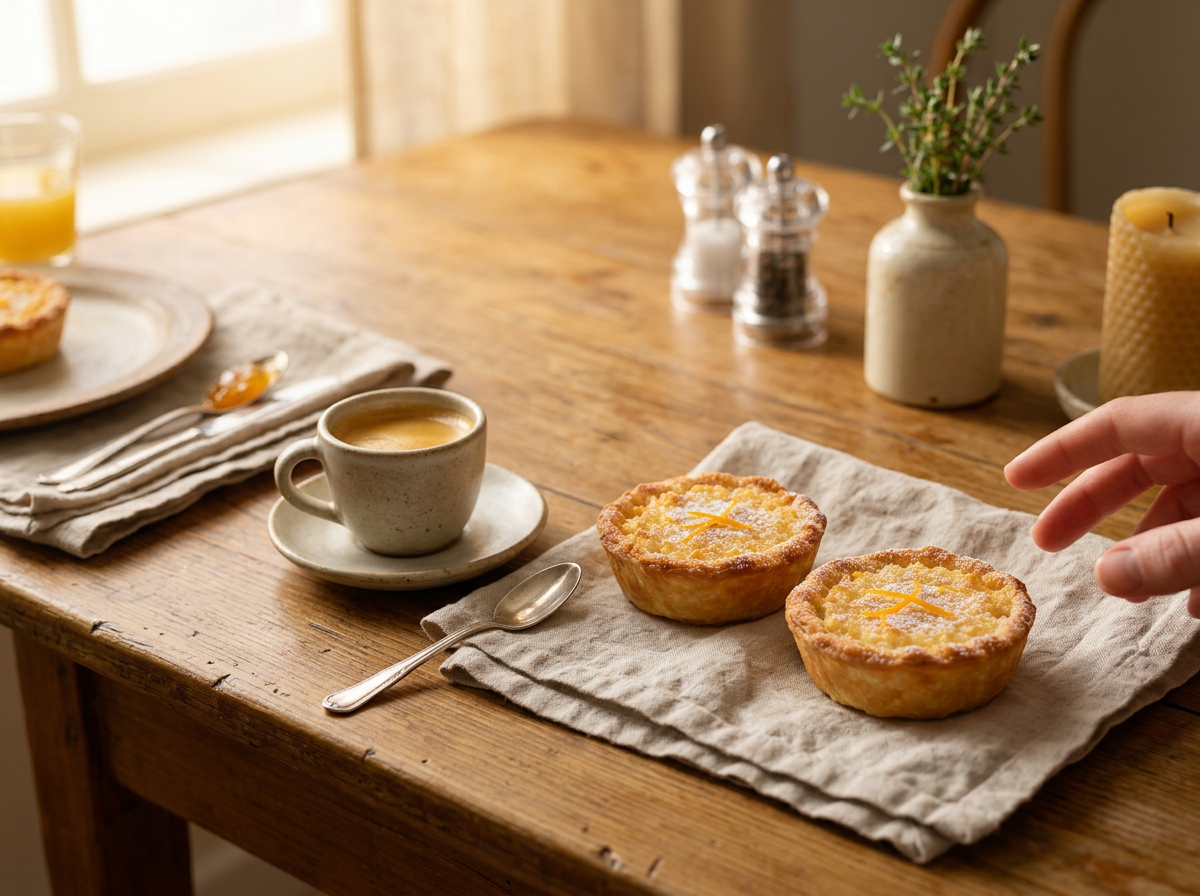
Serve budino di riso the way Tuscan bakeries do, at room temperature or lightly chilled, dusted with powdered sugar just before eating. Espresso or a small glass of vin santo alongside makes this a proper afternoon snack.
For breakfast, warm one tartlet slightly and pair it with black tea or a milky coffee. A few fresh berries on the side add acidity against the rich filling.
FAQ
Why is my budino di riso filling watery instead of set?
This usually means the rice didn’t absorb enough milk before baking, or the tartlets came out of the oven too early. The filling should look like a loose porridge before you add the eggs, not liquid milk with rice floating in it. Bake until the centers only barely jiggle, about 25 to 30 minutes at 180C / 350F.
Can I use short-grain rice instead of Arborio for budino di riso?
Yes, Originario or Carnaroli rice both work fine, since they release starch the same way Arborio does. Avoid long-grain or basmati rice, which stays separate and won’t give the filling its dense, custardy body. Stick with a short or medium grain variety for the right texture.
Can I freeze baked Tuscan rice tartlets?
Yes, baked tartlets freeze well for up to 2 months in an airtight container, separated by parchment so the pastry doesn’t stick. Thaw overnight in the fridge, then warm in a 150C / 300F oven for 8 to 10 minutes to crisp the pastry back up before serving.
What goes well with budino di riso tartlets?
Espresso and vin santo are the traditional Tuscan pairing, since the pastry’s sweetness matches the wine’s caramel notes. A cup of black tea or a glass of dessert wine works too. Fresh berries on the side add a bit of acidity against the rich filling.
Is budino di riso gluten free?
No, the classic version isn’t, since the pastry shell is built from wheat flour. Swap in a 1:1 gluten-free flour blend for the crust to make it gluten free. The rice filling itself contains no wheat, so the swap is the only change needed.
What’s the difference between budino di riso and a regular rice pudding?
Budino di riso is baked inside a short pastry shell, which gives it a firmer, sliceable structure that rice pudding in a bowl doesn’t have. The filling also bakes down denser, closer to a flan, because the eggs set as it cooks. Rice pudding stays soft and spoonable.