Jump to Recipe
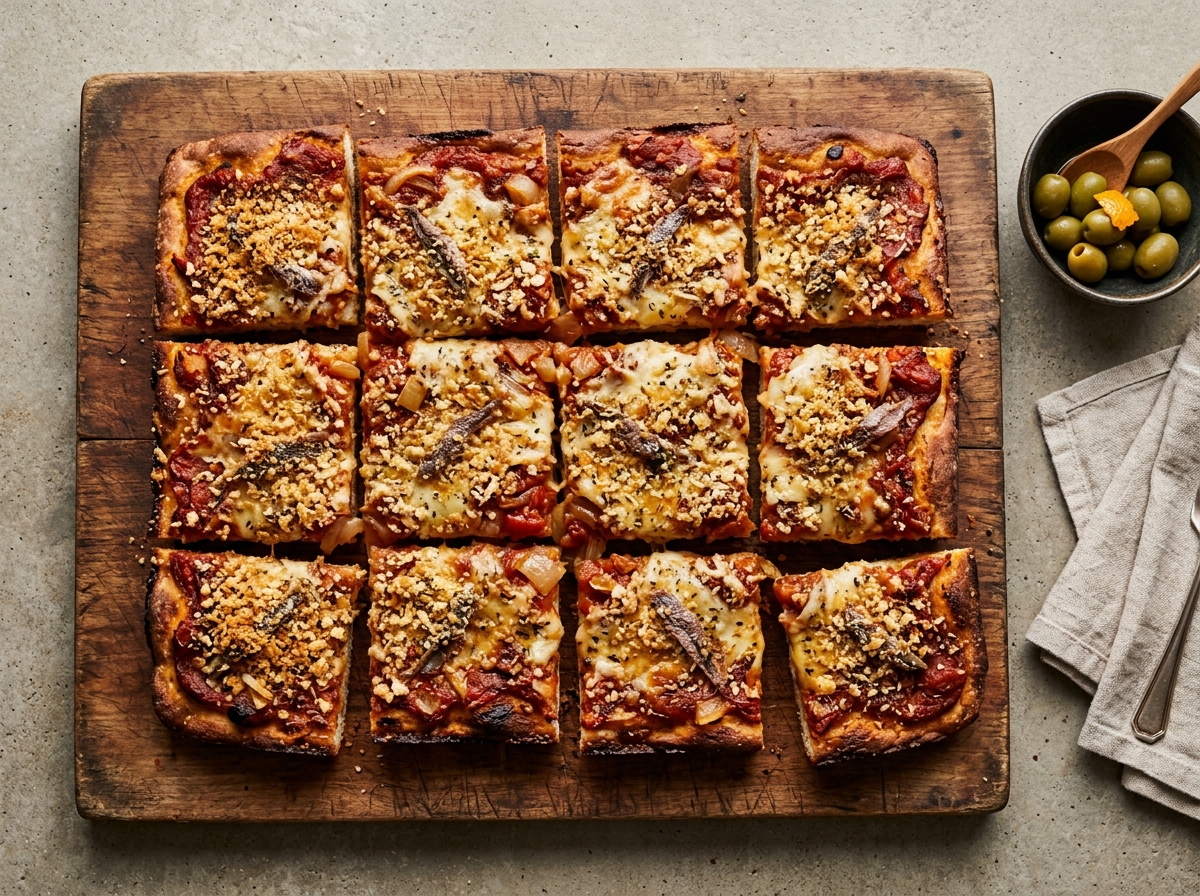
Sfincione palermitano is a thick, spongy sheet pizza from Palermo built on an olive oil dough and topped with a chunky tomato-onion sauce, anchovies, caciocavallo cheese, and a layer of toasted breadcrumbs instead of a thick blanket of mozzarella.
The crumb is closer to focaccia than to a thin Neapolitan crust. You want an open, airy interior under a crisp, oiled bottom, which is why the dough gets two rises instead of one.
In Palermo, sfincione shows up at street stalls, bakeries, and on the Christmas Eve table. Vendors sell it warm, cut into squares, wrapped in paper.
The one place this goes wrong is the first rise. If your kitchen runs cold, give the dough the full 60 minutes and check for doubling by sight, not by the clock, or the crumb stays tight and bready instead of open.
Why You’ll Love This Recipe
- Spongy, focaccia-like crumb instead of a thin crisp crust
- Breadcrumb topping adds crunch without extra cheese
- Feeds a crowd from one sheet pan
- Bakes well ahead and reheats without going soggy
Ingredient Notes
- Bread flour: Gives the dough enough structure to hold the open, spongy crumb. All-purpose flour works but the crumb comes out slightly denser.
- Caciocavallo: A firm, tangy Sicilian cow’s milk cheese. Swap in provolone or scamorza if you can’t find it.
- Anchovy fillets: Melt into the sauce and add a salty backbone rather than a fishy taste. Anchovy paste works, use about 1.5 tsp for 6 fillets.
- Yellow onion: Cooked low and slow until sweet, this builds most of the sauce’s depth. Don’t rush it or the sauce turns sharp instead of sweet.
- Dried oregano: Sicilian oregano is stronger than the standard jar variety, so start with less if yours is fresh or high-potency.
- Breadcrumbs: Use dry, coarse breadcrumbs from day-old bread, not fine store-bought crumbs, so the top stays crunchy instead of turning to sand.
Sfincione Palermitano: Sicily’s Spongy Sheet Pizza
Ingredients
Method
- Whisk warm water with instant yeast and sugar. Let sit 5 minutes until foamy on top.
- Combine bread flour and salt in a large bowl. Add the yeast mixture and 2 tbsp olive oil, mix until a shaggy dough forms.
- Knead 8 to 10 minutes by hand, or 5 minutes on medium in a stand mixer, until the dough turns smooth and slightly tacky.
- Place dough in an oiled bowl, cover, and let rise in a warm spot 60 minutes until doubled.
- Heat 3 tbsp olive oil in a skillet over medium. Add sliced onion and cook 12 to 15 minutes, stirring often, until soft and golden, not browned.
- Add crushed tomatoes, salt, and pepper. Simmer 15 minutes until thickened enough to coat the back of a spoon. Stir in half the oregano off heat.
- Heat oven to 220C/425F. Oil a 9x13-inch sheet pan generously with olive oil.
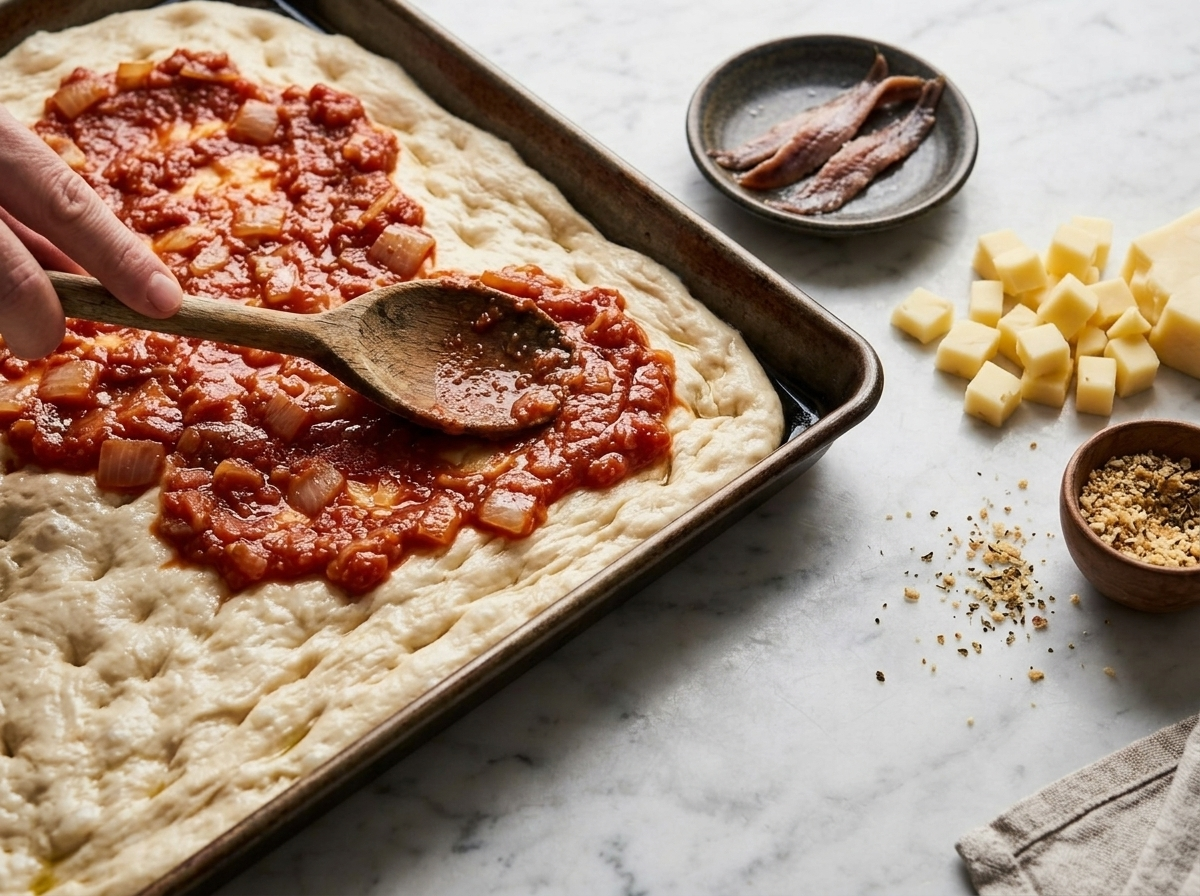
- Press dough into the pan with oiled fingertips, stretching toward the edges. If it resists, let it rest 10 minutes and stretch again.
- Cover loosely and let rise a second time, 45 minutes, until puffy.
- Dimple the dough with your fingertips. Spread the tomato-onion sauce evenly, then scatter chopped anchovies and diced caciocavallo over the top.
- Sprinkle with remaining oregano, then top with toasted breadcrumbs tossed in 1 tbsp olive oil.
- Bake 25 to 30 minutes until the bottom is golden and crisp, the breadcrumbs are toasted, and the edges pull slightly from the pan.
- Cool in the pan 10 minutes before slicing into squares.
Notes
- Check dough doubling by sight, not the clock, especially in a cold kitchen.
- Cook onions until golden and sweet before adding tomatoes, about 12 to 15 minutes.
- Oil the pan and your hands generously so the dough stretches without tearing.
- Toast breadcrumbs before topping for real crunch instead of a sandy texture.
Tips for Success
- Proof the dough until fully doubled, about 60 minutes at 75F/24C, since a cold kitchen slows it down.
- Cook the onions low and slow for 12 to 15 minutes so they turn sweet, not bitter, before adding tomatoes.
- Oil your hands and the pan generously before stretching the dough so it doesn’t tear or spring back.
- Toast the breadcrumbs in a dry pan for 2 to 3 minutes before topping the dough for extra crunch.
- Let resistant dough rest 10 minutes if it keeps springing back, then stretch again to the pan edges.
Variations
- Swap anchovies for sardines or omit them and add extra oregano and capers for a milder, saltier bite.
- Use half caciocavallo and half pecorino for a sharper finish that stands up better to the sweet onions.
- Make individual portions in a muffin tin for single-serve squares, cutting the bake time to 15 to 18 minutes.
Storage and Reheating
Store cooled sfincione in an airtight container at room temperature for 1 day, or in the fridge for up to 3 days.
Reheat squares in a 180C/350F oven for 8 to 10 minutes to recrisp the bottom. Skip the microwave, it turns the spongy crumb gummy.
Freeze fully baked, cooled squares wrapped tightly in foil for up to 2 months. Thaw overnight in the fridge, then reheat straight in the oven.
Serving Suggestions
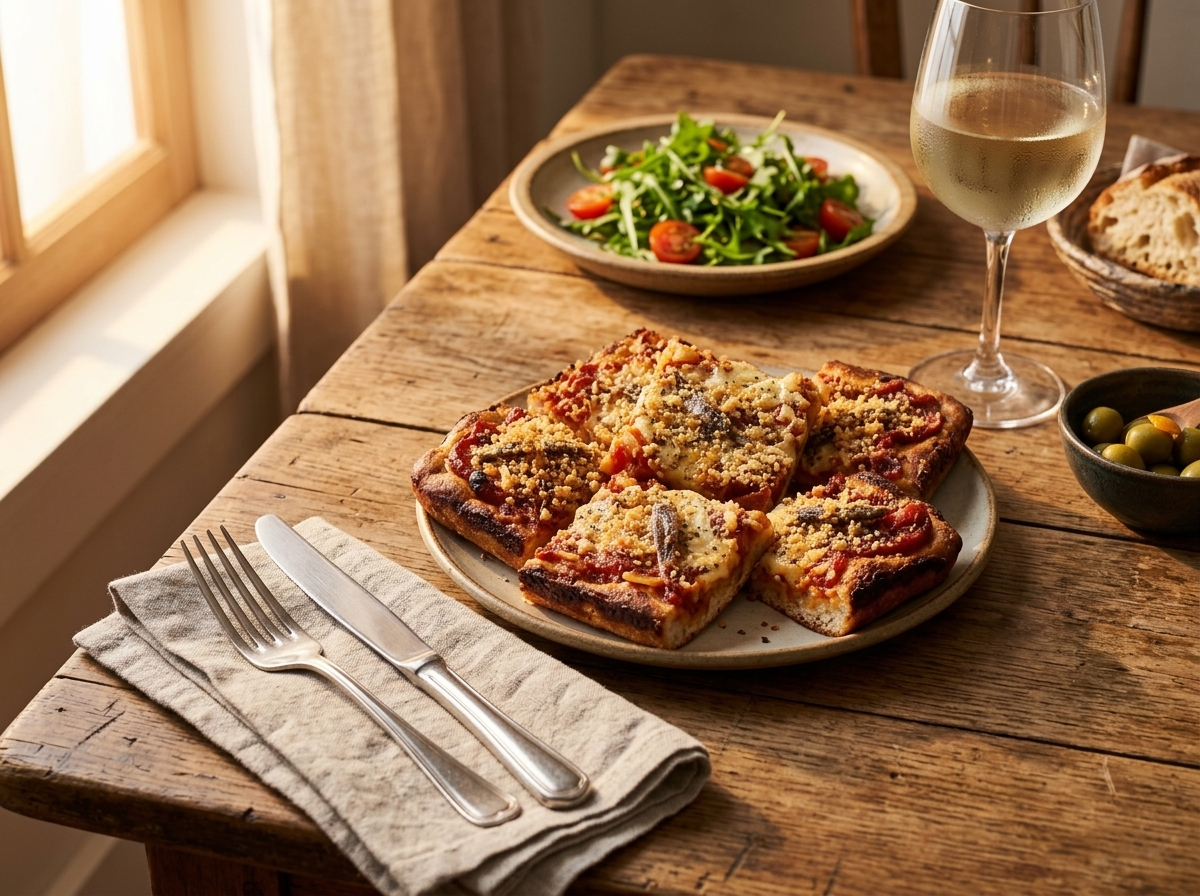
Serve sfincione warm, cut into squares, as a street-food snack or a light lunch with a Sicilian potato salad on the side.
Pair it with a chilled Sicilian white like Grillo or Catarratto, or a cold beer if that’s what’s open. It’s also traditional on the Palermo Christmas Eve table alongside other fried and baked antipasti like sarde a beccafico.
FAQ
Why is my sfincione palermitano dense instead of spongy?
Dense sfincione usually means the dough was under-proofed or handled with too much flour. Give the first rise the full 60 minutes until it visibly doubles, and go easy on extra flour when stretching, since a slightly tacky dough is what keeps the crumb open once baked.
Can I use mozzarella instead of caciocavallo in sfincione?
You can, but mozzarella melts wetter and pools more moisture on top, which softens the breadcrumb crust. Provolone or scamorza are closer substitutes since they’re firm and tangy like caciocavallo and hold their shape under the sauce.
Can I freeze sfincione palermitano after baking?
Yes, baked and cooled sfincione freezes well for up to 2 months wrapped tightly in foil. Thaw it overnight in the fridge, then reheat in a 180C/350F oven for 8 to 10 minutes so the bottom recrisps instead of turning soft.
What do you eat with sfincione in Palermo?
Sfincione is usually eaten on its own, warm, cut into squares as a snack or light meal, the way you’d grab a slice of street pizza. A simple green salad or a glass of chilled Sicilian white wine rounds it out at home.
Is sfincione palermitano vegetarian?
No, the traditional version isn’t vegetarian because it uses anchovy fillets in the sauce and topping. You can leave them out and add extra capers and oregano instead, which changes the flavor but still makes a good, saltier-leaning sheet pizza.
What’s the difference between sfincione and regular pizza?
Sfincione has a much thicker, spongier crumb closer to focaccia, baked in a rectangular sheet pan instead of stretched thin. It also skips a heavy layer of mozzarella in favor of tomato-onion sauce, anchovies, caciocavallo, and a crunchy breadcrumb topping.