
Jump to Recipe
Linguine ai ricci di mare is a Roman and Sardinian classic, in the same coastal spirit as linguine al granchio, pairing hot pasta with raw sea urchin roe tossed together off the heat so the roe stays soft and briny instead of turning grainy.
The whole dish comes together in the time it takes to boil the pasta. Garlic, olive oil, and a pinch of chili build a base in the pan, then a splash of pasta water and white wine loosen it into a light sauce.
The roe does the real work here. I fold it in once the skillet is off the burner, using residual heat to warm it through without cooking it solid, because overcooked ricci turns chalky and loses the sea flavor that makes this dish worth making.
Buy sea urchin roe the day you plan to cook it. Fresh roe should look vivid orange or yellow and smell clean, like the ocean, not fishy.
Why You’ll Love This Recipe
- Ready in under 30 minutes, start to finish
- Raw sea urchin roe keeps its briny, custardy texture
- Just a handful of ingredients besides pasta and salt
- Restaurant-style seafood pasta made at home for less
Ingredient Notes
- linguine: Dried linguine gives the best bite here. Bucatini or spaghetti work as a substitute if that’s what’s in your pantry.
- sea urchin roe (ricci di mare): Look for vivid orange to yellow lobes with a clean ocean smell, sold in small trays at good fish counters. Buy it the day you cook and keep it on ice until use.
- garlic: Slice it thin so it softens gently in the oil instead of browning and turning bitter.
- red chili flakes: A small pinch is enough, the dish is about the roe, not the heat. A whole dried peperoncino gives a milder, rounder heat.
- dry white wine: Use something you’d drink, like Vermentino or Pinot Grigio. Dry vermouth works in a pinch.
- flat-leaf parsley: Adds a clean, grassy note at the end. Skip it if you don’t have any, the dish still works.
- lemon zest: Just the zest, not the juice, keeps the roe’s flavor from turning sharp.
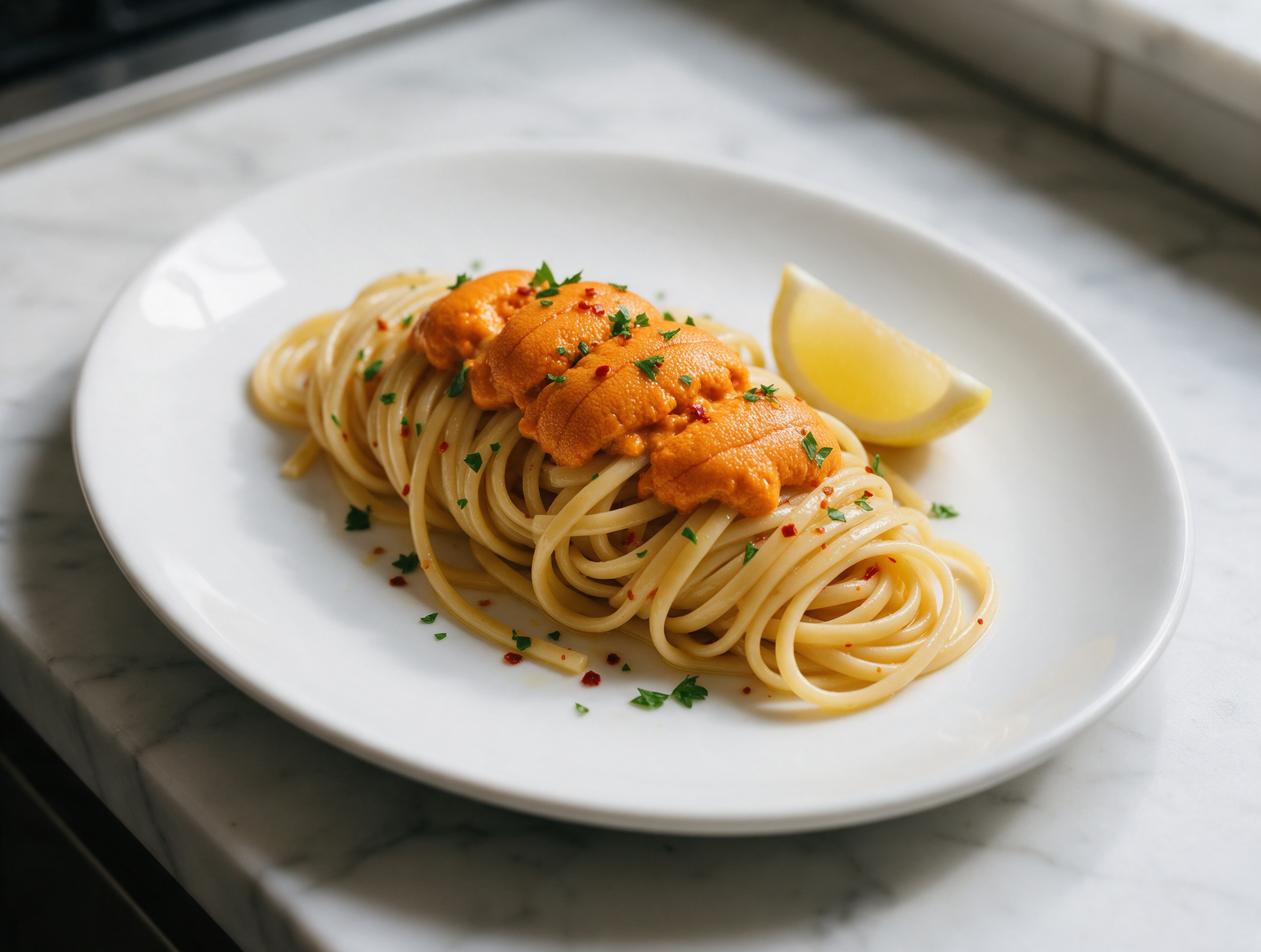
Silky Linguine ai Ricci di Mare with Chili and Lemon
Ingredients
Method
- Bring a large pot of generously salted water to a boil, about 1 tbsp salt per 4 quarts / 4 L water.
- Add the linguine and cook 1 minute short of the package time, until just shy of al dente. Reserve 1 cup / 240 ml pasta water, then drain.
- While the pasta cooks, warm the olive oil in a 12-inch / 30 cm skillet over medium heat. Add the sliced garlic and chili flakes, and cook 1 to 2 minutes until fragrant but not browned.
- Pour in the white wine and let it bubble for 1 minute to cook off the raw alcohol smell.
- Add the drained linguine to the skillet with a splash of the reserved pasta water. Toss over low heat for 1 minute until the noodles are glossy and coated.
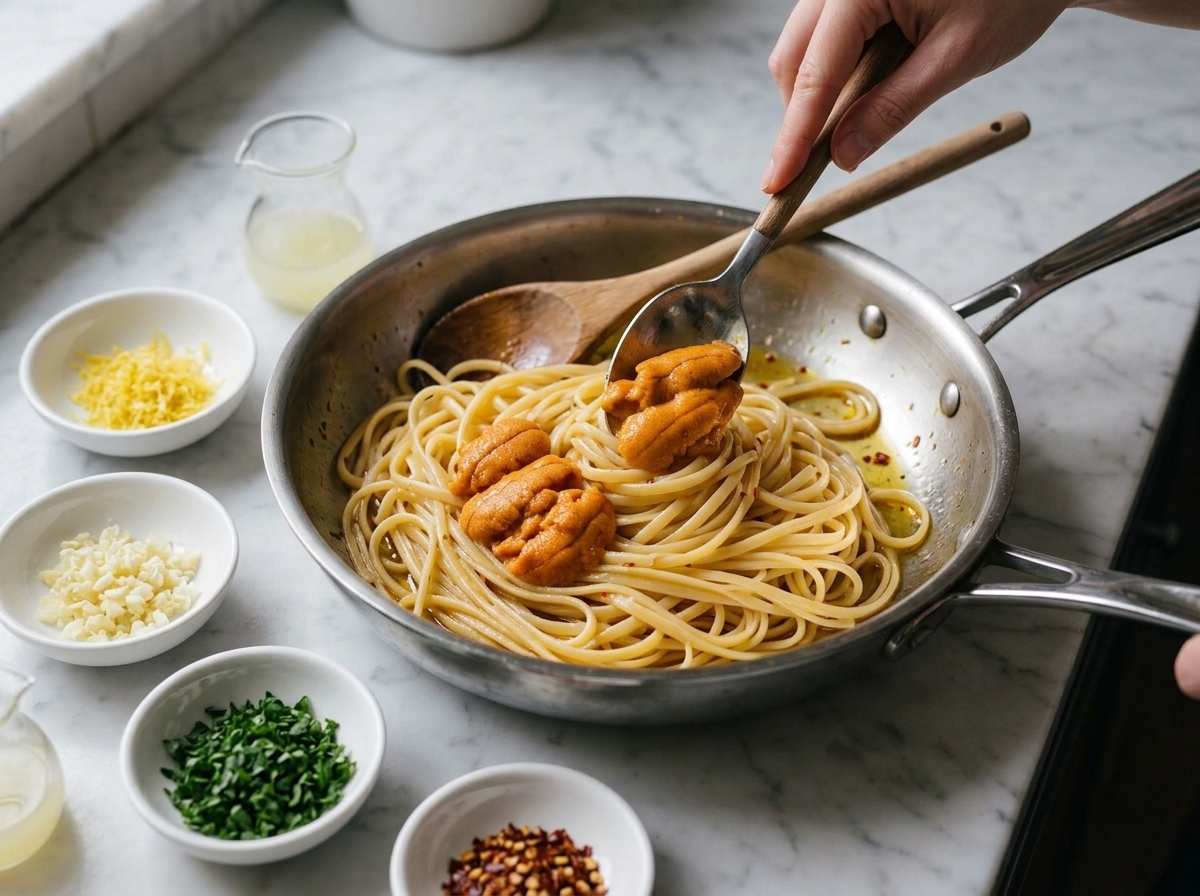
- Remove the skillet from the heat completely. Fold in the sea urchin roe gently, breaking it into soft pieces, until it just melts into the pasta. Don't put the pan back on the burner.
- Add more pasta water a tablespoon at a time if the sauce looks dry, until it clings lightly to the noodles.
- Stir in the chopped parsley and lemon zest. Taste and adjust salt.
- Divide among plates and serve right away, with extra roe on top if you have it.
Notes
- Fold in raw roe off the heat to keep it soft.
- Use the freshest sea urchin roe you can source.
- Reserve pasta water before draining, you'll need it.
- Skip parmesan, cheese and seafood don't pair in Italian cooking.
Tips for Success
- Buy sea urchin roe from a fishmonger you trust, the same way you’d source sushi-grade tuna for tartare di tonno, and cook it the same day for the cleanest flavor.
- Reserve at least 1 cup / 240 ml pasta water before draining, since the starch is what binds the sauce.
- Pull the skillet off the heat before adding the roe so it warms through instead of scrambling.
- Salt the pasta water generously, about 1 tbsp per 4 quarts, since the sauce itself stays lightly seasoned.
- Use fresh chili flakes or a whole dried peperoncino for cleaner heat than pre-ground chili powder.
Variations
- Swap half the sea urchin roe for bottarga shavings for a saltier, more concentrated version.
- Add a spoon of tomato paste for a rosy version popular in some Sardinian kitchens.
- Use spaghetti or bucatini instead of linguine if that’s what your pantry has on hand.
Storage and Reheating
Linguine ai ricci di mare is best eaten right away. The raw sea urchin roe firms up and loses its custardy texture once it sits, and reheating turns it grainy and dulls the briny flavor.
If you want to get ahead, boil the linguine up to a day in advance, toss it with a little olive oil, and refrigerate. Make the garlic-chili base too and keep it separate. At serving time, warm the pasta gently in the skillet with a splash of pasta water and fold in the fresh roe off the heat.
Leftover cooked pasta without the roe keeps for 2 days in the fridge. Don’t store the dish once the roe has been added.
Serving Suggestions
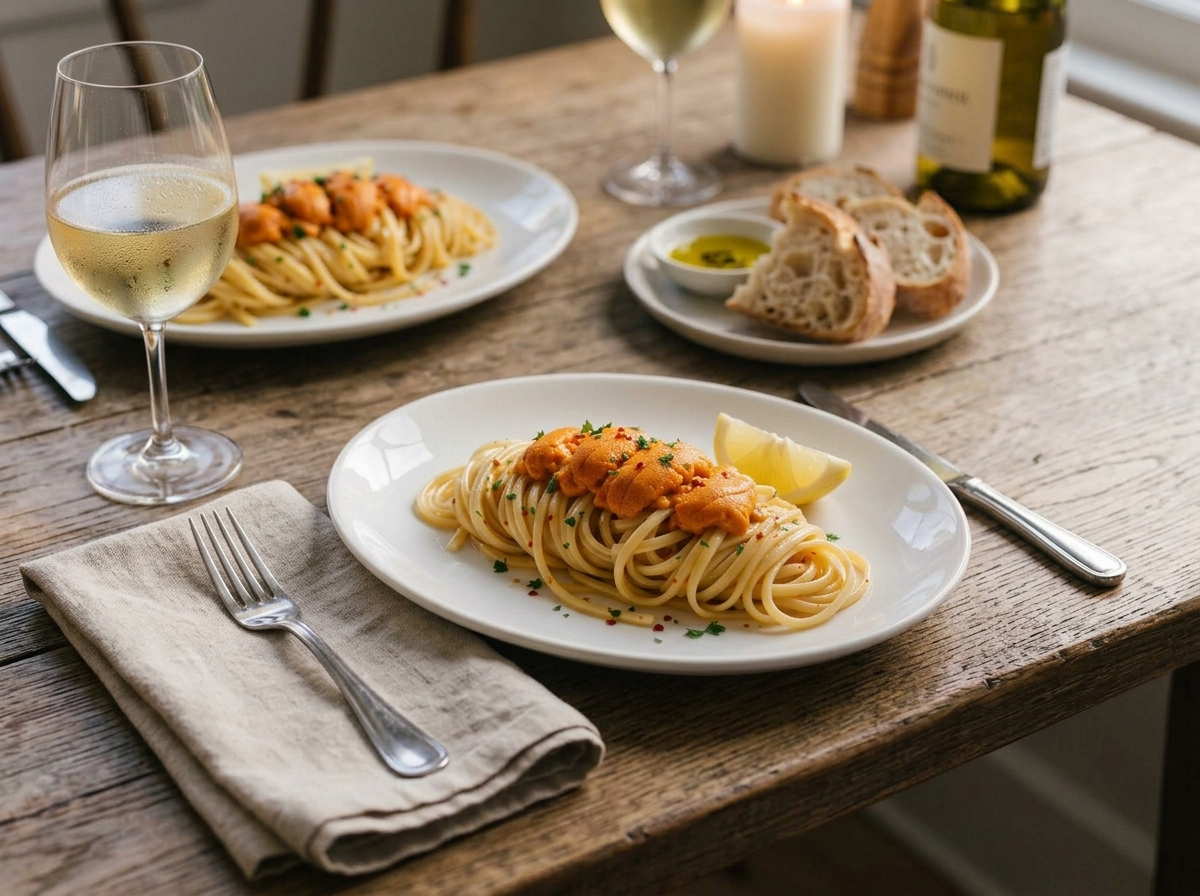
Linguine ai ricci di mare works as a light main on its own, plated straight from the pan. I keep sides simple so the roe stays the focus.
A crisp green salad with lemon vinaigrette or a plate of grilled or roasted vegetables rounds out the meal without competing with the sauce.
Pour a chilled Vermentino or another dry Sardinian white, the kind you’d pour beside aragosta alla catalana, alongside crusty bread for mopping up the last of the sauce.
FAQ
Why did my sea urchin roe turn grainy in the linguine?
Grainy roe usually means it hit direct heat too long. Sea urchin roe should go into the pan only after you pull it off the burner, using residual heat to warm it through. If you toss it while the skillet is still over flame, the delicate proteins seize and the texture turns chalky instead of creamy.
Can I use frozen sea urchin roe instead of fresh for this linguine?
Yes, frozen roe works if fresh isn’t available, though the texture is slightly softer once thawed. Thaw it slowly in the fridge overnight and pat it dry before folding it into the pasta. Avoid refreezing, and use it within a day of thawing for the best briny flavor.
Can I prep linguine ai ricci di mare before guests arrive?
You can prep most of it ahead, just not the final step. Boil the linguine, toss it with a little oil, and make the garlic-chili base in advance, then refrigerate both separately. Reheat gently in the skillet with a splash of pasta water right before serving, and fold in the fresh roe only at the table.
What wine goes with linguine ai ricci di mare?
A dry, mineral white wine works best, like Vermentino or a crisp Sardinian white. The acidity cuts through the richness of the roe without masking its brininess. Avoid heavily oaked whites, since they clash with the delicate sea flavor this dish is built around.
Is linguine ai ricci di mare gluten-free?
Not as written, since regular linguine is made from wheat. Swap in your favorite gluten-free linguine or spaghetti and the rest of the recipe stays the same, since the sauce has no flour or dairy. Check that your pot and utensils are free of cross-contact if that matters for you.
What’s the difference between linguine ai ricci di mare and spaghetti alle vongole?
The main difference is the seafood and how it’s used. Vongole relies on clams cooked briefly in their own broth, while ricci di mare uses raw sea urchin roe folded in off the heat, never actually cooked. The result is a softer, custardy sauce instead of a brothy, garlicky one.