
Jump to Recipe
Guancia di manzo brasata with red wine is beef cheek seared hard, then braised for 3 hours at 150 C / 300 F with a soffritto and dry red wine. The cooking liquid reduces to a glossy sauce, and the meat comes out fork-tender.
Beef cheek is the cut that makes this work. It looks lean but is full of collagen, which turns to gelatin during a long, gentle cook. That’s where the silky texture comes from, not from cream or butter.
Hands-on time is about an hour. The oven handles the rest, so it suits a Sunday afternoon or a dinner you want finished a day early. It tastes better the next day.
Practical note: buy cheeks of similar size, around 300 g each, so they finish together. Trim the silverskin, because it stays chewy no matter how long you cook it.
Why You’ll Love This Recipe
- The oven does the work for three unattended hours
- Tastes better after a night in the fridge
- One Dutch oven handles both searing and braising
- An affordable cut that turns silky without cream or butter
Ingredient Notes
- Beef cheeks: Ask for cheeks of similar size, about 300 g each. If you can’t find them, cross-cut beef shin works with a slightly different texture.
- Dry red wine: Use a dry, medium-bodied bottle you’d drink, such as Chianti, Sangiovese or Montepulciano d’Abruzzo. Skip anything labeled cooking wine, which carries added salt.
- Tomato paste: It adds color and a mild sweetness. Cook it until it turns brick red to remove the tinny taste.
- Beef stock: Low-sodium stock lets you season at the end, after the sauce reduces. Water works in a pinch, but the sauce tastes thinner.
- Rosemary and thyme: Fresh sprigs are best. If you only have dried, use 1/2 tsp of rosemary and 1/2 tsp of thyme.
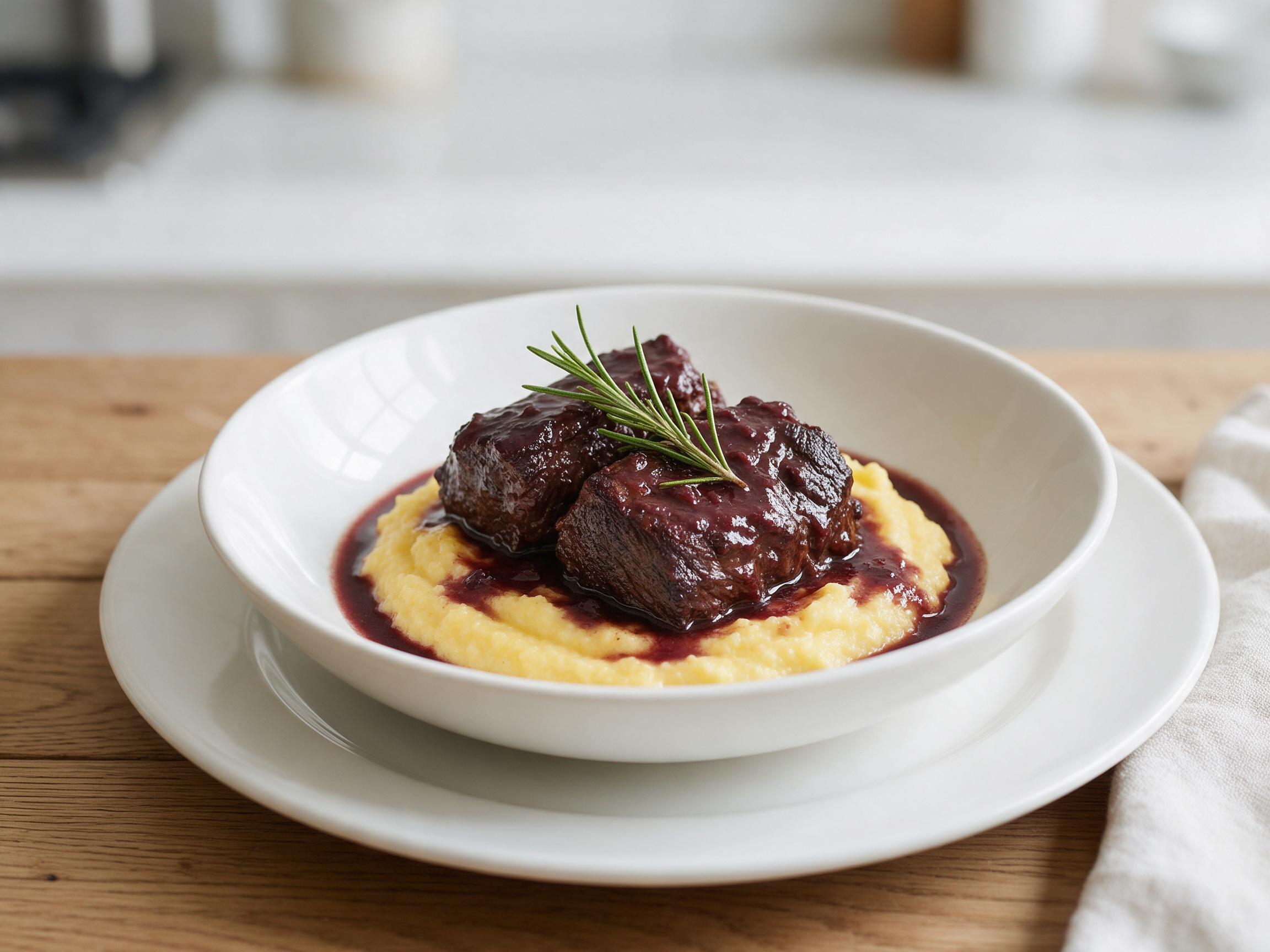
Guancia di Manzo Brasata: Braised Beef Cheeks in Red Wine
Ingredients
Method
- Heat the oven to 150 C / 300 F with a rack in the lower third. Trim the silverskin and any hard white fat from the cheeks with a small knife, leaving the marbled fat. Pat the cheeks completely dry with paper towels and season all over with the salt and pepper.
- Heat 1 tbsp of the oil in a 28 cm / 11-inch Dutch oven over medium-high heat until it shimmers. Sear two cheeks for 3 to 4 minutes per side, without moving them, until deep brown. Move them to a plate, add another 1 tbsp of oil, and sear the other two the same way.
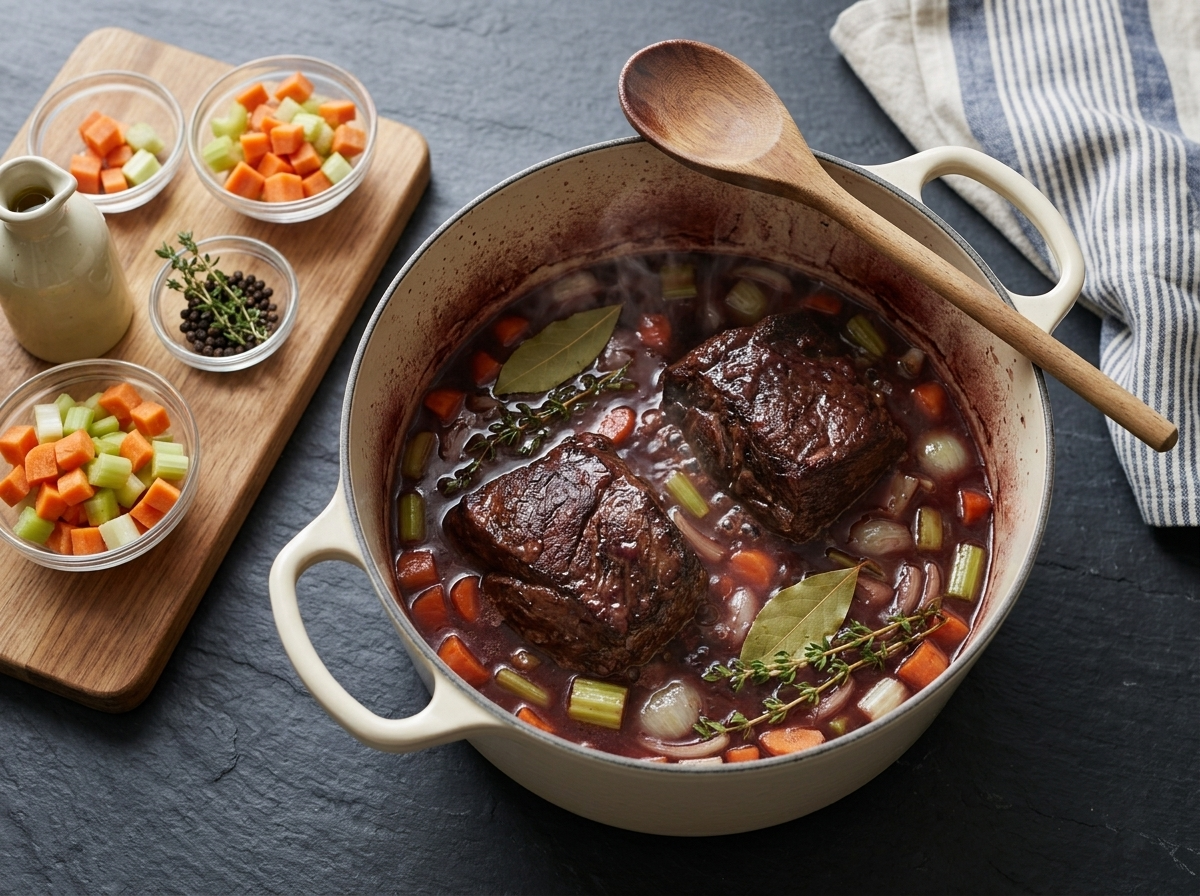
- Lower the heat to medium and add the remaining 1 tbsp of oil, the onion, carrots and celery. Cook for 8 minutes, stirring and scraping up the browned bits, until soft and golden at the edges. Add the garlic and tomato paste and cook for 1 minute, until the paste darkens to brick red.
- Pour in the wine and boil for 6 to 7 minutes, until reduced by about a third and the sharp alcohol smell has mellowed. Add the stock, rosemary, thyme and bay leaves.
- Nestle the cheeks back into the pot with any plate juices. The liquid should come about two-thirds of the way up the meat. Bring to a gentle simmer, cover, and move to the oven. Braise for 3 hours, turning the cheeks once at the 90-minute mark, until a fork slides in with no resistance. Cheeks pulled early feel springy and rubbery, so if you feel any resistance, return them for 20 to 30 minutes.
- Lift the cheeks onto a plate, cover with foil, and rest for 10 minutes. Meanwhile, strain the braising liquid through a fine-mesh sieve into a 3-quart / 2.8 L saucepan, pressing on the vegetables, and skim the fat from the surface. Boil over medium-high heat for 10 minutes, until glossy and thick enough to coat the back of a spoon. Season with salt to taste.
- Return the cheeks to the sauce, or spoon the sauce over them, and turn once to glaze. Serve straight away over soft polenta.
Notes
- Trim all silverskin, but leave the marbled fat for flavor and body.
- Use a wine you'd drink, since the sauce concentrates whatever you pour in.
- Sear in two batches so the Dutch oven stays hot and the cheeks brown instead of steam.
- Salt the sauce last, after reducing, because the flavor concentrates as it boils.
- Test doneness with a fork at 3 hours rather than relying on the clock alone.
Tips for Success
- Pat the cheeks completely dry with paper towels before searing, since surface moisture steams the meat and stops a deep brown crust from forming.
- Sear two cheeks at a time so the pot stays hot and the browned bits on the bottom don’t scorch.
- Cook the tomato paste for a full minute until it darkens to brick red, which removes the raw, tinny taste.
- Keep the oven at 150 C / 300 F and turn the cheeks once at the 90-minute mark so the exposed tops don’t dry out.
- Chill leftovers overnight in the sauce, then lift off the solid fat layer from the surface before reheating for a cleaner-tasting sauce.
Variations
- Add a strip of orange zest and two crushed juniper berries to the braise for a more northern Italian, game-like note.
- Brown 200 g of sliced cremini mushrooms separately and stir them into the finished sauce for an earthier, woodsy finish.
- Shred the cooked cheeks, toss them with the reduced sauce and pappardelle, and serve as a ragu-style primo.
Storage and Reheating
Braised beef cheeks keep for 3 to 4 days in the fridge, covered in their sauce in an airtight container. Cool them at room temperature for no more than 2 hours before chilling. The sauce will set to a loose jelly, which is the gelatin doing its job.
Reheat the cheeks in the sauce, covered, in a saucepan over low heat for 15 to 20 minutes. Add 2 to 3 tbsp of water or stock if the sauce looks tight. You can also use a covered dish in a 150 C / 300 F oven for 25 minutes. Bring everything to steaming hot throughout, at least 165 F / 74 C.
Freeze the cheeks in their sauce for up to 3 months. Thaw overnight in the fridge, then reheat as above.
Serving Suggestions
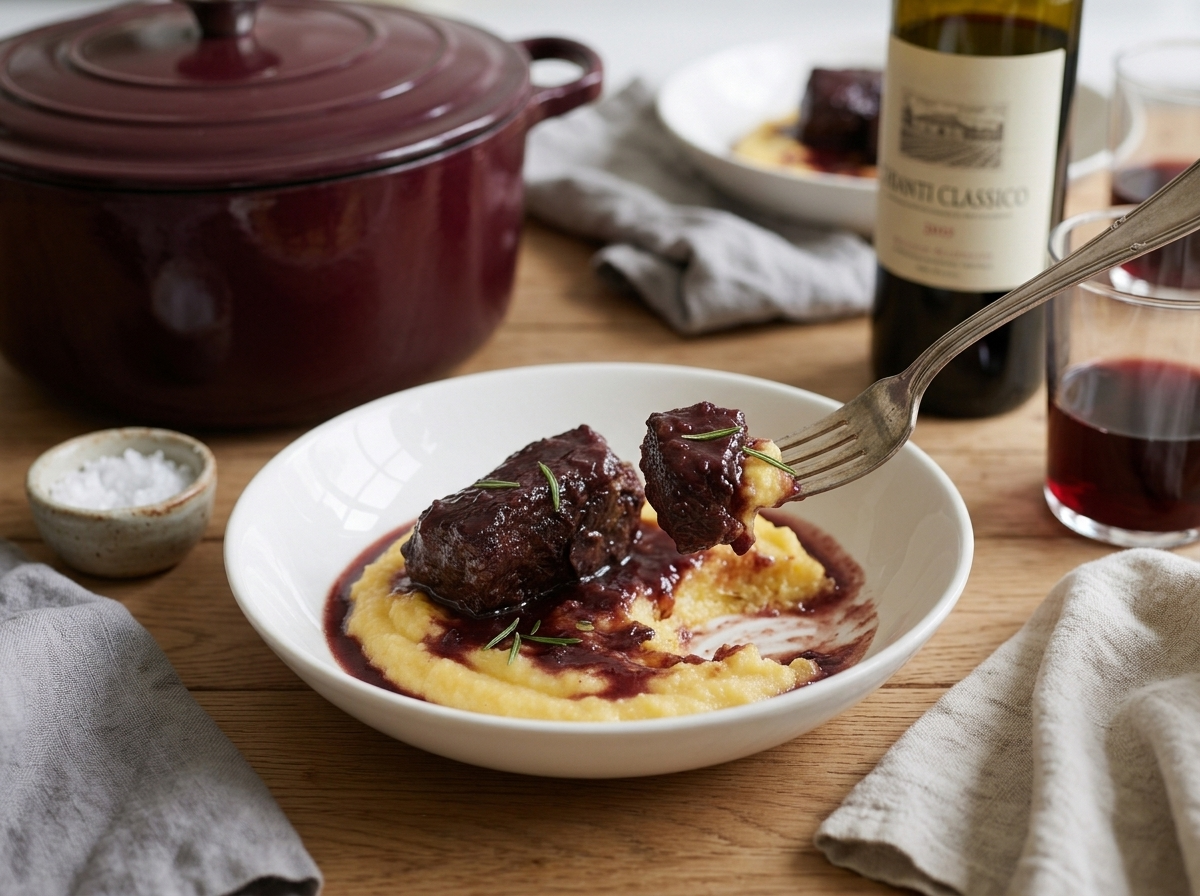
Braised beef cheeks are best served one per person over soft polenta, which catches every bit of sauce. Mashed potatoes or wide egg pasta work as well.
Add something bitter or sharp on the side to balance the gelatin-rich sauce. Sauteed cime di rapa, or a radicchio salad dressed with lemon and olive oil, both do the job.
Pour a glass of the same wine you cooked with. A Montepulciano d’Abruzzo or Chianti Classico fits the sauce well.
FAQ
Why are my braised beef cheeks still tough after 3 hours?
Tough cheeks usually need more time, not less. The collagen only turns to gelatin after sustained gentle heat, so if a fork meets resistance, return the pot to the oven for 20 to 30 minutes and test again. A pot boiling hard instead of barely simmering will also tighten the meat.
Can I use beef shin instead of beef cheeks in guancia di manzo brasata?
Yes, use 1.2 kg of cross-cut beef shin or chuck cut into 5 cm chunks. Braise at 150 C / 300 F and start testing at 2 hours 30 minutes. The sauce will be slightly less sticky, because cheeks carry more collagen than chuck, and shin sits in between.
Can I make guancia di manzo brasata a day ahead, and does it freeze?
Yes to both. Cool the cheeks in their sauce and refrigerate for 3 to 4 days, and the flavor deepens overnight. For freezing, pack cheeks and sauce together in airtight containers for up to 3 months, then thaw overnight in the fridge and reheat covered over low heat.
What goes well with braised beef cheeks in red wine?
Soft polenta is the classic match because it soaks up the sauce. Mashed potatoes or wide egg pasta work as well. Add something bitter or sharp on the side, like sauteed cime di rapa or a radicchio salad with lemon, to cut through the gelatin-rich sauce.
Is braised beef cheek in red wine gluten free and dairy free?
Yes, as written. There’s no flour dusting, butter or cream, so the sauce thickens only by reduction and the natural gelatin. Check the label on your beef stock, since some brands add wheat or dairy. Most of the wine’s alcohol cooks off during the braise, though a small amount remains.
What is the difference between guancia di manzo brasata and beef bourguignon?
Guancia di manzo brasata uses whole beef cheeks braised in olive oil with a soffritto, tomato paste and rosemary. Beef bourguignon uses cubed chuck cooked with butter, bacon, pearl onions and mushrooms. The Italian version serves the cheek whole and tastes cleaner and less smoky.