Jump to Recipe
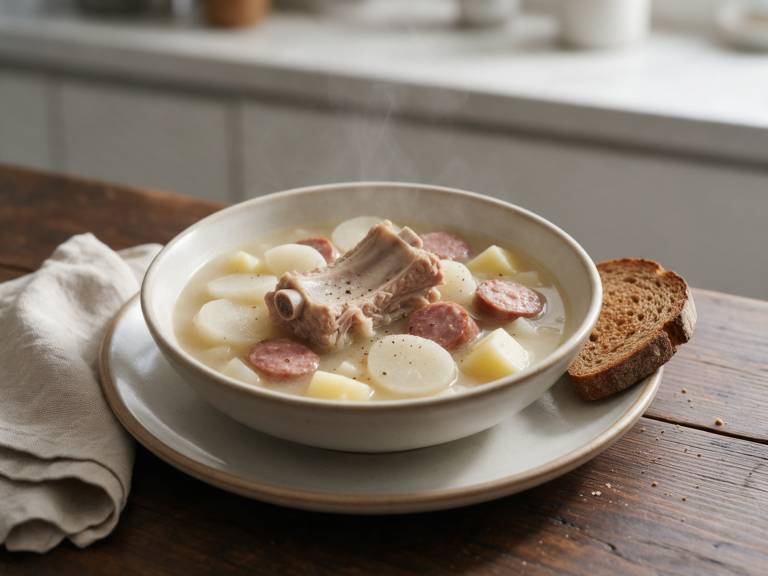
Broda Valtellinese is a slow-simmered pork and turnip soup from Valtellina, the Alpine valley in northern Lombardy, built on a sour, savory broth. This version uses fresh turnips soured with sauerkraut and its brine, which gets you close to the traditional fermented turnips without weeks of waiting.
Pork ribs and fresh sausage give the broth body. A soffritto, juniper and bay keep it grounded. After 80 minutes of gentle simmering, the turnips turn soft and translucent and the ribs let go of the bone.
One judgment call matters most: salt. Sauerkraut brine and sausage both carry plenty, so I add none until the final taste. I once salted at the start and spent the evening diluting a pot that tasted like a pickle jar.
It needs almost no attention once it’s simmering, and the leftovers are better on day two.
Why You’ll Love This Recipe
- Hands-off simmer once the ribs are browned
- Sour broth balances rich pork without cream
- Uses cheap cuts and pantry sauerkraut
- Tastes even better after a night in the fridge
Ingredient Notes
- Turnips: Choose small, firm turnips about the size of a tennis ball, since large ones can taste bitter. Peel them fully and slice evenly so they soften at the same pace.
- Sauerkraut and brine: This is the shortcut that replaces fermented turnips. Buy the refrigerated kind with no added sugar if you can, and keep the brine for the pot.
- Fresh pork sausage: Luganega or plain salamella is closest to what you’d find in Lombardy. Any mild fresh pork sausage without fennel or chili will work.
- Pork spare ribs: Ask the butcher to cut the rack into 4 pieces. Country-style ribs also work, but they give less body to the broth.
- Juniper berries: Five berries add a faint resinous note common in Alpine cooking. Skip them if you can’t find any rather than substituting gin.
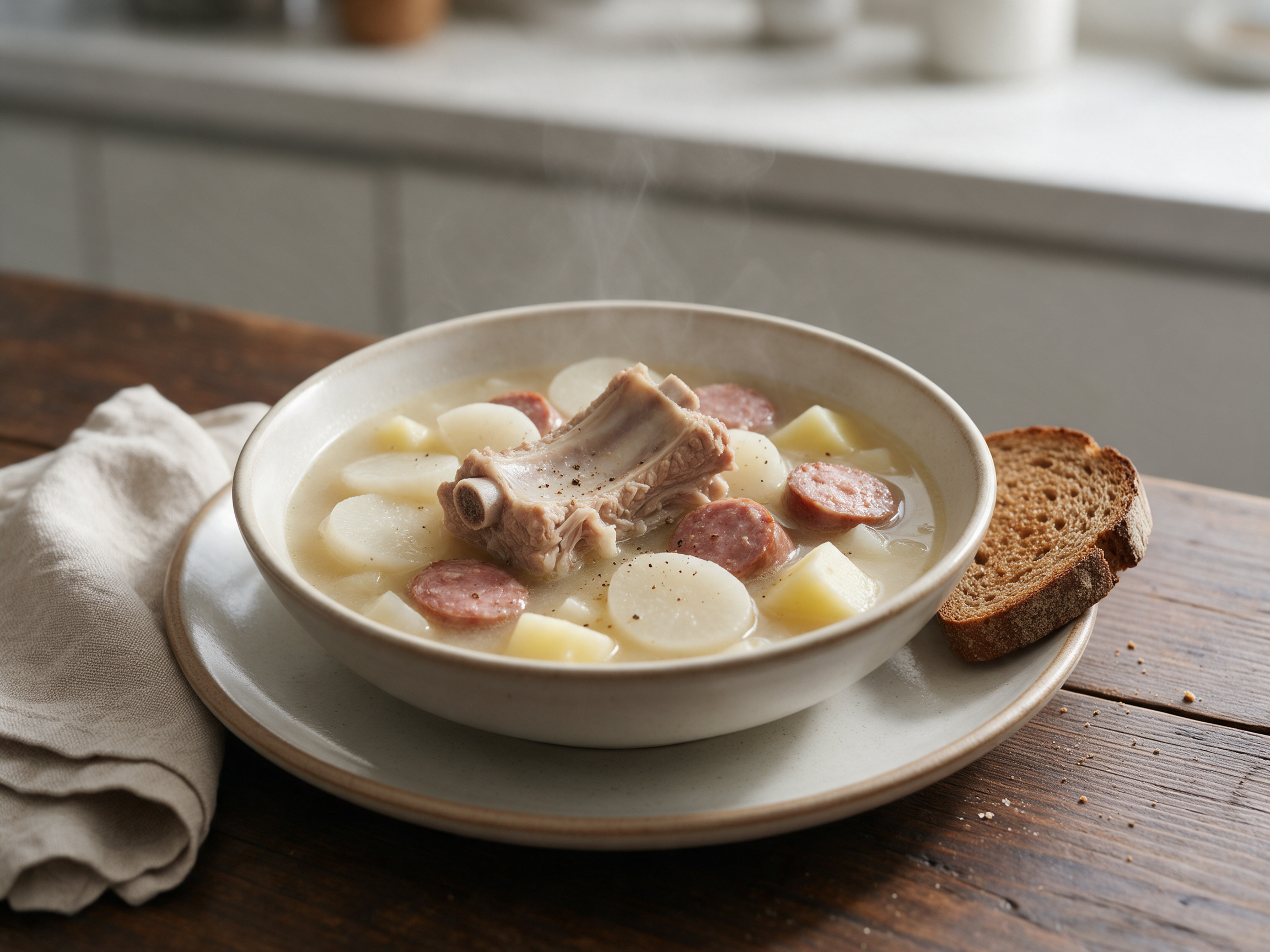
Slow-Simmered Broda Valtellinese with Pork and Turnips
Ingredients
Method
- Peel and slice the turnips 5 mm thick, cube the potato, and finely chop the onion, carrot and celery for the soffritto. Drain the sauerkraut and squeeze it dry, saving 60 ml of the brine.
- Heat the butter and olive oil in a 26 cm / 10-inch Dutch oven over medium-high heat. Brown the ribs in two batches for 4 to 5 minutes per batch until deep brown on all sides, then move them to a plate. Brown the sausage with the second batch for about 3 minutes and set it aside with the ribs.
- Lower the heat to medium and add the soffritto with a pinch of black pepper. Cook for 6 to 7 minutes, stirring, until soft and pale gold. Add the garlic, juniper and bay leaves and cook for 1 minute until fragrant.
- Add the turnips, sauerkraut and brine, then nestle the ribs and sausage on top. Pour in the water and bring to a simmer over medium-high heat. Reduce the heat so only a few bubbles break the surface, partly cover, and simmer for 45 minutes, stirring now and then.
- Add the potato and simmer for 30 more minutes. The broda is ready when the ribs pull easily from the bone, the turnips are soft and translucent, and the sausage reads 160 F / 71 C in the thickest part.
- Lift out the sausage and slice it 1 cm thick, then discard the bay leaves. Taste the broth, add salt in small pinches only if needed, and finish with black pepper. Ladle into bowls with a rib piece and sausage slices in each.
Notes
- Brown ribs in two batches in the 26 cm Dutch oven, never all at once.
- Hold all added salt until the final taste, after the 80-minute simmer.
- Sausage should read 160 F / 71 C in the thickest part.
- Rest the pot off the heat for 10 minutes before serving so the broth settles.
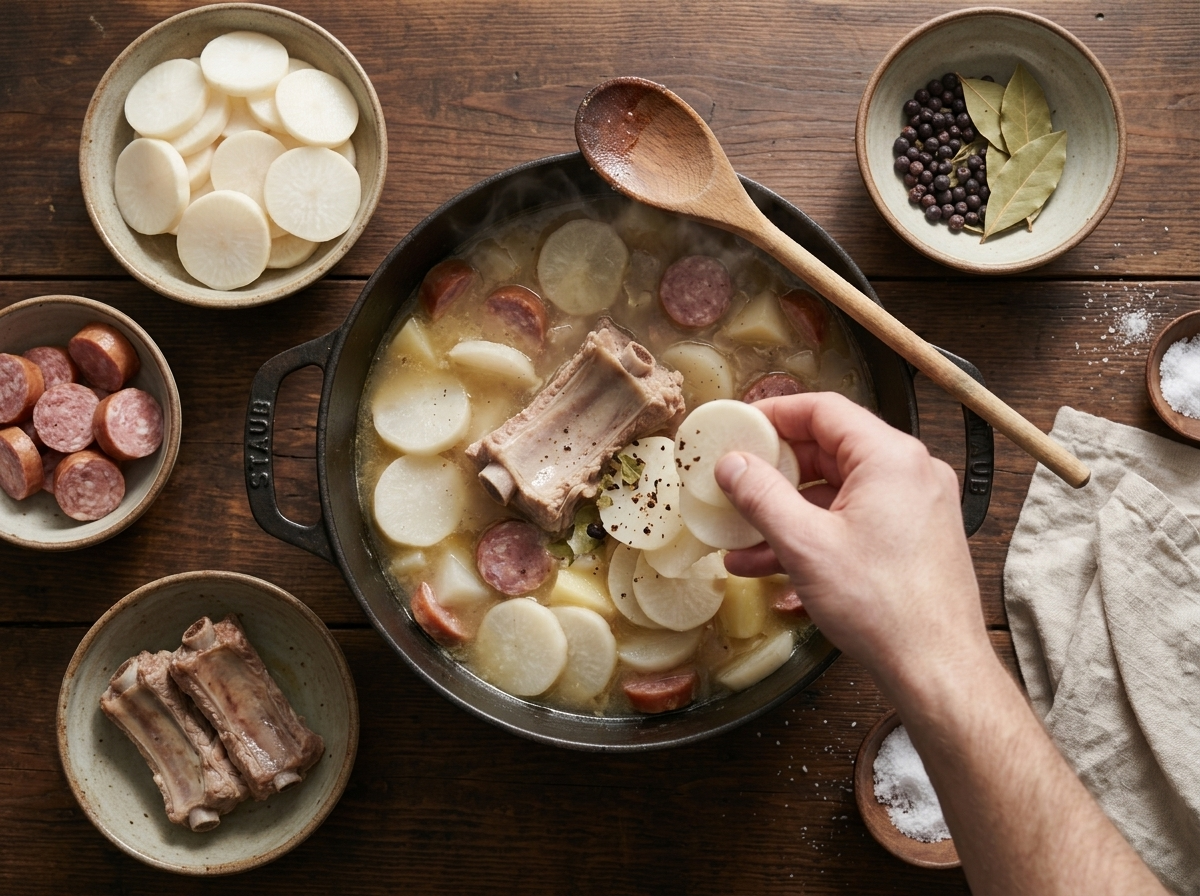
Tips for Success
- Brown the ribs in two batches so the pan stays hot and the meat colors instead of steaming.
- Rinse the sauerkraut briefly under cold water if you prefer a milder sour note in the finished broth.
- Keep the heat low enough that only a few bubbles break the surface, or the turnips will turn to mush.
- Add the potato after the first 45 minutes so it softens and thickens the broth without dissolving.
- Taste and season only at the end, then add salt in pinches, since the sausage and brine already contribute plenty.
Variations
- Swap the spare ribs for 400 g of pork shoulder cubes for a meatier bowl with less bone to handle.
- Use jarred or barrel-fermented turnips (rape acide) in place of fresh turnips, sauerkraut and brine for a closer match to tradition.
- Stir in a handful of chopped savoy cabbage during the last 20 minutes for extra sweetness and body.
Storage and Reheating
Broda Valtellinese keeps in an airtight container in the fridge for 3 to 4 days. Cool it within 2 hours of cooking, and leave the meat in the broth so it stays moist.
Reheat it in a pot over medium-low heat for 10 to 12 minutes, stirring now and then, until steaming throughout. Add a splash of water if it has thickened overnight, and taste for salt before serving.
It freezes for up to 2 months, though the potato turns slightly grainy. Thaw it overnight in the fridge before reheating.
Serving Suggestions
Serve broda Valtellinese in deep bowls with one rib piece and a few slices of sausage per person. Ladle the broth over the meat and finish with black pepper.
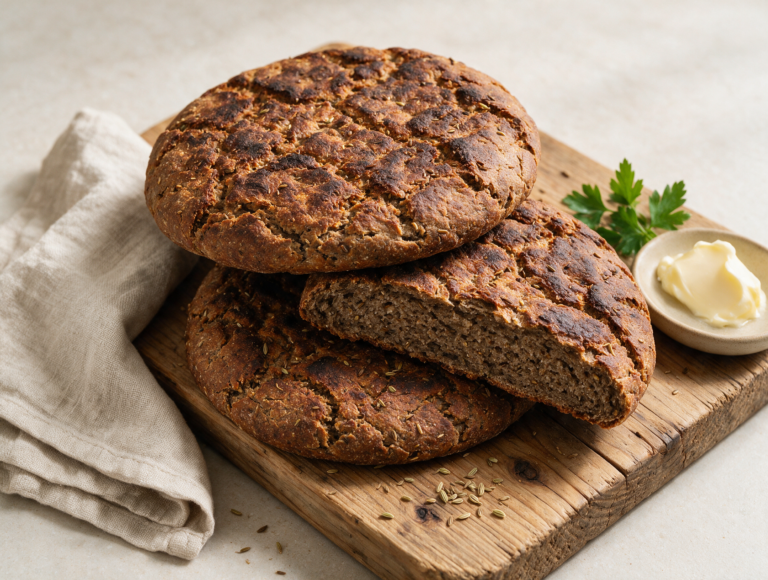
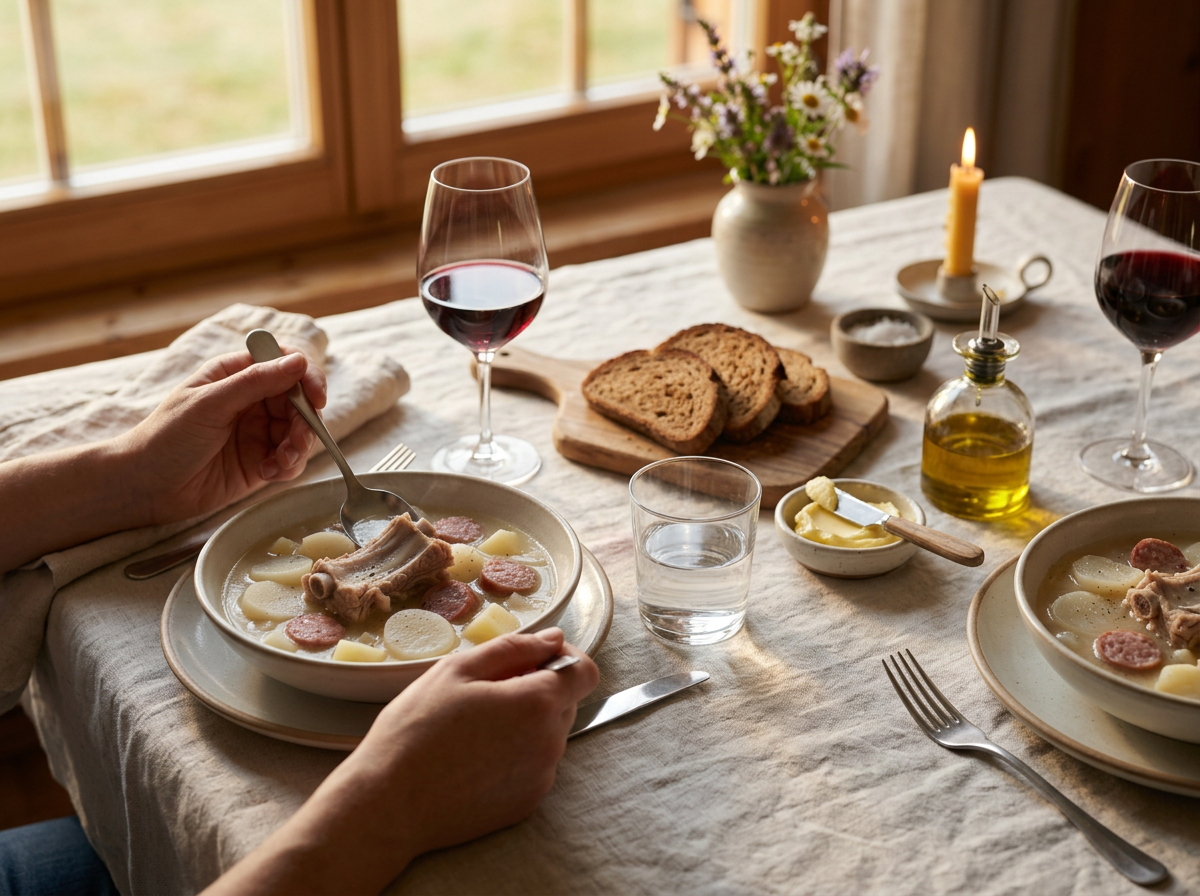
Toasted rye bread or a wedge of soft polenta soaks up the sour broth well. A glass of Valtellina Rosso, the local red made from Nebbiolo, matches its acidity.
A simple green salad dressed with olive oil and a little lemon is enough on the side.
FAQ
Why is my broda too salty or too sour?
Sauerkraut brine and fresh sausage both carry salt, so seasoning early is the usual cause. Stir in a splash of hot water to dilute it. Next time, rinse the sauerkraut briefly and hold off on salt until the final taste. Extra potato also absorbs some of the tang.
Can I use real fermented turnips instead of fresh turnips plus sauerkraut?
Yes, if you can find jarred or barrel-fermented turnips (rape acide). Replace the fresh turnips, sauerkraut and brine with about 700 g drained fermented turnips and rinse them briefly. Keep the full simmer so the ribs get tender, and add no salt until the end.
How do I know the sausage in broda is cooked through?
The sausage is done when an instant-read thermometer in the thickest part reads 160 F / 71 C. By the end of the 80-minute simmer it will be firm and no longer pink inside. If you don’t have a thermometer, slice one piece open to check.
Can you freeze broda valtellinese with the potato in it?
Yes, it freezes for up to 2 months, but the potato turns slightly grainy. Cool it fully, freeze in portions with some broth around the meat, and thaw overnight in the fridge. Mash a few potato pieces against the side of the pot when reheating to restore body.
What goes well with broda valtellinese?
Toasted rye bread or a wedge of soft polenta works best for soaking up the sour broth. A glass of Valtellina Rosso, the local Nebbiolo-based red, matches the acidity. Skip heavy sides, since the ribs and sausage already bring plenty of richness to the bowl.
What is the difference between broda and choucroute?
Broda is a brothy soup built on turnips, while choucroute is a drier dish of sauerkraut cooked with sausages and smoked pork. Here the soffritto, juniper and water give a mellow base under the tang. Choucroute is usually cooked with wine or beer and far more cabbage.