
Jump to Recipe
Pusterer Breatl is a rye flatbread from the Puster Valley in South Tyrol, baked hot and fast until the crust turns deep brown and cracks, and the crumb settles into something dense and chewy. It’s a farmhouse bread, built for keeping, not for fluff.
I first ran into it on a bakery counter in Bruneck, stacked in flat rounds with a hole punched through the middle, a leftover habit from when bread was hung on wooden poles to dry and store through winter.
The dough itself is simple: rye flour, a little wheat flour for structure, water, yeast, and a spice mix of fennel, caraway, and coriander that gives the bread its smell straight out of the oven. No butter, no eggs, no milk.
Bake it at 220C / 430F for 20 to 25 minutes. You’ll know it’s ready when the bottom sounds hollow when you knock on it and the top has gone a deep matte brown.
Why You’ll Love This Recipe
- Keeps at room temperature for a week, longer than most breads
- Only pantry staples, no dairy or eggs required
- One bowl, no special equipment beyond a sheet pan
- Freezes well, so one batch covers weeks of bread
Ingredient Notes
- Rye flour: Use whole dark rye for the earthy, dense character this bread is known for. Light rye works but the flavor turns milder.
- Bread flour: Adds gluten structure so the dough holds together when shaped. All-purpose flour works too, the crumb just turns slightly softer.
- Active dry yeast: One standard packet. Swap for the same weight of instant yeast and skip the blooming step.
- Fennel seeds: Crush lightly before mixing to release more oil into the dough. This is the main flavor note in a Breatl.
- Caraway seeds: Gives the slight anise-pepper bite typical of South Tyrolean rye breads. Cumin seeds work in a pinch, though the flavor shifts.
- Honey: Feeds the yeast and rounds out the crust color. Malt syrup or brown sugar both work as substitutes.
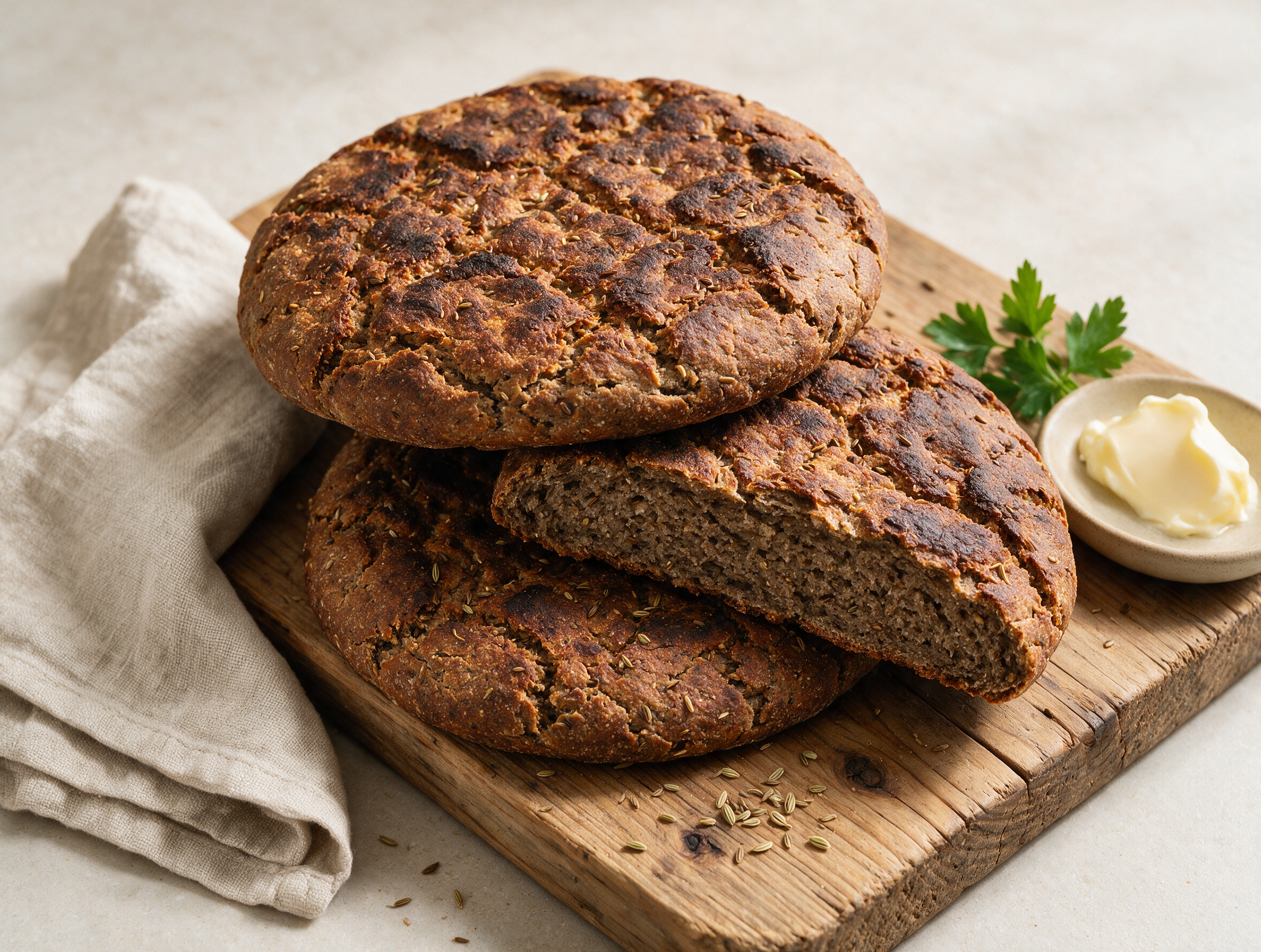
Pusterer Breatl: Baked South Tyrolean Rye Flatbread
Ingredients
Method
- Stir the warm water (about 40C / 104F) with the honey and yeast in a small bowl. Let it sit 5 to 10 minutes until foamy on top.
- In a large mixing bowl, combine the rye flour, bread flour, salt, fennel seeds, caraway seeds, and ground coriander.
- Pour the yeast mixture into the flour mix and knead by hand for 8 to 10 minutes, or 5 minutes in a stand mixer, until the dough is shaggy and slightly sticky. Rye dough stays tackier than wheat dough, resist adding extra flour.
- Cover the bowl and let the dough rise in a warm spot for 45 minutes, until visibly puffed. Rye dough won't double the way wheat dough does, look for about 1.5x growth.
- Punch down the dough and divide it into 4 pieces, about 220 g each.
- Shape each piece into a flat round about 18 to 20 cm / 7 to 8 inches across and 1 cm / 0.4 inch thick on a floured surface. Poke a hole through the center with your finger and dock the surface with a fork.
- Transfer the rounds to a parchment-lined 33 x 46 cm / 13 x 18 inch sheet pan. Cover loosely and rest 15 minutes while the oven heats to 220C / 430F.
- Bake for 20 to 25 minutes, until deep golden brown and the bottom sounds hollow when tapped.
- Cool completely on a wire rack, at least 20 minutes, before slicing. Cutting it warm leaves the crumb gummy.
Notes
- Rye dough feels stickier than wheat dough, resist adding extra flour
- Rest shaped rounds 15 minutes before baking so they don't crack unevenly
- Cool completely before slicing to avoid a gummy crumb
- Crush spices lightly before mixing for stronger aroma
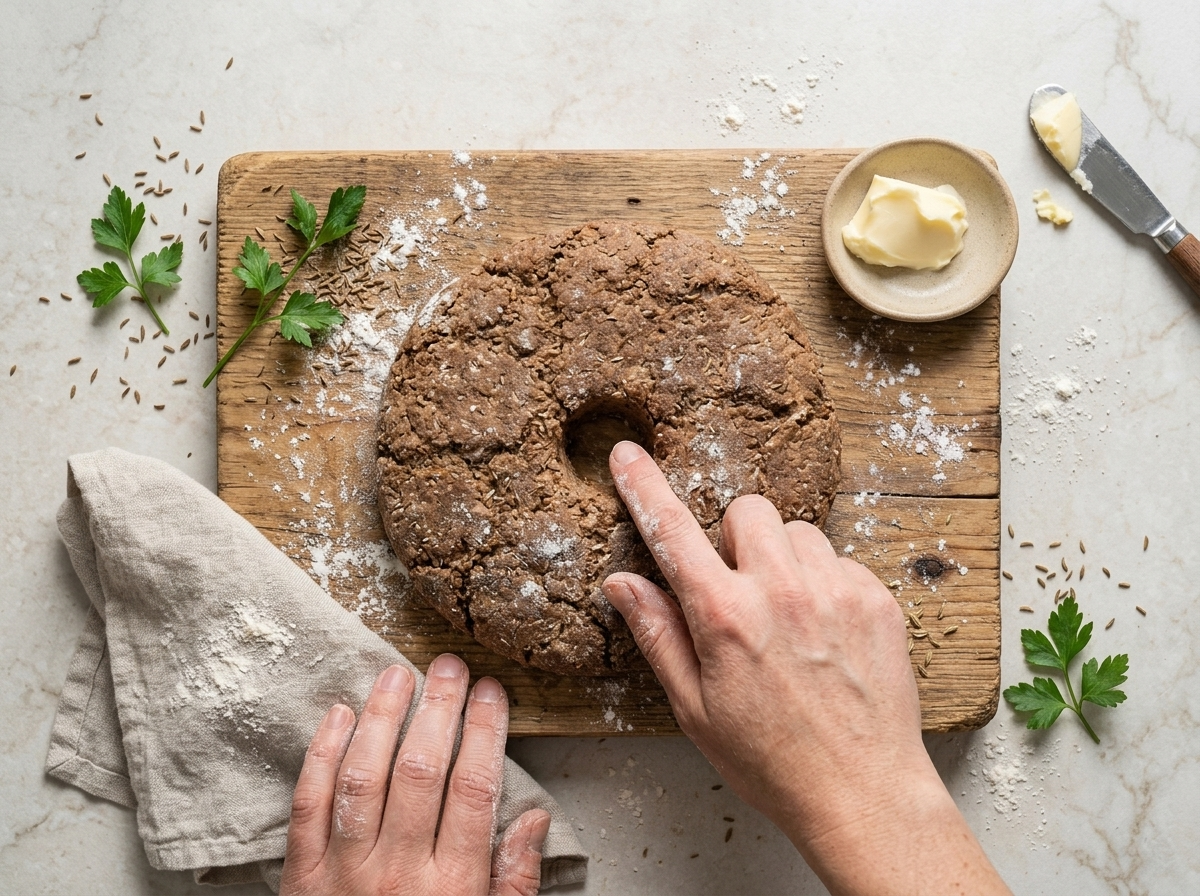
Tips for Success
- Weigh your flour instead of scooping cups, since rye absorbs water differently and volume measures throw the ratio off.
- Crush the fennel and caraway lightly in a mortar before mixing, it releases more oil into the dough.
- Let the shaped rounds rest 15 minutes at room temperature before baking so they don’t crack unevenly in the oven.
- Bake on the lowest oven rack for the first 10 minutes if your oven runs uneven, for better bottom color.
- Cool the bread fully before slicing, cutting it warm compresses the crumb and it turns gummy.
Variations
- Swap half the rye flour for spelt flour for a milder, slightly sweeter crumb closer to Alpine spelt breads.
- Add 1 tbsp orange zest to the spice mix for the citrus-forward version some Puster Valley bakeries use.
- Roll the dough thinner, about 5 mm, and bake 12 to 15 minutes for a cracker-style version closer to Schüttelbrot.
Storage and Reheating
Pusterer Breatl keeps at room temperature for 5 to 7 days wrapped in a clean cloth or paper bag, not plastic, much like the keeping qualities of Bisciola Valtellinese, which was the original point of this bread. The crust softens a little day by day but the crumb stays good.
Freeze whole or cut into wedges for up to 2 months. Wrap tightly in plastic then foil, and thaw at room temperature before reheating.
To refresh, warm it in the oven at 180C / 355F for 5 to 7 minutes. This brings the crust back to crisp without drying out the crumb.
Serving Suggestions
Pusterer Breatl works the way most Alpine breads do, torn by hand and eaten with something rich. Speck, a wedge of aged mountain cheese, or soft butter with a scrape of honey all sit well against the dense crumb.
Serve it alongside a bowl of goulash or a vellutata-style soup like Pancotto della Valtellina, using broken pieces to mop up the last of the bowl.
For a simple lunch, layer thin slices with butter, sliced radish, and chives, the way it’s served in South Tyrolean farmhouses.
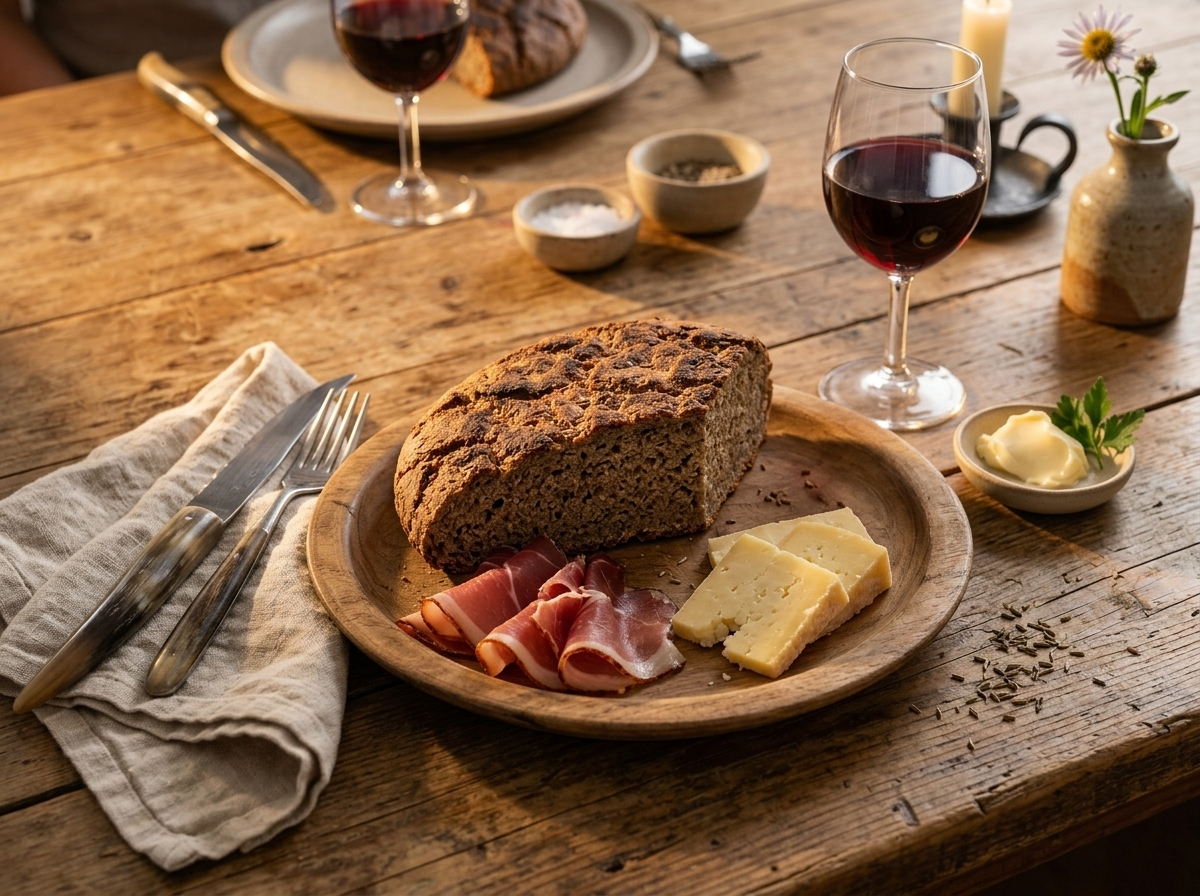
FAQ
How do I know when Pusterer Breatl is done baking?
Tap the bottom of the loaf, it should sound hollow, and the top should be a deep matte brown, not pale. This takes 20 to 25 minutes at 220C / 430F. If the crumb looks gummy when you cut into it later, it needed a few more minutes in the oven.
Can I use all-purpose flour instead of rye for Pusterer Breatl?
You can replace some of the rye with all-purpose flour, but not all of it, or the bread loses its dense, earthy character. I keep at least 300 g of the 500 g total flour as rye. Going lighter than that gives you a soft roll, not a Breatl.
How long does Pusterer Breatl keep, and can I freeze it?
Pusterer Breatl keeps 5 to 7 days at room temperature wrapped in cloth or paper, longer than most breads because of the rye and low fat content. It also freezes well for up to 2 months, wrapped tightly and thawed before reheating.
What do you eat with Pusterer Breatl?
Speck, mountain cheese, and soft butter with honey are the classic pairings in South Tyrol. It also holds up well next to goulash or a thick vegetable soup, since the dense crumb is built for tearing and dipping.
Is Pusterer Breatl dairy-free and vegan?
Yes, Pusterer Breatl is naturally dairy-free and egg-free as written, since the dough only uses flour, water, yeast, honey, and spices. Swap the honey for malt syrup or brown sugar if you want it fully vegan.
What’s the difference between Pusterer Breatl and Schüttelbrot?
Pusterer Breatl is thicker and chewier, closer to a true bread, while Schüttelbrot is rolled thin and baked until it’s fully crisp like a cracker. Both come from the same South Tyrolean rye-and-spice tradition as Pane di Segale della Valtellina, just baked to different thicknesses.