Jump to Recipe
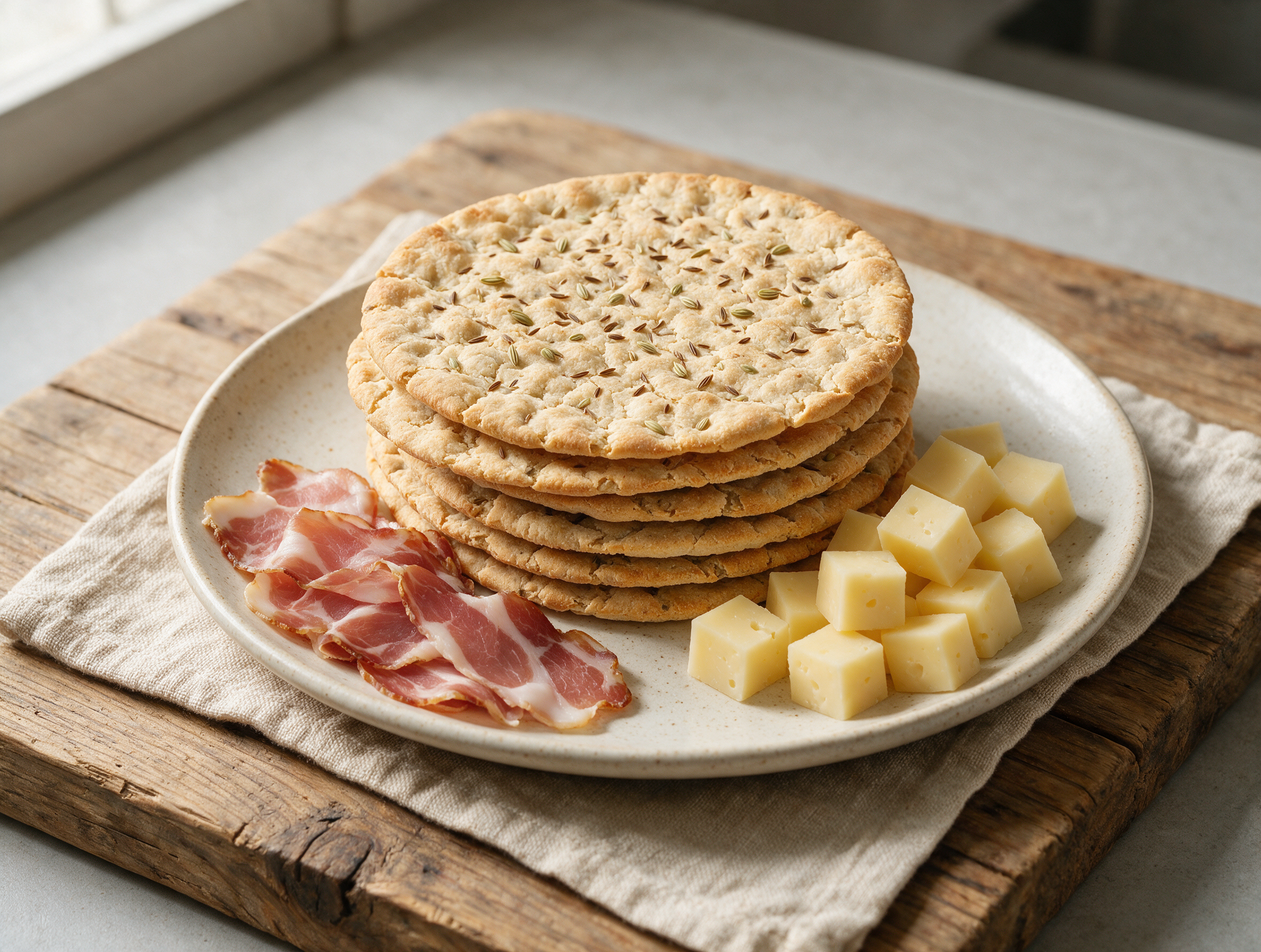
Schüttelbrot is a thin rye flatbread from South Tyrol, in the mountains of northern Italy. Bakers shake the wet dough into a round instead of rolling it with a pin, which is where the bread gets its name, from schütteln, meaning to shake in German. It bakes twice, hot first to set the shape, then low and slow to dry it out, so it ends up thin and snappy rather than soft.
This is mountain hut food. Farmers in the Val Pusteria and Val Venosta valleys used to bake it a few times a year in big batches, much like Pane di Segale della Valtellina, since it keeps for weeks without going stale. No fridge needed, just a paper bag or a tin.
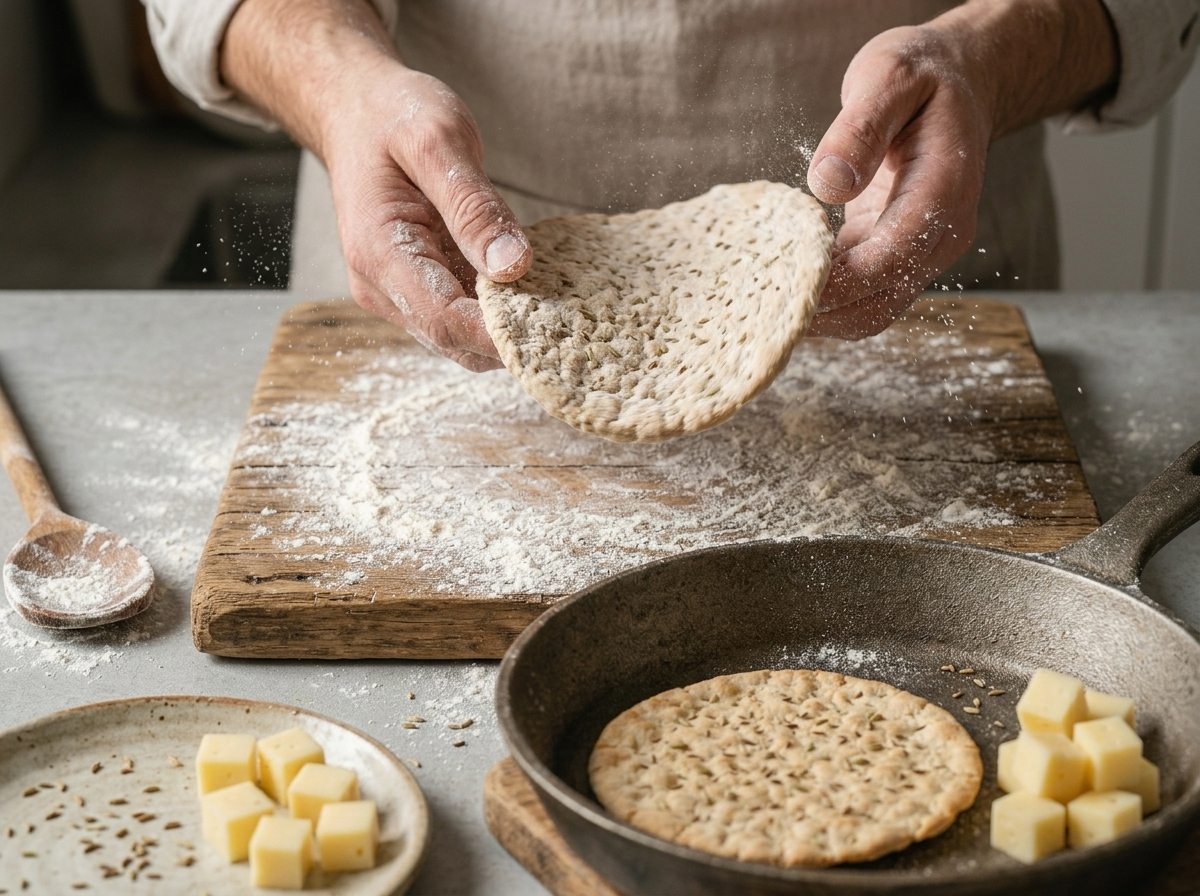
The dough is wetter than a normal bread dough, closer to a thick batter. Your first shaped round will probably look uneven and a bit rustic. Mine did too. By the third one your hands figure out the shake-and-rotate motion and they come out rounder.
Caraway and fennel give it that specific alpine bakery smell. Serve it with speck and a soft mountain cheese and you’ve got the whole picture.
Why You’ll Love This Recipe
- Keeps crisp at room temperature for weeks, no fridge needed
- Made from pantry basics, rye flour, water, yeast, seeds
- Naturally vegan and dairy-free with no eggs or butter
- The shaking technique is genuinely fun once you get the motion
Ingredient Notes
- Rye flour: Use dark or whole rye for authentic flavor. It has little gluten, which is why the dough stays loose and sticky instead of stretchy.
- Bread flour: A small amount gives the dough enough structure to hold a round shape while you shake it. Skip it for a more traditional, denser loaf that uses all rye.
- Active dry yeast: Bloom it in warm water until foamy so you know it’s alive before mixing. Fresh yeast works too, use about 21 g.
- Caraway seeds: The main flavor note in Schüttelbrot. Toast them briefly in a dry pan first if you want a deeper aroma.
- Fennel seeds: Adds a mild anise sweetness that balances the caraway. Crush half of them lightly if you prefer a subtler flavor.
- Anise seeds: Optional but traditional in many South Tyrolean versions. Leave it out if you’re not a fan of licorice notes.
- Honey: Feeds the yeast and rounds out the rye’s slight sourness. Sugar works as a straight swap.
Double-Baked Schüttelbrot: South Tyrolean Rye Flatbread
Ingredients
Method
- In a small bowl, whisk the warm water with the honey and yeast. Let sit for 5 to 8 minutes until foamy on top.
- In a large bowl or the bowl of a stand mixer, combine the rye flour, bread flour, salt, 1 tbsp of the caraway seeds, the fennel seeds, and the anise seeds if using.
- Pour in the yeast mixture. Stir with a wooden spoon or the paddle attachment on low for 3 to 4 minutes until you get a smooth, sticky dough that looks closer to thick batter than bread dough.
- Cover the bowl with a damp towel and let rise in a warm spot for 45 to 60 minutes, until puffy and airy on top. Rye dough won't double in size the way wheat dough does.
- Heat the oven to 250 C / 480 F and line two sheet pans, 33 x 46 cm / 13 x 18 inch, with parchment.
- Dust a work surface heavily with flour. Scoop out about 150 g of dough, roughly the size of a small orange, onto the floured surface.
- Dust the top with more flour, then pick up the dough and gently rotate and shake it between floured hands, letting it stretch under its own weight into a round about 18 to 20 cm / 7 to 8 inch across and 5 mm thick. Don't press or roll it, let gravity do the work.
- Transfer the round to a sheet pan. Prick it all over with a fork, then sprinkle with a pinch of the remaining caraway seeds. Repeat with the rest of the dough, spacing rounds about 5 cm apart, for about 6 rounds total.
- Bake the first pan for 10 minutes at 250 C / 480 F, until the edges puff and start to color.
- Lower the oven to 160 C / 320 F and continue baking for 20 to 25 minutes, until the rounds are pale golden, fully dry, and sound hollow when tapped on the bottom.
- Repeat baking with the second pan. Cool the flatbreads completely on a wire rack, at least 30 minutes, they crisp further as they cool.
Notes
- Dough will look more like thick pancake batter than bread dough, that's correct.
- First shaped round often looks ragged, it evens out by the third one.
- Rise time is shorter than wheat bread since rye has less gluten to trap gas.
- Bake in two stages, high heat first then low heat, don't shortcut the drying stage.
Tips for Success
- Flour your hands and board heavily before shaping, the dough is closer to batter than bread dough.
- Don’t skip the second low-temp bake, it’s what dries the crumb and gives the signature snap.
- Prick every round with a fork before baking so it doesn’t puff into an air pocket.
- Toast the caraway and fennel seeds lightly in a dry pan for a deeper, nuttier aroma.
- Cool the bread fully on a rack before storing, it keeps crisping for the first 30 minutes out of the oven.
Variations
- Swap the fennel for extra caraway only, closer to the old-fashioned Val Pusteria style loaf.
- Stir in a spoonful of active rye sourdough starter with the yeast for a tangier, more traditional flavor.
- Shape smaller rounds about 10 cm across for a snack-size version to serve with an aperitivo.
Storage and Reheating
Schüttelbrot keeps at room temperature for 4 to 6 weeks stored in a paper bag or a loosely closed tin. Skip airtight plastic, it traps moisture and softens the crumb instead of letting it stay dry and crisp.
If a batch softens from humidity, re-crisp it in a 150 C / 300 F oven for 5 to 8 minutes. Let it cool on a rack for a few minutes before eating, it firms up as it cools.
I don’t recommend freezing this one. The whole point of the double bake is a dry, shelf-stable crumb, and freezing adds moisture back in when it thaws.
Serving Suggestions
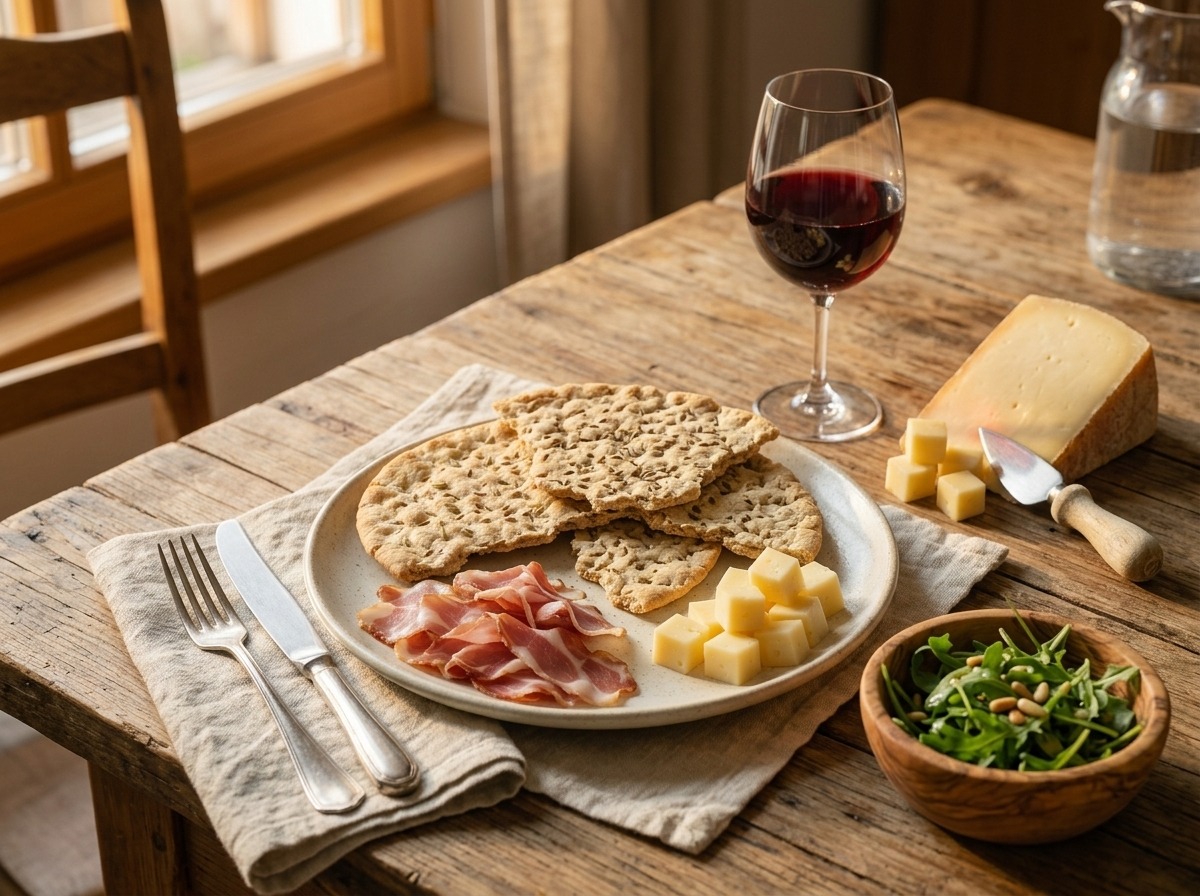
Break it and serve with speck, the cured ham from South Tyrol, and a soft mountain cheese or a spreadable one like Kaminwurzen spread. Butter with chives and a pinch of flaky salt works too.
At a Törggelen gathering, the autumn chestnut-and-new-wine tradition in the region, Schüttelbrot shows up alongside cured meats and a glass of young red wine. It also holds up well next to a bowl of soup like Pancotto della Valtellina, used the way you’d use a cracker.
For something simpler, snap a piece and dip it straight into good olive oil with a little flaky salt.
FAQ
How do I know when Schüttelbrot is fully baked?
It should be pale golden, dry all the way through, and sound hollow when you tap the bottom. If it still feels soft or bends instead of snapping when cool, it needs more time in the low-temp second bake, usually another 5 to 10 minutes at 160 C / 320 F.
Can I make Schüttelbrot with all rye flour instead of adding wheat flour?
Yes, traditional versions use 100% rye flour. The dough will be stickier and harder to shake into a round, so you’ll need more flour on the board and your hands. The result is denser and more crumbly, but closer to the original farmhouse recipe.
How long does homemade Schüttelbrot stay fresh?
Stored in a paper bag or loosely covered tin at room temperature, it stays crisp for 4 to 6 weeks. That’s the whole point of the double bake, it dries the crumb enough to skip refrigeration. Avoid sealing it in plastic, which traps moisture and softens it.
What do you eat with Schüttelbrot?
Speck and mountain cheese are the classic pairing in South Tyrol, along with butter or a soft spreadable cheese. It also shows up at Törggelen, the regional autumn wine gathering, served alongside cured meats and young red wine.
Is Schüttelbrot vegan and dairy-free?
Yes, the dough is just rye flour, wheat flour, water, yeast, salt, and seeds, with no dairy or eggs. It’s not gluten-free, though, since both rye and wheat flour contain gluten.
What’s the difference between Schüttelbrot and regular rye bread?
The technique and texture set it apart. Schüttelbrot dough is wetter and gets shaken by hand into a thin round instead of kneaded and shaped like a loaf, then it’s baked twice until cracker-crisp rather than left soft and springy inside.