Jump to Recipe
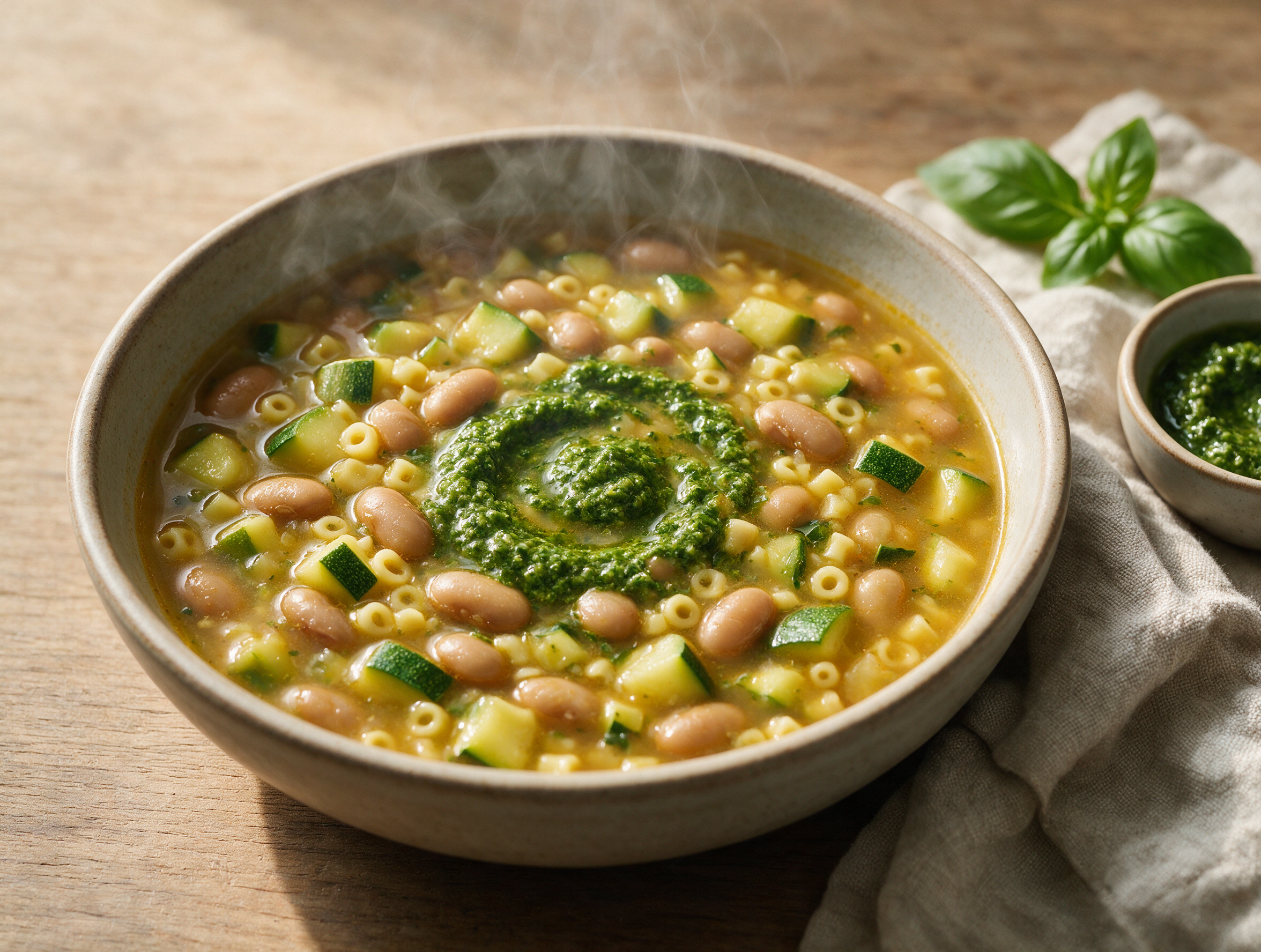
Minestrone alla genovese is a Ligurian seasonal vegetable soup built on a soffritto of onion, celery, and carrot, simmered with seasonal vegetables and borlotti beans, then finished off the heat with a spoonful of pesto so the basil stays bright green instead of turning dull.
The pesto is what separates this pot from a standard minestrone. Stir it in while the soup is still boiling and the basil goes bitter and gray within a minute or two. Wait until the heat is off and the soup has settled for a moment, and the color holds and the aroma comes through clean.
This is a good use for whatever vegetables are sitting in the crisper drawer. Zucchini, green beans, cabbage, and potato are traditional, but the ratios flex depending on the season and what needs using up.
The soup is naturally vegetarian and keeps well for a few days, though the pesto is best added fresh to each bowl once you’re past the first serving.
Why You’ll Love This Recipe
- Uses up whatever vegetables are in the crisper drawer
- Freezes well as a base for quick weeknight dinners
- One pot, no fancy technique beyond a careful soffritto
- The off-heat pesto trick keeps the flavor and color fresh
Ingredient Notes
- borlotti beans: Canned works fine and saves an hour; drain and rinse to cut the sodium. Dried beans need soaking overnight and about 45 minutes of simmering before you add them here.
- pesto alla genovese: Use homemade if you have basil on hand, or a good jarred pesto from the fridge section rather than the shelf-stable kind, which tends to taste flat. Add it off heat only.
- parmesan rind: Optional but worth saving up in the freezer for soups like this one. It adds savoriness to the broth without extra cheese going in.
- savoy cabbage or Swiss chard: Either works. Cabbage holds its shape a bit longer in the pot, while chard wilts faster and adds a slight mineral note.
- ditalini: Any small short pasta works here. Avoid long shapes like spaghetti unless you break them into short lengths first.
Minestrone alla Genovese: Simmered Soup with Pesto
Ingredients
Method
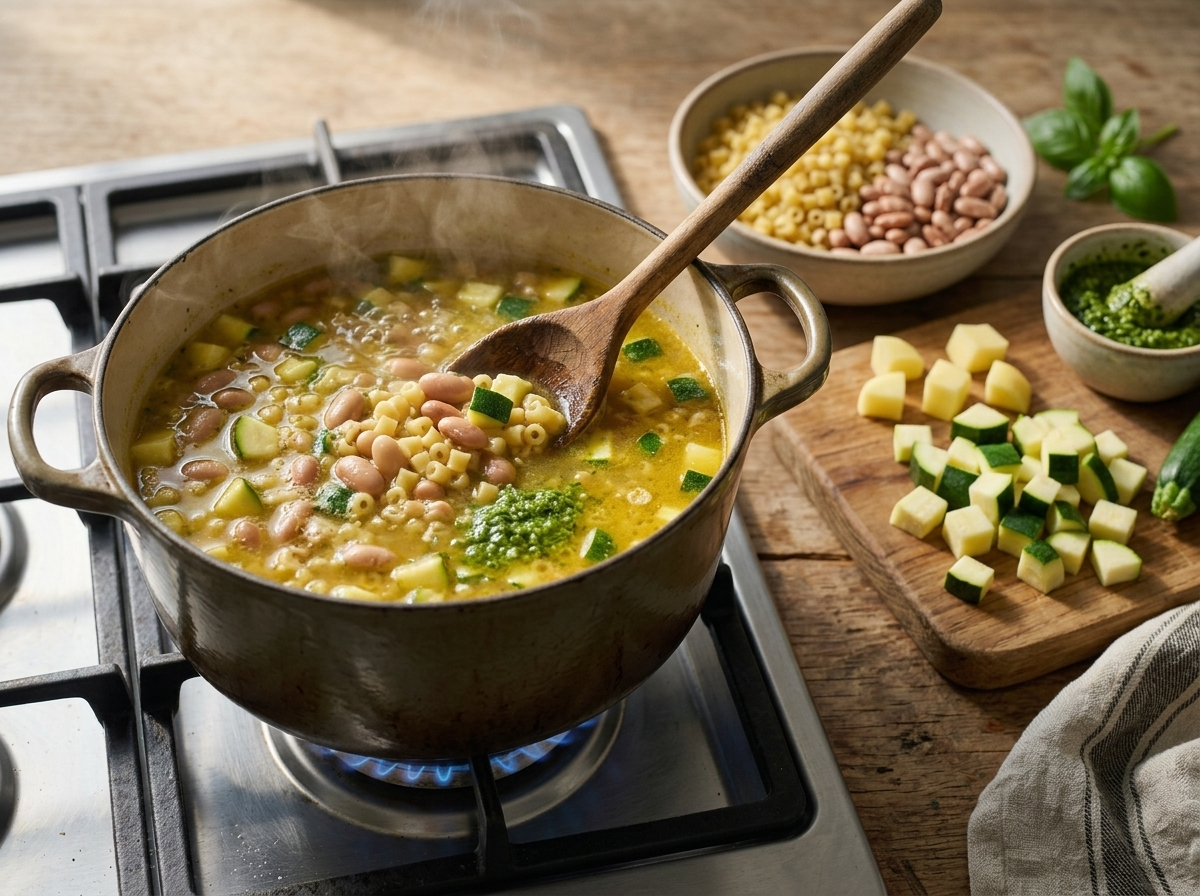
- Heat olive oil in a 5-quart / 4.7L Dutch oven over medium heat. Add onion, celery, and carrot with a pinch of salt. Cook 6 to 8 minutes, stirring often, until the vegetables soften and the onion turns translucent.
- Add potato, zucchini, green beans, and cabbage. Stir for 2 minutes to coat everything in the oil.
- Stir in crushed tomatoes, borlotti beans, parmesan rind, and stock. Bring to a boil, then lower the heat and simmer uncovered for 25 minutes, until the potato is tender when pierced with a knife.
- Fish out the parmesan rind and discard it, or chop up any soft bits and stir them back in. Taste the broth and season with salt and pepper, keeping in mind the pasta and pesto still need to go in.
- Add the pasta directly to the pot. Simmer for 9 to 11 minutes, stirring occasionally so it doesn't stick to the bottom, until al dente.
- Take the pot off the heat completely. Let it sit for 2 minutes so it stops bubbling, then stir in 3 tablespoons of the pesto. Adding pesto to a boiling pot dulls its color and turns it bitter within minutes, so this only works off heat.
- Ladle the soup into bowls and top each with a small spoonful of the remaining pesto and a scatter of grated parmesan. Serve right away.
Notes
- Add the pesto off heat only, never while the soup is boiling
- Fish out the parmesan rind before the pasta goes into the pot
- Cut vegetables into similar sizes for even cooking
- Freeze the base without pasta or pesto for best texture later
Tips for Success
- Stir the pesto in only after the pot is off the heat, since direct boiling turns the basil bitter and gray within minutes.
- Cut the potato, zucchini, and carrot into similarly sized pieces so they finish cooking at the same time.
- Save a parmesan rind in the freezer specifically for soups like this one, then fish it out before serving.
- Cook the pasta separately if you’re planning to freeze leftovers, and combine it with reheated broth only at serving time.
- Taste the broth before adding salt, since canned beans, parmesan rind, and pesto all bring their own sodium.
Variations
- Swap short pasta for broken trenette or spaghetti, a common Ligurian touch, snapped into pieces about 4 cm long before adding.
- Use dried cannellini beans or chickpeas instead of borlotti if that’s what you have, soaked overnight and simmered until tender.
- Make it vegan by using a dairy-free pesto and skipping the parmesan rind, relying on the vegetable stock alone for depth.
Storage and Reheating
The vegetable and bean base keeps in the fridge for 4 to 5 days in a sealed container. If the pasta is already in there, it’ll keep soaking up broth and thicken the longer it sits, which is normal, just add a splash of water or stock when reheating.
Reheat gently on the stovetop over medium-low heat, stirring occasionally, until hot through, about 5 to 7 minutes for a full pot or 2 to 3 minutes for a single bowl in a small saucepan. Skip the microwave if you can, since it heats unevenly and can overcook the pasta at the edges of the bowl.
For longer storage, freeze the base without pasta or pesto for up to 3 months. Thaw overnight in the fridge, reheat on the stovetop, then cook fresh pasta and stir in a new spoonful of pesto once everything’s hot.
Serving Suggestions
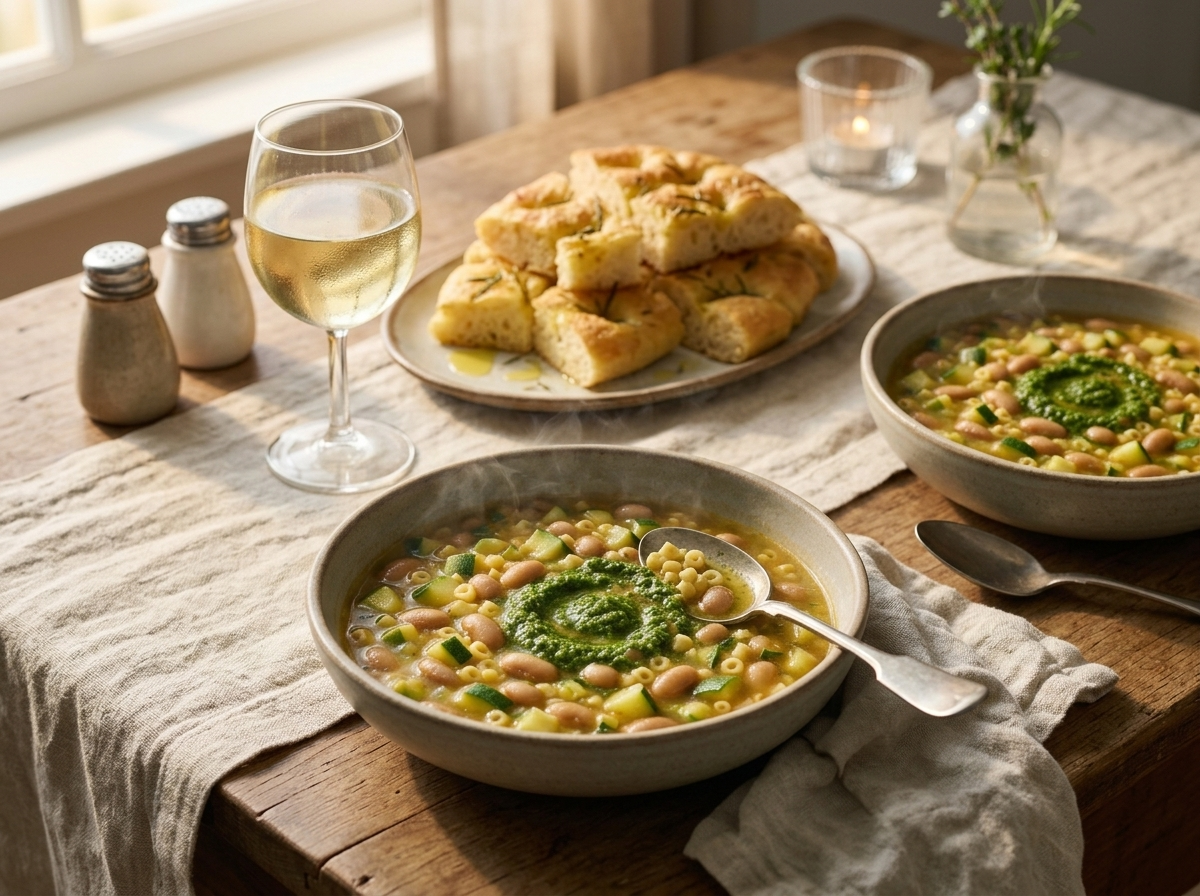
Serve minestrone alla genovese in wide, shallow bowls with a drizzle of good olive oil and extra grated parmesan on top. Crusty bread or a warm square of focaccia is the natural partner for mopping up the broth.
A simple green salad with lemon and olive oil works well alongside if you want something lighter on the side. For wine, a glass of Vermentino or another crisp Ligurian white plays well with the pesto’s basil and pine nut notes.
Leftovers make a solid lunch the next day, especially once the pasta has soaked up more of the broth and the whole pot tastes even more savory.
FAQ
Why did my pesto turn dark or bitter in the minestrone?
This happens when pesto goes into soup that’s still boiling. The heat oxidizes the basil’s chlorophyll fast, turning it from green to gray and bringing out a bitter edge within a minute. Take the pot off the heat completely, let it sit for a couple of minutes so the bubbling stops, then stir the pesto in.
Can I use trofie or another pasta instead of ditalini?
Yes, broken trofie, trenette, or spaghetti snapped into short pieces all work in minestrone alla genovese since Liguria uses whatever short pasta is on hand. Adjust the simmer time to whatever the package states for al dente, checking a piece early so it doesn’t overcook in the hot broth.
Can I make minestrone alla genovese ahead and freeze it?
The vegetable and bean base freezes well for up to 3 months, but leave the pasta and pesto out until you reheat it. Pasta turns soft after freezing, and frozen pesto loses its color and fresh flavor. Cook fresh pasta and stir in a new spoonful of pesto once the base is hot again.
What goes well with minestrone alla genovese besides bread?
Crusty bread or focaccia is the classic pairing, but a simple green salad with lemon and olive oil cuts through the soup’s richness. A glass of Vermentino, Liguria’s white wine, matches the pesto’s herbal notes. Extra grated parmesan on top never hurts.
Is minestrone alla genovese gluten free?
Not as written, since it includes wheat pasta like ditalini. Swap in a gluten-free short pasta such as rice or corn ditalini, and check that your pesto has no wheat-based additives. The rest of the soup, vegetables, beans, and broth, is naturally gluten free.
What’s the difference between minestrone alla genovese and regular minestrone?
The pesto is the main difference. Standard minestrone gets its flavor from a longer simmer and sometimes a parmesan rind, while the Genovese version finishes with a spoonful of pesto stirred in off heat, adding a fresh, herbal layer a plain simmer doesn’t give you.