Jump to Recipe
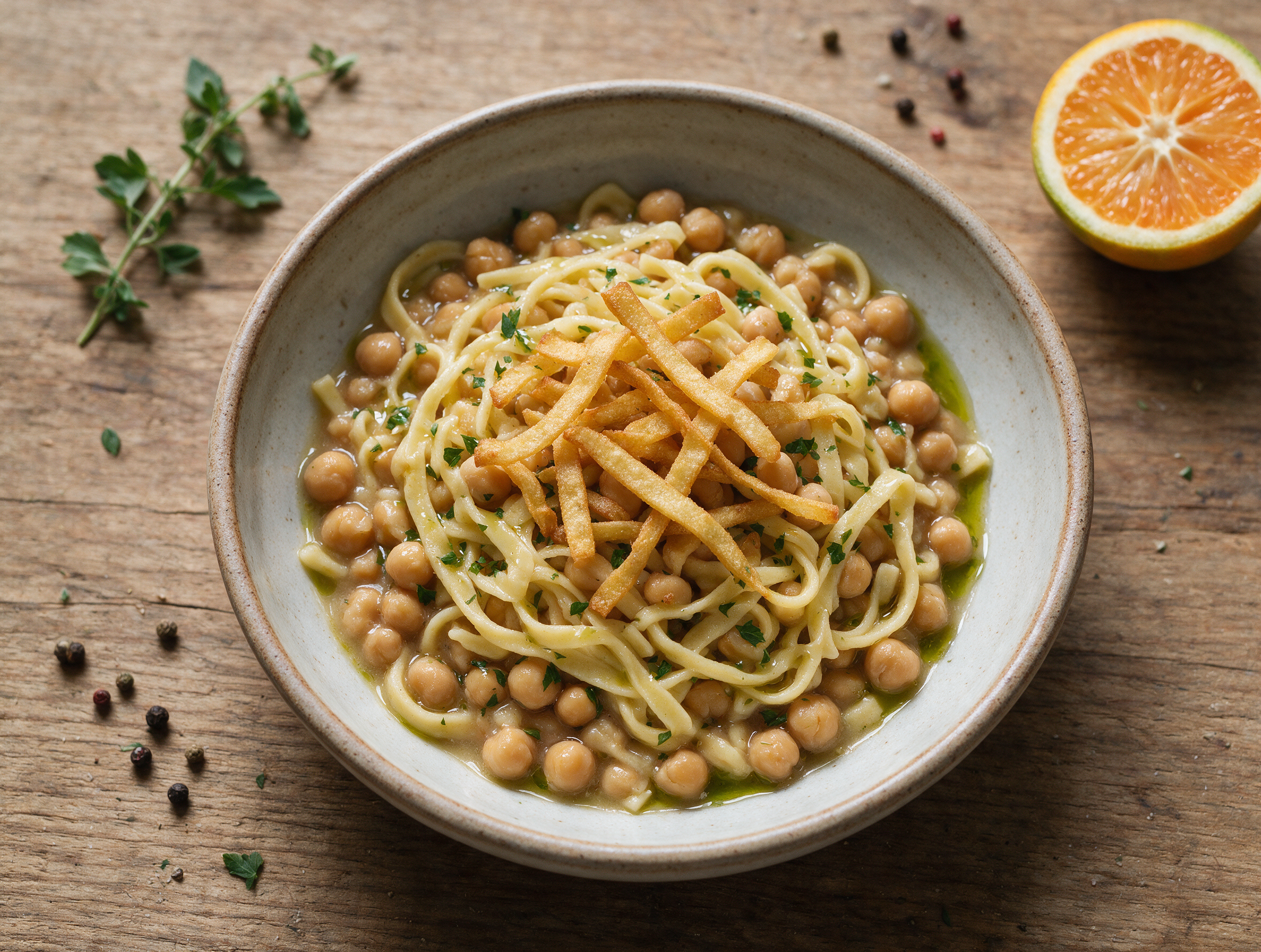
Ciceri e tria is a chickpea and pasta dish from Salento, in southern Puglia, where cooks fry a portion of the fresh pasta strips until crisp and dark, then fold them into the softer boiled noodles and stewed chickpeas.
That contrast, tender against crackling, is what sets this dish apart from an ordinary pasta e ceci alla Romana. The chickpeas cook low and slow with garlic and bay leaf until they collapse into a light stew, and the pasta itself is nothing more than durum semolina and water, rolled thin and cut into short ribbons.
I make my own tria here because the rough surface holds the chickpea broth better than store-bought pasta. It takes an extra 40 minutes, most of it hands-off resting time, and the dough itself is a five-minute job by hand.
One thing to watch: don’t fry the reserved pasta strips too far ahead. They soften fast once they sit near the warm pot, so I fry them last and scatter them on top right before serving.
Why You’ll Love This Recipe
- Two pasta textures, crisp and soft, in one bowl
- Budget-friendly ingredients: dried chickpeas, flour, water, oil
- Naturally vegan with no dairy or eggs needed
- Make the stew ahead, fry the noodles fresh
Ingredient Notes
- dried chickpeas: Soak them for at least 10 hours. Canned chickpeas work in a pinch but give a thinner broth and less body.
- semola rimacinata: This fine durum wheat semolina gives tria its chewy bite. All-purpose flour makes a softer, less distinct noodle.
- frying oil: Use a neutral oil like sunflower since olive oil smokes at a lower point. Keep it at 175 C / 350 F for crisp strips.
- tomato paste: Just enough to tint the broth, not turn it into a tomato sauce. Skip it entirely for a paler, more traditional stew if you prefer.
- fresh red chili: Swap in a pinch of dried chili flakes if fresh isn’t around. Both give the soffritto a gentle background heat.
Ciceri e Tria: Chickpeas and Fried Pasta from Salento
Ingredients
Method
- The night before, put the dried chickpeas in a large bowl, cover with cold water by 8 cm / 3 inches, stir in the baking soda, and soak at room temperature for 10 to 12 hours.
- Drain and rinse the chickpeas, then transfer to a 4-quart / 4 L pot. Cover with fresh cold water by 5 cm / 2 inches and add the bay leaves and 2 smashed garlic cloves.
- Bring to a bare simmer, uncovered, skimming any foam. Cook for 90 minutes to 2 hours, topping up water as needed, until the chickpeas are tender enough to crush between two fingers. Salt generously in the last 15 minutes of cooking.
- Mound the semola on a work surface and make a well in the center. Stir the salt into the warm water, then pour it into the well gradually, mixing with a fork until a shaggy dough forms.
- Knead the dough for 8 to 10 minutes until smooth and firm, almost like play dough. Wrap in plastic and let it rest at room temperature for 30 minutes.
- Roll the dough on a lightly floured surface, or through a pasta machine, to about 2 mm thick. Dust both sides with semola and slice into ribbons about 1 cm / 3/8 inch wide and 8 cm / 3 inches long.
- Toss the cut pasta with a little extra semola to keep the strips from sticking, then spread on a clean towel. Set aside about one-third, roughly 100 g, for frying.
- Heat the olive oil in a 10-inch / 26 cm skillet over medium-low heat. Add the sliced garlic and chili and cook for 2 minutes until fragrant but not browned.
- Stir in the tomato paste and cook for 1 minute, then ladle in 250 ml / 1 cup of the chickpea cooking liquid. Simmer for 5 minutes, then pour the whole mixture into the pot with the chickpeas.
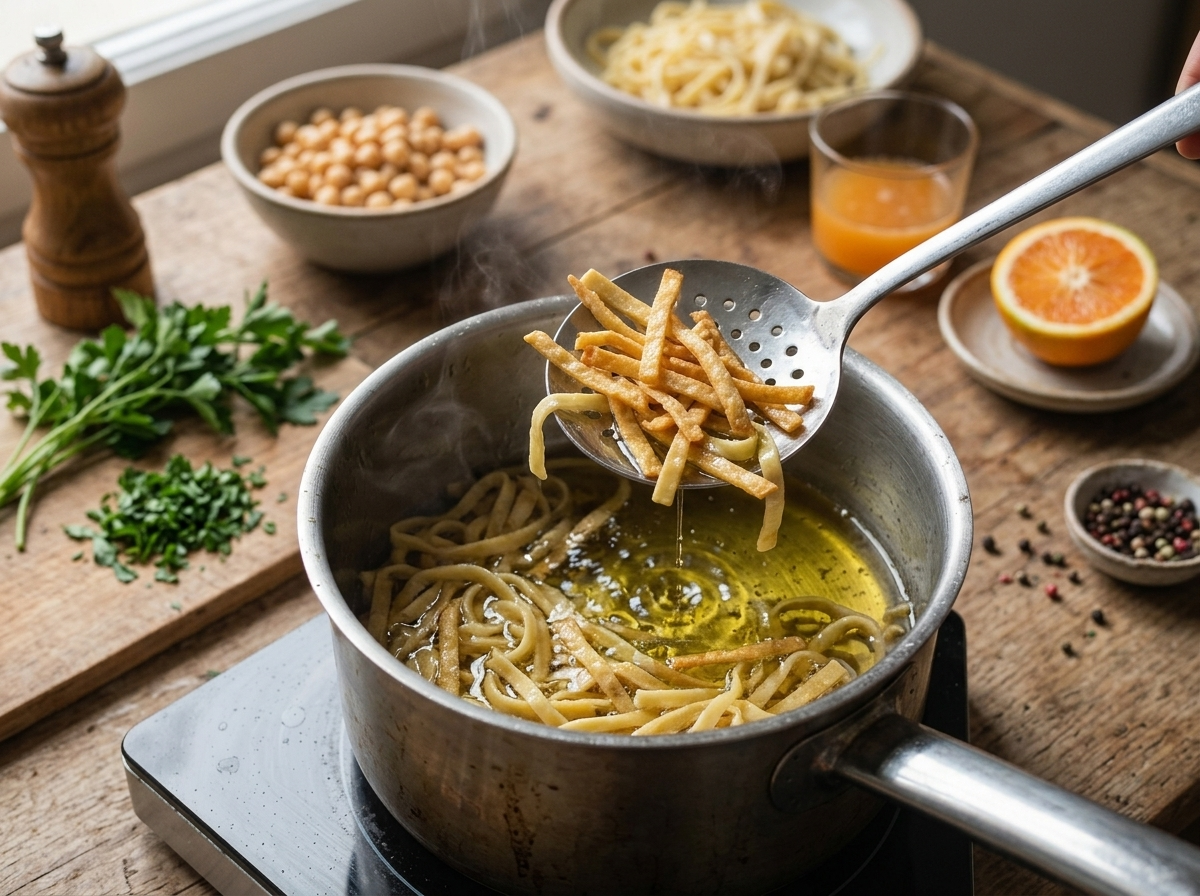
- Pour the frying oil into an 18 cm / 7-inch saucepan to a depth of 4 cm / 1.5 inches and heat to 175 C / 350 F. Fry the reserved pasta strips in two batches so the oil temperature doesn't drop, 60 to 90 seconds per batch, until deep golden and crisp.
- Lift the fried strips onto a paper-towel-lined plate with a slotted spoon. Salt lightly while hot.
- Bring the chickpea pot back to a simmer. Add the remaining, unfried pasta strips directly into the pot and cook for 3 to 4 minutes, stirring gently, until the pasta is al dente and the stew has thickened enough to coat a spoon.
- Taste and adjust salt and black pepper. Ladle into bowls, scatter the fried pasta strips and chopped parsley over the top, and serve right away while the fried strips are still crisp.
Notes
- Traditionally served in Salento on November 2, the Day of the Dead.
- Reserve chickpea cooking water before draining; you'll need it for the soffritto and pasta.
- Fry pasta strips in small batches to keep the oil temperature steady.
- Dough should feel firm like play dough, not soft or sticky.
Tips for Success
- Soak dried chickpeas for at least 10 hours; a rushed soak leaves tough skins no matter how long you simmer.
- Salt the chickpea water only in the final 15 minutes of cooking, since early salting toughens the skins.
- Cut tria strips slightly wider than tagliatelle, about 1 cm, so they hold up against the chickpea broth.
- Fry the reserved pasta in small batches so the oil stays at 175 C / 350 F and the strips crisp instead of steam.
- Reserve a cup of chickpea cooking liquid before draining anything; it’s your backup for loosening the stew later.
Variations
- Swap half the chickpeas for cannellini beans for a milder, creamier stew with the same fried-noodle topping.
- Add a pinch of dried oregano or wild fennel seed to the soffritto for a more herbal, coastal Puglia flavor.
- Stir in a handful of wilted chicory or escarole at the end for a vegetable-forward version of the dish.
Storage and Reheating
Store the chickpea and pasta stew, without the fried strips, in an airtight container in the fridge for 3 to 4 days. The starchy broth thickens as it sits, so add a splash of water or vegetable broth when you reheat.
Reheat gently on the stovetop over medium-low heat, stirring often, for 5 to 7 minutes until hot through. A microwave works too, in 1-minute bursts, stirring between each.
The fried tria strips don’t hold up in the fridge. They go soft and chewy instead of crisp, so fry a fresh batch just before serving instead of trying to save leftovers.
Serving Suggestions
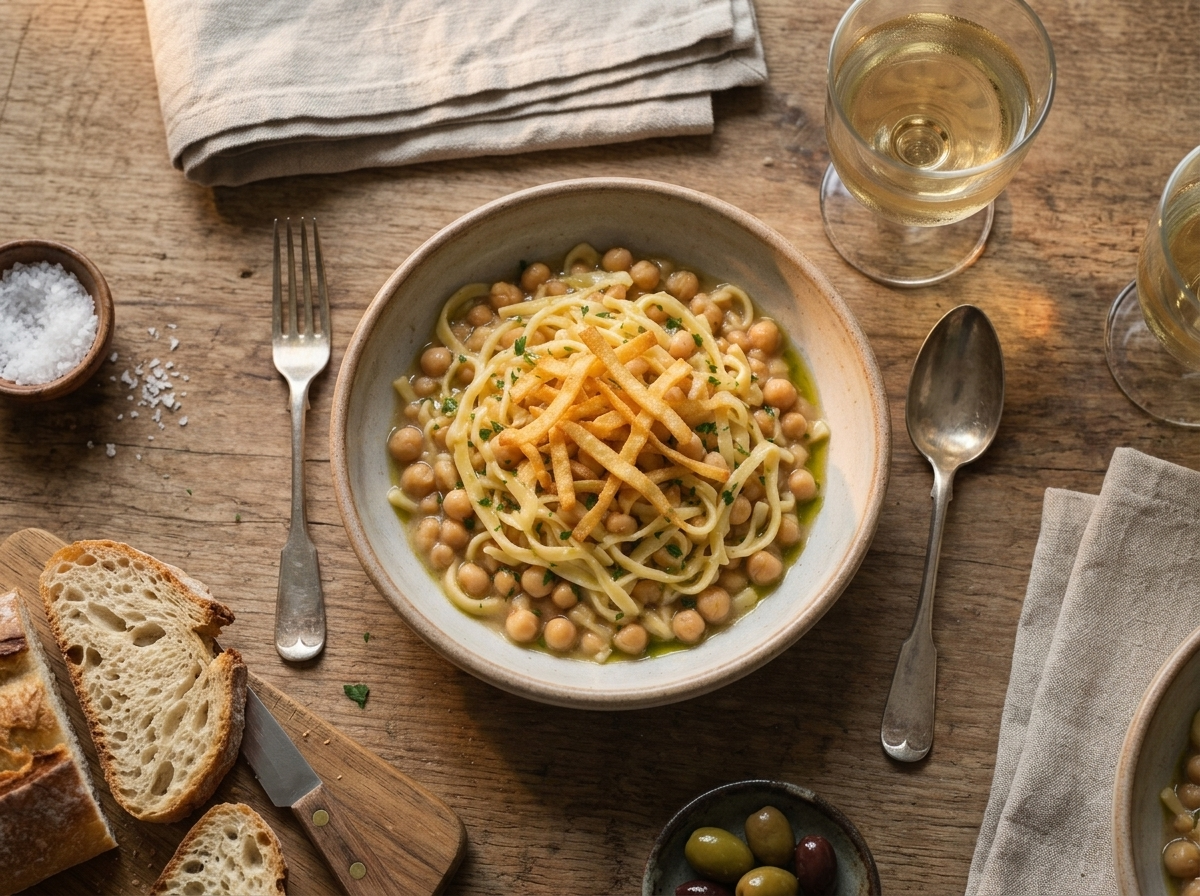
Ladle ciceri e tria into shallow bowls so the fried strips sit visibly on top instead of sinking in. A drizzle of raw extra virgin olive oil right before serving brings back the fruity flavor that cooking mutes.
Crusty bread on the side works for scooping up the last of the chickpea broth. A simple bitter greens salad, dressed with lemon and olive oil, balances the starchy richness of the dish.
For a full Salento-style dinner, start with a plate of taralli or bruschetta and finish with a small glass of dry white wine.
FAQ
Why is my ciceri e tria stew thin instead of creamy?
You likely didn’t mash any chickpeas or reduce the broth enough. Scoop out a cup of cooked chickpeas, mash them with a fork, and stir back into the pot, or simmer the stew uncovered for a few extra minutes so it reduces and coats a spoon before you add the boiled pasta.
Can I use canned chickpeas instead of dried for this recipe?
Yes, though the texture and broth will be thinner. Use two 400 g cans, drained, and simmer them for just 15 to 20 minutes with the garlic, bay leaf, and a splash of vegetable broth so they still pick up flavor before you add the soffritto.
Can I fry the tria strips ahead of time and store them?
You can fry them a few hours ahead, but not overnight. Let them cool completely, keep them uncovered at room temperature on a wire rack so steam doesn’t soften them, then scatter over the bowls right before serving.
What can I serve alongside ciceri e tria for a Salento-style meal?
A simple green salad with bitter leaves like chicory, or a plate of roasted peppers, works well because it cuts through the pasta’s starch. A glass of a dry Puglian white wine, like a Verdeca or Fiano, is the regional match for this dish.
Is ciceri e tria vegan and gluten free?
It’s naturally vegan since the traditional recipe uses no dairy, eggs, or meat, just chickpeas, semolina, water, and olive oil. It isn’t gluten free though, because the tria pasta is made from durum wheat semolina, much like busiate al pesto trapanese, so skip this one if you need a gluten-free meal.
What’s the difference between ciceri e tria and pasta e ceci?
The frying is the difference. Pasta e ceci, the more common Italian chickpea and pasta soup, uses only boiled pasta, while ciceri e tria from Salento sets aside a portion of the fresh noodles to fry until crisp, then folds them back in for contrast.