
Jump to Recipe
Crostata di ricotta romana is a baked tart from Rome built on a short pasta frolla shell and a dense ricotta filling scented with lemon zest. The crust bakes until pale gold, the filling sets to a texture closer to cheesecake than custard, and a woven lattice on top lets steam escape as it bakes.
I use sheep’s milk ricotta when I can find it. Cow’s milk ricotta works too, but drain it well first or the filling turns watery.
This isn’t a fussy dessert. The dough comes together in one bowl, the filling is just a whisk job, and the lattice looks harder to weave than it actually is.
One thing I’ve learned from testing this more times than I’d like to admit: don’t slice it warm. The filling needs a full two hours at room temperature to set, or it slumps on the knife.
Why You’ll Love This Recipe
- Short pasta frolla holds its shape without a blind bake
- Lemon zest and a splash of Sambuca cut the richness
- Keeps well for four days, tastes better on day two
- Lattice top looks intricate but takes ten minutes to weave
Ingredient Notes
- ricotta: Use fresh sheep’s milk ricotta if you can find it. Drain cow’s milk ricotta in a fine-mesh sieve for 30 minutes so the filling doesn’t turn watery.
- butter: Keep it cold and cubed. Warm butter makes the dough sticky and hard to roll into a clean sheet.
- lemon zest: Zest only the yellow part. The white pith underneath turns the filling bitter.
- Sambuca: Swap in Alchermes for the traditional pink-tinted filling, or skip the liqueur and add extra vanilla instead.
- egg yolks: Save the leftover whites for meringue or an omelet the next morning so nothing goes to waste.
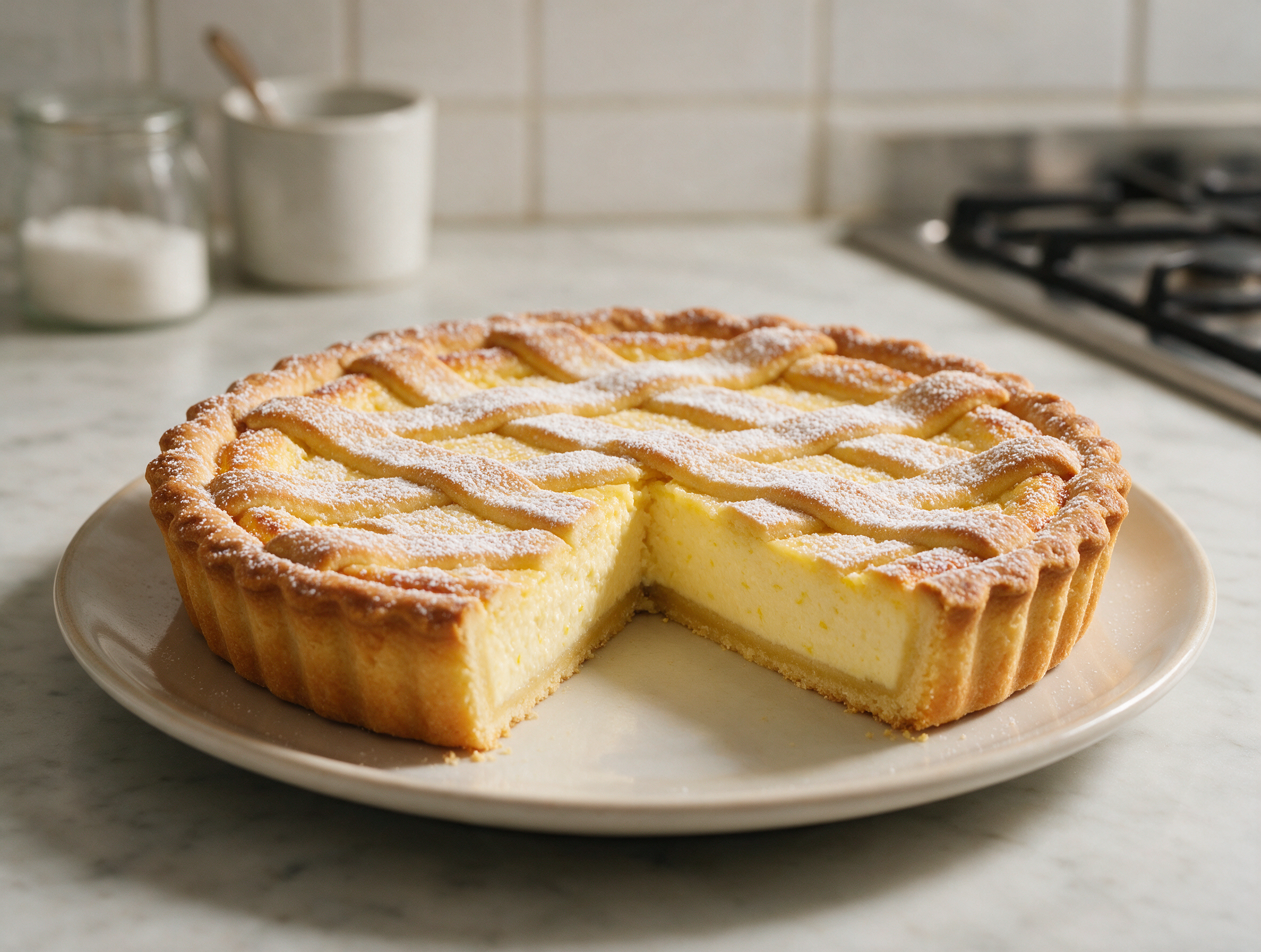
Baked Crostata di Ricotta Romana with Lemon and Sambuca
Ingredients
Method
- In a large bowl, whisk the flour, sugar, salt, and lemon zest together.
- Add the cold cubed butter and rub it into the flour with your fingertips until the mixture looks like coarse sand.
- Add the egg yolks and whole egg. Mix with a fork, then bring the dough together with your hands until it just holds. Don't knead it or the crust turns tough.
- Shape into two disks, one about two-thirds of the dough and one-third for the lattice. Wrap both in plastic and chill for 30 minutes.
- While the dough chills, drain the ricotta in a fine-mesh sieve for 30 minutes if it looks wet.
- Whisk the ricotta, sugar, whole eggs, lemon zest, vanilla, Sambuca (if using), and salt together in a bowl until smooth and no lumps remain.
- Heat the oven to 170 C / 340 F. Roll the larger disk of dough on a floured surface to about 3 mm thick and line a 26 cm / 10-inch tart pan with a removable bottom. Trim the edges and prick the base a few times with a fork.
- Pour the ricotta filling into the shell and smooth the top with a spatula.
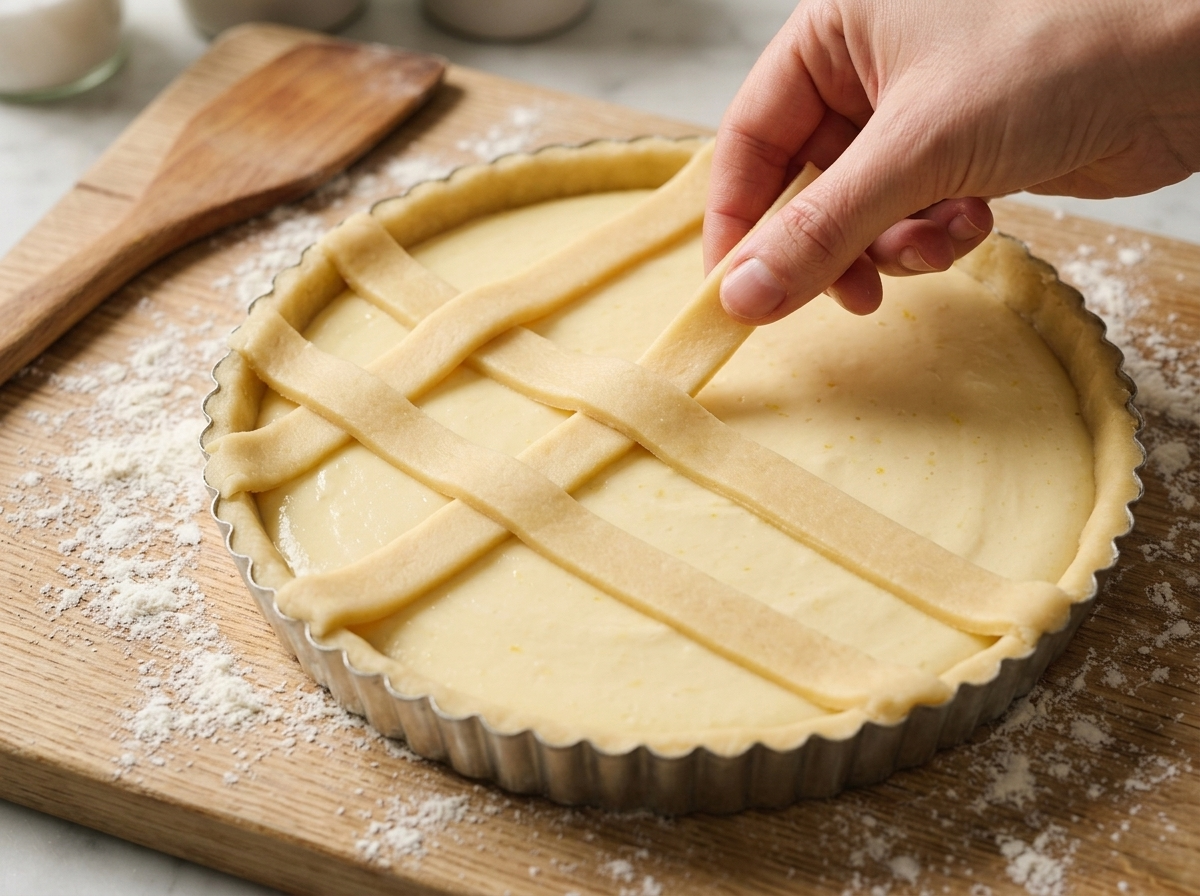
- Roll the remaining dough and cut into strips about 1.5 cm / 0.6-inch wide. Weave into a lattice over the filling, pressing the ends into the edge of the crust.
- Brush the lattice with the egg yolk beaten with milk.
- Bake for 45 to 50 minutes, until the crust is golden and the filling is set at the edges but still jiggles slightly in the center, reaching about 165 F / 74 C internally.
- Cool the tart in the pan on a wire rack for 20 minutes, then remove the ring and cool completely at room temperature, about 2 hours, before slicing.
Notes
- Drain wet ricotta for 30 minutes or the filling turns loose.
- Chill dough twice: once before rolling, once after lining the pan.
- Don't overbake past 50 minutes or the filling dries and cracks.
- Cool fully for 2 hours before slicing for clean wedges.
Tips for Success
- Chill the dough for 30 minutes before rolling so the butter stays firm and the crust doesn’t shrink.
- Drain wet ricotta in a fine-mesh sieve for 30 minutes before mixing, or the filling won’t set properly.
- Weave the lattice loosely since the strips tighten as the dough bakes and can crack if pulled too tight.
- Check the filling at 45 minutes. It should jiggle slightly in the center and firm up as it cools.
- Let the tart cool at room temperature for at least 2 hours before slicing for clean wedges.
Variations
- Add 50 g chopped dark chocolate to the filling for the version seen in some Roman bakeries.
- Swap Sambuca for Alchermes to get the traditional rose-pink filling seen in Roman pasticcerie.
- Fold in 2 tbsp candied citron or orange peel for a version closer to old-fashioned Roman convent recipes.
Storage and Reheating
Crostata di ricotta romana keeps well covered in the fridge for 4 days. The filling actually firms up and the lemon flavor settles overnight, so it’s a good one to bake a day ahead.
To freeze, wrap the fully cooled tart tightly in plastic and foil and freeze for up to 1 month. Thaw overnight in the fridge before serving.
Serve it at room temperature or lightly chilled straight from the fridge. There’s no reheating step here, since the filling is meant to be eaten cool, not warm.
Serving Suggestions
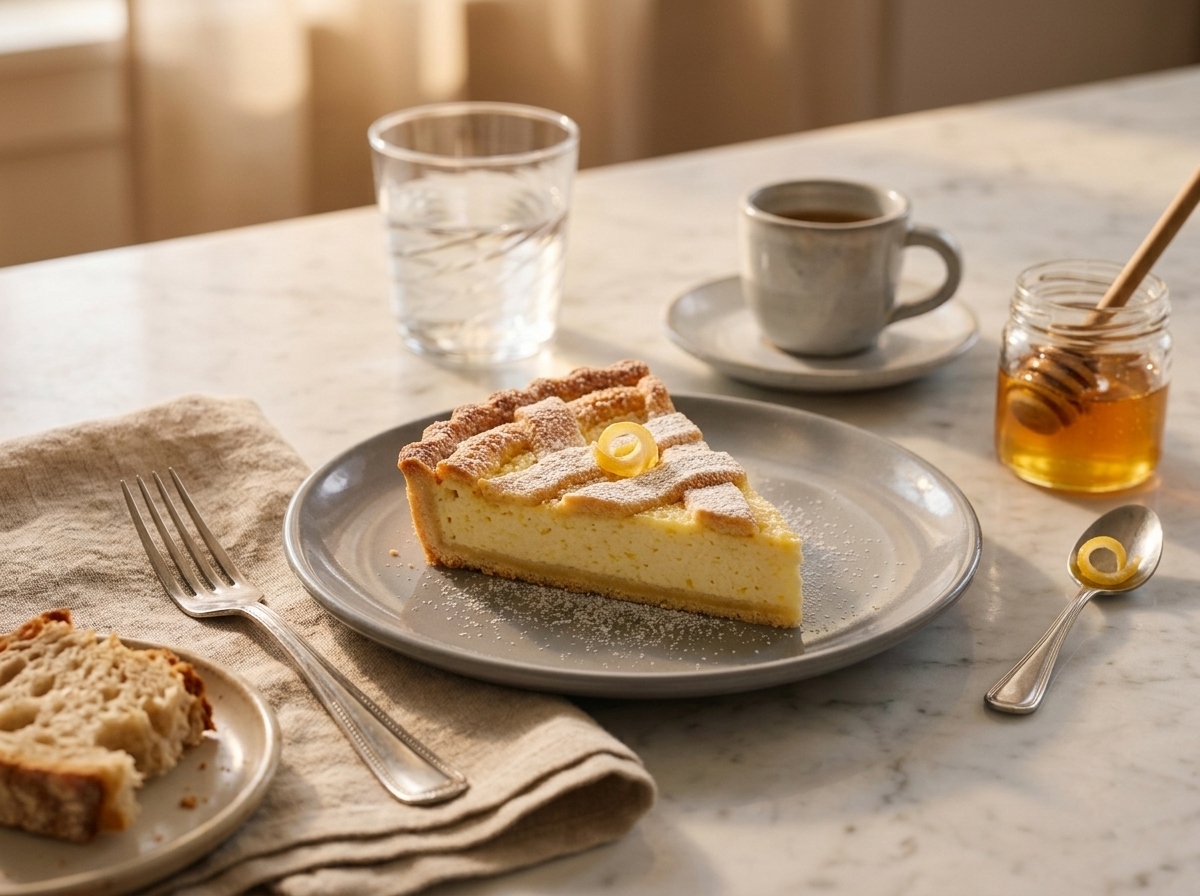
Crostata di ricotta romana is traditionally served with a small espresso after a meal, the bitterness cutting through the sweet filling. A slice with strong coffee is enough on its own.
For something with more contrast, add a spoonful of fresh berries or a light dusting of powdered sugar on top just before serving.
At the table, pour a small glass of Vin Santo or a chilled Moscato alongside. Both wines pick up the lemon and vanilla notes in the filling without competing with them.
FAQ
Why is my crostata di ricotta romana still wobbly in the middle after baking?
That’s normal at 45 to 50 minutes and it firms up as it cools. Ricotta filling sets like a cheesecake, not a custard, so pull the tart once the edges are set and the center has a slight jiggle, then let it finish setting during the 2-hour cool. Baking past that point dries out the filling.
Can I use cow’s milk ricotta instead of sheep’s milk in this baked tart?
Yes, cow’s milk ricotta works, though the filling turns out slightly less rich. Drain it in a fine-mesh sieve for 30 minutes first, since cow’s milk ricotta holds more water and can leave the filling loose if you skip that step.
Can I make this Roman ricotta tart a day ahead of serving?
Yes, it actually improves overnight in the fridge as the filling firms up and the lemon flavor settles. Bake it a day ahead, cover loosely once fully cooled, and refrigerate. Bring it to room temperature for 30 to 40 minutes before slicing.
What goes well with crostata di ricotta romana besides espresso?
A small glass of Vin Santo or a dry Moscato works well since the sweetness in both matches the tart’s lemon and ricotta filling. Fresh berries or a light dusting of powdered sugar on top round it out without adding more sweetness.
Is crostata di ricotta romana gluten-free?
No, the pasta frolla shell uses regular wheat flour, so this version isn’t gluten-free. You can swap in a 1:1 gluten-free flour blend for the crust, though the dough will be more fragile to roll and may need extra chilling time.
What’s the difference between crostata di ricotta romana and Neapolitan pastiera?
The Roman version is a straightforward ricotta filling with lemon zest under a lattice crust, while pastiera from Naples adds cooked wheat berries, candied fruit, and orange flower water for a denser filling. Both are Easter traditions, but the Roman crostata is simpler and quicker to make.