
Jump to Recipe
Risotto ai carciofi is a Northern Italian rice dish that turns tender artichokes and carnaroli rice into a single creamy plate, built ladle by ladle with warm stock.
The artichokes get sliced thin and cooked down in butter until they turn silky, almost melting into the soffritto before the rice goes in. That step is where the flavor comes from, more than the stock itself.
I use carnaroli here because it holds its bite better than arborio through 18 minutes of stirring. Fresh artichokes taste best in early spring, the same season that fills bowls of Garmugia Lucchese spring vegetable soup, but frozen artichoke hearts or jarred ones packed in oil work fine on a Tuesday night.
A splash of lemon in the soaking water, the same bright touch that makes silky risotto al limone so vivid, keeps the artichokes pale instead of gray. Skip that step and the risotto turns a dull olive color, still fine to eat, just less appetizing on the plate.
Why You’ll Love This Recipe
- Sweet artichokes and glossy rice in one pan
- Uses pantry staples plus one seasonal vegetable
- Ready in under an hour, no fuss
- Mantecatura finish gives a restaurant texture at home
Ingredient Notes
- Carnaroli rice: Holds its shape and bite better than arborio through the long stirring. Arborio works as a substitute but turns softer faster.
- Artichokes: Fresh artichokes give the best texture in spring. Frozen artichoke hearts or jarred ones packed in oil work year-round, just pat jarred ones dry before cooking.
- Dry white wine: Adds acidity that balances the butter. Swap in dry vermouth, or skip it and add a small splash of white wine vinegar with the first ladle of stock.
- Parmigiano Reggiano: Grana Padano is a close substitute. For a vegetarian version double check the rind isn’t animal rennet if that matters to you.
- Vegetable or chicken stock: Homemade tastes cleanest, but a low-sodium store-bought stock works fine. Keep it simmering the whole time so it doesn’t cool the rice.
- Butter: Used twice, once to soften the shallot and once cold for the mantecatura. Olive oil can replace the cooking butter, but the cold butter at the end is what gives the glossy finish.
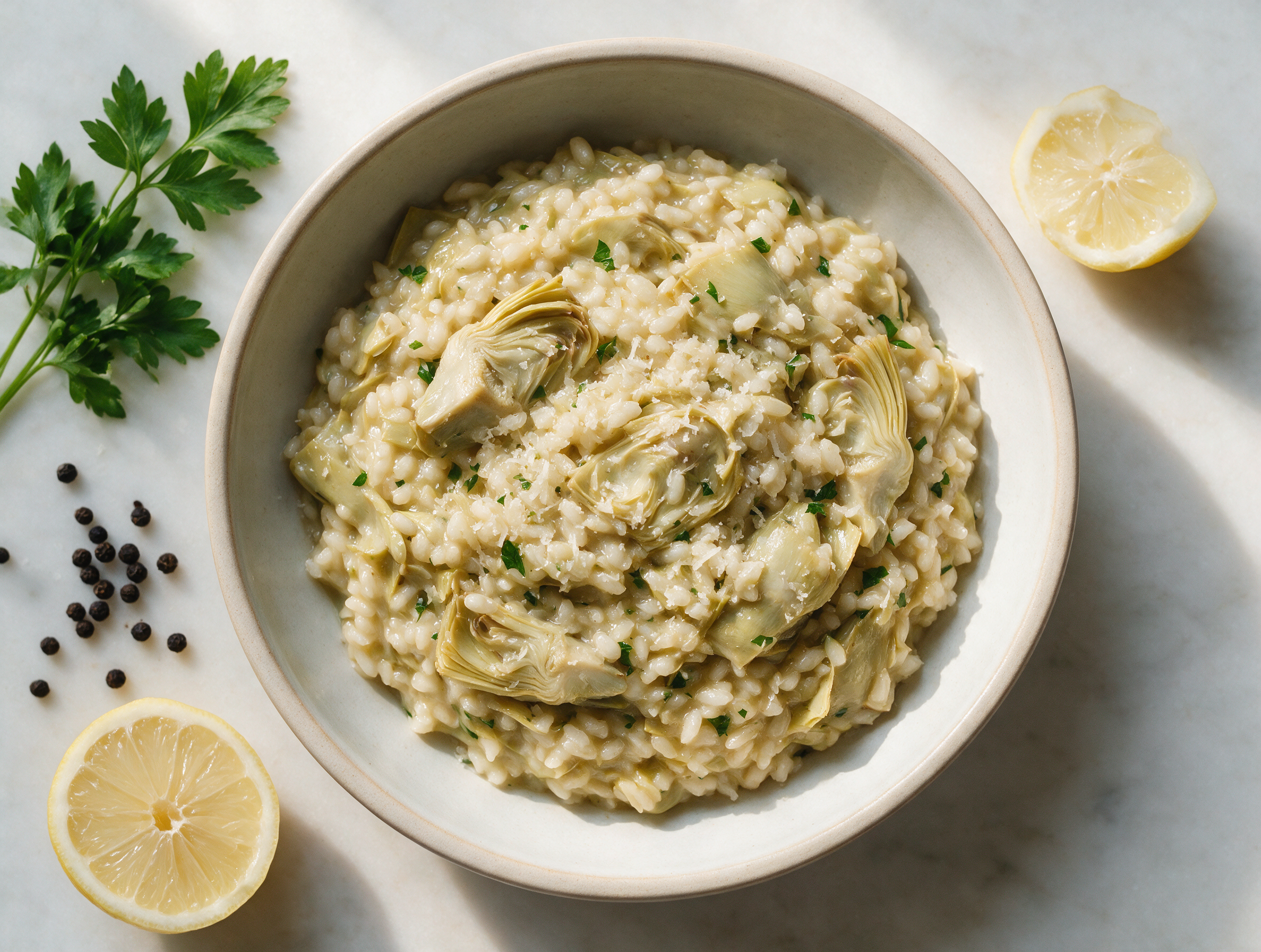
Risotto ai Carciofi: Creamy Artichoke Risotto with Lemon
Ingredients
Method
- Fill a bowl with cold water and the lemon juice. Trim the artichokes down to the pale, tender heart, cut into quarters, remove the fuzzy choke, and slice thin. Drop the slices into the lemon water as you go to stop them browning.
- Pour the stock into a 2-quart / 2L saucepan and bring to a simmer over medium heat. Lower the heat to keep it just barely simmering while you cook the risotto.
- Heat the olive oil and 1 tbsp butter in a 28 cm / 11-inch wide saucepan over medium heat. Add the shallot and garlic, if using, and cook for 3 to 4 minutes until soft and translucent.
- Drain the artichoke slices and pat dry. Add them to the pan and cook for 5 to 6 minutes, stirring occasionally, until tender and slightly golden at the edges. Season with a pinch of salt.
- Add the rice and stir constantly for 2 minutes until the edges of the grains turn translucent and the rice smells lightly toasted.
- Pour in the white wine and stir until it fully evaporates, about 1 to 2 minutes.
- Add a ladleful of hot stock and stir until it's absorbed. Keep adding stock one ladle at a time, waiting for the rice to soak it up before the next addition, for 16 to 18 minutes total.
- Taste a grain of rice around the 16-minute mark. It should show a firm, thin white center with no chalky crunch. Pull the pan off the heat once it reaches this point, the risotto should still look loose and slightly soupy, it firms up as it rests.
- Beat in the cold butter cubes and Parmigiano Reggiano off the heat, stirring vigorously until the risotto turns glossy and moves in a slow wave when you tilt the pan.
- Let it rest, covered, for 1 to 2 minutes. Adjust salt and black pepper to taste.
- Spoon onto warm plates, top with chopped parsley, and serve right away.
Notes
- Trim artichokes down to the pale heart, discard the fibrous outer leaves.
- Keep stock simmering in a separate pot the entire cooking time.
- Rice should show a thin white dot in the center when cut, that's al dente.
- Mantecatura happens off heat, never over direct flame.
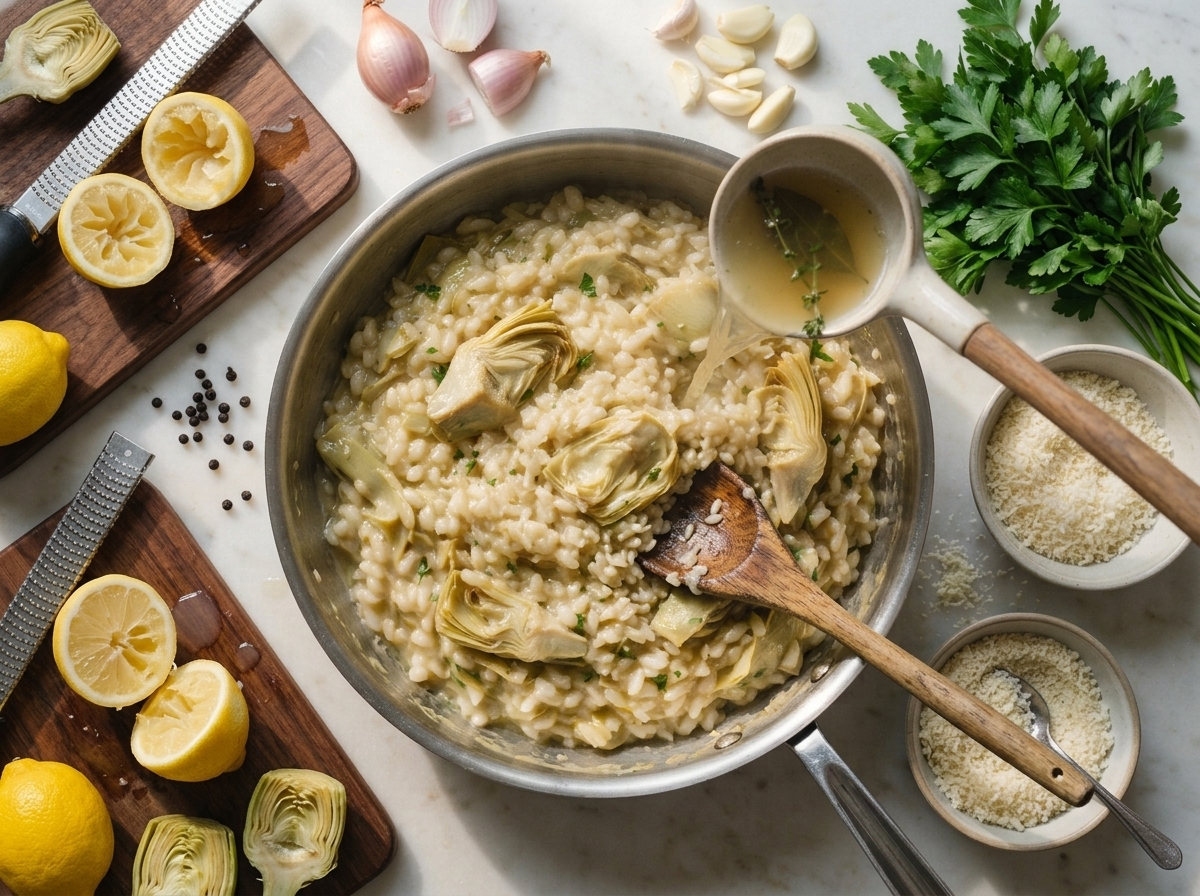
Tips for Success
- Keep the stock at a gentle simmer the whole time so the rice temperature never drops when you add a new ladle.
- Toast the rice for a full 2 minutes before adding wine so each grain seals and keeps its bite.
- Add stock one ladle at a time and wait until it’s absorbed before pouring the next, don’t rush this part.
- Pull the risotto off the heat while it still looks slightly loose, it firms up fast as it rests.
- Beat in cold butter cubes off heat for the mantecatura, this is what gives the glossy wave-like finish.
Variations
- Stir in a handful of fresh peas with the artichokes for a spring primavera version with extra color and sweetness.
- Swap half the parmesan for pecorino romano for a sharper, saltier finish that pairs well with the artichokes.
- Finish with lemon zest and a few mint leaves instead of parsley for a brighter, herbaceous edge.
Storage and Reheating
Risotto ai carciofi keeps in the fridge for 2 to 3 days in a sealed container. The rice firms up as it cools, that’s normal.
To reheat, add a splash of stock or water to a 24 cm / 9-inch skillet over medium-low heat and stir until it loosens back into a creamy texture, about 4 to 5 minutes. A microwave works too, cover loosely and heat in 30-second bursts, stirring between each, until warmed through.
I don’t recommend freezing this one. The rice grains turn mushy and the artichokes lose their texture once thawed.
Serving Suggestions
Risotto ai carciofi stands on its own as a primo course, the traditional first course in an Italian meal before the protein.
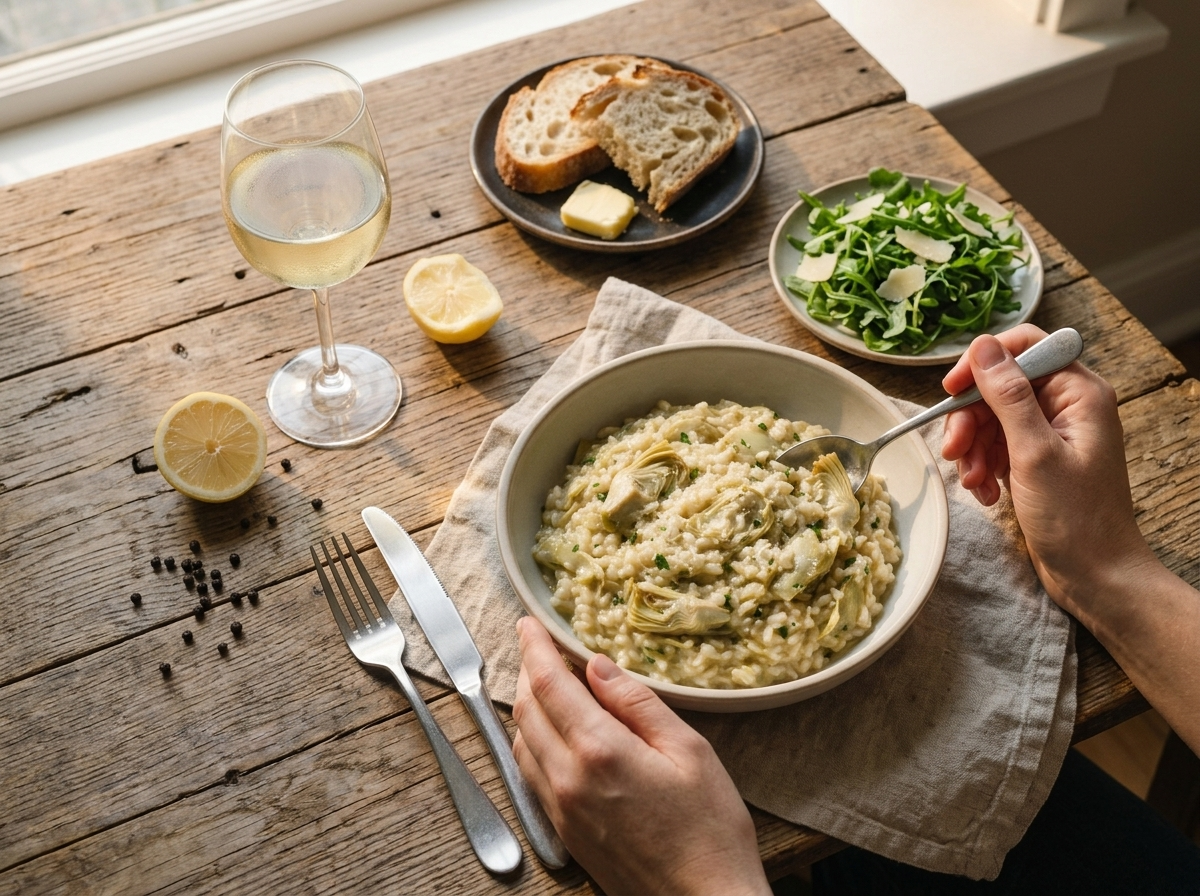
Serve it with a simple green salad dressed in lemon and olive oil to cut through the richness, or alongside a pan-seared piece of chicken or fish if you want a fuller dinner.
A glass of dry white wine, like the one you used in the pot, is the natural pour alongside it.
FAQ
Why did my risotto ai carciofi turn out gluey instead of creamy?
Gluey risotto usually means the rice released too much starch from over-stirring or cooked past its al dente point. Stir gently and only enough to keep grains moving, and pull the pan off heat while the center still shows a thin white dot. The mantecatura with cold butter and parmesan should loosen it into a glossy wave, not a paste.
Can I use jarred or frozen artichokes instead of fresh for this risotto?
Yes, jarred artichokes in oil or frozen artichoke hearts both work well and save the trimming step. Drain jarred ones and pat them dry before they go in the pan, since they’re already cooked, just warm them through for 2 to 3 minutes instead of the full 5 to 6. Frozen hearts can go straight into the pan from frozen.
Can I start risotto ai carciofi ahead and finish it later?
Yes, cook the rice about three-quarters of the way through, until it still has a firm bite, then spread it on a sheet pan to cool and stop the cooking. Refrigerate for up to a day, then finish with the remaining hot stock and the mantecatura right before serving. This is how restaurant kitchens handle risotto on busy nights.
What wine pairs well with artichoke risotto?
A dry white wine like Vermentino, Sauvignon Blanc, or a dry vermouth works best, ideally the same bottle you cooked the risotto with. The acidity cuts through the butter and parmesan in the mantecatura and echoes the wine already in the pan. Avoid oaky whites, they clash with the artichoke’s slight bitterness.
Is risotto ai carciofi gluten free?
Yes, risotto ai carciofi is naturally gluten free since it’s built on rice, artichokes, stock, and parmesan with no flour or pasta involved. Just double check your stock or bouillon cubes, since some brands add wheat-based fillers. Everything else in this recipe is naturally free of gluten.
What’s the difference between risotto ai carciofi and risotto alla milanese?
Risotto ai carciofi uses artichokes and stays pale green to golden, while risotto alla milanese is colored a deep yellow with saffron and traditionally includes bone marrow. Both use the same base technique of toasting rice and adding stock gradually, but the flavor profile and color are completely different.