Jump to Recipe
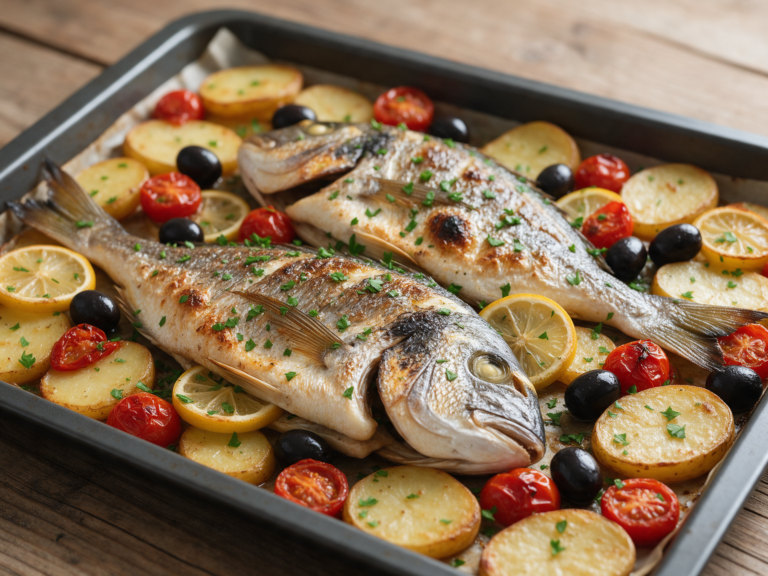
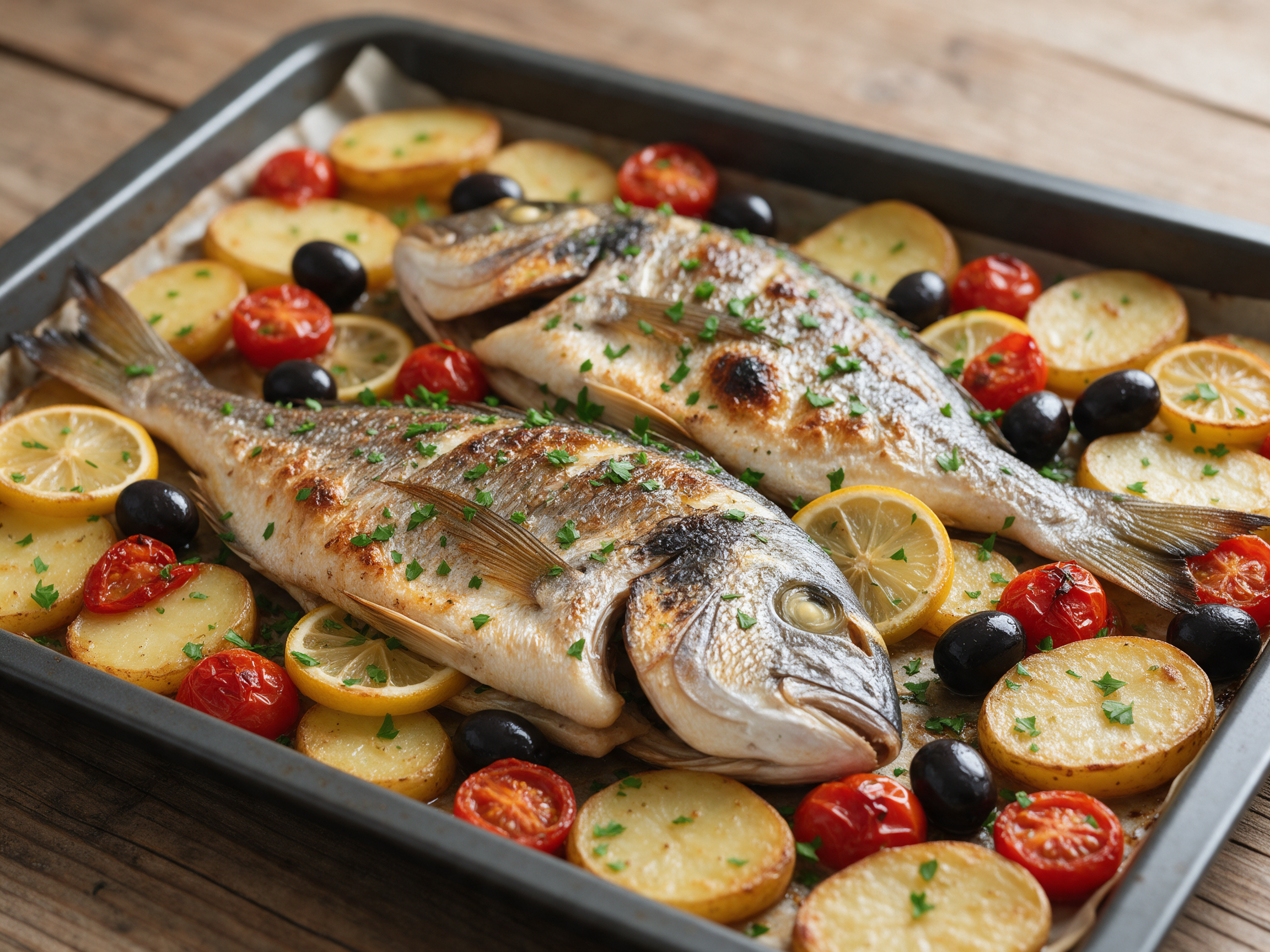
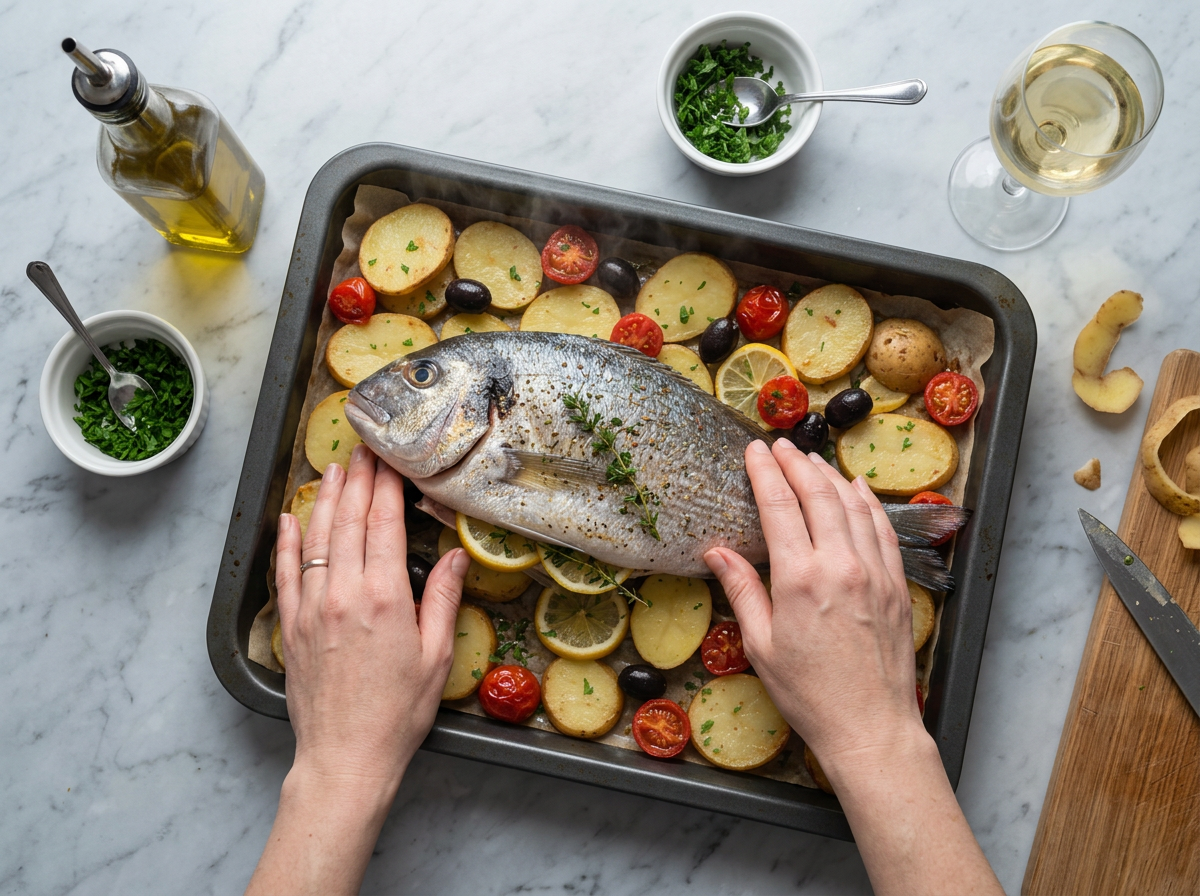
Dentice al forno is a whole dentex baked on a bed of thin-sliced potatoes, cherry tomatoes and olives at 200 C / 390 F. This baked dentex and potatoes tray takes 75 minutes from start to table, and most of that time is hands-off.
Dentex is a lean Mediterranean fish with firm, white, slightly sweet flesh, denser than sea bream. Lean also means unforgiving. Pull it when the thickest part near the backbone reads 145 F / 63 C, because a few extra minutes turn it dry and chalky.
The potatoes get a 20-minute head start alone in the oven. That’s the technique that matters here, since the potatoes need longer than the fish. Once the fish goes on, wine and tomato juices pool under it and season the slices from below.
Ask your fishmonger to gut and scale the fish, and keep the head on. It protects the flesh and gives you the best cheek meat.
Why You’ll Love This Recipe
- One sheet pan holds the fish, potatoes and sauce
- Potatoes soak up wine and tomato juices from below
- Hands-off oven time leaves room for a salad
- Naturally gluten-free and dairy-free with no special swaps
Ingredient Notes
- Whole dentex: Choose a fish of about 1.2 kg with clear eyes and red gills, gutted and scaled. Sea bream or sea bass work as substitutes.
- Potatoes: Waxy or all-purpose potatoes such as Yukon Gold hold their shape when sliced thin. Floury russets tend to break apart and turn mushy.
- Dry white wine: Use a dry bottle you’d drink, such as Vermentino. For an alcohol-free tray, swap in 120 ml fish stock or water with a squeeze of lemon.
- Olives: Taggiasca or Gaeta olives are mild and fruity. Kalamata works too, but rinse them first since they run saltier.
- Extra-virgin olive oil: The oil becomes part of the pan juices, so use a fruity one you’d happily dip bread in.
Dentice al Forno: Baked Dentex with Lemon Potatoes
Ingredients
Method
- Heat the oven to 200 C / 390 F. Toss the potato slices in a 30 cm / 12-inch mixing bowl with 2 tbsp olive oil, 1 tsp salt, half the pepper, the lemon zest and the leaves from 2 thyme sprigs.
- Spread the potatoes on a rimmed 33 x 46 cm / 13 x 18 inch sheet pan in a slightly overlapping layer. Roast for 20 minutes, stirring once at the 10-minute mark, until the edges just start to color.
- While the potatoes roast, rinse the dentex inside and out and pat it very dry with paper towels. Cut three shallow slashes into each side, then season the skin and cavity with 1 tsp salt and the remaining pepper.
- Fill the cavity with the 3 lemon slices, 2 garlic cloves, the parsley stems and the remaining 2 thyme sprigs. Rub the whole fish with 1 tbsp olive oil.
- Pull the pan from the oven. Scatter the tomatoes, olives and the last garlic clove over the potatoes, then lay the fish on top, diagonally if needed. Pour the wine into the potatoes beside the fish and drizzle the remaining 1 tbsp oil over the vegetables.
- Bake for 30 minutes, checking at 25, until the skin is lightly golden, the flesh near the backbone is opaque and a thermometer in the thickest part reads 145 F / 63 C.
- Rest the fish on the tray for 5 minutes. Squeeze the lemon juice over the top and scatter the chopped parsley leaves. To serve, run a knife along the backbone, lift off the top fillet, remove the bone, then lift out the bottom fillet and spoon the potatoes and juices alongside.
Notes
- Ask the fishmonger to gut and scale the dentex, and leave the head on.
- Start the potatoes first, since they need 20 minutes alone in the oven.
- Check the fish at 25 minutes and pull it at 145 F / 63 C.
- Rest the fish 5 minutes before adding lemon juice and parsley.
Tips for Success
- Slice the potatoes to 4 mm with a mandoline or a sharp knife, so every piece softens at the same pace under the fish.
- Pat the fish dry inside and out with paper towels before oiling, because dry skin browns while wet skin steams.
- Check the fish at 25 minutes with an instant-read thermometer, sliding the probe in just above the backbone at the thickest point.
- Pour the wine into the potatoes beside the fish, not over the skin, so the skin stays dry and lightly crisp.
- Rest the fish for 5 minutes on the tray before serving, then fillet it by lifting the top side off the backbone.
Variations
- Swap the cherry tomatoes for sliced fennel and a little orange zest for a lighter, slightly sweet Sicilian-style tray.
- Add 2 tbsp capers and a pinch of chili flakes with the olives for a saltier, sharper pan sauce.
- Use four 180 g skin-on dentex fillets laid on the par-roasted potatoes and bake 12 to 14 minutes until opaque.
Storage and Reheating
Leftover dentice al forno keeps for 2 days in an airtight container in the fridge. Lift the flesh off the bones first so no small bones end up in the next serving.
Reheat it covered with foil in a 150 C / 300 F oven for 10 to 12 minutes, with a teaspoon of olive oil spooned over the fish, until hot throughout. I skip the microwave because it dries out lean fish.
The potatoes soften as they sit and the skin won’t crisp again. Plan on tender, flaky leftovers rather than a repeat of day one.
Serving Suggestions
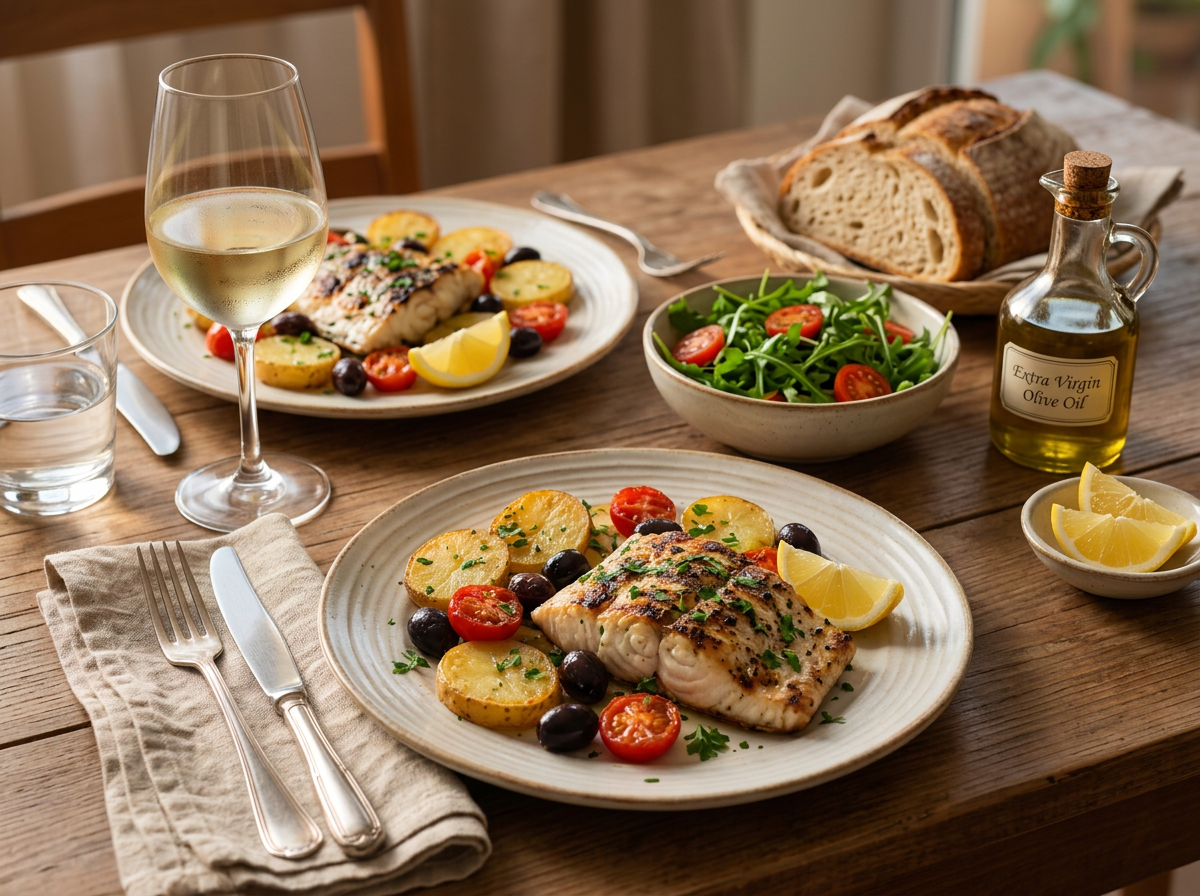
Dentice al forno is best brought to the table on the tray, with the fish filleted in front of everyone so each plate gets potatoes and pan juices. Squeeze the last of the lemon over the top just before serving.
A rocket salad dressed with lemon and olive oil is the easiest side, since the bitter leaves cut through the oil. Blanched green beans work equally well. Keep some crusty bread nearby for the juices.
For drinks, a chilled Vermentino or Falanghina matches the lemon and olives without overpowering the fish.
FAQ
How do I know when baked dentex is done?
Dentex is done when the thickest part, just above the backbone, reads 145 F / 63 C. Without a thermometer, push a knife into the flesh behind the head. It should look opaque and flake away from the bone with no translucent streak. The fish keeps cooking slightly during the 5-minute rest.
Can I use sea bream or sea bass instead of dentex?
Yes, sea bream (orata) and sea bass (branzino) both work with the same method. Pick one fish of about 1.2 kg, or use two 600 g fish and check them at 22 minutes, since smaller fish cook faster. Dentex is a little firmer and sweeter, but lemon and olive oil narrow the gap.
Can I prep dentice al forno ahead of time?
Partly. Slice the potatoes up to 2 hours ahead and keep them in cold water, then drain and dry them well before oiling. You can stuff the fish and refrigerate it for up to 4 hours. Bake only when you’re ready to eat, since the fish is best straight from its rest.
Why is my baked dentex dry?
Dentex dries out when it goes past 145 F / 63 C, because the flesh is lean and has little fat to cover for extra minutes. Check at 25 minutes with a thermometer instead of waiting for the full 30. The oil rubbed on the skin and the wine in the pan also help hold moisture.
What wine and side dish suit baked dentex with potatoes?
A chilled Vermentino or Falanghina suits it well, and a bitter-leaf salad such as rocket with lemon and oil cuts through the olive oil. Since the potatoes already share the tray, you only need a green side and some bread for the pan juices.
Is dentice al forno gluten-free and dairy-free?
Yes, both. The tray contains only fish, potatoes, tomatoes, olives, olive oil, wine and herbs, with no flour or cheese. Serve it with gluten-free bread or skip the bread altogether, and check the olive jar label if you’re cooking for someone with a strict allergy.