
Jump to Recipe
Risotto al Prosecco is a Northern Italian risotto made by cooking Carnaroli rice in a shallot soffritto, deglazing with dry Prosecco, then building creaminess with hot stock added one ladle at a time.
The Prosecco does two jobs here. It adds acidity that cuts through the butter and Parmigiano, and its light sweetness rounds out the finish once most of the alcohol cooks off.
I use Carnaroli over Arborio because it holds its bite longer and releases starch at a steadier pace, which makes the mantecatura step (beating in cold butter and cheese off the heat) easier to get right.
This isn’t a fast dish. It asks for about 20 minutes of standing at the stove, stirring and ladling. But the payoff is a risotto that moves in a slow wave when you tilt the plate, not a sticky clump.
Why You’ll Love This Recipe
- Ready in about 40 minutes with five pantry staples
- Dry Prosecco adds acidity without turning the dish sweet
- Carnaroli rice holds its bite even after 18 minutes of simmering
- Mantecatura finish gives a glossy, spoonable texture every time
Ingredient Notes
- Carnaroli rice: Holds its bite and releases starch steadily. Arborio works as a substitute but turns soft faster, so watch your timing closely.
- Prosecco: Use a dry brut, not extra dry or demi-sec, or the risotto tastes sweet. A dry still white wine like Pinot Grigio works if you’re out of Prosecco.
- shallot: Milder and sweeter than onion. Half a small yellow onion, finely chopped, is a fine swap.
- vegetable stock: Keep it low-sodium since the Parmigiano adds plenty of salt. Chicken stock works too, if you don’t need this vegetarian.
- Parmigiano Reggiano: Grate it fresh off a wedge. Pre-grated cheese has anti-caking starch that keeps it from melting smoothly into the rice.
- butter: Unsalted, split between the soffritto and the mantecatura. Salted butter works if you cut the added salt by half.
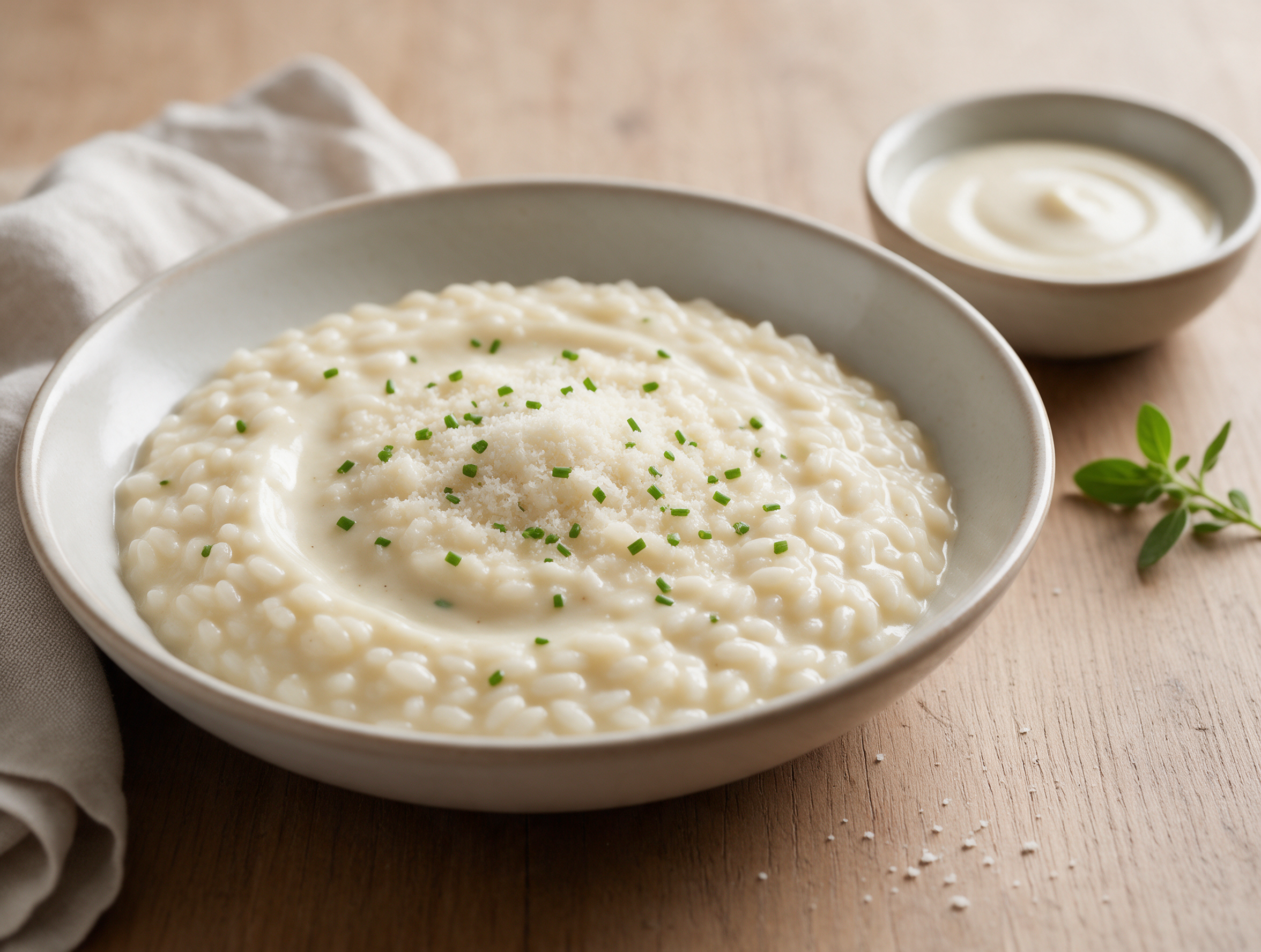
Creamy Risotto al Prosecco with Parmigiano Reggiano
Ingredients
Method
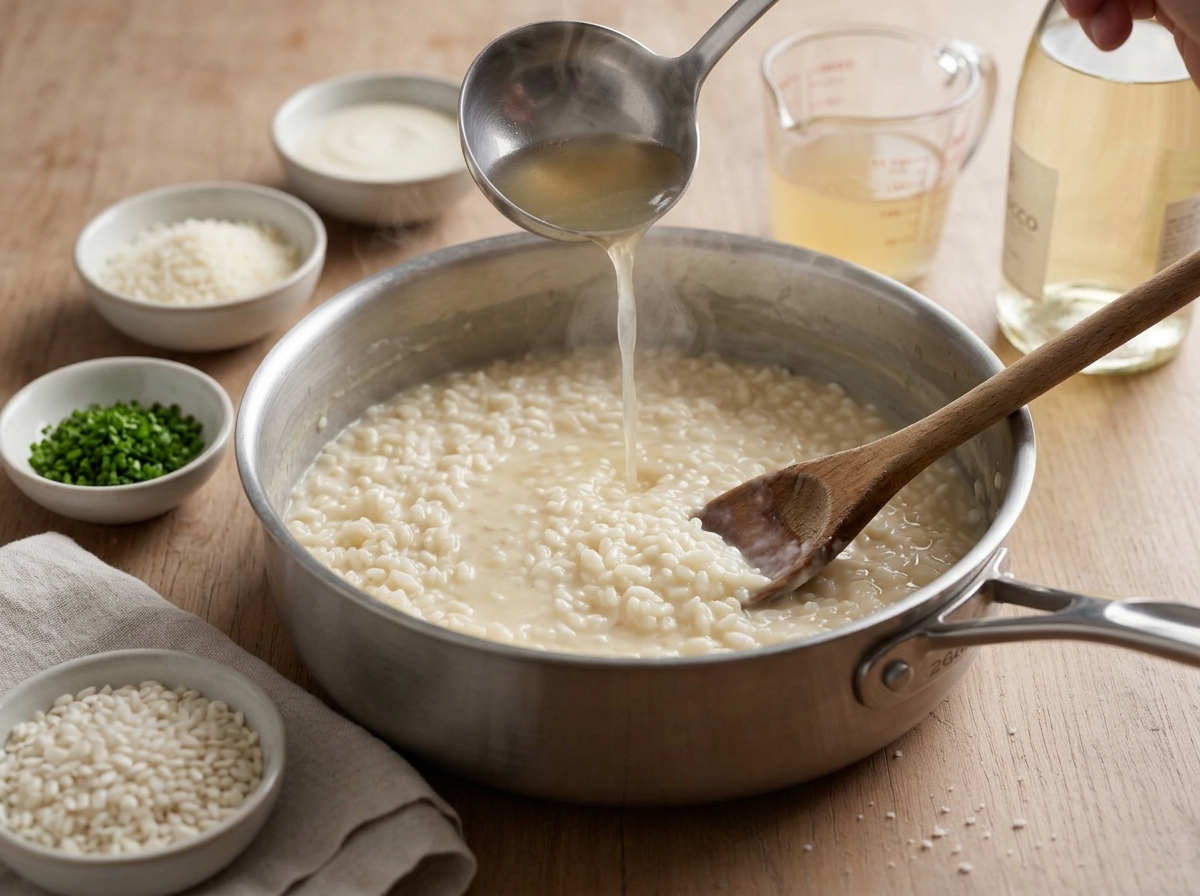
- Pour the stock into a 2 L / 2-quart saucepan and bring to a simmer over medium heat. Lower the heat to keep it barely bubbling while you cook the risotto.
- Heat the olive oil and 30 g butter in a 26 cm / 10-inch heavy-bottomed saucepan over medium heat. Add the shallot and cook for 3-4 minutes, stirring, until soft and translucent but not browned.
- Add the rice and stir constantly for 2 minutes until the edges look glassy and every grain is coated in fat. Do not let it brown.
- Pour in the Prosecco. Let it bubble and mostly evaporate, stirring, about 2 minutes, until the sharp alcohol smell fades and only a faint fruity note remains.
- Add a ladle of hot stock, stirring until it's nearly absorbed, then add the next. Repeat for about 17-18 minutes, keeping the pot at a steady simmer, until the rice is al dente with a firm bite in the center and looks loose and creamy around it.
- Season lightly with salt partway through, keeping in mind the Parmigiano added later is already salty.
- Remove the pot from the heat and let it rest, uncovered, for 2 minutes.
- Add the cold cubed butter and grated Parmigiano. Beat vigorously with a wooden spoon until the risotto turns glossy and moves in a slow wave when you tilt the pot.
- Taste and adjust salt and black pepper. Spoon onto warm plates right away, since risotto keeps cooking and tightens up as it sits.
- Garnish with chives and extra Parmigiano if using. Serve immediately.
Notes
- Use a dry Prosecco (brut), not extra dry or demi-sec, or the risotto turns sweet.
- Keep the stock at a bare simmer; cold stock stalls cooking and slows starch release.
- Rest off heat for 2 minutes before mantecatura so the butter doesn't split from residual heat.
- Don't toast the rice past 2 minutes or the outer starch layer seals too much.
Tips for Success
- Keep the stock at a bare simmer the whole time so the rice temperature never drops when you add a new ladle.
- Add stock in small increments and wait until each ladle is nearly absorbed before pouring the next one in.
- Pull the rice off the heat a minute before it tastes fully done, since residual heat keeps cooking it.
- Beat the cold butter and Parmigiano in vigorously off the heat for a glossy finish instead of a greasy one.
- Taste the Prosecco before you cook with it; if it tastes sweet, the finished risotto will taste sweet too.
Variations
- Stir in blanched asparagus tips or fresh peas during the last 5 minutes of cooking for a spring version.
- Swap Prosecco for a dry rosé spumante for a pale pink risotto with a similar acidity and fruitiness.
- Add cooked shrimp or scallops in the last 2 minutes and use fish stock instead of vegetable stock.
Storage and Reheating
Refrigerate leftover risotto in an airtight container for 3-4 days. The texture firms up as it cools, which is normal for rice this starchy.
Reheat it in a 26 cm / 10-inch skillet over medium-low heat with a splash of stock or water, stirring often, until it loosens back into a creamy consistency, about 4-5 minutes. A microwave works too, at 60% power in 30-second bursts with a splash of water stirred in between.
Freezing isn’t worth it here. The rice turns grainy and the creaminess doesn’t come back. If you have a lot left over, pack it into patties the next day, coat lightly in breadcrumbs, and pan-fry them into rice cakes instead.
Serving Suggestions
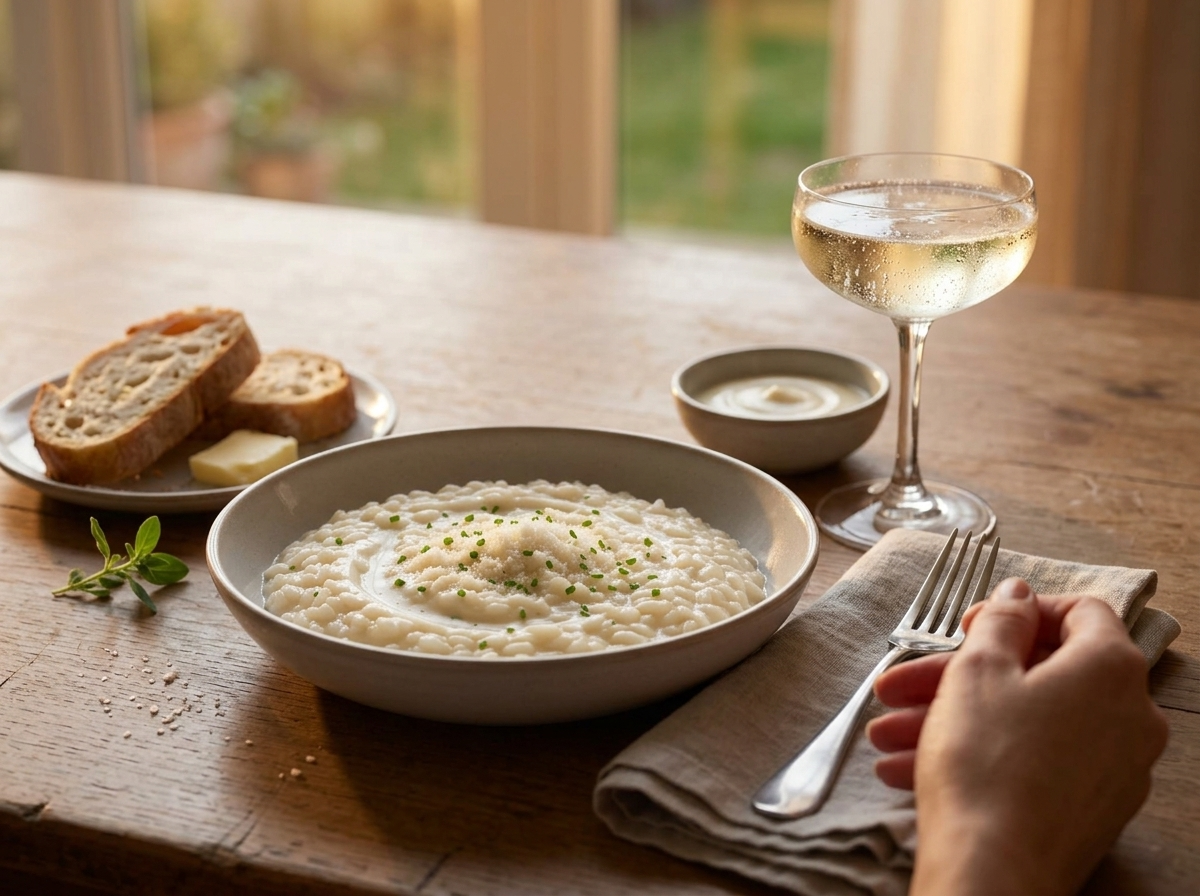
Serve risotto al Prosecco on its own as a primo, in warm shallow bowls so it doesn’t cool and stiffen before you’re done eating. A few extra shavings of Parmigiano and a crack of black pepper on top go a long way.
Seared scallops or shrimp make a good pairing since the risotto is already rich enough to carry them without extra sauce. A simple green salad with lemon vinaigrette on the side cuts through the butter.
Pour the same Prosecco you cooked with alongside the meal. It’s a small detail, but the acidity in the glass echoes what’s already working in the dish.
FAQ
Why is my risotto al Prosecco gluey instead of creamy?
Gluey risotto usually means the stock went in too fast or the rice sat off heat too long without stirring. Add hot stock one ladle at a time, waiting until it’s mostly absorbed, and keep the pot at a steady simmer. Using Carnaroli instead of a softer rice also helps it stay separate and creamy instead of sticky.
Can I use white wine instead of Prosecco in this risotto?
Yes, a dry still white wine works fine and gives similar acidity, though you lose the faint sparkle and light sweetness Prosecco adds. Pick something crisp like Pinot Grigio or Vermentino rather than an oaky Chardonnay, which tastes heavy against the butter and Parmigiano.
Can I make risotto al Prosecco ahead of time?
You can cook the rice with the soffritto, Prosecco, and about half the stock ahead of time, then spread it on a sheet pan to cool and chill it for up to a day. Finish with the remaining hot stock and the butter-Parmigiano mantecatura right before serving so it stays creamy, not gluey.
What goes well with risotto al Prosecco?
Simple seafood like seared scallops or shrimp pairs well since the risotto is already rich, and a glass of the same Prosecco you cooked with ties the plate together. A light green salad with lemon vinaigrette also cuts through the butter if you’re serving it as a main course.
Is risotto al Prosecco gluten free?
Yes, risotto al Prosecco is naturally gluten-free since it’s built on rice, stock, butter, and Parmigiano with no flour or pasta involved. Just check your stock and Prosecco labels, since some processed broths use gluten-based flavor carriers and a few sparkling wines are fined with wheat-derived agents.
What’s the difference between risotto al Prosecco and risotto allo spumante?
Risotto al Prosecco specifically uses Prosecco DOCG, a dry sparkling wine from Veneto with a light, fruity edge, while risotto allo spumante is the broader term covering any Italian sparkling wine, including sweeter styles. The difference is subtle, mostly in acidity and how much sweetness comes through after cooking.