
Jump to Recipe
Costine al Lavécc della Valmalenco is a dish of pork ribs slow-braised in red wine, juniper, and a simple soffritto until the meat pulls from the bone, cooked in the heavy pot that gives the dish its name. The name comes from the lavécc, the cast-iron or copper pot used in the mountain huts of Valmalenco, a valley in Sondrio province that also gives us rustic Valtellina pancotto.
You won’t find a lavécc in most kitchens, so a Dutch oven does the same job here. What matters is steady, low heat over roughly 2.5 hours, not the pot’s pedigree.
The technique is straightforward: brown the ribs, build a soffritto, add wine and stock, then let the pot sit at a bare simmer. Rush the heat and the outside of the meat tightens before the collagen breaks down, leaving ribs that are cooked through but still chewy.
Polenta is the traditional partner, soaking up the reduced sauce at the end.
Why You’ll Love This Recipe
- One pot does the browning, braising, and sauce
- Meat turns fork-tender with a patient, low simmer
- Sauce reduces on its own, no extra thickeners needed
- Leftovers taste even better the next day
Ingredient Notes
- pork spareribs: Ask the butcher for St. Louis-cut spareribs and to section them into 2-rib pieces so they fit the pot and brown evenly.
- red wine: Use a dry red like Valtellina Rosso or Barbera. The wine’s acidity cuts through the fat as it braises.
- juniper berries: Crush them with the flat of a knife first; whole berries stay too sealed to release their piney flavor.
- carrot and celery: Dice these small so they melt into the sauce instead of staying as distinct chunks.
- tomato paste: A single spoon adds color and a little sweetness without making the sauce taste tomato-forward.
- beef stock: Low-sodium stock lets you control the final salt level once the sauce reduces and concentrates.
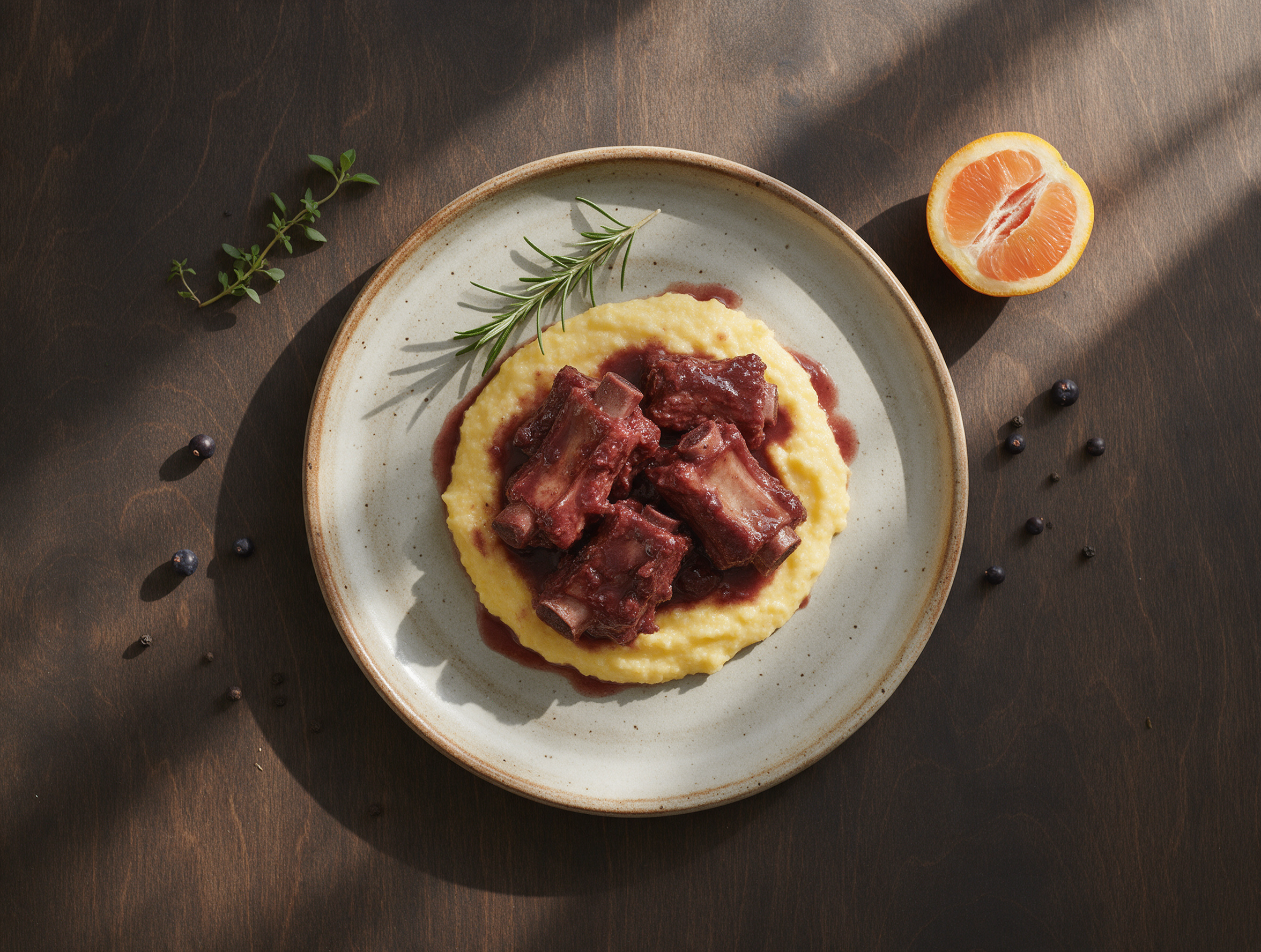
Costine al Lavécc: Slow-Braised Valmalenco Pork Ribs
Ingredients
Method
- Pat the pork spareribs dry with paper towels and season all over with salt and pepper.
- Heat the olive oil and butter in a 26 cm / 10-inch Dutch oven over medium-high heat. Brown the ribs in two batches, 3 to 4 minutes per side, until deep golden brown. Don't crowd the pot or the meat will steam instead of browning. Set the ribs aside on a plate.
- Lower the heat to medium and add the onion, carrot, and celery to the same pot. Cook for 6 to 8 minutes, stirring occasionally, until softened and just starting to turn gold.
- Add the garlic and cook for 1 minute until fragrant.
- Stir in the tomato paste and cook for 1 minute to deepen its color.
- Pour in the red wine, scraping up the browned bits from the bottom of the pot. Simmer for 2 to 3 minutes to cook off the sharp alcohol smell.
- Return the ribs to the pot along with any juices. Add the stock, juniper berries, bay leaves, and rosemary, then bring to a gentle simmer.
- Cover and cook at a bare simmer, turning the ribs once halfway through, for 2 to 2.5 hours, until the meat pulls easily from the bone and reaches about 93C / 200F internally.
- Uncover for the final 20 minutes if the sauce looks thin, letting it reduce to a spoon-coating consistency.
- Remove the ribs to a platter and let rest 10 minutes. Discard the bay leaves and rosemary sprig, then skim excess fat from the surface of the sauce.
- Spoon the sauce over the ribs and serve hot, with polenta alongside if you like.
Notes
- Ask your butcher to cut spareribs into 2-rib sections for even browning.
- Crush juniper berries before adding; whole berries barely release flavor.
- Skim excess fat from the sauce before serving for a cleaner finish.
- A heavy Dutch oven mimics the lavécc's slow, even heat well.
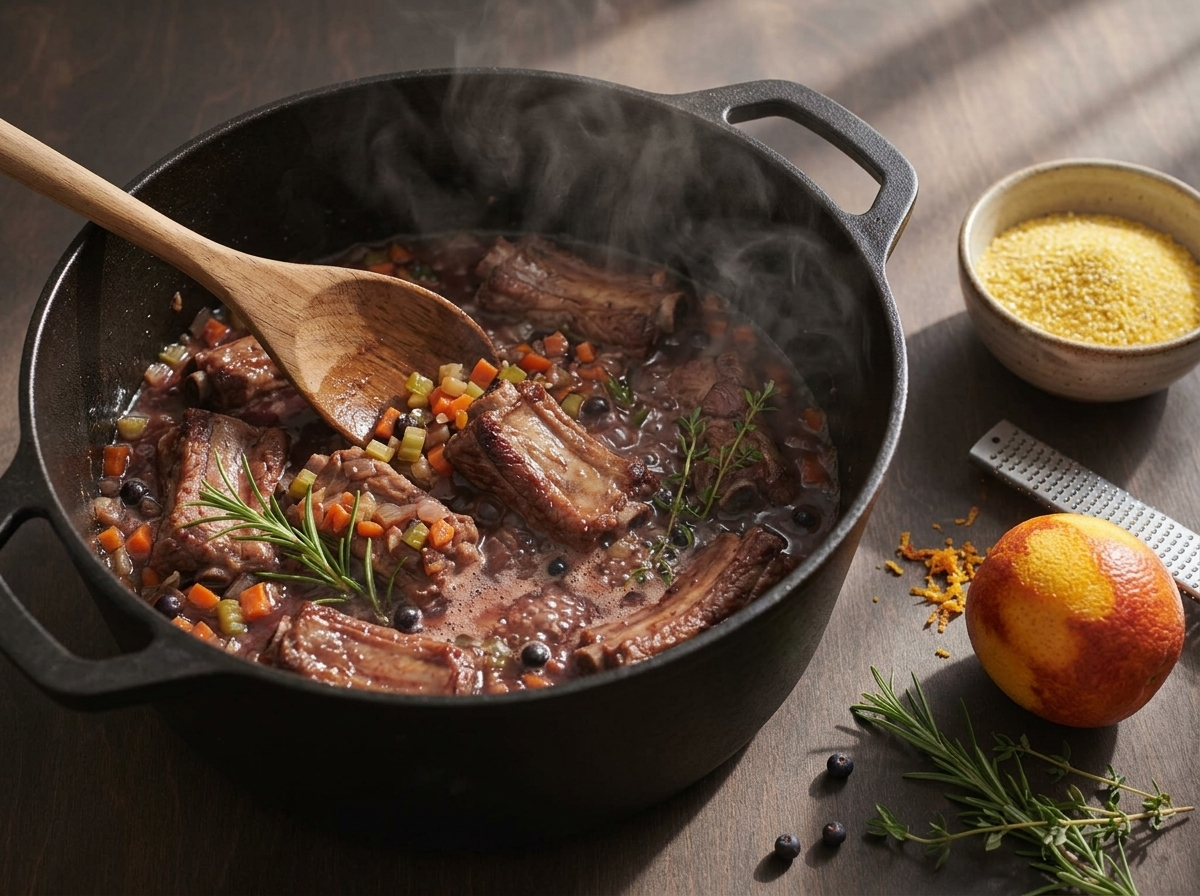
Tips for Success
- Brown the ribs in two batches; crowding the pot steams the meat instead of browning it.
- Crush juniper berries with the flat of a knife before adding them to the pot.
- Simmer at a bare bubble, not a rolling boil, or the meat turns stringy before it turns tender.
- Skim the fat off the braising liquid before serving for a cleaner-tasting sauce.
- Rest the ribs 10 minutes off heat so the meat reabsorbs some of the sauce.
Variations
- Swap half the wine for the same amount of stock for a milder, less winey sauce.
- Add two sliced potatoes to the pot in the last 40 minutes for a one-pot meal with a starchy side built in.
- Use bone-in pork shoulder cut into chunks instead of ribs for a stew-like texture.
Storage and Reheating
Costine al lavécc keeps 3 to 4 days in the fridge, stored in an airtight container with the braising liquid poured over the meat so it doesn’t dry out.
It freezes well since it’s a braise. Portion the ribs with sauce into freezer bags or containers and freeze up to 3 months, then thaw overnight in the fridge before reheating.
Reheat gently on the stovetop over low heat, covered, for about 15 minutes, or in the oven at 160C / 325F covered for 20 to 25 minutes, until the meat is warmed through to 74C / 165F.
Serving Suggestions
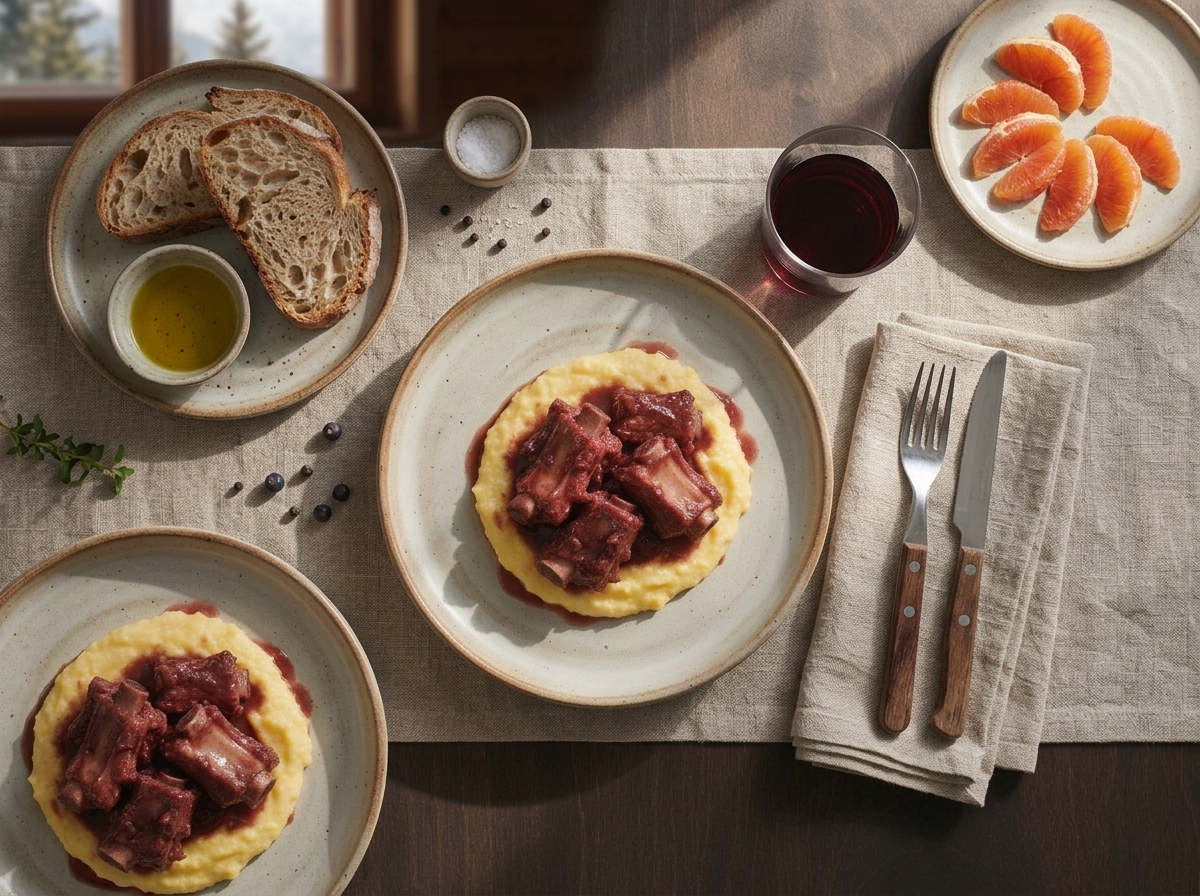
Soft polenta is the classic partner here, the same way it grounds a plate of slow-braised venison in red wine, spooned onto the plate first with the ribs and sauce ladled over the top.
Mashed potatoes, buttered pappardelle, or chestnut flour gnocchi with brown butter to mop up the sauce all work if polenta isn’t on hand.
Pour a glass of the same Valtellina Rosso used in the braise. Its acidity matches the richness of the sauce without competing with it.
FAQ
How do I know when costine al lavécc are done braising?
The ribs are done when the meat pulls away from the bone with light pressure from a fork and the internal temperature reads about 93C / 200F. At that point the collagen has broken down into gelatin, which gives the sauce its silky body. If the meat still clings tight to the bone, keep simmering in 15-minute increments.
Can I use baby back ribs instead of spareribs for this recipe?
Yes, baby back ribs work, though they’re leaner and cook faster than spareribs. Start checking for doneness around 1 hour 45 minutes instead of the full 2 to 2.5 hours, since less fat means less time is needed to turn the meat tender.
Can I make costine al lavécc a day ahead?
Yes, and it actually tastes better the next day once the sauce has settled into the meat. Cool completely, refrigerate in the braising liquid for up to 2 days, then reheat gently on the stovetop before serving.
What goes with costine al lavécc besides polenta?
Soft polenta is the classic match, but mashed potatoes, buttered pappardelle, or crusty bread to soak up the sauce all work well. A glass of Valtellina Rosso, the same wine used in the braise, ties the plate together nicely.
Is costine al lavécc gluten-free?
Yes, as written the recipe has no flour, breadcrumbs, or thickeners, so it’s naturally gluten-free. Just check your stock and tomato paste labels, since some brands add wheat-based fillers or anti-caking agents that aren’t always obvious.
What is a lavécc and why does the name matter here?
A lavécc is the heavy cast-iron or copper pot traditionally used in Valmalenco’s mountain huts to cook over an open fire. A Dutch oven does the same job on a home stove, holding steady heat so the ribs braise slowly instead of boiling hard.