Jump to Recipe
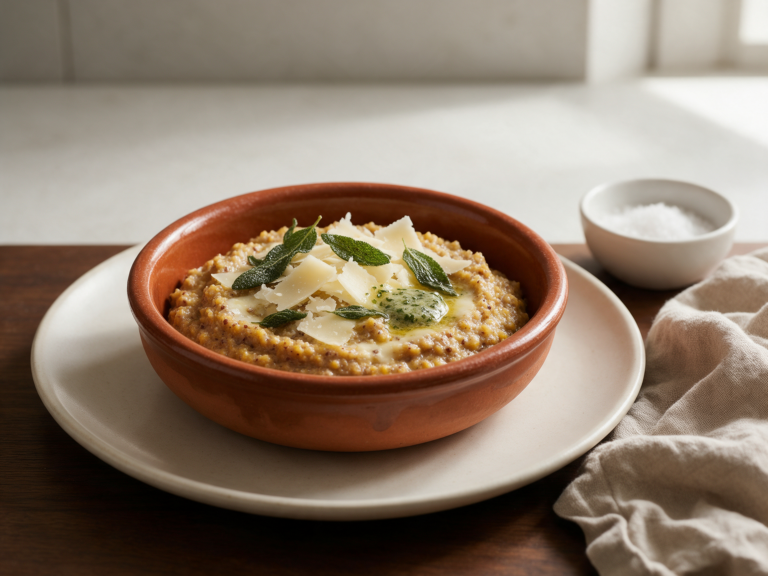
Polenta Rustica di Talamona is a Valtellina-style polenta made from coarse yellow cornmeal and buckwheat flour, simmered for 40 minutes and finished with Casera cheese and butter. Talamona is a town in the Valtellina valley in Lombardy, where buckwheat and mountain cheese are pantry staples.
The texture defines the result here. Buckwheat gives a darker color and an earthy edge, and the long cottura keeps the grains tender instead of gritty. It sits close to polenta taragna, the buckwheat polenta of the same valley.
It’s a one-pot dinner if you don’t mind staying near the stove. You stir every few minutes, not constantly. The one thing that goes wrong is a scorched bottom: walk away for ten minutes and the polenta catches, and the whole pot tastes burnt.
Serve it within 10 minutes of finishing, while it’s still loose and glossy.
Why You’ll Love This Recipe
- One pot for the polenta, one small skillet for butter
- You stir every few minutes, not nonstop
- Built from two pantry flours, one cheese, and butter
- Leftovers set firm and pan-fry into crisp slabs
Ingredient Notes
- Coarse yellow cornmeal: Look for bramata or a package labeled coarse polenta. Fine cornmeal cooks faster but turns pasty. Instant polenta works in a pinch, though the texture is softer.
- Buckwheat flour: Farina di grano saraceno is dark and earthy, and it’s what makes this a Valtellina-style polenta. Buckwheat isn’t wheat, but check the label for cross-contamination if you’re cooking gluten-free. Without it, use all cornmeal and expect a milder flavor.
- Casera cheese: Casera is a semi-hard cow’s milk cheese from Valtellina that melts into strings. Fontina or Taleggio are good substitutes, and Taleggio will make the polenta creamier.
- Coarse sea salt: Season the water well, since the polenta absorbs it as it cooks. Casera is salty too, so taste after the cheese goes in before adding more.
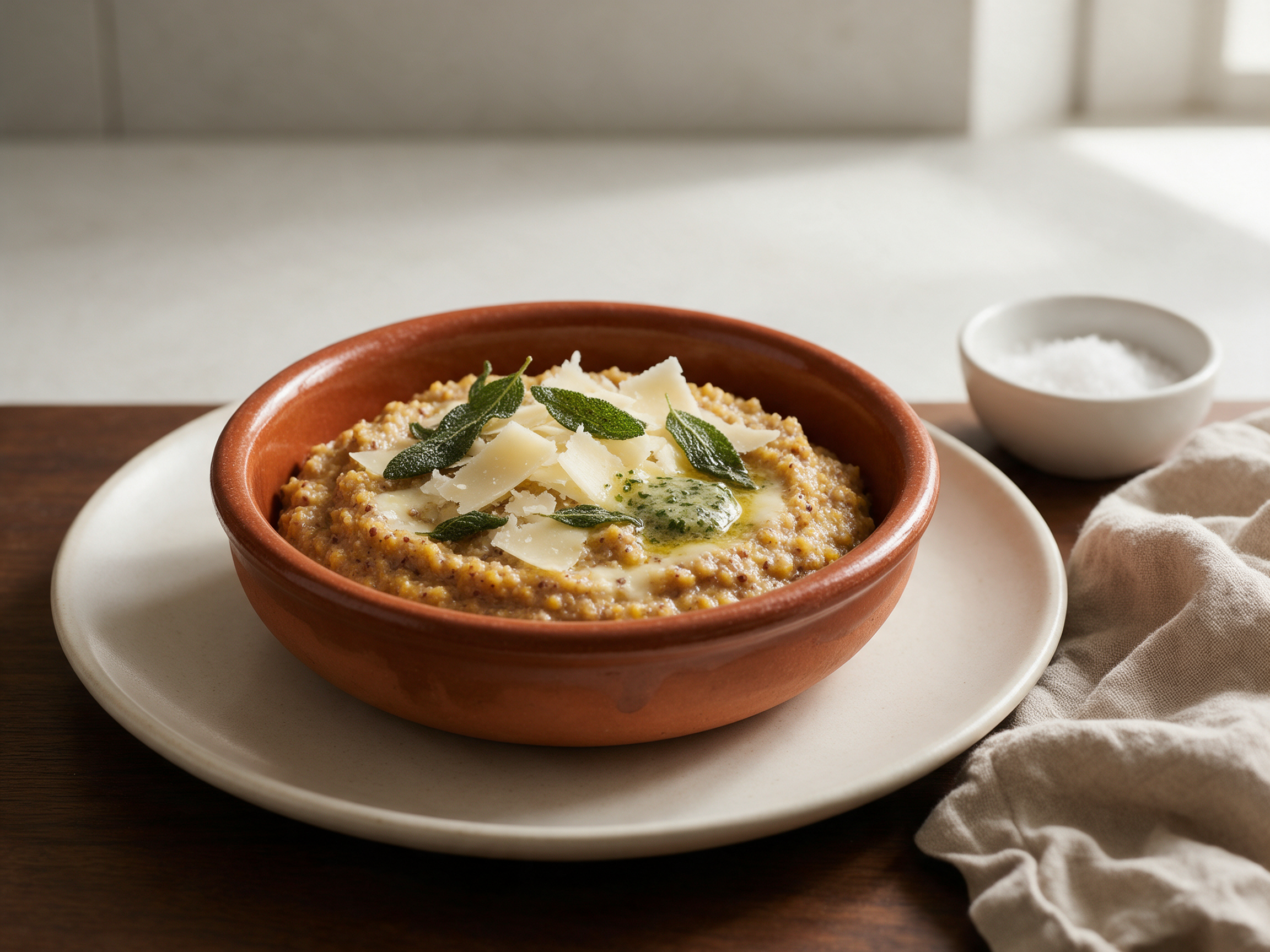
Polenta Rustica di Talamona with Sage Butter and Casera
Ingredients
Method
- Bring the water and salt to a boil in a 4-quart / 3.8 L heavy-bottomed pot, about 24 cm / 9.5-inch wide. While it heats, whisk the cornmeal and buckwheat flour together in a bowl, then cube 150 g of the Casera and shave the remaining 50 g.
- Pour the flour mix into the boiling water in a thin stream, whisking constantly, for about 1 minute until no lumps remain. Lower the heat until the surface only blips every few seconds, then switch to a wooden spoon.
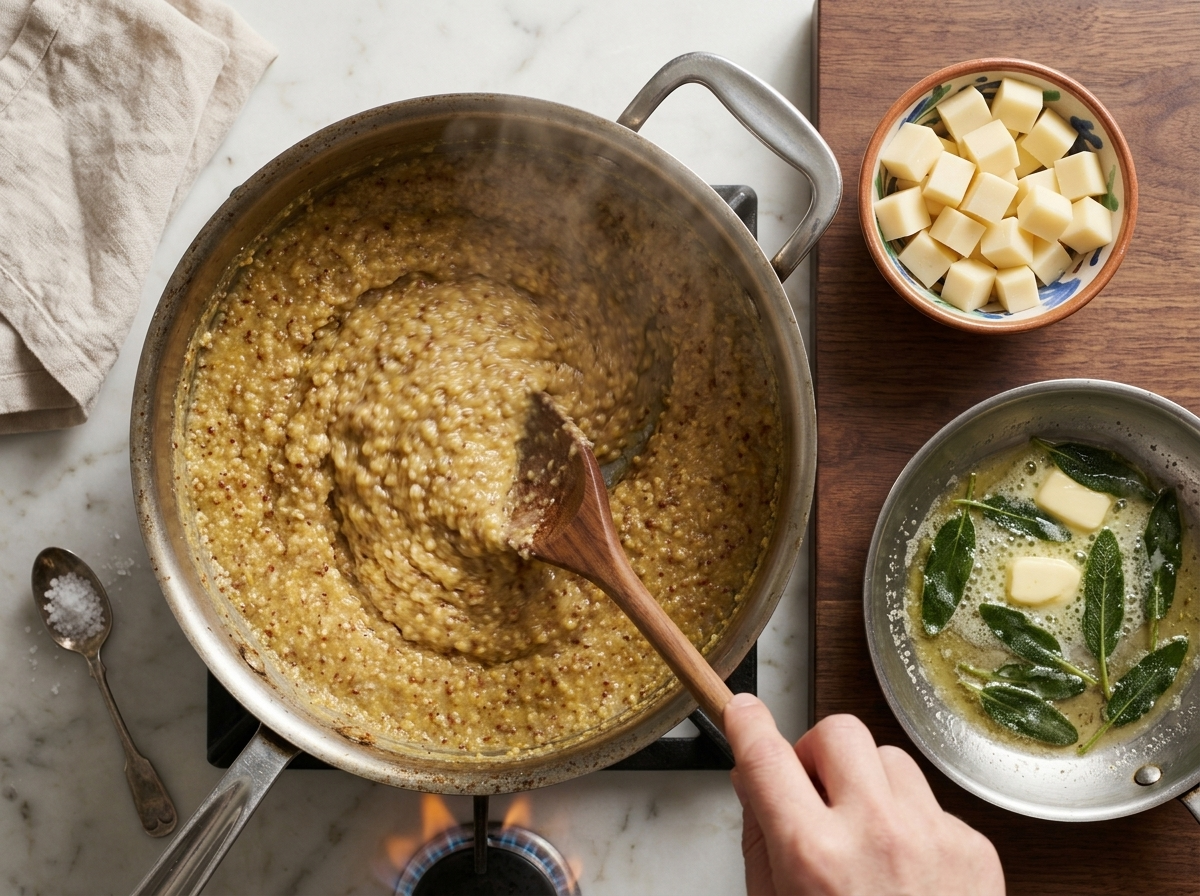
- Cook for 40 minutes, stirring every 3 to 5 minutes and scraping the bottom and corners. Don't leave it unstirred for 10 minutes, because the bottom will scorch and you can't stir that flavor back out. If it stiffens before the grains are tender, stir in 60 ml of hot water. It's done when it pulls away from the sides and has no gritty bite.
- During the last 5 minutes of cooking, melt 50 g butter in a 20 cm / 8-inch skillet over medium heat. Add the sage and garlic and cook for 2 to 3 minutes until the sage turns crisp and the butter smells nutty. Remove the garlic.
- Take the polenta off the heat. Stir in 40 g butter and the cubed Casera for about 2 minutes until melted and stringy, then taste and add black pepper and more salt if needed.
- Spoon the polenta onto warm plates, top with the shaved Casera, and spoon the sage butter over each portion. Serve within 10 minutes, while it's still loose.
Notes
- Start boiling the water before you measure and dice, so the pot is ready for the flour.
- Stir every 3 to 5 minutes, scraping the bottom and corners of the pot.
- Done means the polenta pulls away from the sides and has no gritty bite.
- Remove the garlic from the sage butter once it browns, so it doesn't turn bitter.
Tips for Success
- Pour the flour mix into boiling water in a thin stream while whisking, so the grains hydrate separately and don’t form lumps.
- Keep the heat low enough that the surface only blips every few seconds, which prevents scorching and spitting polenta.
- Add 60 ml of hot water if the polenta turns stiff before the grains are tender. Cold water can make it seize.
- Stir in the Casera off the heat so it melts into strings instead of turning oily, then taste for salt.
- Fill the pot with water right after serving, because polenta stuck to the bottom lifts off easily when soaked.
Variations
- Replace the Casera with fontina or Taleggio for a milder, creamier polenta that spreads more loosely on the plate.
- Top each portion with sauteed porcini or chestnut mushrooms and skip the shaved cheese for a more mushroom-forward main.
- Pour leftover polenta into a buttered dish, chill, then slice and pan-fry in butter until the edges are crisp and golden.
Storage and Reheating
Polenta Rustica di Talamona keeps in the fridge for 3 to 4 days. Pour leftovers into a lightly buttered dish, let them cool for 20 minutes, then cover and chill. It will set into a firm block.
To reheat it soft, crumble the polenta into a saucepan with 60 ml of water or milk for every 2 cups. Warm over low heat for 5 to 8 minutes, stirring, until it loosens. To crisp it, cut 2 cm slabs and pan-fry in butter for 4 minutes per side.
The set slabs also freeze well for up to 2 months. Separate them with parchment, thaw overnight in the fridge, and fry from there.
Serving Suggestions
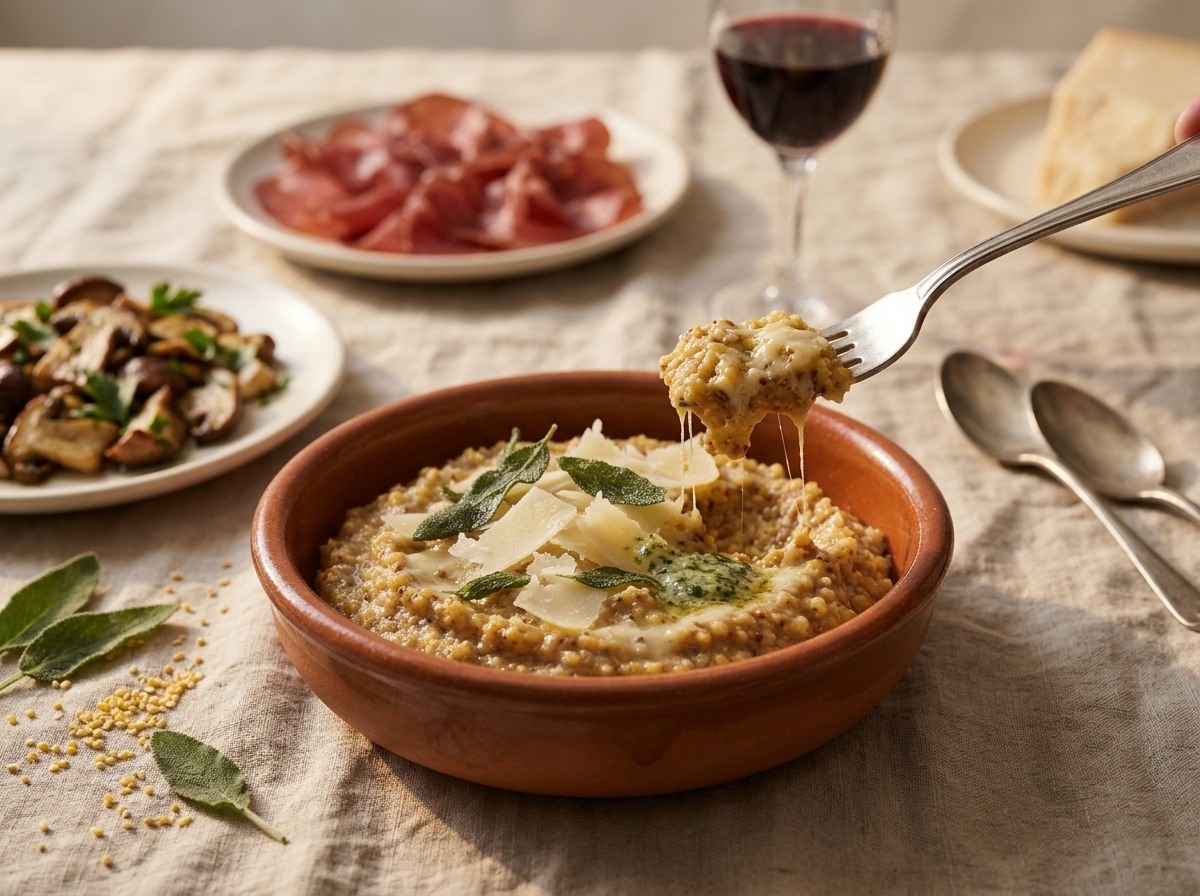
Spoon the polenta onto warm plates or a wooden board and top with shaved Casera and a few crisp sage leaves with their butter. A loose, steaming pile is the goal, so serve it right away.
Braised or sauteed mushrooms are the classic partner, and sauteed Swiss chard or a beef stew also work. Thin slices of bresaola on the side add a salty, cured note.
A glass of Valtellina red wine suits the buckwheat and the cheese. For something lighter, a sharp green salad with lemon cuts through the butter.
FAQ
Why is my polenta rustica gritty or lumpy?
Gritty polenta is undercooked, and lumps come from adding the flour too fast. Coarse cornmeal and buckwheat need the full 40 minutes at a low simmer to soften. Pour the flour in a thin stream while whisking, and if lumps still show up, whisk hard for 30 seconds before switching to a spoon.
Can I use instant polenta instead of coarse cornmeal in polenta rustica?
Yes, but the texture changes. Instant polenta is precooked, so it’s ready in about 5 minutes and tastes softer and less nutty. Skip the buckwheat, follow the package water ratio, and stir in the butter and Casera at the end as written.
Can I freeze leftover polenta rustica di Talamona?
Yes, once it has set. Pour leftovers into a buttered dish, chill until firm, cut into 2 cm slabs, and freeze between sheets of parchment for up to 2 months. Thaw overnight in the fridge, then pan-fry in butter until crisp. Don’t freeze it loose, since it turns watery when thawed.
What goes well with polenta rustica di Talamona?
Savory, juicy dishes work best: braised or sauteed mushrooms, bresaola, sauteed Swiss chard, or a beef stew. The polenta is rich with butter and Casera, so something bitter or acidic on the side balances it. A Valtellina red wine suits it too.
Is polenta rustica gluten free, and can I make it dairy free?
The ingredients are naturally gluten-free, since buckwheat isn’t related to wheat. Check both flour labels for cross-contamination if you’re cooking for celiac. For a dairy-free version, swap the butter for olive oil and leave out the Casera, then add a little more salt, since the cheese supplied much of it.
What is the difference between polenta rustica and polenta taragna?
They’re close relatives. Polenta taragna is the classic buckwheat and cornmeal polenta of Valtellina, stirred with butter and cheese. This version follows the same method and adds a sage butter finish. It uses about 70 percent cornmeal, and ratios vary from family to family.