
Jump to Recipe
Rüsümada Valtellinese is a warm custard drink from the Valtellina valley in Lombardy, made by whisking egg yolks and sugar into hot red wine until it turns thick, pale, and foamy, close to a wine-based zabaglione. Farmers and woodcutters drank it to warm up after a cold morning outside, sometimes with a splash of grappa stirred in at the end.
The technique is straightforward. Temper the yolks with warm wine, then cook gently over a double boiler until the mixture reaches 71C/160F and coats the back of a spoon. Go too fast over direct heat and the yolks scramble instead of thickening smoothly, that’s the one real risk here.
I use a Nebbiolo-based wine from Valtellina, Chiavennasca, when I can find a bottle, but any dry, medium-bodied red works fine. Serve it in small cups with a dusting of cinnamon and a couple of dry biscuits for dunking.
Why You’ll Love This Recipe
- Ready in 20 minutes with 5 pantry staples
- Warms you up on cold mornings, Alpine-style
- No baking, just a whisk and a double boiler
- Easy to scale up for a crowd with grappa on the side
Ingredient Notes
- Egg yolks: Use fresh, cold eggs and separate them cleanly. The yolks give the custard its body and pale gold color.
- Sugar: Granulated sugar whisked into the yolks first prevents graininess later in the cook.
- Red wine: A dry, medium-bodied red like Chiavennasca (local Nebbiolo) gives the traditional color. Any dry red you’d drink works as a substitute.
- Cinnamon stick: Infuses the wine while it warms. Ground cinnamon at the end doesn’t replace this step, it burns off flavor too fast.
- Lemon zest: Optional, but it cuts the richness of the yolks. Use a vegetable peeler to avoid the bitter white pith.
- Grappa: Stirred in off the heat for the adult, after-dinner version. Leave it out for a kid-friendly cup.
- Dry biscuits: Savoiardi, plain biscotti, or amaretti all hold up well for dunking without dissolving instantly.
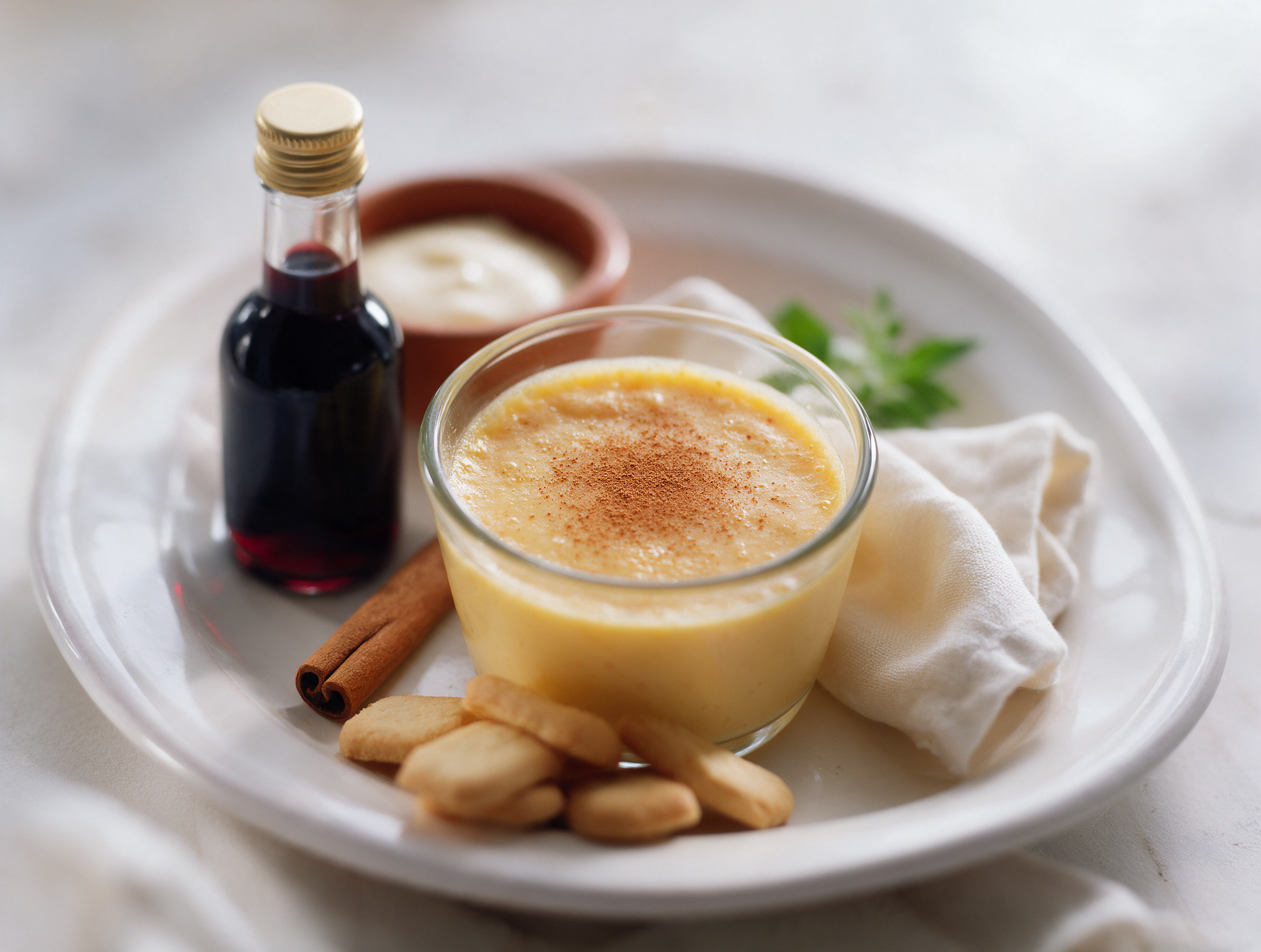
Rüsümada Valtellinese: A Warm Egg and Red Wine Custard
Ingredients
Method
- Warm the red wine, cinnamon stick, and lemon zest in a 1-quart / 1L saucepan over medium heat until steaming, 3 to 4 minutes. Don't let it boil.
- Whisk the egg yolks and sugar in a heatproof mixing bowl until pale and slightly thickened, about 1 to 2 minutes.
- Fish out the cinnamon stick and lemon zest from the wine. Pour the warm wine into the yolk mixture in a thin stream, whisking constantly to temper the eggs.
- Set the bowl over a 2-quart / 2L saucepan of barely simmering water, making sure the bottom doesn't touch the water. Whisk constantly for 5 to 8 minutes, until the custard is foamy, thick enough to coat the back of a spoon, and reads 71C/160F on an instant-read thermometer.
- Pull the bowl off the heat the moment it hits temperature. If it keeps cooking, the yolks will scramble into curds.
- Stir in the grappa, if using, off the heat.
- Ladle the warm custard into small cups. Dust with ground cinnamon and serve right away with dry biscuits for dunking.
Notes
- Use a heatproof bowl that fits snugly over the saucepan without touching the water.
- Pull the custard off the heat the second it coats a spoon, it keeps thickening off heat.
- Chiavennasca, the local Nebbiolo, gives the most authentic color and flavor.
- Whisk constantly, a pause of even 10 seconds can scramble the yolks near the end.
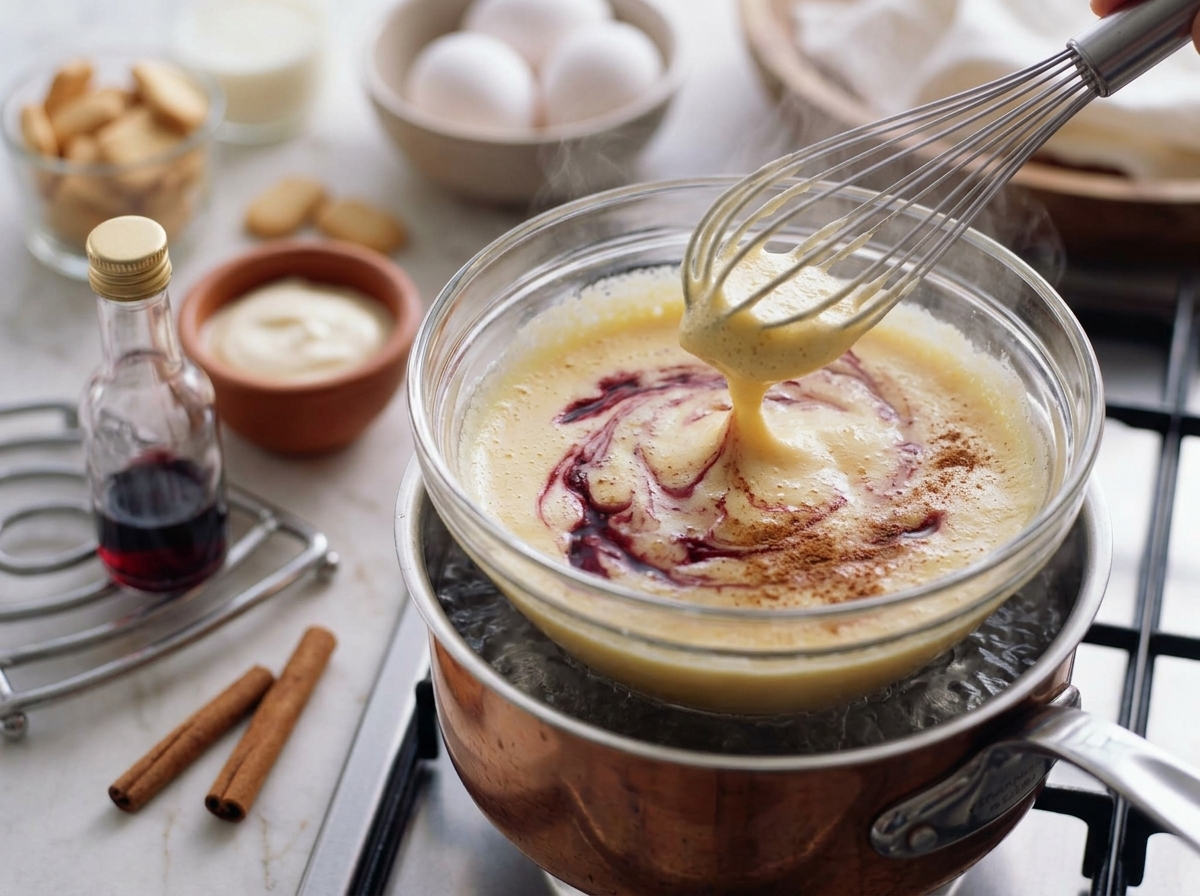
Tips for Success
- Whisk the egg yolks and sugar until pale before adding wine, this keeps the custard smooth.
- Pour the warm wine into the yolks slowly to temper them and prevent scrambling.
- Check the temperature with an instant-read thermometer near the 6-minute mark, it climbs fast at the end.
- Choose a dry, medium-bodied red wine, a sweet wine turns the custard cloying.
- Serve immediately in warmed cups so the custard doesn’t cool and separate on top.
Variations
- Stir in a tablespoon of grappa off the heat for the adult, after-dinner version served in Valtellina.
- Swap the cinnamon stick for a strip of orange peel for a brighter, citrus-forward custard.
- Pour the warm custard over cubes of stale bread for a traditional Alpine breakfast bowl.
Storage and Reheating
Rüsümada Valtellinese keeps in the fridge, covered, for up to 2 days. The texture is softest the day it’s made, but a gentle rewarm brings it back close to fresh.
To reheat, set the bowl back over a double boiler with barely simmering water and whisk constantly for 2 to 3 minutes, just until warm to the touch. Don’t push it past 60C/140F while reheating or the custard will separate into curds.
Skip the microwave entirely. There’s no way to whisk while it heats, and the yolks will scramble in patches.
Serving Suggestions
Pour Rüsümada Valtellinese into small cups or glasses while it’s still warm and dust the top with ground cinnamon. Dry biscotti or savoiardi on the side turn it into a light breakfast or an after-dinner cup.
In Valtellina it sometimes gets poured over cubes of stale bread instead of served plain, which turns the drink into more of a soft, spoonable breakfast.
For an adult version, stir a splash of grappa in right before serving and pass extra biscuits at the table.
FAQ
Why did my Rüsümada Valtellinese curdle instead of turning smooth?
Your custard likely got too hot, past 71C/160F, or sat directly over the flame instead of a double boiler. Egg yolks scramble quickly once they cross that point. Keep the bowl over barely simmering water, not touching it, and pull the pan the moment the mixture coats the back of a spoon.
Can I use white wine instead of red wine in Rüsümada Valtellinese?
You can, though it turns the drink into something closer to a classic zabaglione and loses the deep color that gives Rüsümada its name. A dry white like Sauvignon Blanc works fine texture-wise. Stick with a light, dry red such as Chiavennasca or Nebbiolo for the traditional Valtellina flavor and hue.
Can I make Rüsümada Valtellinese ahead of time and reheat it?
Yes, refrigerate it covered for up to 2 days and rewarm gently over a double boiler on low heat, whisking for 2 to 3 minutes. Don’t let it climb past 60C/140F while reheating or the custard will separate. It’s smoothest the day it’s made, but a gentle rewarm keeps the texture close.
What goes well with Rüsümada Valtellinese besides biscuits?
Dry biscotti, savoiardi, or plain amaretti all work well for dunking into the warm custard. In Valtellina it’s also poured over stale bread cubes for a simple breakfast, or paired with roasted chestnuts in colder months. A small glass of grappa on the side is traditional for an after-dinner version.
Is Rüsümada Valtellinese safe to eat with raw egg yolks?
The yolks aren’t raw by the time you serve it, the double boiler cooking brings the custard to 71C/160F, hot enough to reduce salmonella risk. Use fresh, properly refrigerated eggs and don’t skip the thermometer check if you’re unsure. Anyone pregnant or immunocompromised should confirm that temperature carefully before eating.
What’s the difference between Rüsümada Valtellinese and zabaglione?
Zabaglione is whisked with Marsala or another sweet fortified wine and stays pale gold, while Rüsümada Valtellinese uses dry red wine from the Valtellina valley, giving it a deeper rosy color and a less sweet finish. Rüsümada is also served warm as a drink rather than spooned as a dessert.