Jump to Recipe
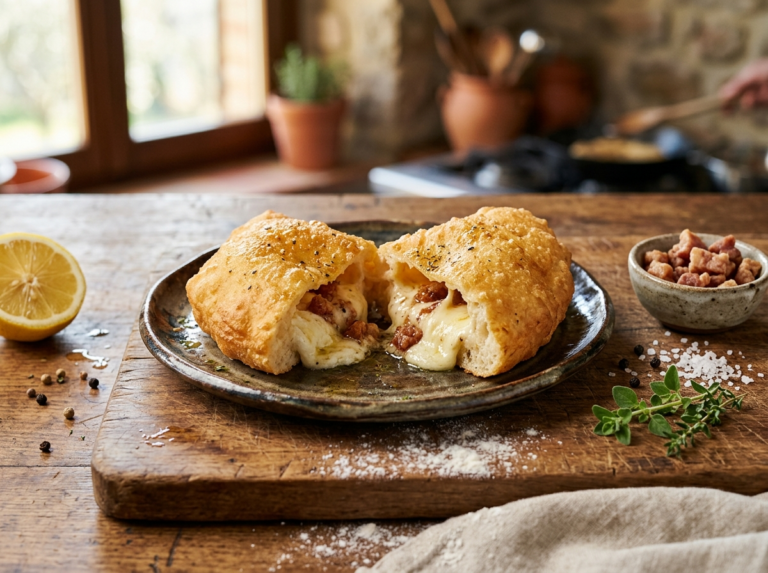
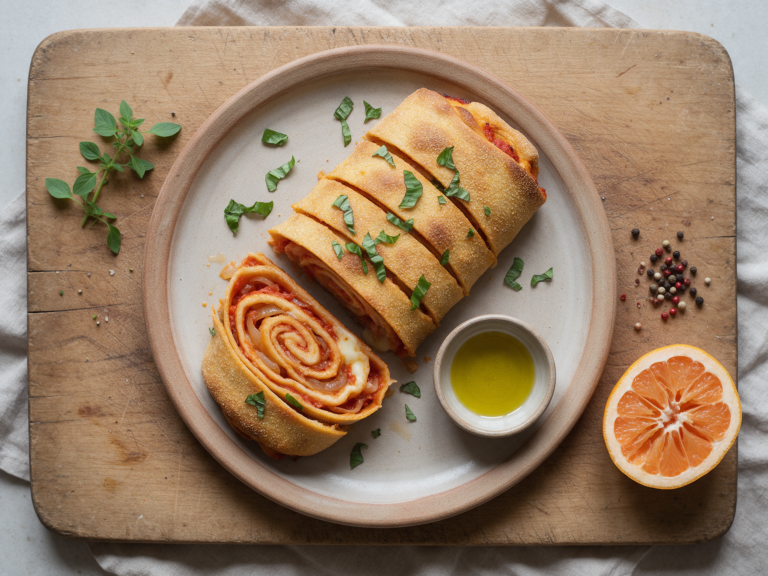
Scaccia ragusana is a rolled, stuffed Sicilian flatbread from Ragusa: thin semolina dough, a thick tomato and onion filling, and caciocavallo cheese, baked until the crust is crisp and the layers inside are soft.
The dough defines the result. Re-milled durum semolina (semola rimacinata) gives a golden color and a chewy bite that all-purpose flour can’t match, and you roll it to about 3 mm so the spiral stays visible when you slice.
The one thing that goes wrong is a wet filling. If the tomato still runs off the spoon, it soaks the thin dough from the inside and the bottom turns gummy. Simmer it until a spoon leaves a trail that stays open for a couple of seconds.
Plan on just over two hours, most of it rising and cooling. The filling cooks while the dough rises, so the actual work is light.
Why You’ll Love This Recipe
- Filling cooks while the dough rises, so hands-on time stays low
- Pantry staples: semolina, canned tomatoes, onion, one good cheese
- Slices hold their shape for lunchboxes and picnics
- Freezes after baking and reheats crisp from frozen
Ingredient Notes
- semola rimacinata: This is finely re-milled durum semolina, sold in most Italian groceries and online. If you can’t find it, use 300 g semolina plus 150 g bread flour, though the color will be paler.
- caciocavallo ragusano: A semi-hard stretched-curd cheese with a sharp, slightly nutty taste. Young provolone is the easiest substitute, and a 150 g provolone plus 50 g pecorino mix gives extra bite. Caciocavallo uses animal rennet.
- canned crushed tomatoes: Choose a brand with no added puree. Passata also works, but plan on a few extra minutes of simmering to reach the same thickness.
- instant dry yeast: If you only have active dry yeast, use 9 g and stir it into the warm water for 5 minutes before mixing.
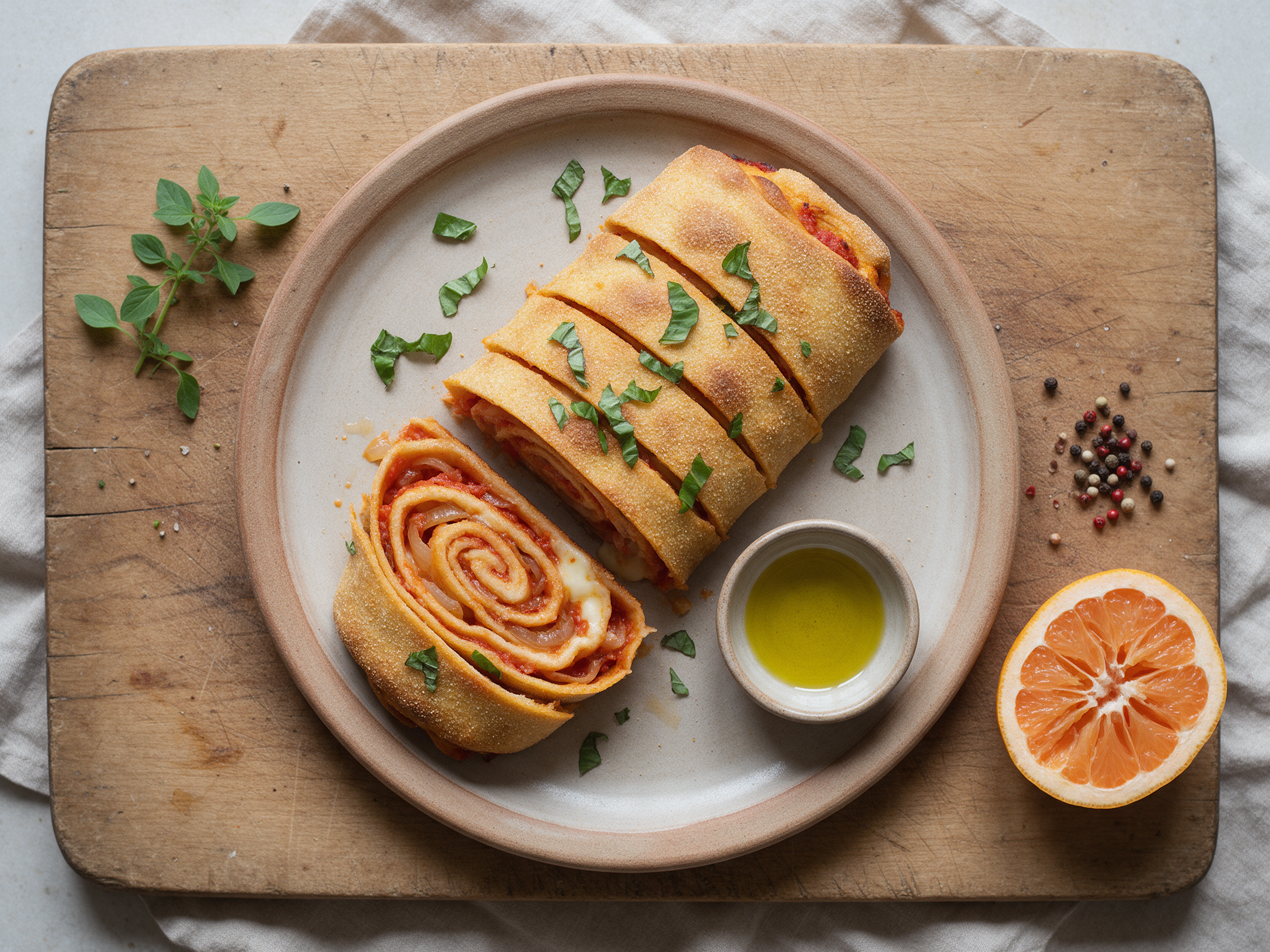
Rolled Scaccia Ragusana with Tomato and Caciocavallo
Ingredients
Method
- In a 3-quart / 3 L bowl, whisk 450 g semola rimacinata, the yeast and 8 g salt. Add the warm water and 2 tbsp olive oil and stir until no dry flour remains.
- Knead on the counter for 10 minutes until the dough is smooth and slightly tacky, dusting your hands with a little semolina only if it sticks. Return it to the bowl, cover, and let it rise for 60 minutes until doubled.
- Warm 2 tbsp olive oil in a 26 cm / 10-inch skillet over medium-low heat. Cook the sliced onion with a pinch of the salt for 10 minutes, stirring now and then, until soft and pale gold, like a quick soffritto.
- Add the crushed tomatoes, the remaining salt and the pepper. Simmer for 12 to 15 minutes, stirring, until a spoon dragged across the pan leaves a trail that stays open for a couple of seconds. Tear in the basil and cool the filling completely, about 30 minutes.
- Heat the oven to 220 C / 425 F with a rack in the middle and line a 33 x 46 cm / 13 x 18 inch sheet pan with parchment. Dust the counter with semolina.
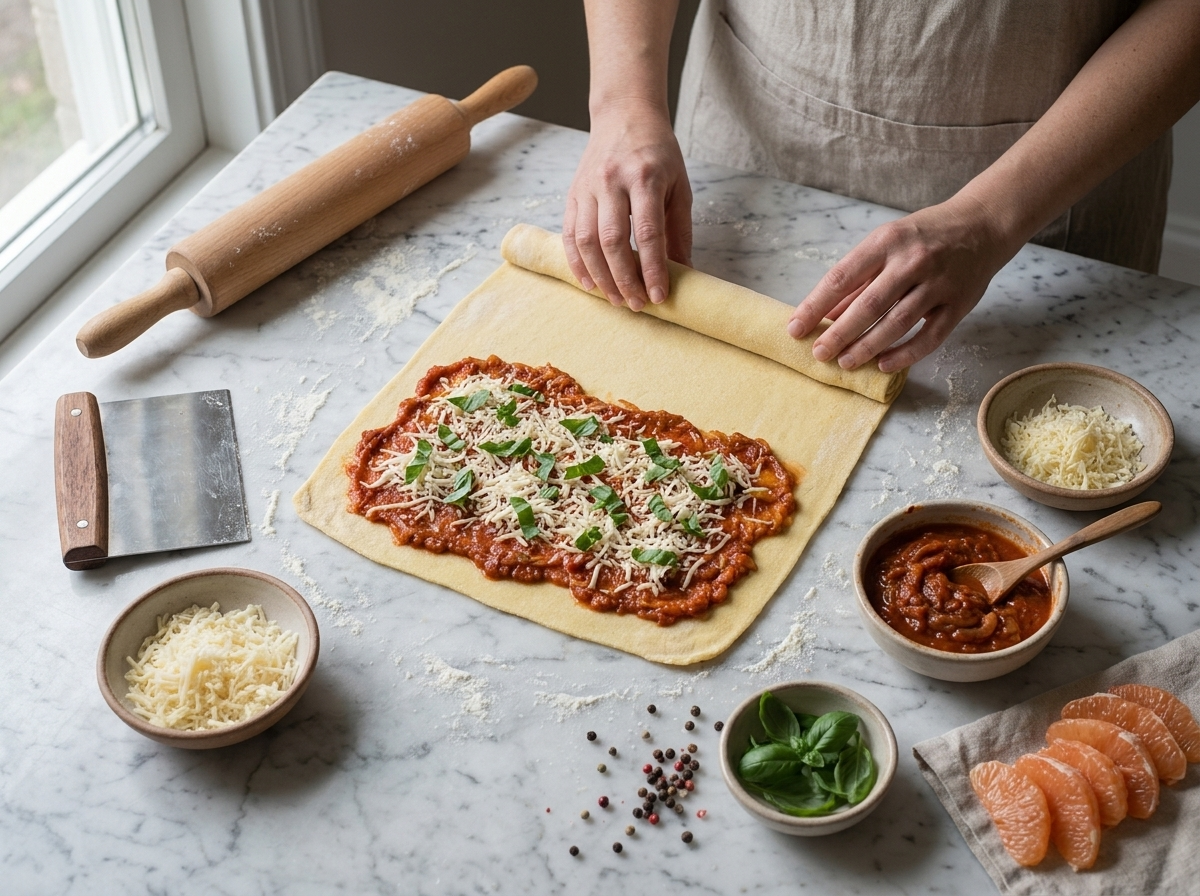
- Divide the risen dough into two pieces of about 385 g each. Roll one piece to a 30 x 40 cm / 12 x 16 inch rectangle about 3 mm thick, keeping the other covered. If it shrinks back, stretch it gently with your hands.
- Spread half the cooled filling over the rectangle, leaving a 2 cm border, and scatter with 100 g of the caciocavallo. Starting at a 30 cm short edge, roll tightly into a log, pinch the seam closed and tuck the ends under. Set it seam side down on the pan.
- Shape the second piece the same way and place it 5 cm from the first. Prick both logs 6 to 8 times with a fork and brush the tops with 1 tbsp olive oil.
- Bake for 28 minutes, rotating the pan after 15 minutes, until the crust is deep golden and the bottoms feel firm when tapped.
- Cool on the pan for 10 minutes, then slice into pieces about 4 cm thick with a serrated knife. Serve warm.
Notes
- Use fine semola rimacinata, since coarse semolina makes a gritty dough.
- Cool the filling completely before spreading it on the dough.
- Leave a 2 cm border so the seam seals as you roll.
- Wait 10 minutes after baking before slicing so the layers set.
Tips for Success
- Knead the semolina dough for a full 10 minutes, since it feels sticky at first and smooths out as the gluten develops.
- Cool the filling completely before spreading, because warm tomato softens the dough and the log won’t hold a tight spiral.
- Roll the dough to about 3 mm and leave a 2 cm border so the seam seals and nothing leaks.
- Grate the caciocavallo coarsely and scatter it evenly, so each slice gets cheese instead of one concentrated pocket.
- Slice with a serrated knife after the 10-minute cool, using a light sawing motion so the spiral doesn’t squash.
Variations
- Swap the tomato filling for blanched broccoli or cauliflower, chopped anchovy and a little pecorino, a traditional winter filling in Ragusa.
- Spread a thin layer of ricotta over the dough, add wilted spinach and a grating of lemon zest, and skip the tomato.
- Layer thin slices of fried eggplant over the tomato and cheese before rolling for a version closer to pasta alla Norma.
Storage and Reheating
Scaccia ragusana keeps in an airtight container in the fridge for 3 to 4 days. Let the logs cool completely first so trapped steam doesn’t soften the crust.
Reheat slices on a sheet pan at 180 C / 350 F for 10 to 12 minutes, until the edges crisp and the center is hot. A microwave works in a pinch but softens the crust.
To freeze, wrap each cooled log in foil and freeze for up to 2 months. Reheat from frozen at 180 C / 350 F for 20 to 25 minutes, opening the foil for the last 5 minutes.
Serving Suggestions
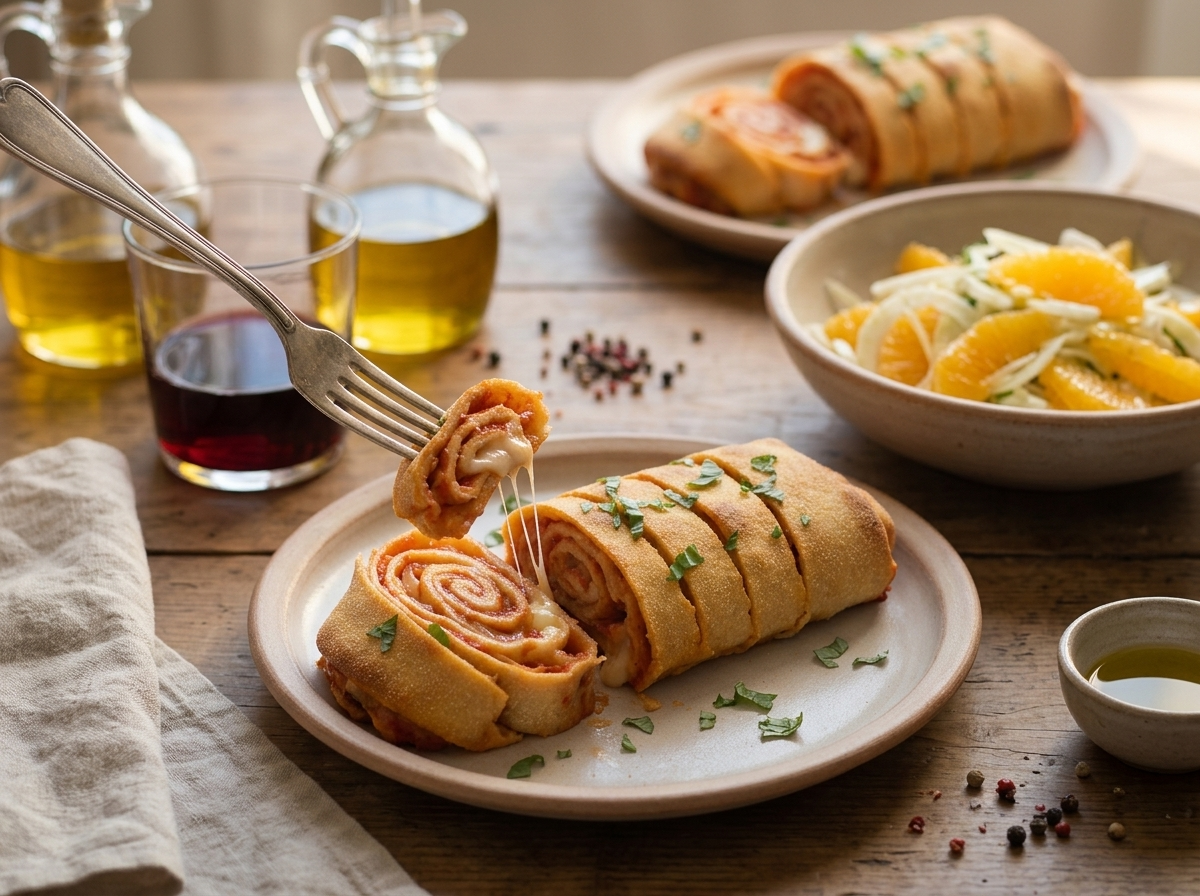
Serve scaccia ragusana warm or at room temperature, cut into thick slices so the spiral shows. It works as a light dinner, a shared plate before Palermo cauliflower pasta, or a picnic item.
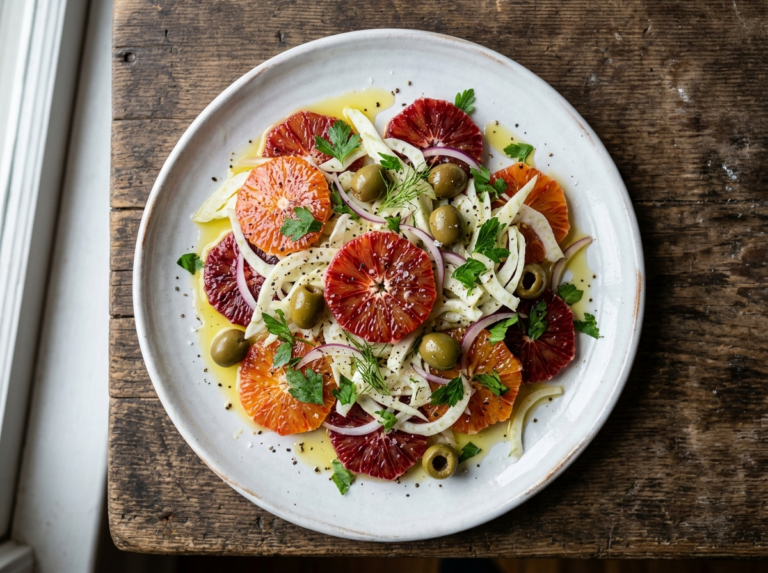
A salad of shaved fennel and orange segments with olive oil cuts through the cheese and tomato. On cooler nights, pair two slices with a bowl of lentil soup.
For wine, a glass of Cerasuolo di Vittoria, the red from the Ragusa area, fits well. A light Nero d’Avola does the job too.
FAQ
Why is my scaccia ragusana soggy on the bottom?
A soggy bottom almost always means the filling was too wet or still warm when you rolled it. Simmer the tomato and onion until a spoon dragged through leaves a trail that stays open for a couple of seconds, then cool it fully. Bake on the middle rack at 220 C / 425 F so the base crisps.
Can I use all-purpose flour instead of semola rimacinata for scaccia ragusana?
Yes, but the result is paler and softer, with less chew. All-purpose flour absorbs less water, so start with about 260 ml and add more only if the dough feels dry. A better compromise is 300 g semola rimacinata plus 150 g bread flour, which keeps some of the golden color and bite.
Can I freeze scaccia ragusana, and how do I reheat it?
Yes, freeze it after baking. Cool the logs completely, wrap each in foil, and freeze for up to 2 months. Reheat from frozen at 180 C / 350 F for 20 to 25 minutes, opening the foil for the last 5 minutes to re-crisp the crust. Freezing unbaked dough with the filling makes the dough soggy.
What goes well with scaccia ragusana for dinner?
A crisp salad of sliced fennel and orange cuts through the cheese and tomato, and a bowl of lentil or minestrone soup turns two slices into a full meal. For wine, Cerasuolo di Vittoria is the local red from the Ragusa area. A light Nero d’Avola also works.
What is the difference between scaccia ragusana and focaccia?
Scaccia ragusana is a thin semolina dough wrapped around a filling and baked in layers, while focaccia is a thick, open dough with toppings pressed on top. Some Ragusa bakers fold scaccia into a flat rectangle instead of rolling it. The filling and flavor stay the same either way.
Is scaccia ragusana vegetarian, and how do I make it dairy free?
As written it has no meat, so it’s vegetarian, though caciocavallo is made with animal rennet. To make it dairy free, leave out the cheese and stir 60 g chopped pitted green olives and 1 tbsp drained capers into the tomato filling instead. Keep the same baking time.