Jump to Recipe
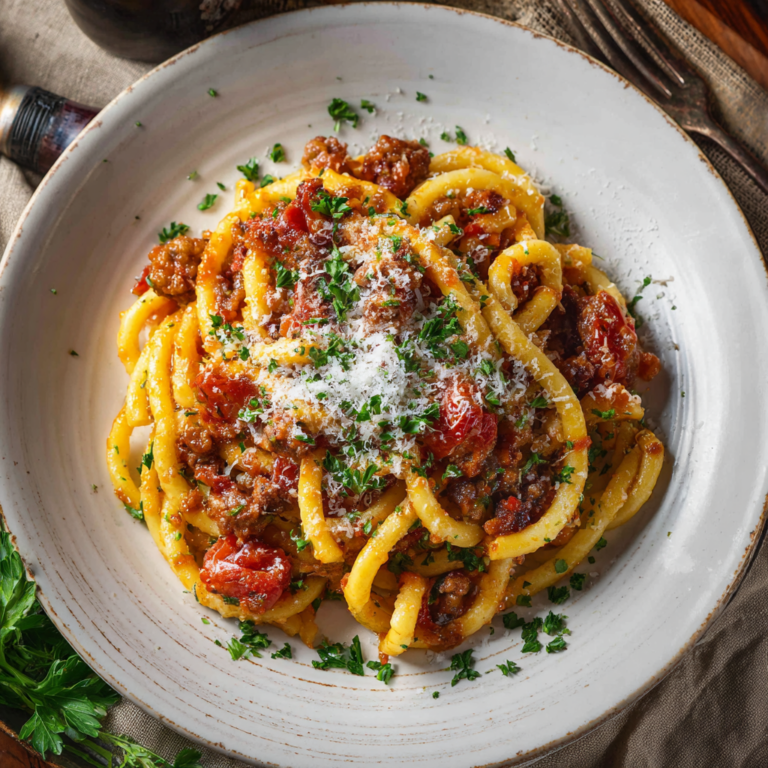
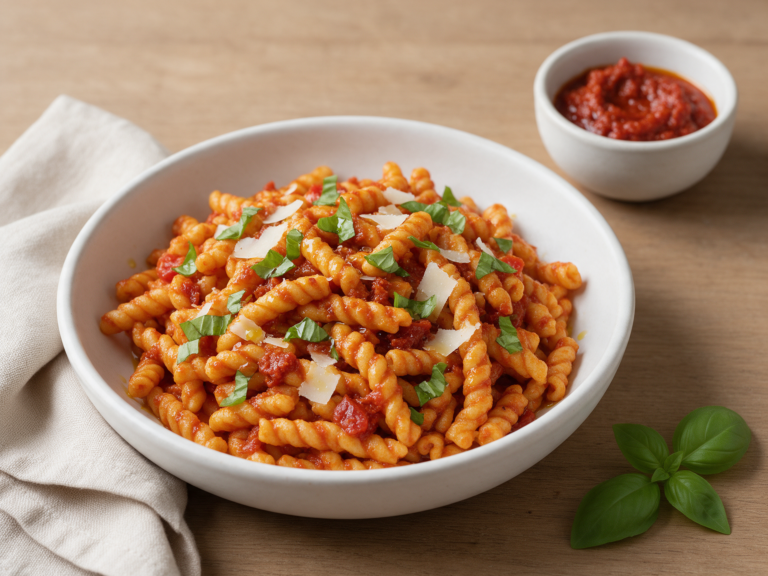
Fusilli al ferretto calabresi with nduja is hand-rolled semolina pasta, wrapped around a thin rod and tossed in a tomato sauce built on spreadable Calabrian salami. The dough is only semola and water, and the sauce takes about 25 minutes.
The pasta is the project. You mix the dough, rest it for 30 minutes, then wrap each small piece around a ferretto, a metal rod about 2 to 3 mm thick. The hollow spirals hold sauce far better than extruded fusilli.
Nduja does the job of fat and chili in one spoonful. It melts into the soffritto, turns the tomatoes brick red, and leaves a slow warmth instead of a sharp burn.
Total time is about 105 minutes, mostly shaping. Make the pasta on a weekend, freeze it, and a weeknight dinner takes about 25 minutes.
Why You’ll Love This Recipe
- Hand-rolled spirals trap sauce better than dried fusilli
- Nduja adds heat and body without a long simmer
- Shaped pasta freezes, so weeknight dinner takes 25 minutes
- The dough is only semola and water, with no eggs
Ingredient Notes
- semola rimacinata: This is twice-milled durum semolina, fine like flour. Coarse semolina won’t knead smooth. If you can’t find it, use 300 g semola rimacinata and 100 g 00 flour for a softer bite.
- nduja: Nduja is a spreadable, chili-heavy salami from Calabria, sold in jars or tubes at Italian delis. Soft sobrasada is the closest substitute, though milder, so add a pinch of chili flakes.
- canned whole peeled tomatoes: Choose whole tomatoes and crush them by hand. They taste cleaner and less metallic than pre-chopped, and San Marzano style cans are worth the small extra cost.
- pecorino: Pecorino Romano or a Calabrian pecorino gives the sharp, salty finish this sauce wants. Parmigiano Reggiano works and tastes rounder and less sharp.
- ferretto: A ferretto is a thin square or round metal rod. A metal knitting needle, a thin bamboo skewer or a clean bicycle spoke, all around 2 to 3 mm thick, does the same job.
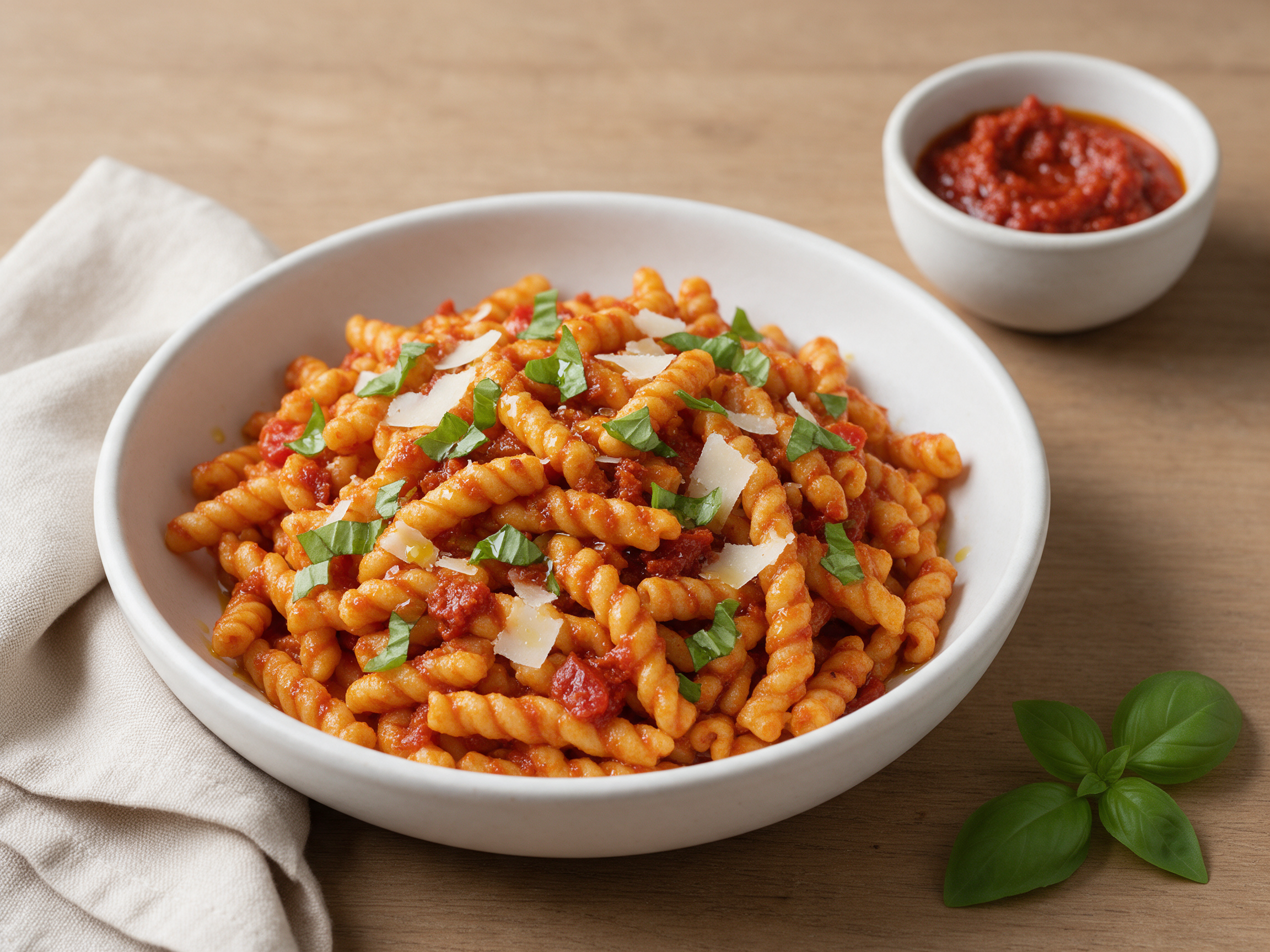
Homemade Fusilli al Ferretto Calabresi with Nduja Sauce
Ingredients
Method
- Mound the semola on a clean board, make a well and pour in 190 ml lukewarm water. Mix with a fork, then knead by hand for 10 minutes until the dough is smooth, firm and slightly tacky. If it feels crumbly or cracks when pressed, knead in water a teaspoon at a time, because dry dough splits when wrapped. Cover and rest for 30 minutes.
- Cut off a quarter of the dough and keep the rest wrapped. Roll the piece into a rope about 8 mm thick and cut it into 4 cm lengths.
- Lay the ferretto across one piece at a slight angle, press to flatten, then roll it back and forth under your palm so the dough wraps the rod in a spiral. Slide the fusilli off and set it on a semola-dusted sheet pan. Repeat with the remaining dough, which takes 30 to 40 minutes the first time.
- Pour 3 liters of water into a 5 L / 5-quart pot, add the salt, cover and bring to a boil while you make the sauce. In a 28 cm / 11-inch deep skillet, warm the olive oil over medium heat. Cook the onion for 5 minutes until soft and translucent, then add the garlic for 30 seconds.
- Add the nduja in spoonfuls and mash it into the oil with a wooden spoon. Cook for 2 to 3 minutes at medium heat until it melts and the oil turns brick red.
- Crush the tomatoes by hand into the skillet and pour in their juice. Simmer gently for about 14 minutes, stirring now and then, until the sauce coats the back of a spoon and oil pools at the edges.
- When the sauce has simmered for 5 minutes, drop the fusilli into the boiling water. Cook for 8 to 10 minutes, tasting at 8, until tender with a slight chew. Scoop out a mug of pasta water before you drain.
- Lift the pasta with a spider straight into the sauce, add 60 ml pasta water and toss over medium heat for 1 minute until the sauce turns glossy and clings to the spirals. Add a splash more water if it looks tight. Stir in the basil and half the pecorino, then serve at once with the rest of the pecorino on top.
Notes
- Rest the dough 30 minutes so the semolina hydrates and rolls without springing back.
- Keep the heat at medium so the nduja melts into the oil instead of frying.
- Add the pasta once the sauce has simmered 5 minutes so both finish together.
- Taste the sauce before adding salt, since nduja and pecorino are both salty.
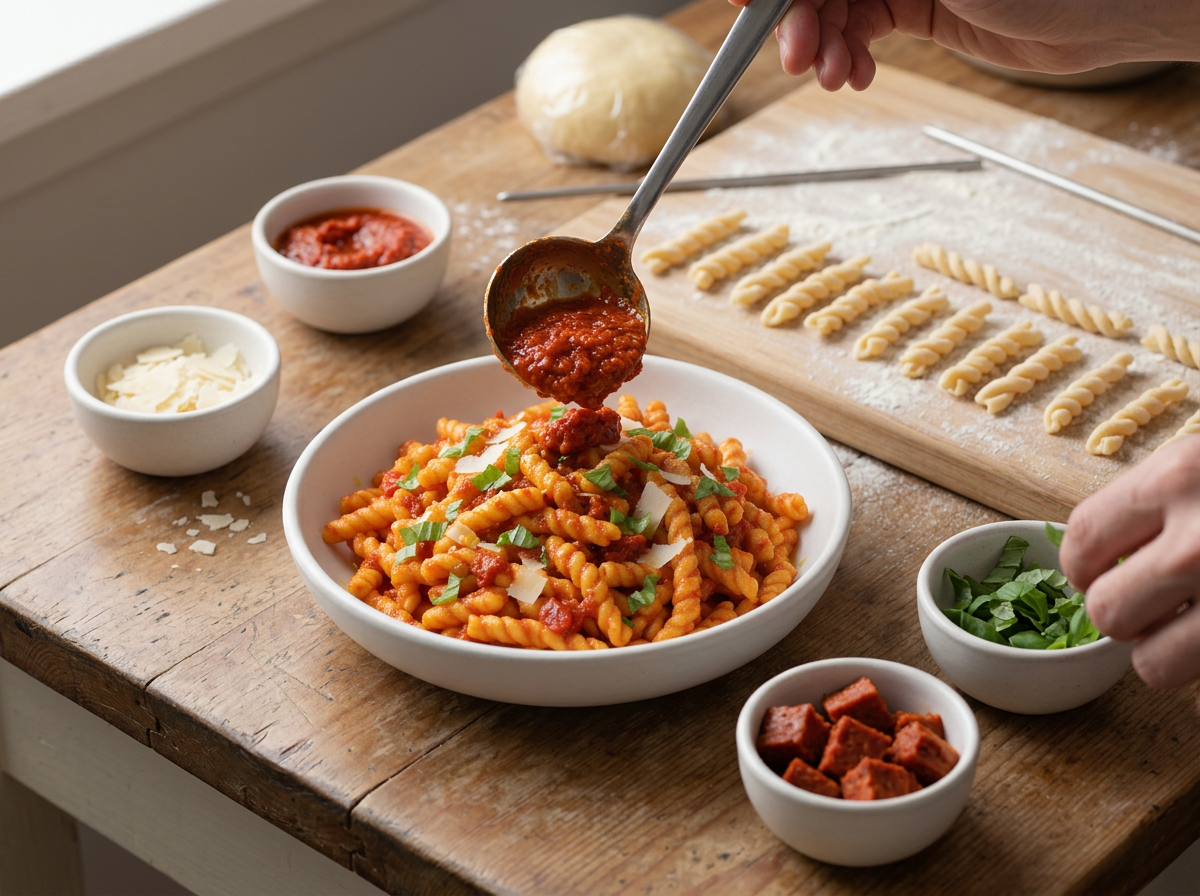
Tips for Success
- Use semola rimacinata rather than coarse semolina, so the dough kneads smooth and the spirals keep their shape in boiling water.
- Keep the dough you aren’t shaping wrapped in plastic, because semolina dough dries on the counter within a few minutes.
- Dust the tray with semola instead of flour and leave a little space between pieces so the spirals don’t fuse.
- Taste the sauce before adding any extra salt, since nduja, pecorino and the pasta water all carry plenty.
- Scoop out a mug of pasta water before draining, then add it a splash at a time so the sauce clings to the spirals.
Variations
- Replace half the nduja with 100 g crumbled Italian sausage for a milder sauce that still has body and a little fennel.
- Fold 150 g blanched cime di rapa or broccoli rabe into the skillet with the pasta for a bitter green against the heat.
- Finish each bowl with a spoonful of fresh ricotta, which cools the chili and makes the sauce creamier.
Storage and Reheating
Leftover sauced fusilli al ferretto keeps in an airtight container in the fridge for 3 days. Reheat it in a 28 cm / 11-inch skillet over medium-low heat with 2 to 3 tablespoons of water, stirring for 4 to 5 minutes until the pasta is steaming and the sauce loosens.
Uncooked shaped pasta keeps on a semola-dusted tray, loosely covered, in the fridge for up to 2 days. To freeze, leave the pieces on the tray for 1 hour until hard, then move them to a freezer bag for up to 2 months. Cook from frozen and add about 2 minutes to the boiling time.
The sauce on its own keeps 4 days in the fridge or 3 months in the freezer. Cool it within 2 hours of cooking before you store it.
Serving Suggestions
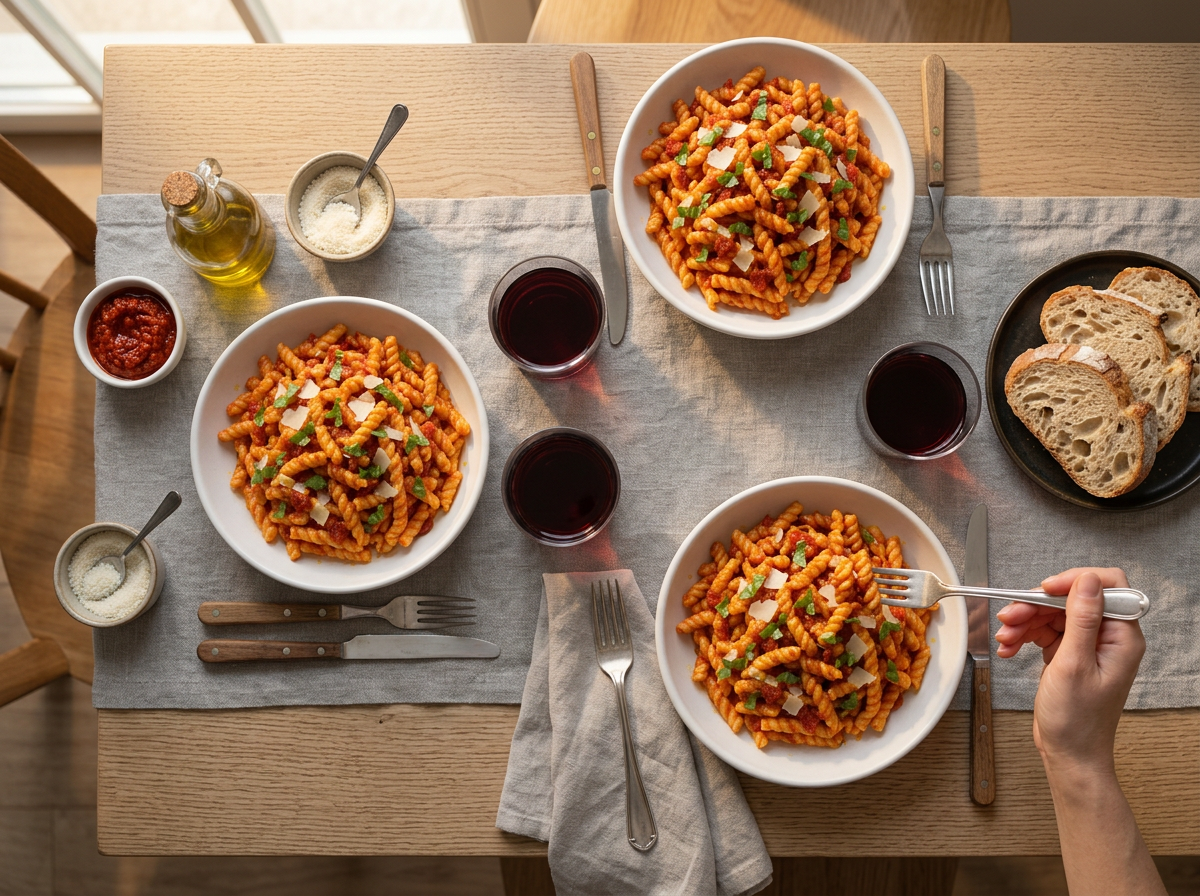
Serve fusilli al ferretto straight from the skillet into warm shallow bowls, with extra pecorino and a thread of olive oil on top. The spirals keep absorbing sauce, so plate within a couple of minutes of tossing.
A bitter-leaf salad of escarole or rocket with lemon and olive oil balances the chili and pork fat. A chilled Cirò Rosso from Calabria is the natural wine to pour.
Put out crusty bread on the side for the sauce left in the bowl. Roasted peppers or aubergine in olive oil also fit the meal if you’re feeding a crowd.
FAQ
Why is my fusilli al ferretto dough cracking when I wrap it around the rod?
Your dough is too dry. Knead in lukewarm water a teaspoon at a time until it feels firm and slightly tacky, and rub a damp palm over the rope before wrapping. Also keep the unused dough covered, since semolina dough dries out on the counter within a few minutes.
Can I use chorizo instead of nduja in this fusilli sauce?
Soft sobrasada is the closest swap, and I add 1/2 teaspoon of chili flakes because it’s milder. Dry-cured chorizo works too, but it stays in pieces instead of melting into the oil, so the sauce loses its brick-red color and body. Use the same 150 g either way.
Can I freeze the shaped fusilli al ferretto before cooking?
Yes, they freeze well. Spread the pieces on a semola-dusted tray without touching, freeze for 1 hour until hard, then move them to a freezer bag for up to 2 months. Cook straight from frozen in boiling salted water for 10 to 12 minutes. Don’t thaw them first or they’ll clump.
How do I know when the nduja tomato sauce is ready?
The sauce is ready after about 14 minutes of gentle simmering, when it coats the back of a spoon and orange-red oil pools at the edges. The tomatoes darken from bright red to brick as the nduja melts in. If it still looks watery, give it 2 more minutes before adding the pasta.
What wine goes with fusilli al ferretto with nduja?
A lightly chilled Cirò Rosso from Calabria is the natural match. Its bright acidity and red-fruit flavor cut through the pork fat without adding heat. A dry rosato works if you want something lighter, and a cold lager handles the chili well too.
What’s the difference between fusilli al ferretto and regular fusilli?
Fusilli al ferretto is shaped by hand from semola and water, wrapped around a thin rod so the spiral is hollow and slightly uneven. Store-bought fusilli is extruded through a die and twisted into a tighter, smoother corkscrew. The hand-rolled version holds more sauce and has a chewier bite.