Jump to Recipe
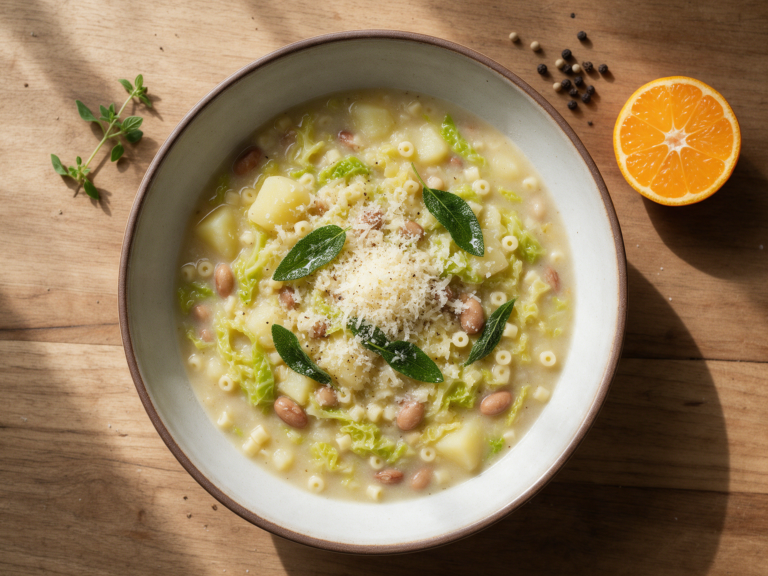
Mal maridada Valtellinese is a thick soup from Valtellina in northern Lombardy, built from potatoes, savoy cabbage, borlotti beans and short pasta. It cooks in one pot and finishes with Casera cheese and a spoonful of sage butter. The dialect name means “badly married,” usually explained by the odd pairing of pasta and potatoes in the same bowl.
Versions change from village to village, so treat this as my weeknight take. The texture defines the result: dense enough that a spoon holds its trail, not brothy.
Total time is 63 minutes, and most of it is hands-off simmering. Everything comes from the pantry or a basic grocery run, and the Casera has easy substitutes.
Watch the pasta. It keeps absorbing broth after the heat is off, so pull the pot when the ditalini is al dente, rest it 5 minutes, and serve right away.
Why You’ll Love This Recipe
- One pot, and most of the time is simmering
- Built from pantry staples and cheap vegetables
- Reheats well for lunches across the week
- Thick enough to eat as a full main course
Ingredient Notes
- Casera cheese: A semi-hard Valtellina cow’s milk cheese that melts smoothly. Young Fontina or mild Asiago are the closest swaps, and Parmigiano works at 60 g.
- potatoes: Use yellow-fleshed potatoes such as Yukon Gold. They hold their edges while still thickening the broth, which floury russets don’t.
- savoy cabbage: Its crinkled leaves turn silky and sweet. Green cabbage works but stays firmer, so add 5 minutes to the simmer.
- borlotti beans: Canned beans save an hour. Cannellini are a fine substitute, though borlotti keep a creamier center.
- ditalini: Any short tube or small shell works. Broken spaghetti pieces are the budget option and cook in about the same time.
- vegetable broth: Use a good one, since it is the base of the soup. Chicken or beef broth gives a deeper result if you don’t need it vegetarian.
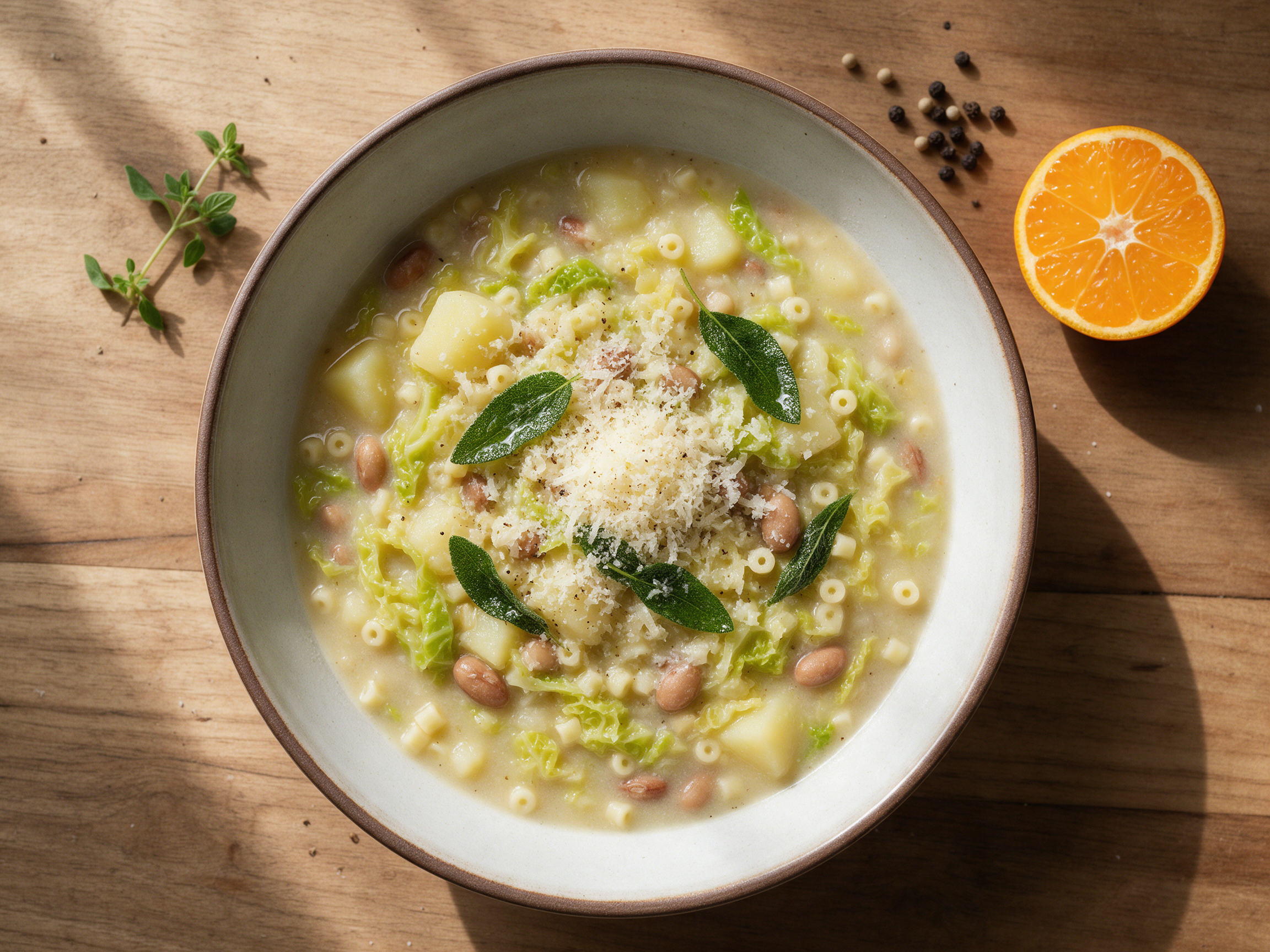
Simmered Mal Maridada Valtellinese with Potato and Cabbage
Ingredients
Method
- Melt 40 g butter in a 26 cm / 10-inch (4.7 L / 5-quart) Dutch oven over medium-low heat. Add the onion, 4 thinly sliced sage leaves and a pinch of salt, and cook for 8 minutes, stirring, until soft and pale gold with no browning. Add the garlic for the last minute.
- Stir in the potatoes and cabbage and cook for 5 minutes, stirring often, until the cabbage has wilted by about a third and everything is coated in butter.
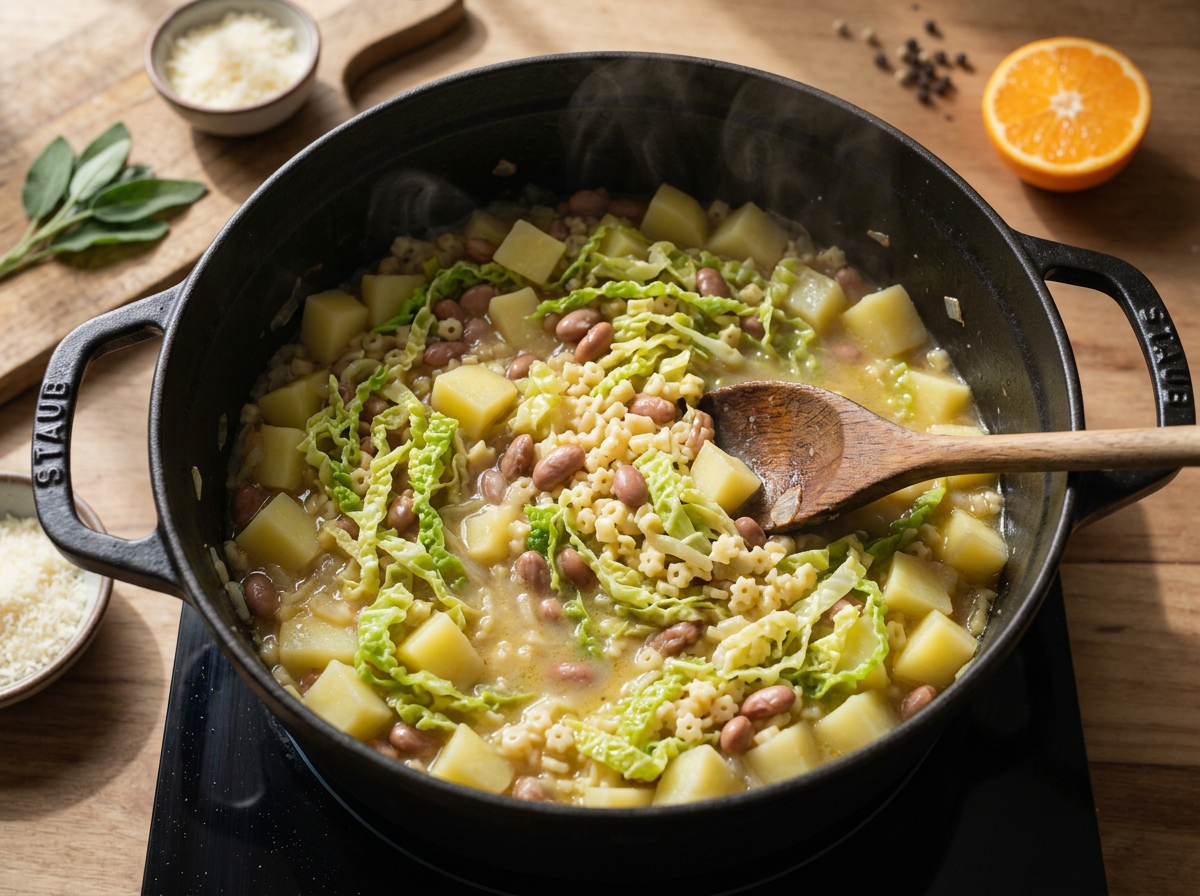
- Pour in the hot broth, add the pepper and salt, and bring to a boil. Reduce to a gentle simmer, partly cover, and cook for 15 minutes until the potatoes are tender when pierced with a knife but still hold their edges.
- Stir in the beans and ditalini. Simmer uncovered for 9 to 10 minutes, stirring often so the pasta doesn't stick, until the ditalini is al dente and a spoon leaves a trail. If the pot looks tight, add up to 100 ml hot water.
- Take the pot off the heat, stir in 70 g of the Casera, cover, and rest for 5 minutes. Taste and adjust the salt.
- During the rest, melt 20 g butter in a 20 cm / 8-inch skillet over medium heat. Add the remaining 4 sage leaves and cook for 2 to 3 minutes until the butter foams, smells nutty, and the leaves crisp. Ladle the soup into bowls, spoon over the sage butter, and top with the remaining 30 g Casera.
Notes
- Soften the onion in butter for the full 8 minutes without browning it.
- Add the pasta only after the potatoes are tender when pierced with a knife.
- Thin with hot water, 100 ml at a time, if the pot gets too thick.
- Make the sage butter during the 5-minute rest so it goes on hot.
Tips for Success
- Cut potatoes into 2 cm cubes so they stay intact through the 15-minute simmer instead of dissolving into the broth.
- Heat the broth before pouring it in, so the soffritto and vegetables keep cooking and the pot stays at a simmer.
- Stir often once the pasta goes in, scraping the bottom, because starch from the ditalini and potatoes catches easily.
- Stop cooking when the ditalini is al dente, then rest the pot covered for 5 minutes to reach the right thickness.
- Grate the Casera yourself and stir it in off the heat, so it melts smoothly instead of turning stringy.
Variations
- Render 100 g diced pancetta with the onion before adding the vegetables for a smoky, meatier version of the soup.
- Swap the ditalini for 150 g broken pizzoccheri, the buckwheat pasta of the same valley, and cook until tender, about 12 minutes.
- Drop the beans and add an extra 150 g potato for a lighter, starchier soup closer to a vellutata.
Storage and Reheating
Cool the soup within 2 hours, then keep it in a sealed container in the fridge for 3 to 4 days. It will be much thicker the next day because the pasta and potatoes keep absorbing liquid.
Reheat it in a saucepan over medium-low heat with 120 ml / 1/2 cup broth or water per two portions. Stir for 8 to 10 minutes until steaming. The extra liquid stops the pasta from turning gluey.
I don’t freeze this soup. Thawed potatoes go grainy and the pasta turns soft, so the fridge is the better make-ahead route.
Serving Suggestions
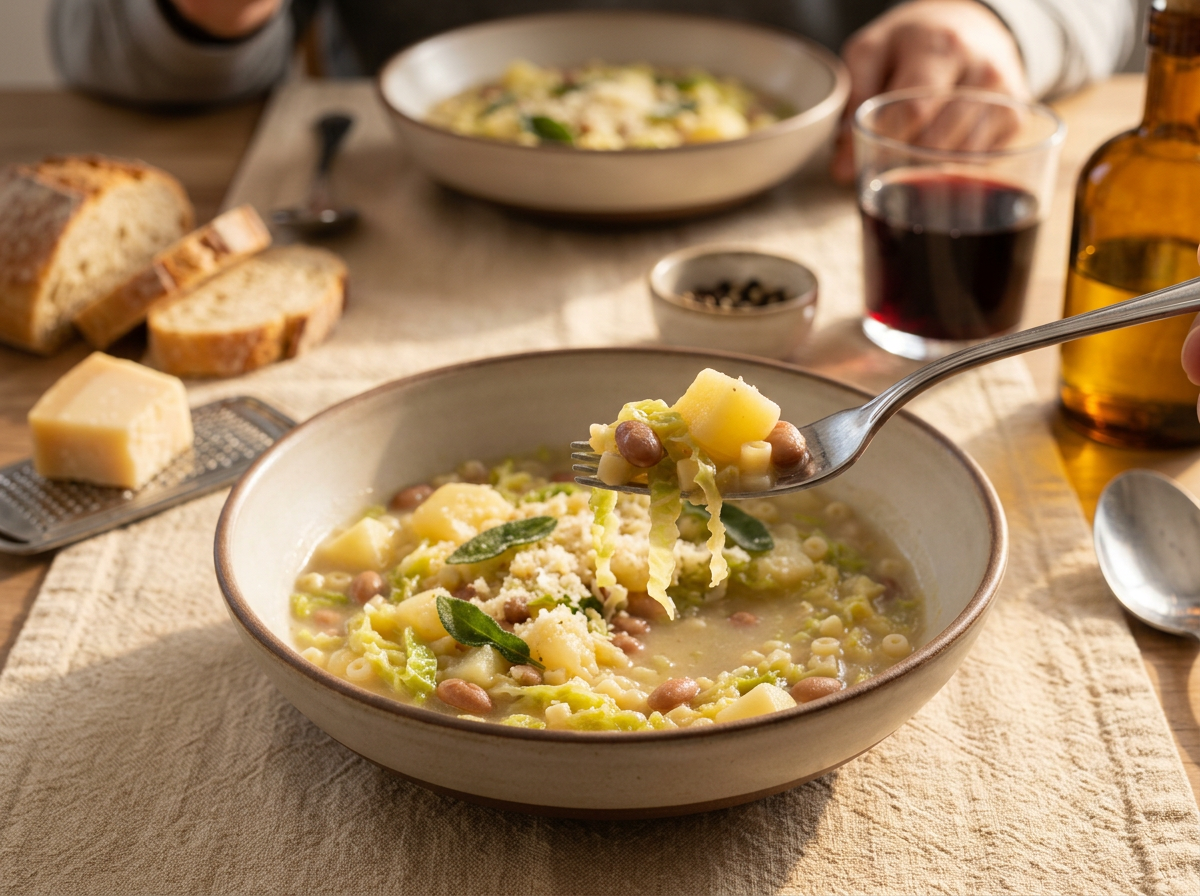
Ladle the soup into warm bowls, spoon the sage butter over the top, and finish with the remaining grated Casera and a few turns of black pepper. Serve it hot after the 5-minute rest.
Crusty bread is the natural partner for the last spoonfuls. A bitter green salad, such as radicchio or escarole with lemon and olive oil, cuts through the butter and cheese.
For a glass, a light Nebbiolo-based red like Rosso di Valtellina keeps things local. A bowl is filling enough that the soup works as the whole dinner.
FAQ
Why is my mal maridada Valtellinese gluey instead of brothy?
The pasta cooked too long or sat in the pot after cooking. Pull the soup when the ditalini still has a slight bite, around 9 to 10 minutes, then rest it off the heat for 5 minutes. If it tightens further, stir in 120 ml / 1/2 cup hot broth right before serving.
Can I use Parmigiano instead of Casera in mal maridada?
Yes, use 60 g of grated Parmigiano Reggiano in place of the 100 g of Casera. It’s saltier and sharper, so taste before adding more salt. Young Fontina or mild Asiago melt closer to Casera and keep the soup silky when stirred in off the heat.
Can I freeze mal maridada with the potatoes and pasta in it?
I don’t freeze it, because thawed potatoes turn grainy and the pasta goes soft. Refrigerate instead, where it keeps 3 to 4 days in a sealed container. Reheat gently on the stove with a splash of broth, and it tastes close to day one.
What goes with mal maridada Valtellinese for a full dinner?
Serve it with crusty bread and a bitter green salad dressed with lemon and olive oil. A glass of Rosso di Valtellina, a light Nebbiolo-based red from the same valley, suits the butter and cheese. Treat the soup as the main course, since a bowl runs about 360 calories.
Is mal maridada Valtellinese vegetarian or gluten free?
It’s vegetarian with vegetable broth, though check the Casera label if you avoid animal rennet. It isn’t gluten free as written, but any short gluten-free pasta works. Cook it per the packet and taste a couple of minutes early, since gluten-free shapes soften faster, and stir gently so it doesn’t break up.
What is the difference between mal maridada and pizzoccheri della Valtellina?
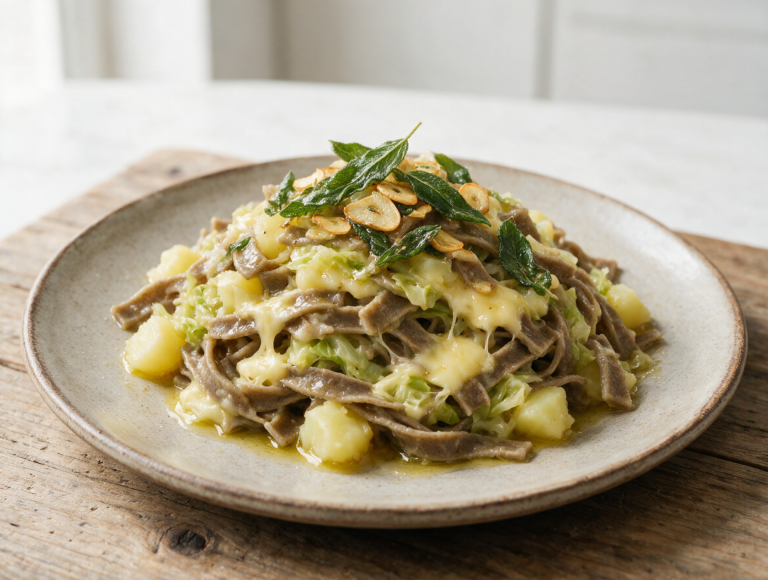
Mal maridada is a spoonable soup with short pasta, while pizzoccheri is a plated dish of buckwheat ribbons tossed with potatoes, greens, and melted Valtellina cheese. The ingredients overlap, but mal maridada is wetter and softer. Pizzoccheri is the one with the buckwheat bite.