Jump to Recipe
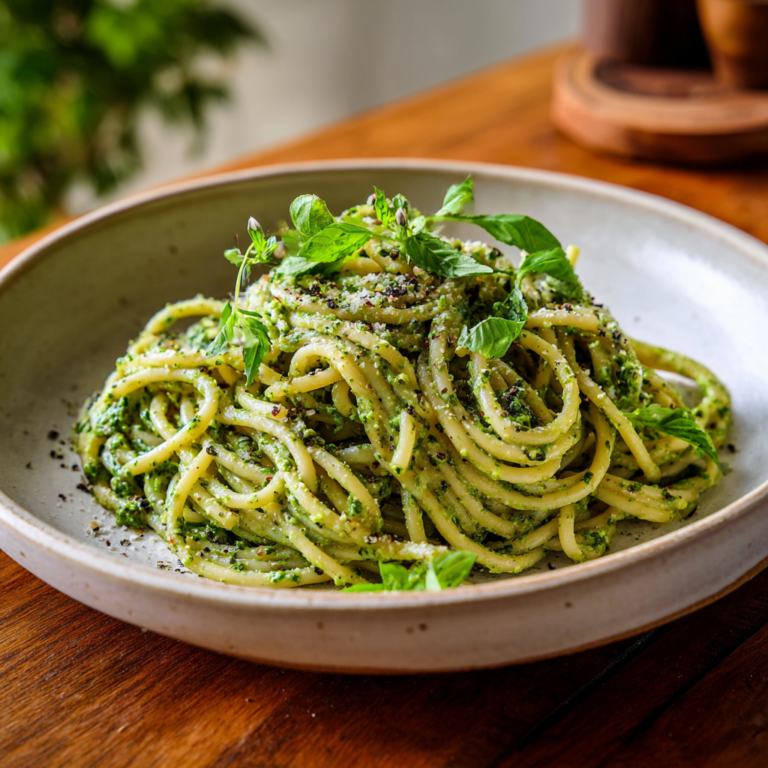
Hand-rolled pìpi di frumento dell’Aprica are short, pinched pieces of eggless wheat pasta, boiled for 5 to 7 minutes and finished in browned sage butter with cubes of Casera. Aprica is a mountain town in Valtellina, Lombardy, and the sauce follows that Alpine pantry: butter, sage, aged cheese. This is my home method, not a certified formula.
The dough is only 400 g flour, 190 ml water and a little salt. The texture, not the sauce, defines the dish. Each piece should be chewy at the edges with a thin, tender center that holds butter in its curl.
One judgment call matters. Skip the 30-minute rest and the ropes spring back and shrink as you cut them, so the pieces come out uneven and tough.
Shape a double batch on a weekend and freeze half. Weeknight cooking then takes about 10 minutes.
Why You’ll Love This Recipe
- The dough needs only flour, water and salt
- Shaped pieces freeze well and cook in minutes
- Browned butter and Casera make a glossy sauce without cream
- Pinched curls trap sauce in every bite
Ingredient Notes
- All-purpose flour: Italian type 0 or plain all-purpose both work. Avoid bread flour, which makes the dough fight you when rolling.
- Casera cheese: Valtellina Casera is semi-firm and melts into soft pockets. Young fontina or mild Asiago are the closest substitutes.
- Unsalted butter: Unsalted lets you control seasoning, since the cheeses are already salty. Use a European-style butter if you can, for deeper browning.
- Fresh sage: Fresh leaves crisp in the butter and flavor it. Dried sage turns dusty here, so leave it out if you can’t get fresh.
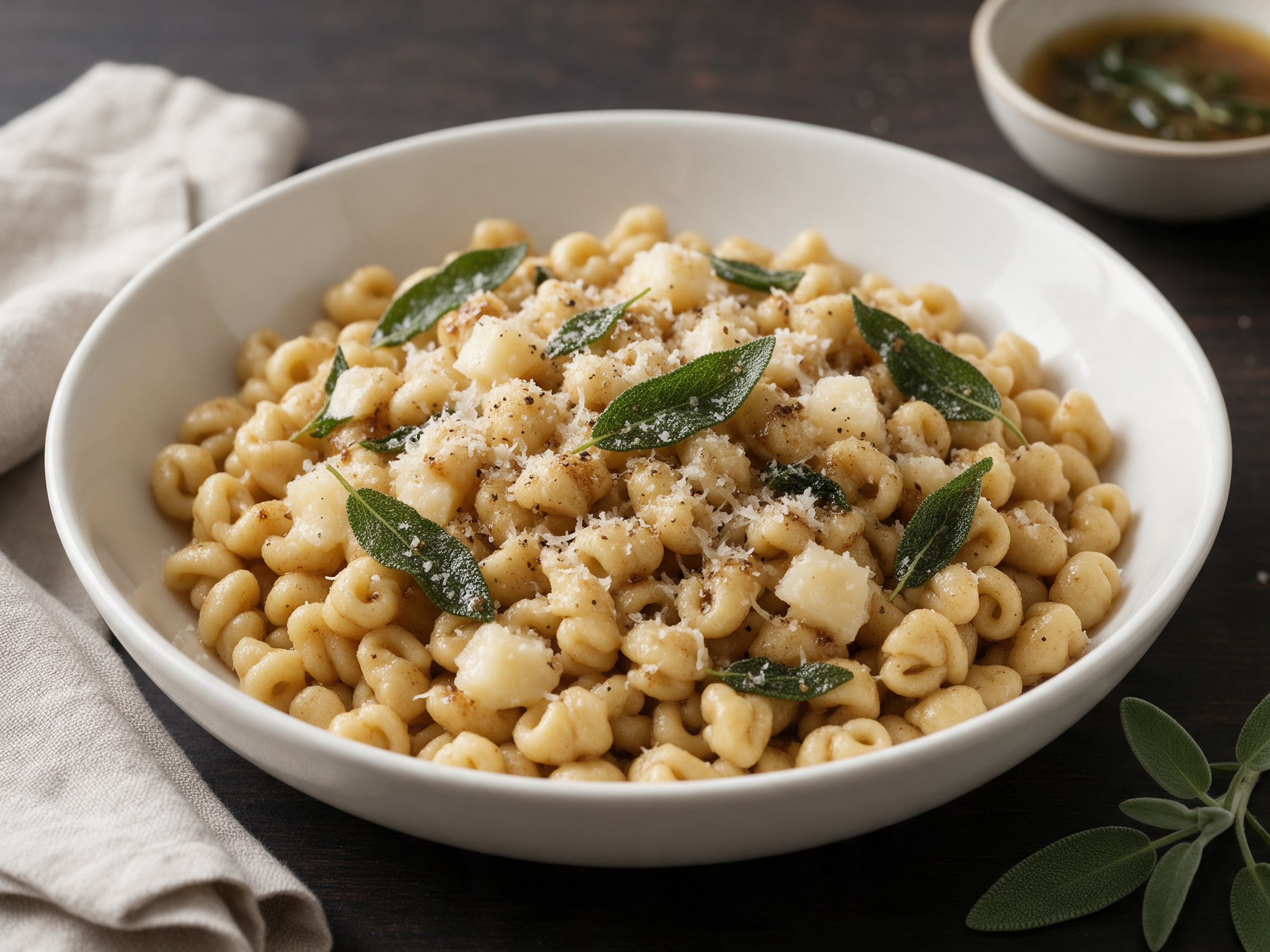
Hand-Rolled Pìpi di Frumento dell’Aprica with Sage Butter
Ingredients
Method
- Mound the flour and fine salt on a clean counter or in a wide bowl and make a well. Add the warm water in three additions, mixing with your fingers until a shaggy dough forms. Knead for 8 minutes until the dough is smooth and springs back slowly when pressed. If it feels stiff, add water 1 tsp at a time.
- Shape the dough into a ball, cover it with an upturned bowl or plastic wrap, and rest for 30 minutes at room temperature.
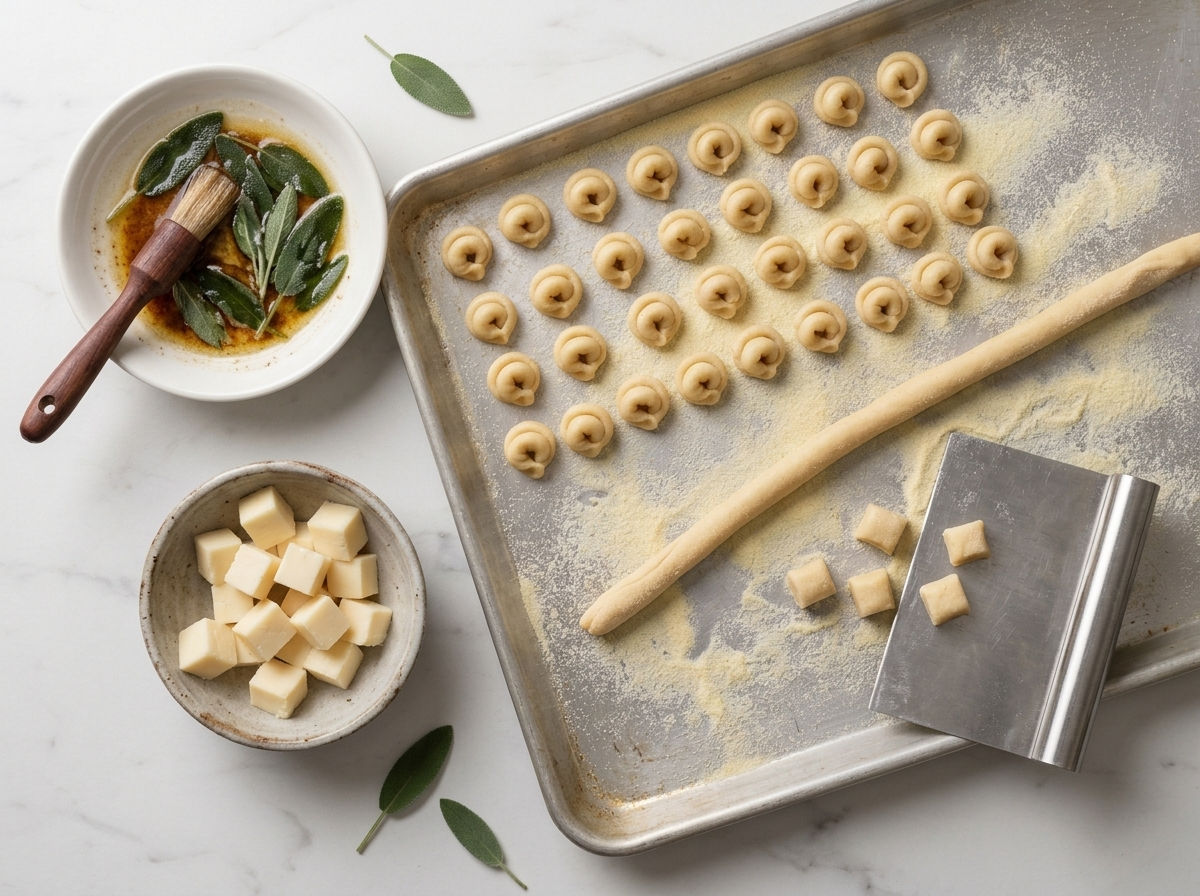
- Dust a 33 x 46 cm / 13 x 18 inch sheet pan with the semolina. Cut the dough into 6 pieces and keep 5 covered. Roll one piece into a rope about 1 cm thick, cut it into 2 cm lengths, then press each piece with your thumb and drag it toward you so it curls into a small open shell. Transfer to the pan and repeat with the remaining dough. When about half is shaped, set a 5-liter / 5-quart pot with 4 liters / 4 quarts of water and the coarse salt over high heat.
- When the water boils, add the pìpi and stir once. Boil for 5 to 7 minutes, until a piece bitten in half is tender with a slight chew and no chalky core. Meanwhile, melt the butter in a 28 cm / 11-inch skillet over medium heat. Add the sage and garlic and cook for 3 to 4 minutes until the butter foams, smells nutty and shows amber flecks. Remove the garlic.
- Scoop out 60 ml of pasta water, then lift the pìpi into the skillet with a spider strainer. Take the skillet off the heat, add the water, Casera and half the Grana Padano, and toss for about 1 minute until the cheese softens and the sauce turns glossy. Serve within 5 minutes with the remaining Grana Padano and black pepper.
Notes
- Rest the dough 30 minutes before rolling, or the ropes will shrink back.
- Keep ropes about 1 cm thick and cut pieces 2 cm long for even cooking.
- Reserve 60 ml pasta water before draining, since it loosens the sauce.
- Serve within 5 minutes of tossing, while the sauce is glossy.
Tips for Success
- Weigh the flour and water on a scale, since this dough has low hydration and a few extra grams of water change it.
- Rest the dough a full 30 minutes under a bowl or wrap so the gluten relaxes and the ropes stop springing back.
- Keep unshaped dough covered at all times, because a dried skin on the surface makes pieces crack when you pinch them.
- Bite one piece in half after 5 minutes of boiling and look for a pale core, then cook a minute longer if you see one.
- Toss the pasta with the cheese off the heat so the Casera softens and coats the pieces instead of turning stringy.
Variations
- Add 150 g thinly sliced Savoy cabbage to the boiling water for the last 3 minutes, then toss it into the butter with the pasta.
- Swap half the all-purpose flour for whole wheat flour for a nuttier dough, and add 10 ml extra water.
- Use 4 tbsp olive oil in place of butter and skip the cheese, then finish with toasted breadcrumbs for a dairy-free version.
Storage and Reheating
Cooked and sauced pìpi keep for 3 days in an airtight container in the refrigerator. The sauce tightens as it cools, which is normal.
Reheat them in a 28 cm / 11-inch skillet over medium-low heat with 2 to 3 tbsp water, stirring for 3 to 4 minutes until hot and glossy again. Avoid the microwave, which makes the butter separate and the cheese oily.
For longer storage, freeze the shaped, uncooked pieces in a single layer on a sheet pan for 1 hour, then bag them. They keep for 2 months and cook straight from frozen in 1 to 2 minutes more than fresh.
Serving Suggestions
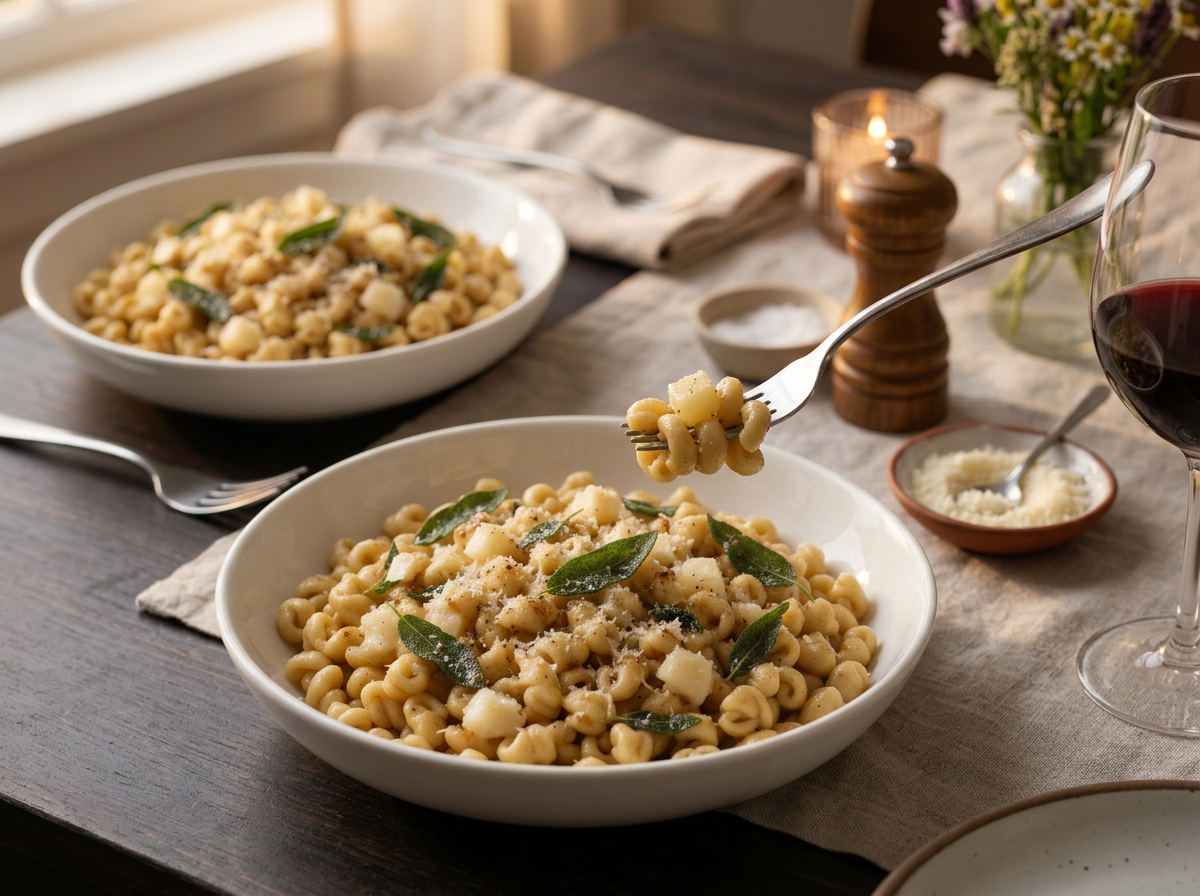
Serve the pìpi in warmed bowls within 5 minutes of tossing, with the remaining Grana Padano and black pepper on top. The sauce is at its silkiest right after it’s made.
Sautéed Swiss chard or bitter greens with a squeeze of lemon balance the richness. A glass of Rosso di Valtellina suits the butter and cheese well.
For a lighter meal, serve a small portion as a first course before a simple roast or grilled sausage.
FAQ
How do I know when pìpi di frumento are cooked through?
Pìpi are done after 5 to 7 minutes of boiling, when a piece bitten in half is tender with a slight chew and no chalky white core. Taste one at 5 minutes. Thicker pieces from ropes over 1 cm may need the full 7 minutes.
Can I use fontina instead of Casera for pìpi?
Yes, young fontina is the closest swap. It melts a little faster and tastes milder, so add it off the heat and toss for about 1 minute. Mild Asiago also works, though it gives a firmer, less creamy finish than Casera.
Why are my hand-rolled pìpi tough and rubbery?
Tough pìpi usually come from skipping the 30-minute dough rest or rolling ropes thicker than 1 cm. Unrested gluten stays tight and the pasta turns dense. Rest the dough under a bowl, keep ropes about 1 cm thick, and pinch the pieces thin.
Can I freeze pìpi di frumento before cooking them?
Yes, freeze the shaped pieces on a sheet pan for 1 hour, then transfer them to a bag for up to 2 months. Cook straight from frozen without thawing. Add 1 to 2 minutes to the boiling time, so they cook for 6 to 9 minutes in total.
How do I make pìpi dairy free?
The dough is already dairy free and egg free, so only the sauce changes. Warm 4 tbsp olive oil with the sage and garlic until the sage crisps, then toss the pasta in it with a splash of pasta water. Finish with toasted breadcrumbs instead of cheese.
What is the difference between pìpi and pizzoccheri?
Pizzoccheri are Valtellina ribbons made with buckwheat flour, while pìpi in this recipe are short pinched pieces made from wheat flour only. Pìpi taste milder and cook in 5 to 7 minutes. Both are often finished with butter, sage and Casera, the way a Valtellina minestra de dumèga is.