Jump to Recipe
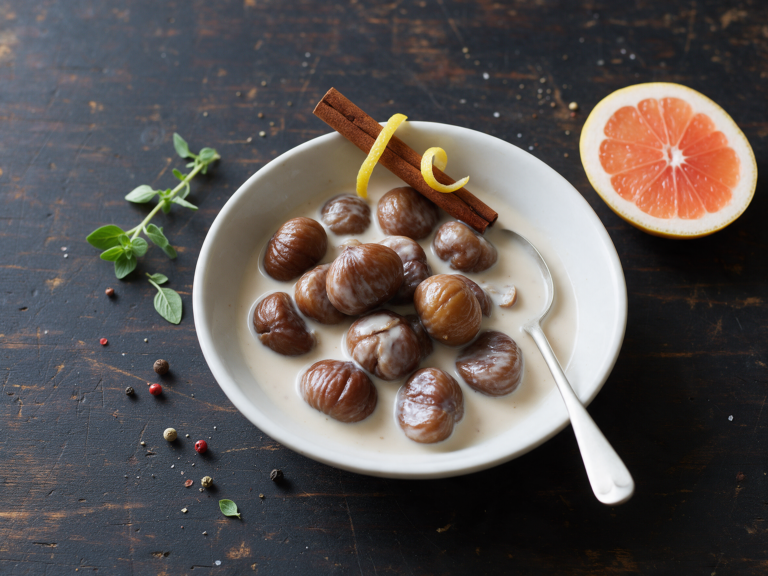
Castagne al latte della Valtellina is a bowl of dried chestnuts simmered in whole milk until the chestnuts turn soft and mealy and the milk reduces to a loose cream. It comes from the Alpine valleys of northern Lombardy, where dried chestnuts were a winter staple.
You’ll soak the chestnuts overnight, then give them about an hour on the stove. The texture defines the result, so the work is patience, not technique. Dried chestnuts taste toasty and gently sweet, and the milk takes that on.
Heat is the one thing to watch. Milk scorches on the bottom of the pot fast, and a burnt layer flavors the whole batch. Hold it at a bare simmer and scrape the bottom with a wooden spoon every few minutes.
Serve it warm as dessert, or as a light supper on a cold night.
Why You’ll Love This Recipe
- Six ingredients and one pot, with little to wash up
- Soak the night before, then mostly hands-off on the stove
- Keeps 3 to 4 days and reheats gently on the stove
- Works as a dessert or a light cold-weather supper
Ingredient Notes
- dried chestnuts (castagne secche): Buy whole peeled dried chestnuts from an Italian deli or online. Broken pieces dissolve into the milk, so whole ones give a better texture. Vacuum-packed cooked chestnuts work as a shortcut (see FAQ).
- whole milk: Whole milk gives the creamiest result. Semi-skimmed works but reduces to a thinner liquid. For dairy-free, use unsweetened oat drink.
- lemon zest: Peel one strip about 5 cm long with a vegetable peeler and leave the white pith behind, since pith turns bitter. Orange zest is a fair swap.
- cinnamon stick: One small stick adds a quiet warmth. A split vanilla bean can replace it if you prefer a rounder, sweeter note.
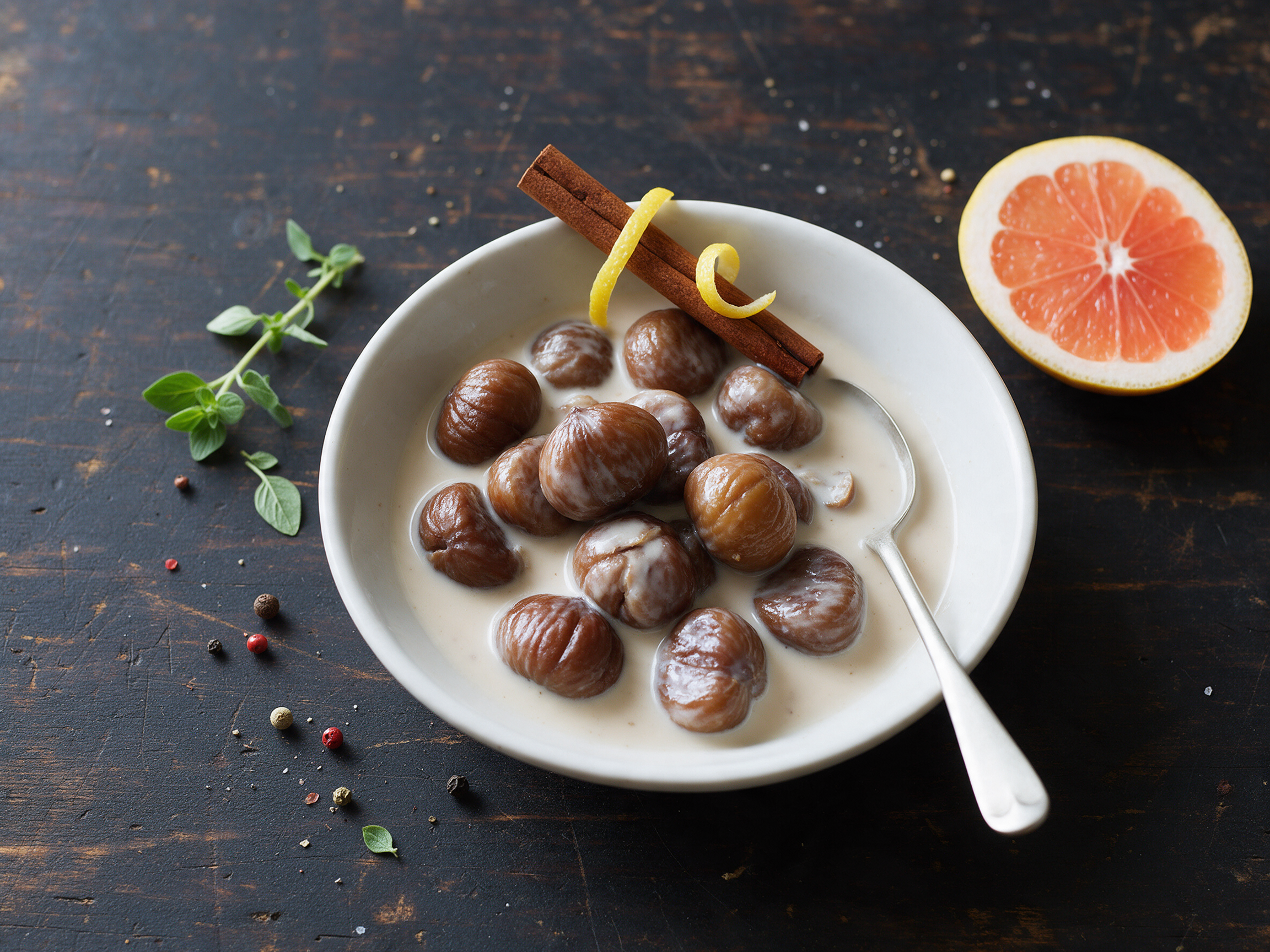
Castagne al Latte della Valtellina: Simmered Chestnuts
Ingredients
Method
- Rinse the chestnuts under cold water and put them in a 2-quart / 2 L bowl. Cover with 1 L cold water and soak for 8 hours or overnight, until they swell and feel plump.
- Drain the chestnuts in a fine-mesh strainer and discard the soaking water. Pick off any dark bits of skin, then tip them into a 22 cm / 4-quart heavy-bottomed pot with the milk, sugar, lemon zest, cinnamon stick and salt.
- Heat over medium, stirring, for 8 to 10 minutes until the milk steams and tiny bubbles form at the edge. Drop the heat to its lowest setting so the surface barely trembles. Don't let it boil.
- Simmer uncovered for 50 minutes, scraping the bottom with a wooden spoon every 3 to 4 minutes. The chestnuts are done when a knife slides in with no resistance and the center is soft and crumbly. The milk should be a pale, loose cream that lightly coats a spoon.
- Remove the zest and cinnamon stick. Taste and stir in up to 1 tbsp more sugar if you like. Ladle into shallow bowls and serve warm.
Notes
- Soak the chestnuts for at least 8 hours so the centers hydrate fully.
- Keep the milk at a bare simmer and stay near the pot.
- Add extra sugar only at the end, after tasting.
- Use whole peeled dried chestnuts, since broken pieces dissolve into the milk.
- Serve warm straight from the pot for the creamiest texture.
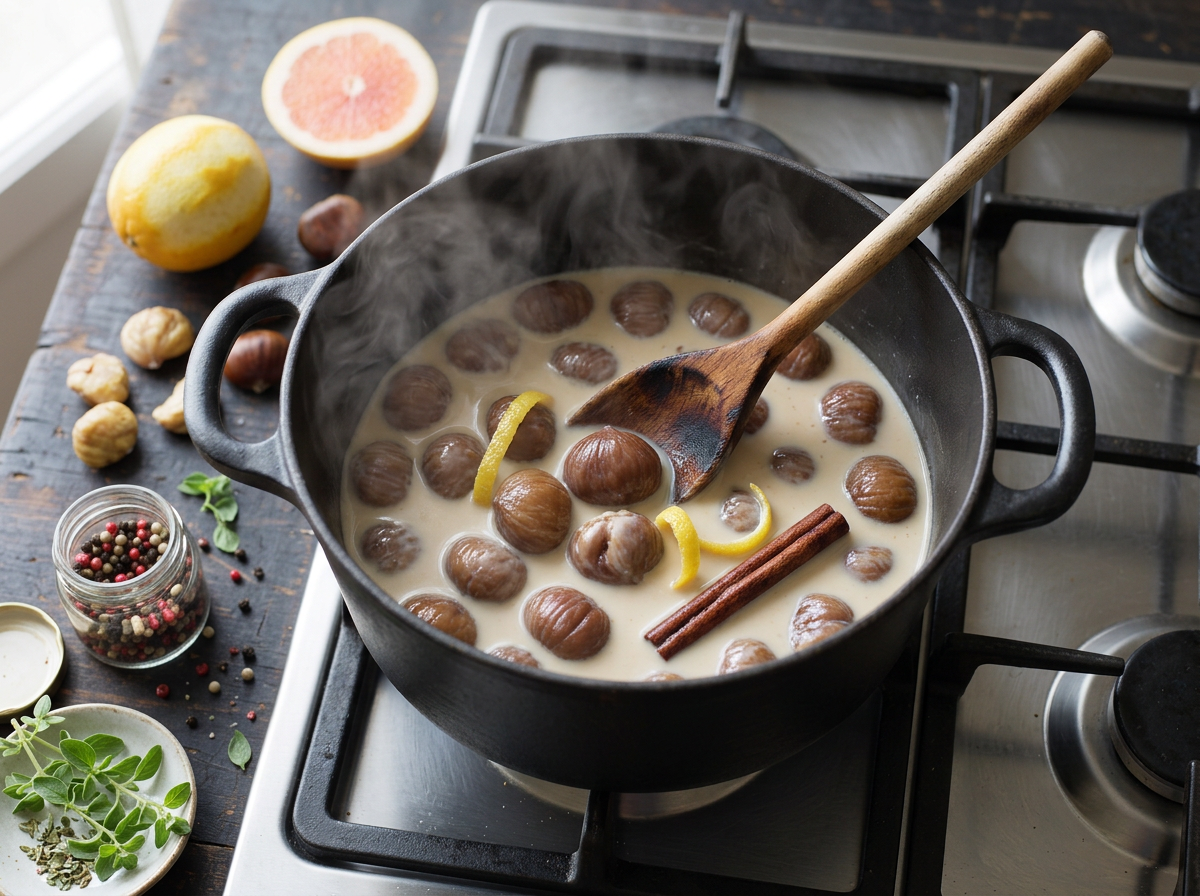
Tips for Success
- Soak the chestnuts at least 8 hours so the centers hydrate fully, or they stay chalky even after an hour of simmering.
- Use a heavy-bottomed 22 cm pot and drop the burner to its lowest setting as soon as the milk starts to steam.
- Scrape the bottom with a flat-edged wooden spoon every 3 to 4 minutes to catch any milk starting to stick.
- Peel the lemon zest with a vegetable peeler and skip the white pith, which makes the milk taste bitter.
- Taste before adding extra sugar at the end, since the chestnuts release their own sweetness as the milk reduces.
Variations
- Stir in 1 tbsp grappa or dark rum after removing the pot from the heat for a grown-up winter bowl.
- Replace the sugar with 2 tbsp chestnut or acacia honey, stirred in at the end so the flavor stays intact.
- Swap the cinnamon stick for a split vanilla bean, scraping the seeds into the milk before simmering.
Storage and Reheating
Castagne al latte keeps 3 to 4 days in an airtight container in the fridge, with the chestnuts submerged in their milk. It thickens as it chills, which is normal. You can also eat it cold.
To reheat, tip it into a saucepan with a splash of whole milk, about 2 tbsp per portion. Warm over low heat for 5 to 8 minutes, stirring, until steaming but not boiling. In the microwave, use 50% power in 1-minute bursts and stir between each.
I don’t freeze it. The milk turns grainy once thawed.
Serving Suggestions
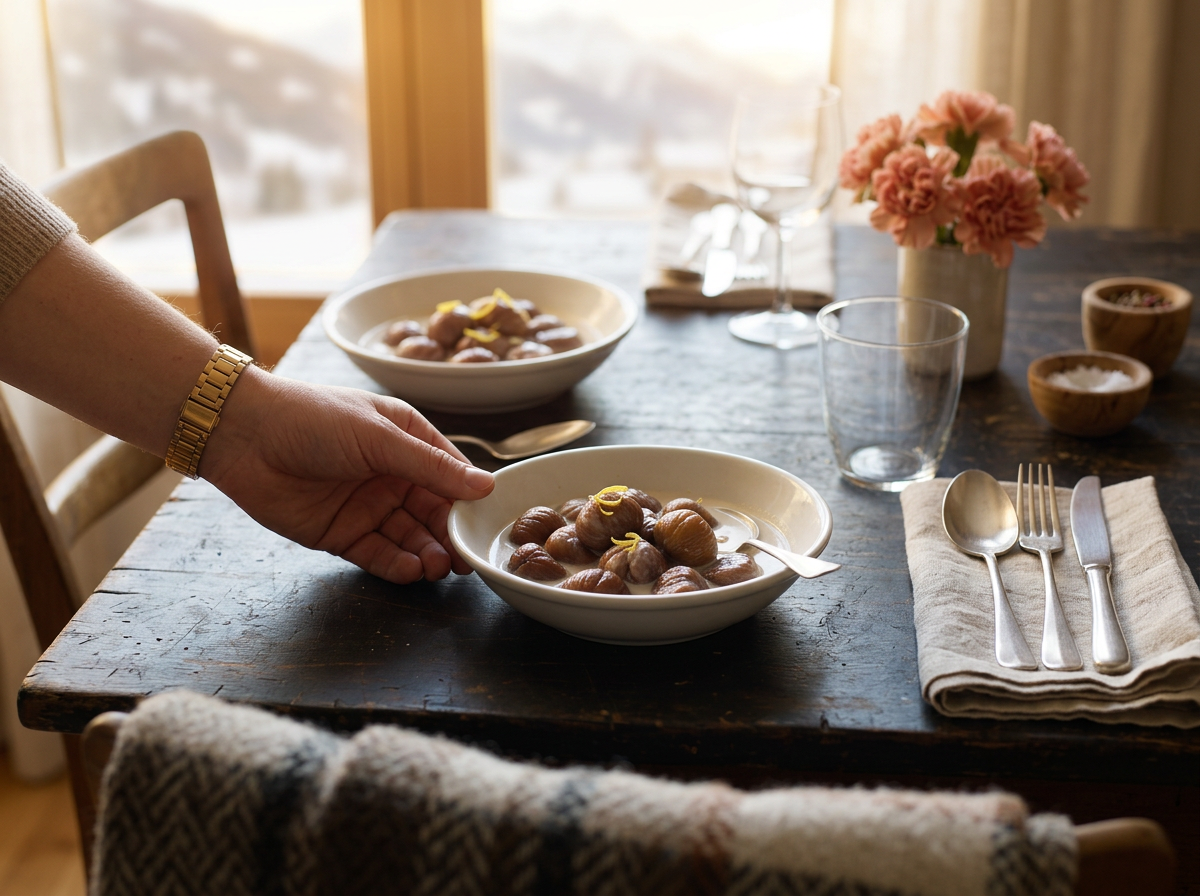
Castagne al latte is best served warm in a shallow bowl, straight from the pot. A spoonful of lightly whipped unsweetened cream on top softens the sweetness without hiding the chestnuts.
It works as the end of a hearty Valtellina dinner, such as pizzoccheri or Valtellina minestra de dumèga, or on its own as a light supper when the weather turns cold.
For a drink, pour a small glass of Moscato d’Asti or a cup of barley coffee.
FAQ
How do I know when castagne al latte are done?
The chestnuts are done after about 50 minutes of simmering, when a paring knife slides in with no resistance and the center feels soft and crumbly. The milk should have reduced to a pale, loose cream that lightly coats a spoon. If a chestnut still feels firm or chalky in the middle, keep simmering for 5 to 10 minutes and test again.
Can I use vacuum-packed or fresh chestnuts instead of dried for castagne al latte?
Yes, vacuum-packed cooked chestnuts work. Use about 500 g, skip the soak, and simmer them in the milk for 15 to 20 minutes just until they soften and take on the flavor. Fresh chestnuts need scoring, boiling, and peeling first, so they’re more work, and the taste is less toasty than dried.
Can I make castagne al latte ahead, and how do I reheat it?
Yes, cook it up to 3 to 4 days ahead and refrigerate it in its milk. It thickens as it chills, so reheat in a saucepan over low heat with a splash of whole milk, about 2 tbsp per portion, stirring for 5 to 8 minutes until steaming. Skip the boil, which can make the milk separate.
What is the difference between castagne al latte and Monte Bianco?
Castagne al latte keeps whole chestnuts in simmered milk and is usually served warm like a spoonable dessert. Monte Bianco is sweetened chestnut purée piped into a mound under whipped cream, served cold. Castagne al latte is the rustic one: no piping, no sieve, just a pot.
What goes with castagne al latte after dinner?
A spoonful of lightly whipped unsweetened cream is a good topping, since it softens the sweetness without hiding the chestnuts. For a drink, pour a small glass of Moscato d’Asti or a cup of barley coffee. It also follows a salty Valtellina main like pizzoccheri well.
How do I make castagne al latte dairy free?
Swap the whole milk for the same amount of unsweetened oat drink and keep the method unchanged. The result is thinner and a little less creamy, so taste at the 50-minute mark and add up to 1 tbsp sugar if it needs it. The dish is naturally gluten free, but check that the oat drink is labeled gluten free if that matters to you.