
Jump to Recipe
Frittata di zucchine is Italy’s answer to a glut of zucchini: sliced thin, cooked down in olive oil until golden, then set in eggs and parmesan until just firm.
The trick most people miss is moisture. Zucchini is mostly water, and if you skip salting and draining the slices, you end up with a frittata that weeps liquid onto the plate the moment you cut into it.
I cook this one almost entirely in a 26 cm skillet on the stovetop, then finish it under the broiler for 2 to 3 minutes so the top sets without flipping the pan. It’s the Roman way to eat it: room temperature, cut into wedges, with bread and a green salad.
Six eggs and one skillet feed four people as a light lunch. It also holds up well in the fridge for a few days, which makes it one of the easier make-ahead dishes in a weekly rotation.
Why You’ll Love This Recipe
- Uses up a glut of zucchini in one skillet
- Holds up well for lunches for 3 to 4 days
- No flipping the pan, the broiler sets the top
- Tastes just as good at room temperature as hot
Ingredient Notes
- zucchini: Pick firm, small to medium zucchini. Large ones hold more water and seeds, which makes draining even more important.
- parmesan: Parmigiano Reggiano gives the best flavor, but pecorino romano or grana padano both work as a swap.
- basil: Fresh mint is the more traditional herb in Roman versions of this frittata. Use whichever you have on hand.
- olive oil: Use a decent extra-virgin olive oil since it flavors both the zucchini and the eggs directly.
- onion: A shallot works in place of the onion if you want a milder, sweeter background flavor.
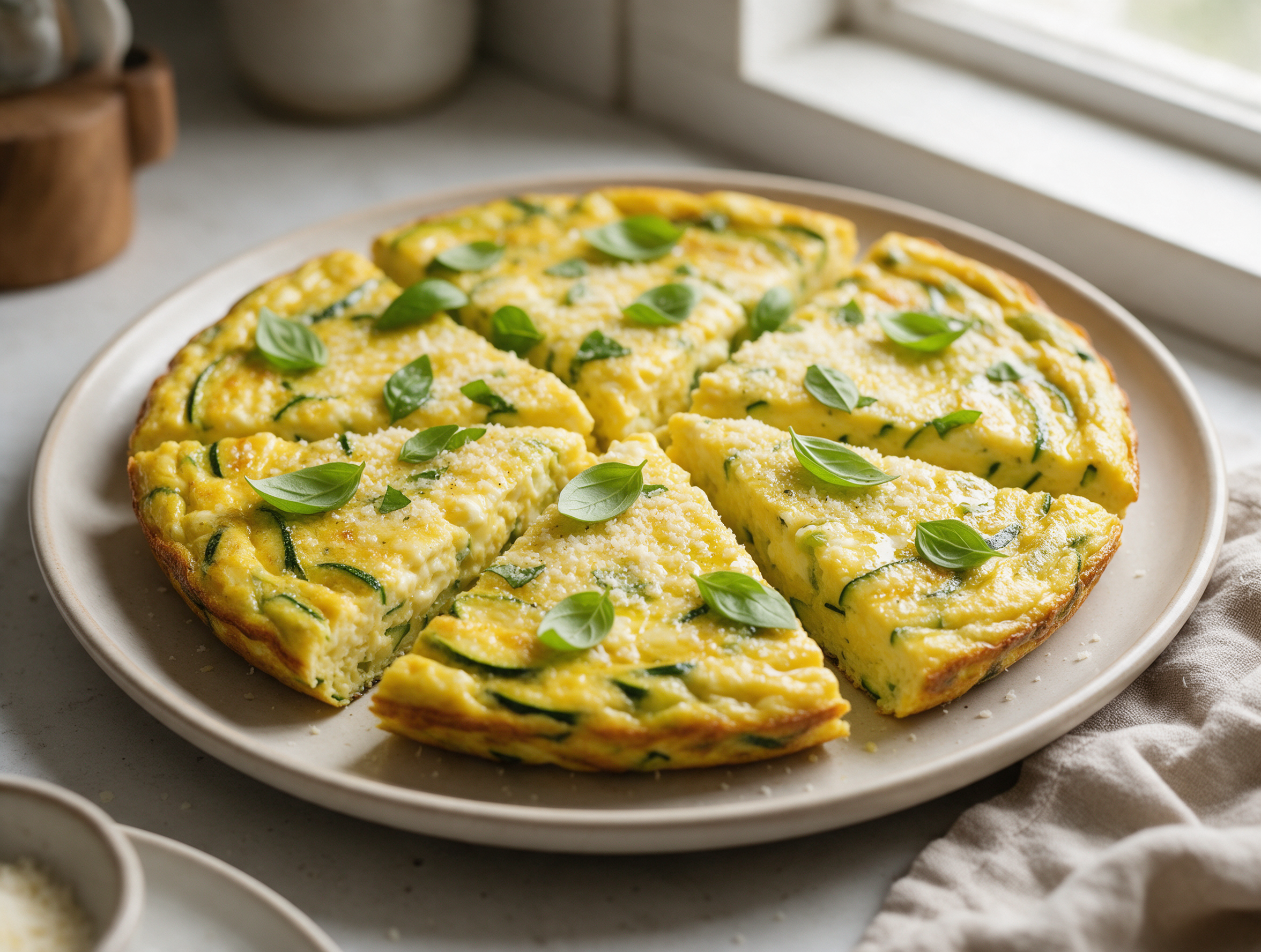
Skillet Zucchini Frittata with Parmesan and Basil
Ingredients
Method
- Trim the zucchini and slice into thin rounds, about 3 mm thick. Toss with 1/2 tsp salt in a colander set over a bowl and let drain for 10 minutes.
- Pat the zucchini dry with a clean towel to remove any remaining surface moisture.
- Crack the eggs into a mixing bowl. Add the parmesan, remaining 1/4 tsp salt, and black pepper, then whisk until just combined.
- Heat the olive oil in a 26 cm / 10-inch nonstick oven-safe skillet over medium heat. Add the onion and cook for 3 to 4 minutes until soft.
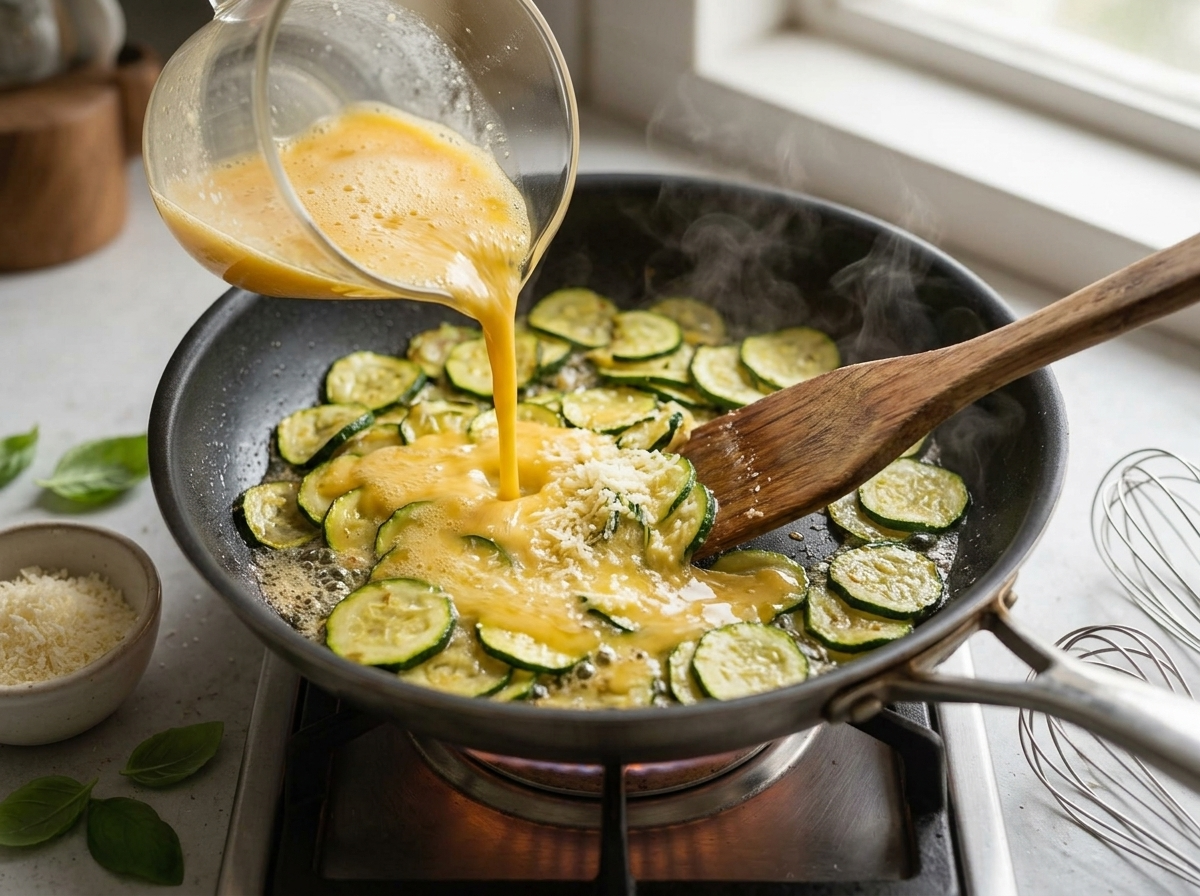
- Add the drained zucchini to the skillet. Cook for 8 to 10 minutes, stirring occasionally, until the slices turn golden at the edges and most of the moisture has cooked off.
- Turn the heat to low. Pour the egg mixture over the zucchini, scatter the basil on top, and gently tilt the pan so the eggs settle evenly.
- Cover the skillet and cook for 6 to 8 minutes, until the edges are set and only the very center still looks slightly wet.
- Move the skillet under a hot broiler for 2 to 3 minutes, until the top is set and turns pale gold. Internal temperature should read 160 F / 71 C at the center.
- Remove from the broiler and let the frittata rest in the pan for 5 minutes. Slide it onto a board, cut into wedges, and serve warm or at room temperature.
Notes
- Drain zucchini well; skipping this step is the top cause of a watery frittata.
- Use a nonstick or well-seasoned skillet so the bottom releases cleanly.
- Broil only 2 to 3 minutes; longer turns the top rubbery.
- Rest before slicing for cleaner wedges and better texture.
Tips for Success
- Salt the sliced zucchini and let it drain for 10 minutes before cooking, or the center stays watery.
- Cook the zucchini until it’s actually golden at the edges, not just soft, so the flavor isn’t flat.
- Whisk the eggs just until combined; overbeating adds too much air and the frittata puffs then collapses.
- Keep the heat low once the eggs go in, so the bottom doesn’t scorch before the center sets.
- Let the frittata rest 5 minutes before slicing so it firms up enough to hold clean wedges.
Variations
- Swap half the zucchini for thinly sliced yellow squash for a milder, slightly sweeter version of the same frittata.
- Add 50 g crumbled feta or ricotta salata in with the eggs for a tangier, saltier bite.
- Stir in chopped mint instead of basil for a more traditional Roman take on frittata di zucchine.
Storage and Reheating
Zucchini frittata keeps in an airtight container in the fridge for 3 to 4 days. The texture actually improves after a day, once the eggs and zucchini settle.
To reheat, put wedges in a 160 C / 320 F oven for 8 to 10 minutes, or warm them in a dry nonstick skillet over low heat, covered, for about 5 minutes. Both keep the eggs tender instead of turning them rubbery, which is what a hot microwave tends to do.
Freezing isn’t worth it here. Eggs and zucchini both lose texture after thawing and turn spongy.
Serving Suggestions
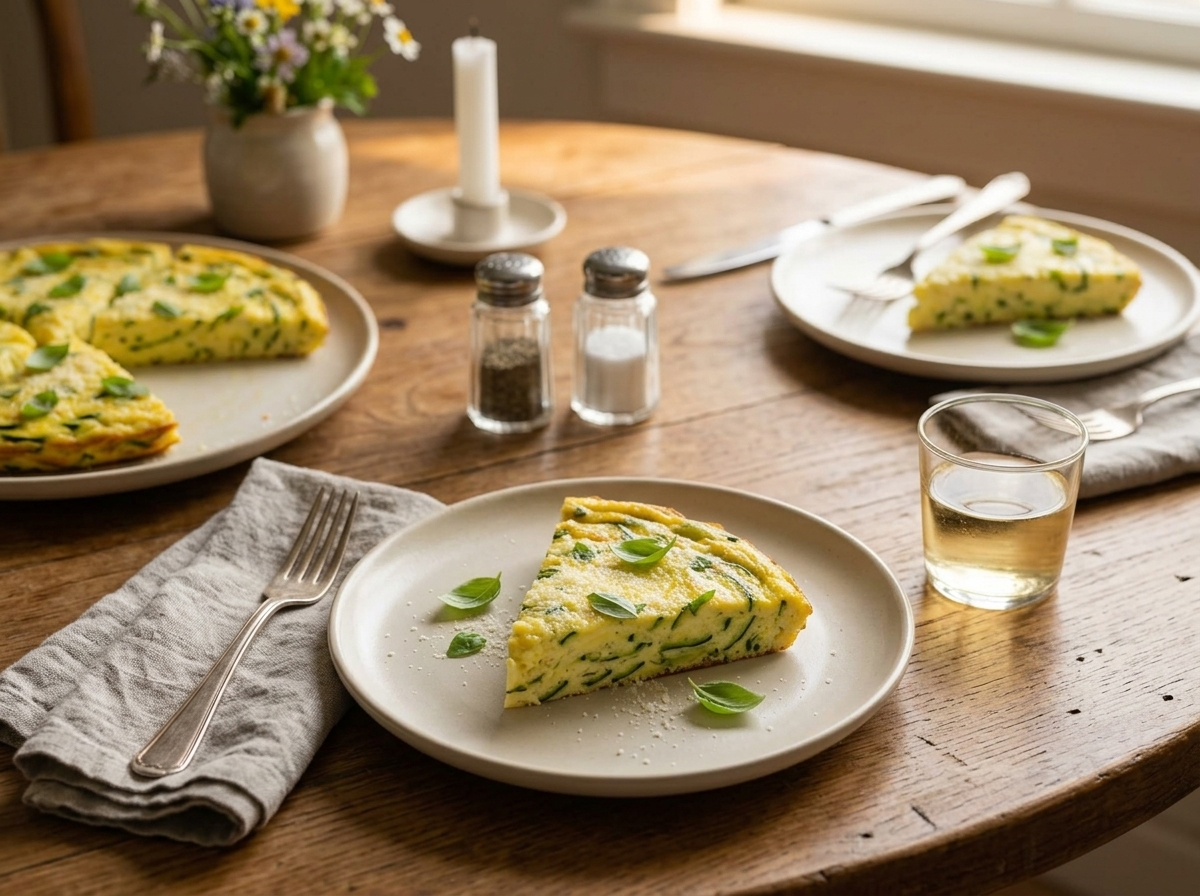
Serve zucchini frittata warm or at room temperature, cut into wedges, with a green salad dressed simply in lemon and olive oil.
It works as a light lunch with crusty bread, or as part of an antipasto spread alongside cured meats and marinated vegetables.
Leftover wedges make a solid sandwich filling the next day, tucked into a roll with a few arugula leaves.
FAQ
Why is my zucchini frittata watery in the middle?
Watery frittata almost always means the zucchini wasn’t drained enough before it hit the eggs. Salt the sliced zucchini for 10 minutes, then squeeze out the liquid in a colander or clean towel before it goes into the skillet. Skipping that step is the main reason the center stays loose while the edges look done.
Can I use pecorino instead of parmesan in this frittata?
Pecorino romano works well here, though it’s saltier and sharper than parmesan, so cut the added salt in the egg mixture by half. Use the same 40 g amount, grated fine, and whisk it straight into the eggs. The frittata tastes a bit more assertive but sets the same way.
Can I make zucchini frittata ahead and reheat it the next day?
Yes, zucchini frittata keeps well and actually firms up after a night in the fridge. Store it covered for up to 4 days, then reheat wedges in a 160 C / 320 F oven for 8 to 10 minutes, or in a dry skillet over low heat until warmed through. Microwaving works but makes the edges rubbery.
What goes well with a zucchini frittata besides bread?
A sharp green salad with lemon and olive oil is the classic pairing, since the acidity cuts through the richness of the eggs and parmesan. Roasted tomatoes or a simple tomato salad also work alongside it. For a heartier meal, add a bowl of minestrone or roasted potatoes.
Is zucchini frittata gluten-free?
Yes, this zucchini frittata is naturally gluten-free since it’s built from eggs, zucchini, parmesan, and olive oil with no flour or breadcrumbs added. Just check that any bread or sides you serve alongside it are gluten-free too if that matters for your table.
What’s the difference between frittata di zucchine and a French omelette?
A frittata is cooked low and slow with the filling mixed directly into the eggs, then set until firm all the way through, while a French omelette cooks fast over higher heat and folds around a filling while the center stays soft. Frittata di zucchine is sliced into wedges and served warm or at room temperature, not folded.