
Jump to Recipe
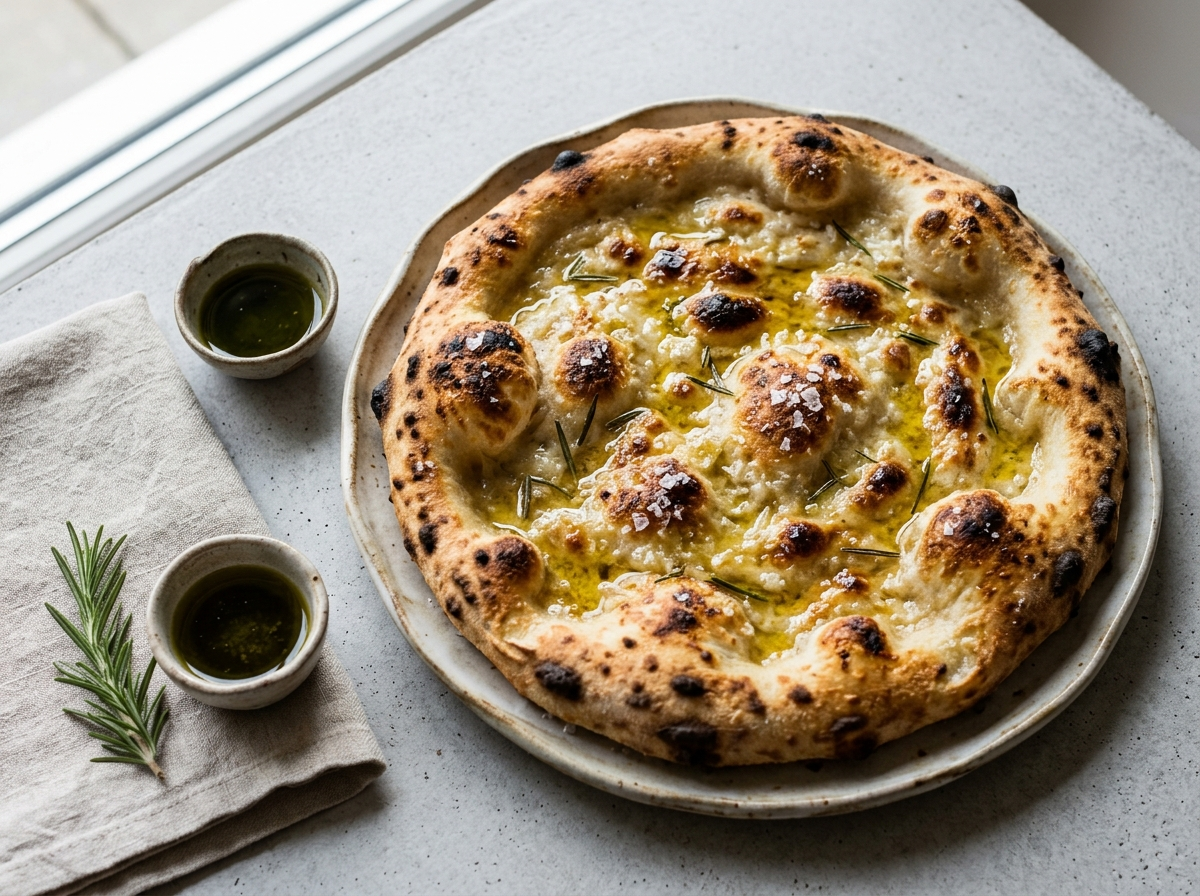
Pizza bianca romana is a Roman street-food flatbread made from a wet, olive oil dough baked hot and fast until the crust blisters and the crumb turns open and airy. There’s no sauce, no cheese, just good olive oil and coarse salt, sometimes a scattering of rosemary. It’s sold by weight in Roman bakeries and eaten folded, still warm, straight out of paper.
The dough is the whole recipe here. At 75% hydration it’s slack and sticky, closer to focaccia than to a Neapolitan pizza dough, and a 12-hour cold ferment in the fridge builds flavor without much yeast.
I bake mine on a preheated pizza steel at 250C/480F. The dough goes in wet and comes out blistered dark in spots within 8 to 10 minutes, which is the one thing that tells you it’s actually done and not just pale and doughy in the middle.
This isn’t a fussy recipe, but it rewards patience. Give the dough its overnight rest and don’t rush the second rise before baking.
Why You’ll Love This Recipe
- Needs just five pantry ingredients
- Cold ferment builds flavor overnight, hands-off
- Bakes in 8 to 10 minutes once the oven is hot
- No sauce or cheese to shop for
Ingredient Notes
- Bread flour: Higher protein than all-purpose helps the wet dough hold structure. 00 flour works too if you have it on hand.
- Water: Use room temperature water so the yeast doesn’t slow down. Filtered water helps if your tap water tastes heavily chlorinated.
- Instant yeast: Only a small amount is needed because the dough ferments 12 hours in the fridge. Swap in 6g fresh yeast if that’s what you have.
- Extra virgin olive oil: Goes into the dough and gets poured on top, so use one you’d happily drizzle on a salad. A milder oil keeps the flavor from getting bitter.
- Fine sea salt: Mixed into the dough for seasoning. Don’t skip it, unsalted dough tastes flat next to the salty topping.
- Flaky sea salt: Sprinkled on top after baking or right before, gives crunch that fine salt can’t. Maldon or a coarse gray sea salt both work.
Pizza Bianca Romana with Olive Oil and Flaky Sea Salt
Ingredients
Method
- Whisk the flour and yeast in a large bowl, add the water, and stir with a spoon until no dry flour remains. Cover and rest 20 minutes.
- Add the salt and olive oil, then knead by hand or mixer for 8 to 10 minutes until smooth and stretchy. The dough should stretch thin without tearing when pulled.
- Cover the bowl and let rise at room temperature 1 hour, then transfer to the fridge and ferment 12 hours.
- Remove the dough from the fridge and let it sit at room temperature 1 hour to take the chill off.
- Turn the dough onto a floured surface, divide into 2 pieces, and shape into loose rounds without deflating it too much. Cover and rest 30 to 45 minutes.
- Meanwhile, heat the oven to 250C/480F with a pizza stone or steel on the middle rack for at least 45 minutes.
- Stretch each piece by hand into an oval about 30 x 20 cm and transfer to a floured peel or a sheet of parchment.
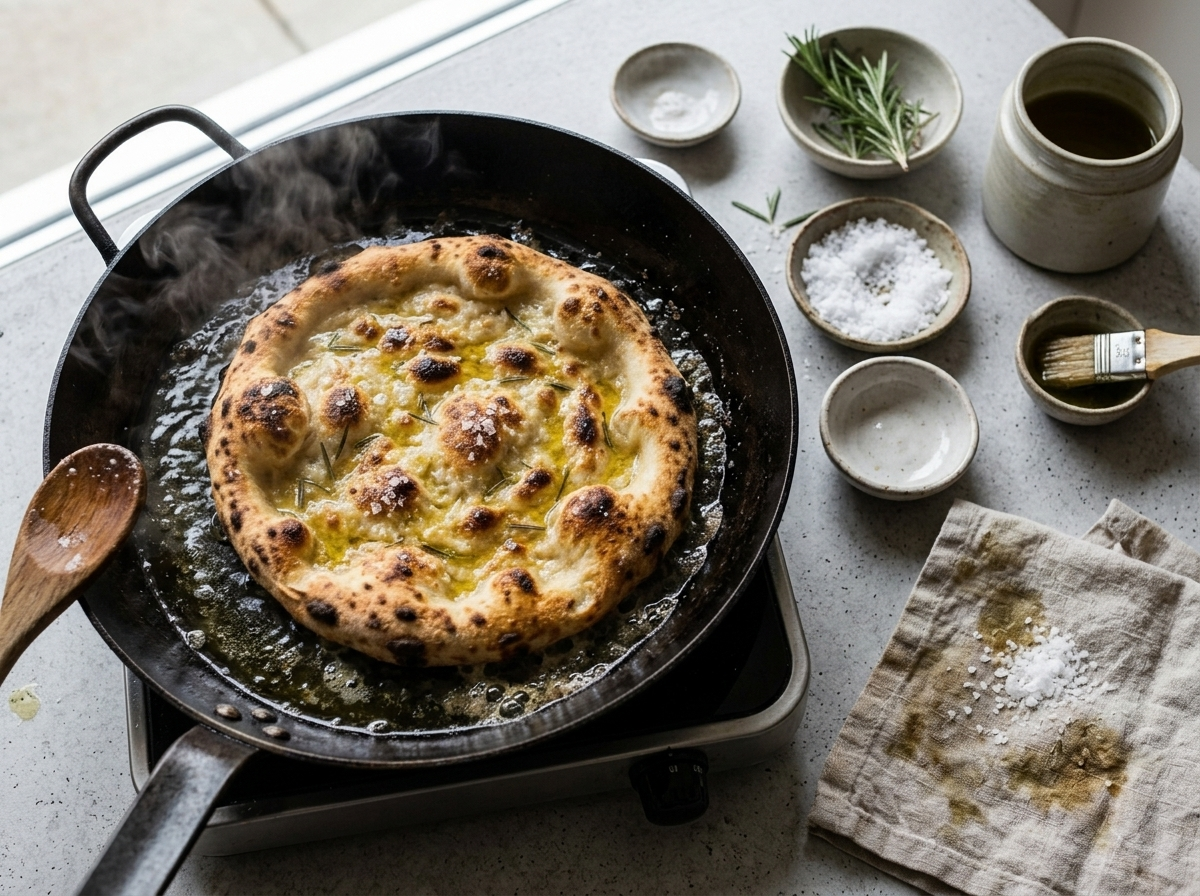
- Whisk the topping olive oil with the water to make an emulsion. Dimple the dough deeply with your fingertips, then pour the emulsion over the top so it pools in the dimples.
- Scatter with flaky salt and rosemary, if using.
- Slide onto the hot stone and bake 8 to 10 minutes, until deep golden with dark blistered spots.
- Cool 5 minutes on a rack before slicing, so the crust doesn't turn soggy.
Notes
- Autolyse the flour and water 20 minutes before adding salt for easier kneading.
- Cold ferment 12 hours minimum for real flavor and an open crumb.
- Preheat the stone or steel a full 45 minutes, a cold stone gives a pale, soggy bottom.
- Don't skimp on the topping oil, it's what keeps the crust from drying out.
Tips for Success
- Weigh your flour and water instead of using cups so the 75% hydration stays accurate.
- Don’t skip the 20-minute autolyse rest, it hydrates the flour fully and cuts kneading time in half.
- Let the shaped dough rest a full 30 to 45 minutes before stretching so it isn’t tight and springs back.
- Preheat the pizza stone at least 45 minutes so the bottom crisps before the top overbakes.
- Dimple the dough hard enough to see finger marks, the oil pools there and keeps the crumb moist.
Variations
- Scatter thin potato slices and rosemary over the dough before baking for pizza bianca con patate.
- Swap half the bread flour for whole wheat flour for a nuttier, denser crumb.
- Split the baked pizza bianca and fill it with mortadella or prosciutto for a Roman-style sandwich.
Storage and Reheating
Pizza bianca romana is best eaten the day it’s baked, within a couple hours while the crust is still crisp. Once it cools completely, wrap it in a kitchen towel or paper bag, since plastic traps steam and turns the crust soft.
Store leftovers at room temperature for up to 1 day, or in the fridge for up to 3 days in an airtight container. Freeze whole or in pieces for up to 2 months, wrapped tightly in foil.
To reheat, skip the microwave. Warm slices directly on the oven rack at 200C/400F for 5 to 7 minutes, which brings back most of the crisp bottom.
Serving Suggestions
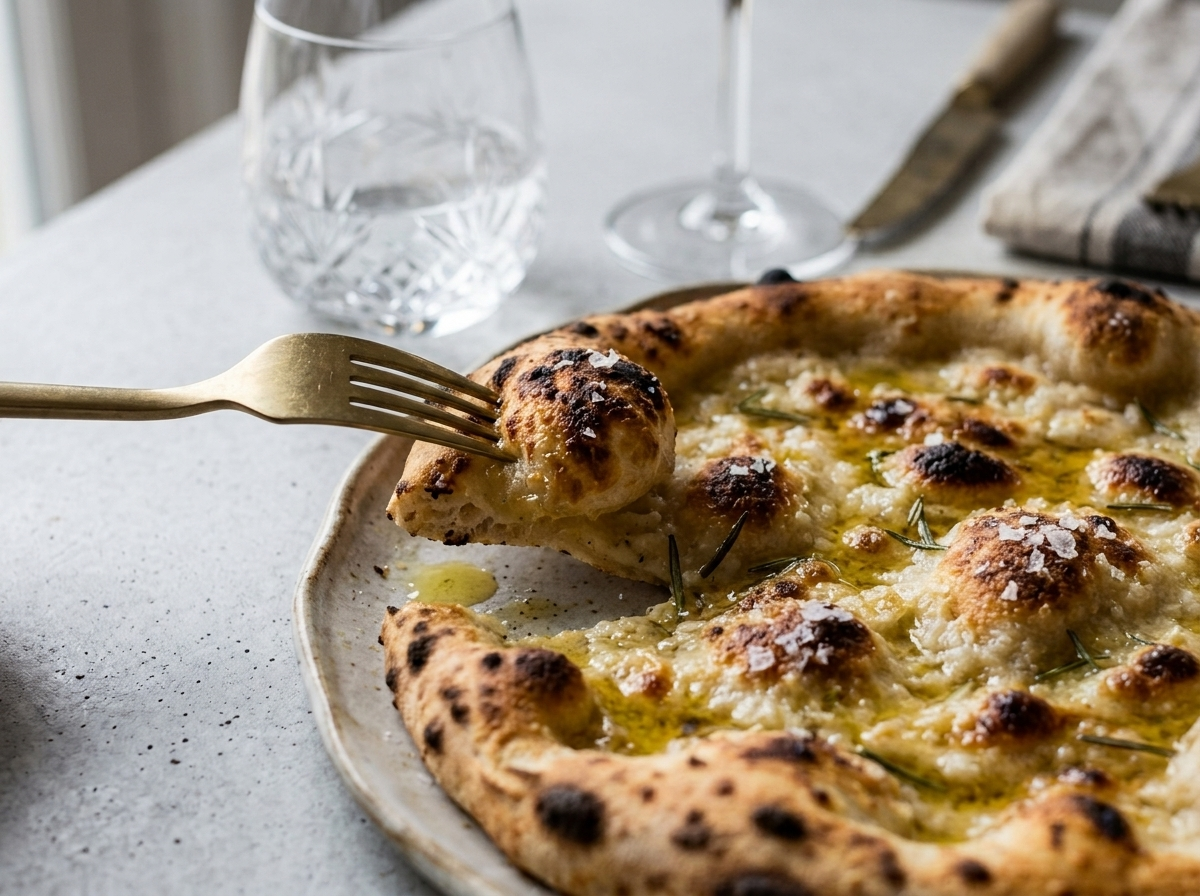
Pizza bianca romana works as a snack on its own, torn into pieces while still warm. In Rome it’s often split open and filled with mortadella, prosciutto, or a soft cheese like stracchino for a quick sandwich.
Serve it alongside a plate of cured meats and olives as part of an antipasto spread, or set it next to a bowl of leek and potato soup instead of regular bread.
A glass of chilled white wine or a light beer cuts through the olive oil well.
FAQ
Why is my pizza bianca romana dense instead of full of holes?
Dense crumb usually means the dough got overworked during shaping or didn’t ferment long enough. Handle the dough gently after its cold rest so you don’t punch out the air bubbles, and give it the full 12-hour fridge ferment for an open crumb.
Can I use all-purpose flour instead of bread flour for pizza bianca romana?
Yes, but the crumb will be a bit tighter and less chewy since all-purpose flour has less protein. The dough will also feel slightly slacker at 75% hydration, so add flour a tablespoon at a time if it feels too loose to shape.
Can I leave the dough in the fridge longer than 12 hours?
Yes, you can push the cold ferment to 24 hours without issues. The dough will taste more sour and the crumb even more open, just let it warm up on the counter for a full hour before shaping so it isn’t cold and stiff.
What goes well with pizza bianca romana?
Cured meats like mortadella or prosciutto, olives, and a soft cheese such as stracchino all pair well, since Romans often split it open for a sandwich. It also works as bread alongside soup or a simple antipasto plate.
Is pizza bianca romana vegan?
Yes, the classic version has no dairy, eggs, or meat, just flour, water, yeast, olive oil, and salt. Check that any topping additions like cheese or cured meat are left off if you want to keep it strictly vegan.
What’s the difference between pizza bianca romana and focaccia?
Pizza bianca romana is stretched thinner, baked hotter and faster on a stone, and has a crisper, more blistered crust than focaccia. Focaccia is usually baked in an oiled pan at a lower temperature, giving it a softer, more bread-like crumb.