
Jump to Recipe
Biscottini di Prosto are small Italian cookies made from flour, olive oil, dry white wine and sugar, twisted into shape and baked once at 180C/350F until pale gold at the edges. The name plays on ‘prosto’, meaning plain or straightforward, which fits a dough with no eggs, no butter and no double baking.
Cookies like these turn up in home kitchens across central Italy, made with whatever dry white is already open on the counter. They’re dry and firm on purpose, built for dunking into a small glass of wine or a cup of coffee rather than eating straight.
If the dough feels sticky right after mixing, don’t reach for more flour. Let it sit on the counter for 5 minutes, the flour absorbs the liquid on its own and the dough firms up enough to shape.
The dough keeps in the freezer, so you can shape a double batch and bake half now, the rest another week.
Why You’ll Love This Recipe
- Comes together in one bowl with no mixer needed
- Uses pantry staples: flour, olive oil, wine, sugar
- Stays fresh in a tin for weeks, ready for dunking
- No eggs or butter, so it’s naturally dairy free
Ingredient Notes
- all-purpose flour: Gives the dough its structure. Don’t swap in cake flour, the dough gets too soft to shape into twists.
- granulated sugar: Sweetens the dough itself. The coarse sugar for rolling is separate and gives the outside its crunch.
- extra-virgin olive oil: The main fat here, so use a fruity, not overly bitter, oil since you’ll taste it directly in the cookie.
- dry white wine: Pick something you’d drink, like a Pinot Grigio or Vermentino. Sub white grape juice for an alcohol-free version and cut the sugar slightly.
- lemon zest: Zest only the yellow part of the peel, the white pith underneath turns bitter.
- anise seeds: These give the traditional licorice note. Swap in fennel seeds or leave them out if you’re not a fan.
- baking powder: Make sure it’s fresh, old baking powder won’t lift the dough enough and the cookies turn dense.
- coarse sugar: Also called sanding sugar, it stays crunchy through baking instead of melting like fine sugar would.
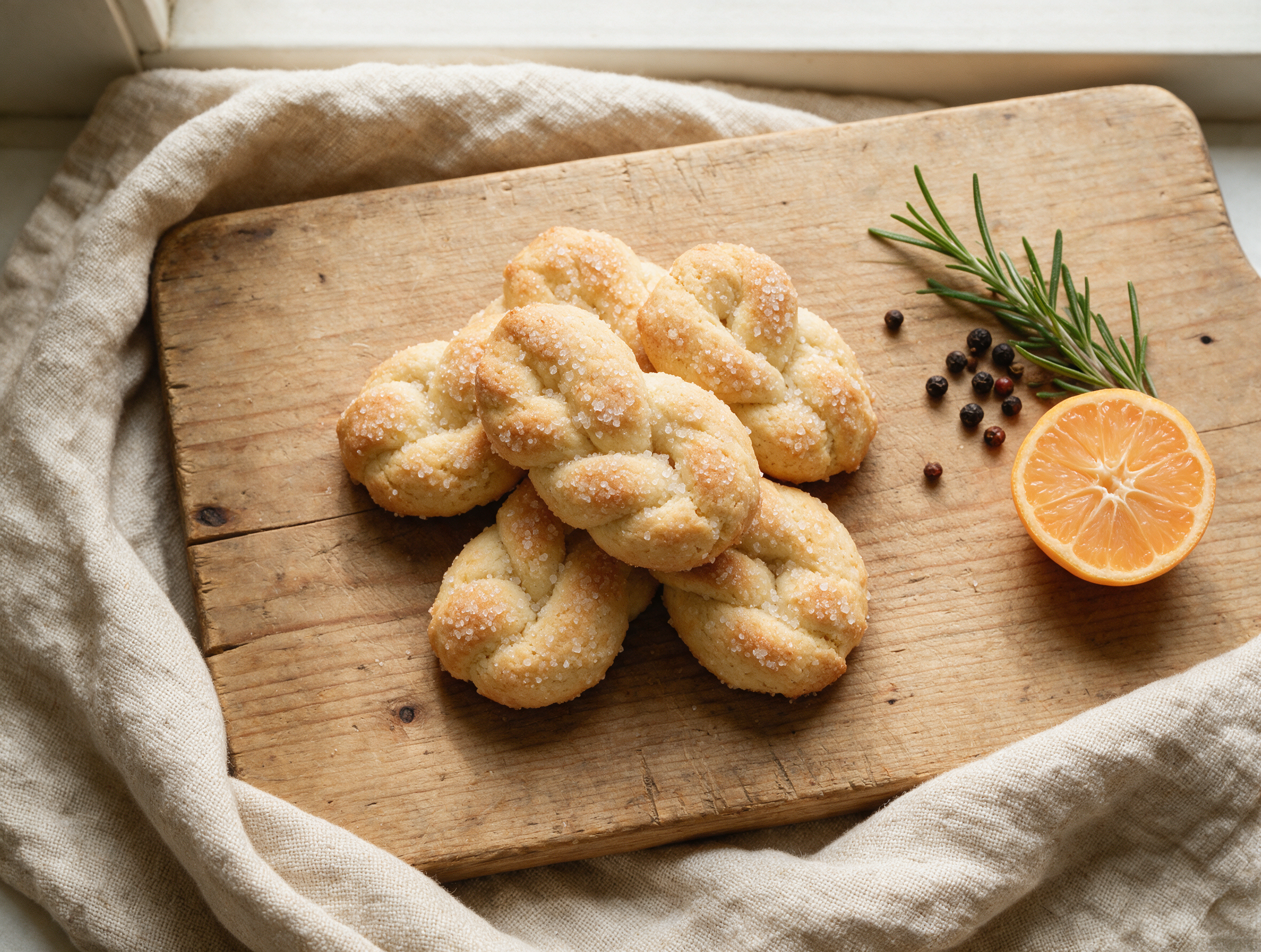
Biscottini di Prosto: Homemade Italian Wine Cookies
Ingredients
Method
- Heat the oven to 180C / 350F. Line a 33 x 46 cm / 13 x 18-inch sheet pan with parchment paper.
- In a large mixing bowl, whisk the flour, sugar, baking powder, salt and anise seeds together until combined.
- Make a well in the center and pour in the olive oil, wine and lemon zest. Stir with a wooden spoon until a shaggy dough forms.
- Turn the dough onto a lightly floured surface and knead for 2 to 3 minutes until it forms a smooth ball. If it feels sticky and tacky, don't add more flour right away, let it rest 5 minutes on the counter, it firms up as the flour hydrates.
- Pinch off pieces of dough about 20 g each and roll into 15 cm ropes. Fold each rope in half and twist twice to form a small twisted cookie.
- Roll each shaped cookie in the coarse sugar, pressing lightly so it sticks, then place on the sheet pan about 3 cm apart.
- Bake for 16 to 18 minutes, rotating the pan once, until the edges look pale gold and the tops are set but still pale, not deep brown. This is the doneness cue, they firm up more as they cool.
- Cool on the pan for 5 minutes, then move to a wire rack to cool completely, about 20 minutes, before serving or storing.
Notes
- Use a dry white wine you'd drink, not cooking wine, for cleaner flavor.
- Rest sticky dough 5 minutes before adding more flour.
- Roll cookies in coarse sugar right before baking so it doesn't dissolve.
- Space cookies 3cm apart, they spread slightly in the oven.
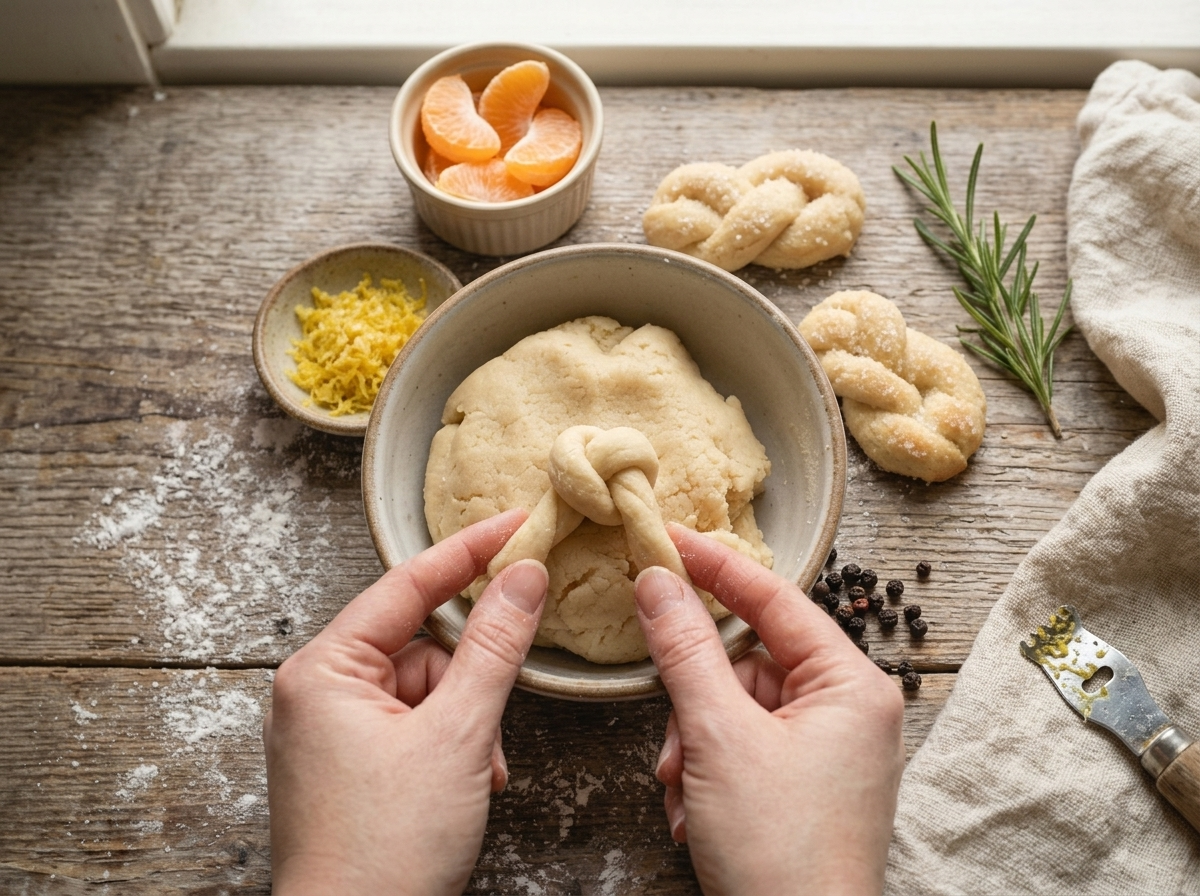
Tips for Success
- Zest the lemon before you juice anything else so the oils stay bright on the peel.
- Knead the dough gently for only 2 to 3 minutes; overworking it makes the cookies tough instead of tender.
- Rest sticky dough for 5 minutes instead of adding extra flour, it firms up on its own as it hydrates.
- Roll each cookie in coarse sugar right before it goes on the pan so the crystals stay crunchy after baking.
- Check the cookies at 16 minutes; a minute or two over turns pale gold into deep brown fast.
Variations
- Swap anise seeds for fennel seeds or a few drops of vanilla extract if you don’t like licorice flavor.
- Add 1 tablespoon of orange zest alongside the lemon for a warmer, slightly sweeter citrus note.
- Shape the dough into small rings instead of twists for a more traditional taralli-style look.
Storage and Reheating
Biscottini di Prosto keep well at room temperature in an airtight tin for up to 2 weeks. The dry crumb actually improves after a day or two, once the surface sugar sets and the inside firms up a bit more.
Freeze baked cookies in a freezer bag for up to 2 months, or freeze the shaped, unbaked dough for the same length of time. Thaw frozen cookies at room temperature for about 20 minutes before serving.
If a batch turns a little stale, warm them in a 150C/300F oven for 5 minutes to re-crisp the edges. Let them cool a few minutes before serving so they firm back up.
Serving Suggestions
Biscottini di Prosto are built for dunking. Serve them with a small glass of vin santo or another sweet dessert wine after dinner, the classic way they’d show up in an Italian kitchen.
For a daytime version, set them out with espresso or strong black tea. They also hold up well next to a bowl of fresh figs or grapes on a dessert board.
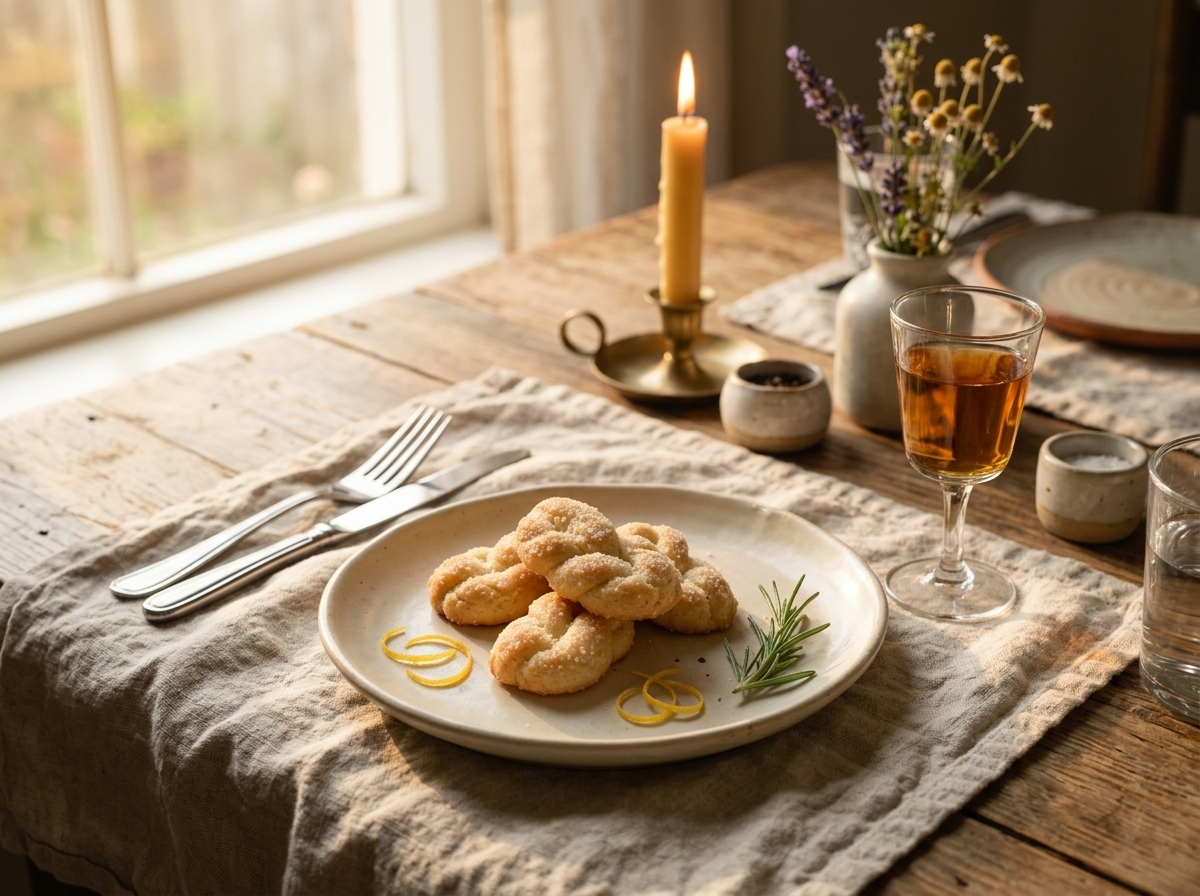
FAQ
Why are my Biscottini di Prosto pale and soft instead of crisp at the edges?
They’re likely underbaked or too crowded on the pan. Bake at 180C/350F for 16 to 18 minutes until the edges look pale gold, and give the cookies 3cm of space so they bake evenly. Cooling on the rack for another 20 minutes also firms up the crumb, which stays soft straight from the oven.
Can I use grape juice instead of wine in Biscottini di Prosto?
Yes, white grape juice or apple juice works as a non-alcoholic swap for the dry white wine. Use the same 100 ml amount, though the dough will taste a bit sweeter, so cut the added sugar by a tablespoon or two to balance it out.
Can I freeze Biscottini di Prosto dough before baking?
Yes, wrap the shaped, unbaked dough tightly in plastic wrap and freeze it for up to 2 months. Thaw it overnight in the fridge, then let it sit at room temperature for 15 minutes before baking as directed.
What do you dip Biscottini di Prosto in?
Vin santo or another sweet dessert wine is the classic pairing, since these cookies are dry and made for dunking. Espresso or a cup of strong tea works too if you want something after dinner without the alcohol.
Are Biscottini di Prosto dairy free and egg free?
Yes, the dough uses olive oil instead of butter and has no eggs, so it’s both dairy free and egg free. They aren’t gluten free though, since the recipe relies on regular all-purpose flour for its structure.
What’s the difference between Biscottini di Prosto and classic Italian biscotti?
Classic biscotti are baked twice, once as a loaf and again in sliced form, which gives them a hard, crunchy snap. Biscottini di Prosto bake once, so the crumb stays tender and only slightly crisp at the edges, closer to a wine cookie than a true biscotto.