
Jump to Recipe
Pansotti con salsa di noci is a Ligurian stuffed pasta filled with wild greens and ricotta, boiled and tossed in a rustic walnut sauce thickened with soaked bread and sharpened with garlic and Parmigiano. The name comes from pansa, Ligurian dialect for belly, a nod to the pasta’s rounded, stuffed shape.
Traditional preboggion, a foraged mix of borage, wild chicory and other greens, gives the filling its slightly bitter, herbal edge. I use a spinach and chard mix instead, similar to the filling in crespelle alla fiorentina, which is easier to find and works the same way.
The failure mode here is a filling that’s too wet. If you don’t squeeze the cooked greens hard enough, the extra moisture thins the ricotta and can split the pasta seams open in the boiling water.
The walnut sauce should stay coarse, not silky smooth. Pulse the food processor in short bursts so you keep some texture against the soft ricotta filling.
Why You’ll Love This Recipe
- Rustic walnut sauce needs no cream or tomato, just pantry basics
- Filling uses a wilted greens mix that’s easy to find year-round
- Uncooked pansotti freeze well for a make-ahead weeknight dinner
- Coarse sauce texture plays against the soft herb-ricotta filling
Ingredient Notes
- Wild greens (preboggion): Hard to source outside Liguria, so a spinach and chard mix gives a similar texture and cooks the same way.
- Ricotta: Drain it well in a sieve for 30 minutes before mixing, a watery ricotta will make the filling loose.
- Walnuts: Buy whole and shell them close to cooking if you can, pre-shelled walnuts work fine but taste flatter after months on a shelf.
- Stale bread: A firm white loaf, crust removed, soaks up milk without turning to mush the way soft sandwich bread does.
- Marjoram: This is the traditional herb in Ligurian fillings, oregano works as a stronger-flavored substitute in a pinch.
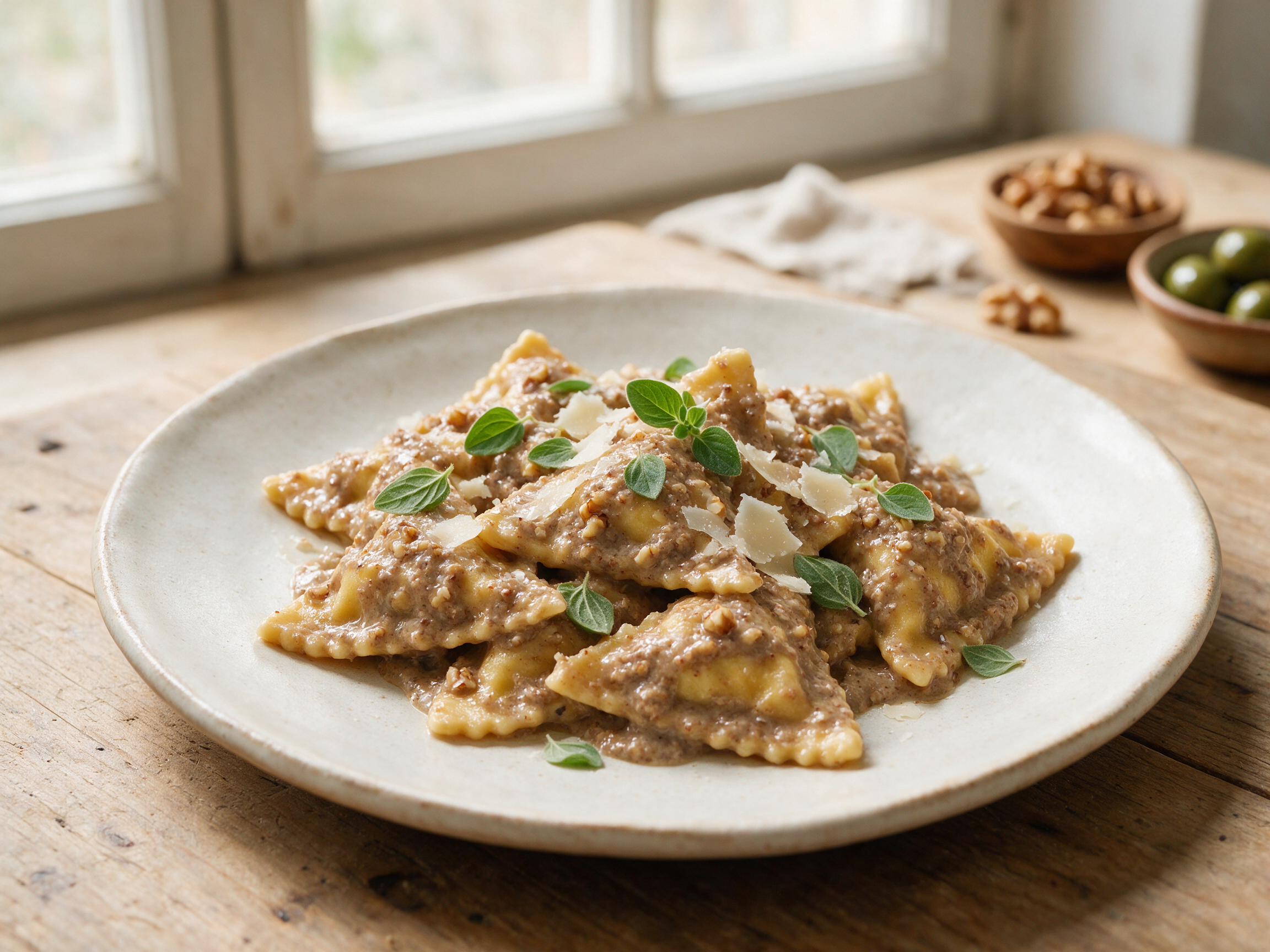
Pansotti con Salsa di Noci: Herb Ravioli, Walnut Sauce
Ingredients
Method
- Mound the flour on a work surface and make a well in the center. Crack the eggs and salt into the well and whisk with a fork, gradually pulling in flour from the edges.
- Knead the dough for 8 to 10 minutes until smooth and elastic. Wrap in cling film and rest at room temperature for 30 minutes.
- Wilt the spinach and chard in a pot with just the water clinging to the leaves, 3 to 4 minutes until fully collapsed. Drain, cool, then squeeze bone dry, this step matters, a wet filling will thin the ricotta and split the pasta later.
- Chop the squeezed greens finely and mix with ricotta, egg, Parmigiano, nutmeg, marjoram, salt and pepper until evenly combined.
- Soak the bread in the milk for 5 minutes, then squeeze out the excess milk.
- Blitz the walnuts, garlic, soaked bread, olive oil, Parmigiano and a pinch of salt in a food processor, pulsing in short bursts to a coarse, spoonable sauce, not a smooth paste.
- Roll the pasta dough to about 1 to 2 mm thick, using a pasta machine or rolling pin. Cut into 6 cm squares.
- Spoon a teaspoon of filling into the center of each square. Fold into a triangle and press the edges firmly to seal, pushing out any air pockets. You should end up with about 45 to 50 pansotti.
- Bring a 8-quart / 7.5 L stockpot of salted water to a boil. Working in two batches so the pot isn't crowded, cook the pansotti for 3 to 4 minutes, until they float and the pasta is tender. Lift out with a slotted spoon before adding the next batch.
- Reserve a cup of pasta water, then drain the pansotti gently.
- Toss the pansotti with the walnut sauce in a warmed bowl, loosening with 2 to 4 tablespoons of reserved pasta water until the sauce coats the pasta evenly.
- Plate and top with extra Parmigiano and toasted walnut pieces. Serve right away.
Notes
- Squeeze cooked greens bone dry before mixing the filling
- Rest pasta dough 30 minutes before rolling for easier handling
- Keep walnut sauce coarse, don't over-process it into a paste
- Cook pansotti in two batches so they don't stick together in the pot
- Freeze uncooked pansotti on a tray before bagging to keep them separate
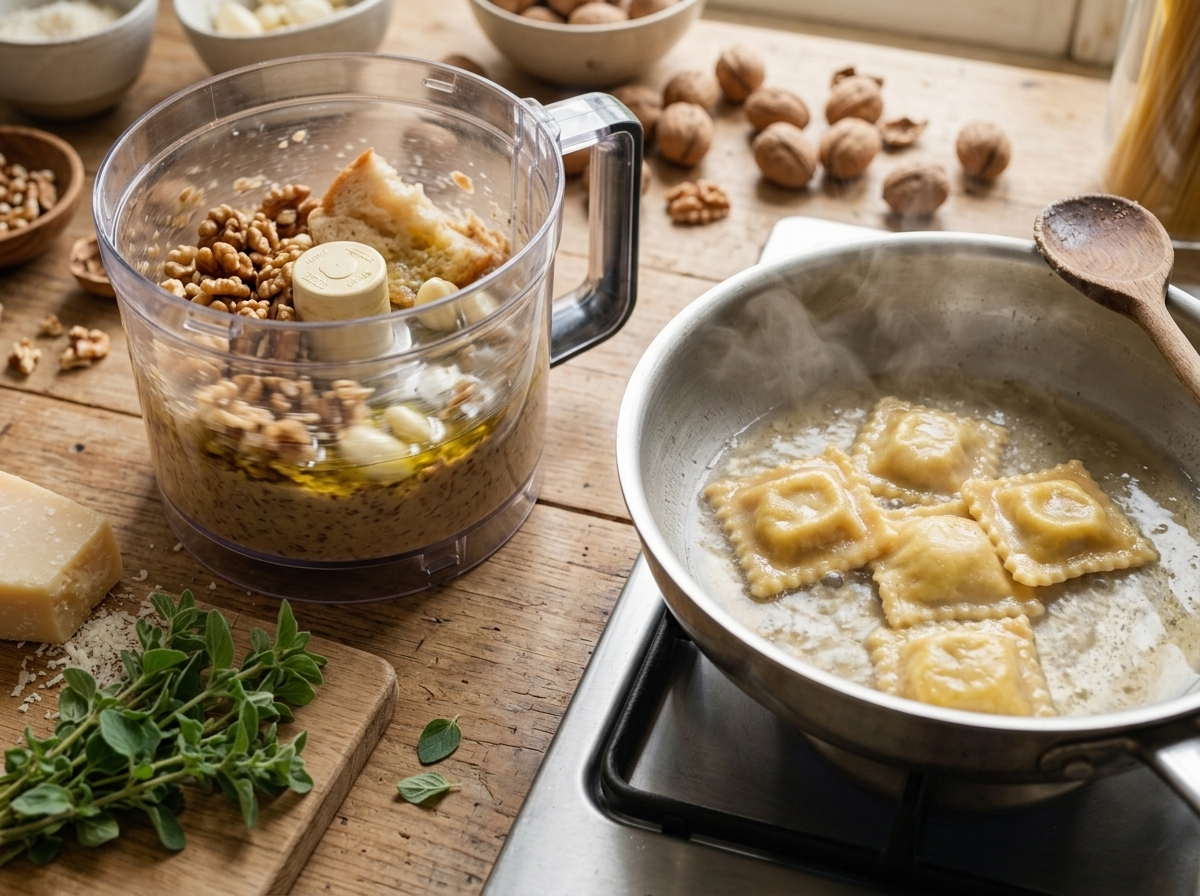
Tips for Success
- Squeeze cooked greens bone dry before mixing the filling, excess water thins the ricotta and splits the pasta seams.
- Rest the pasta dough 30 minutes before rolling so it relaxes and doesn’t spring back on you.
- Pulse the walnut sauce in short bursts so it stays coarse and grainy, not a smooth paste.
- Save a cup of pasta water before draining, it loosens the sauce without watering down the walnut flavor.
- Press pansotti edges firmly to push out air pockets, or they’ll pop open in the boiling water.
Variations
- Swap half the walnuts for toasted hazelnuts for a rounder, slightly sweeter sauce.
- Stir a spoonful of mascarpone into the walnut sauce for a silkier, less grainy texture.
- Cut squares of pasta and fold into triangles instead of the traditional half-moon shape if that’s easier for you.
Storage and Reheating
Cooked pansotti tossed with sauce keep 2 days in the fridge in an airtight container, since the dairy-based sauce doesn’t hold much longer than that. Reheat gently in a skillet over low heat with a splash of milk or pasta water, stirring for 3 to 4 minutes until warmed through.
Uncooked, sealed pansotti freeze well. Lay them in a single layer on a tray until solid, then bag them for up to 2 months.
Boil frozen pansotti straight from the freezer, adding 1 to 2 extra minutes to the cooking time, and make the walnut sauce fresh right before serving.
Serving Suggestions
Pansotti con salsa di noci works as a primo, a first course served on its own before a simple secondo like grilled fish or roast chicken. A crisp green salad with a sharp vinaigrette cuts through the richness of the walnut sauce.
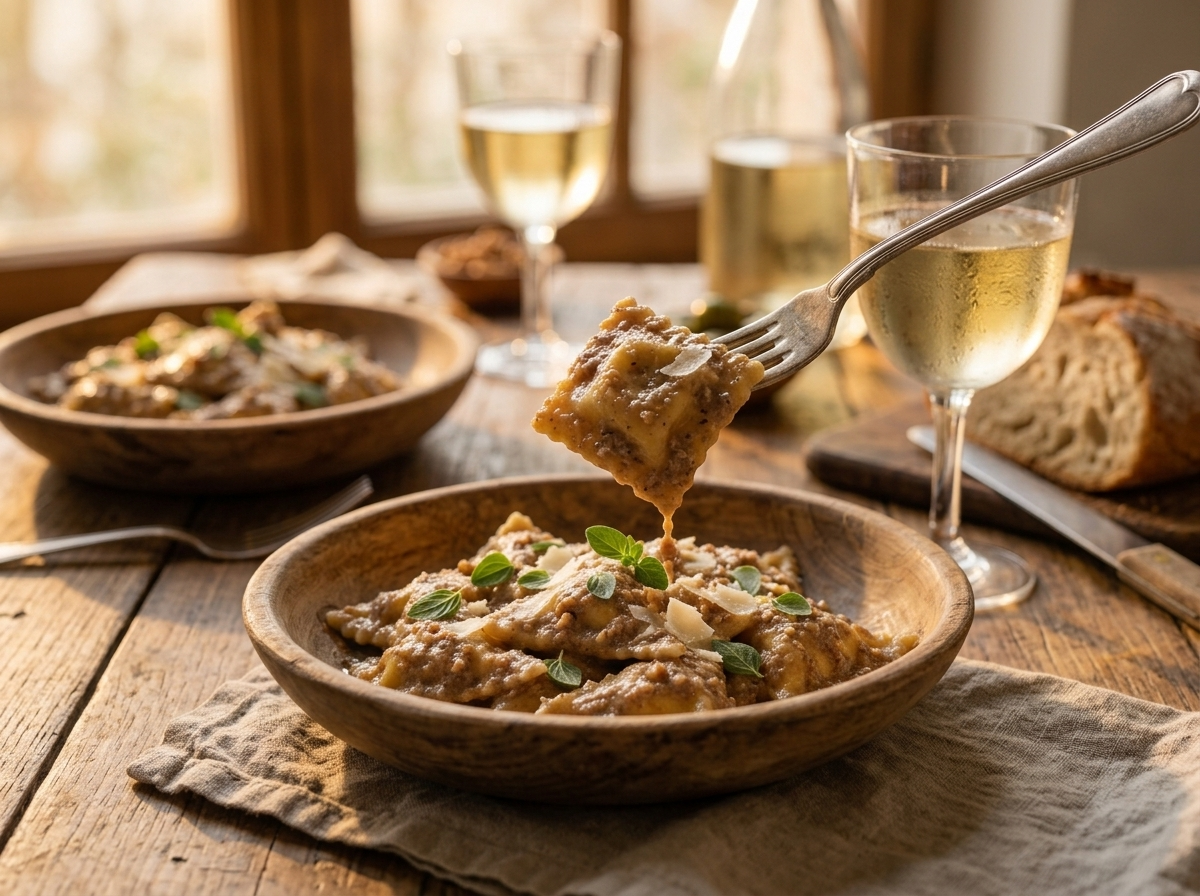
Pour a dry Ligurian white like Vermentino or Pigato alongside it, the acidity balances the oil and cheese in the sauce.
Finish each bowl with a few extra shavings of Parmigiano and a scatter of toasted walnuts, the same crunchy finish that works so well on a bowl of creamy gorgonzola risotto.
FAQ
Why did my pansotti fall apart in the boiling water?
Usually the filling is too wet or the edges weren’t sealed well enough. Squeeze the cooked greens hard before mixing them with the ricotta, and press each edge firmly to push out air pockets. Thin, weak seals are the main cause of pansotti splitting open once they hit a rolling boil.
Can I use spinach instead of the traditional preboggion greens?
Yes, a mix of spinach and chard works well and is what most home cooks use outside Liguria. Preboggion is a foraged blend of wild greens like borage and chicory that gives a more bitter, herbal note, but spinach and chard give a similar texture and cook the same way.
Can I freeze pansotti con salsa di noci before cooking them?
Yes, freeze the uncooked, sealed pansotti in a single layer on a tray, then transfer to a bag once solid. They’ll keep for up to 2 months. Boil them straight from frozen, adding an extra 1 to 2 minutes to the cooking time, and make the walnut sauce fresh right before serving.
What wine pairs well with pansotti con salsa di noci?
A dry Ligurian white like Vermentino or Pigato works best, since its acidity cuts through the rich walnut sauce. A light Pinot Grigio is a good stand-in if you can’t find either. Avoid heavy reds, they overpower the herb filling and the pasta itself.
Is pansotti con salsa di noci vegetarian?
Yes, this dish is vegetarian since it’s built from pasta, greens, ricotta, walnuts and Parmigiano, with no meat or fish involved. It isn’t vegan or dairy-free though, since the filling and sauce both rely on ricotta, egg, milk and Parmigiano. It also contains gluten from the pasta and bread, and tree nuts from the walnuts.
What’s the difference between pansotti and regular ravioli?
Pansotti are a specific Ligurian shape, usually cut into triangles or half-moons and stuffed with wild greens and ricotta rather than meat or squash. Regular ravioli are typically square and can hold almost any filling. The name pansotti comes from pansa, meaning belly, describing their plump, rounded shape once sealed.