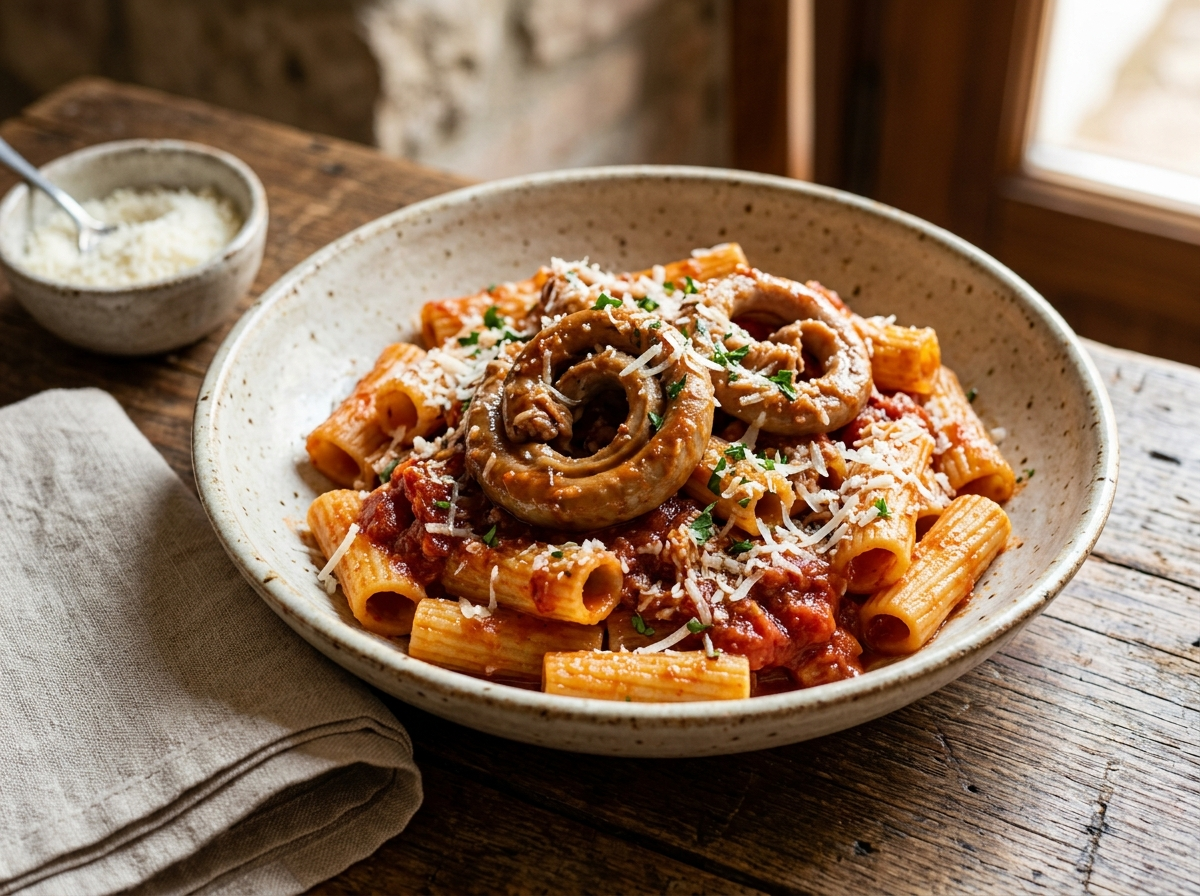
Ingredients
Method
Prepare the pajata
- Rinse the pajata rings under cold water and pat dry. If not already tied, loop each into a rough coil and tie loosely with kitchen string so the milk stays inside.
- Pat the rings dry again with paper towel. Excess moisture stops them from browning properly.
Braise the sauce
- Warm olive oil in a wide heavy pot over medium heat. Add garlic and chili flakes, cook 1 minute until fragrant.
- Add pajata rings and brown 4 to 5 minutes per side until the casing looks blistered and lightly golden.
- Pour in white wine, scrape up any browned bits, and let it bubble 2 minutes until mostly evaporated.
- Add crushed tomatoes, bay leaf, a good pinch of salt and pepper. Bring to a bare simmer.
- Cover, reduce heat to low, and simmer 45 to 60 minutes, turning the rings once, until the casing is tender and the milk inside has set into soft curds. Press a ring with a spoon; it should feel firm, not liquid.
Cook and finish the pasta
- Bring a large pot of well-salted water to a boil. Cook rigatoni until al dente, 1 minute less than the package suggests.
- Reserve 1 cup of pasta water, then drain the rigatoni.
- Remove the bay leaf. Lift out the pajata rings, cut into shorter pieces if you like, and return them to the sauce.
- Add the drained rigatoni to the pot with the sauce, tossing over low heat and adding splashes of pasta water until it clings to the pasta, about 1 to 2 minutes.
- Stir in half the pecorino, then plate and top with more pecorino and a crack of black pepper.
Notes
- Ask your butcher for young, milk-fed veal pajata; freshness matters more than anything else here.
- Don't rush the browning step, or the casing turns tough instead of tender.
- Simmer gently; a hard boil can split the rings and spill the curds into the sauce.
- Sauce keeps better than tossed pasta, so store leftovers separately when possible.