
Jump to Recipe
Tirtlen Altoatesini are deep-fried dough pockets from Alto Adige, filled with sauerkraut, spinach, and speck, then fried until the outside blisters and turns deep gold.
They come from Val Gardena, where farmhouse kitchens made them to stretch a bit of dough and whatever cabbage or greens were on hand into a filling meal. Some families add potato-filled tortelli or cheese instead of sauerkraut, but the sauerkraut-spinach-speck combination is the one you’ll find most often on Alto Adige menus.
The dough is closer to a rustic bread-pasta hybrid than a pizza base, and it needs to rest for 30 minutes so it rolls thin without springing back. The filling has to be well drained and cooled before you fill the dough, or it steams and tears the dough open in the hot oil.
Keep the frying oil steady at 175 C / 350 F and work in small batches. You’ll get a crisp, blistered shell instead of a greasy one.
Why You’ll Love This Recipe
- Uses pantry staples like flour, cabbage, and cured ham
- Filling and dough can both be made ahead of frying
- Crisp, blistered shell with a savory, tangy filling
- Freezes uncooked so you can fry a few at a time
Ingredient Notes
- rye flour: Gives the dough a slightly nutty, rustic bite. Swap in more all-purpose flour if rye isn’t available.
- speck: Alto Adige cured, smoked ham. Smoked bacon or pancetta works as a substitute, though it renders more fat.
- sauerkraut: Drain and squeeze out as much brine as possible before cooking, or the filling turns watery and soaks the dough.
- spinach: Fresh spinach wilts fast and keeps a cleaner color. Frozen spinach works too if thawed and squeezed dry first.
- caraway seeds: Their anise-like bite cuts through the sauerkraut. Fennel seeds are a reasonable stand-in if you’re out of caraway.
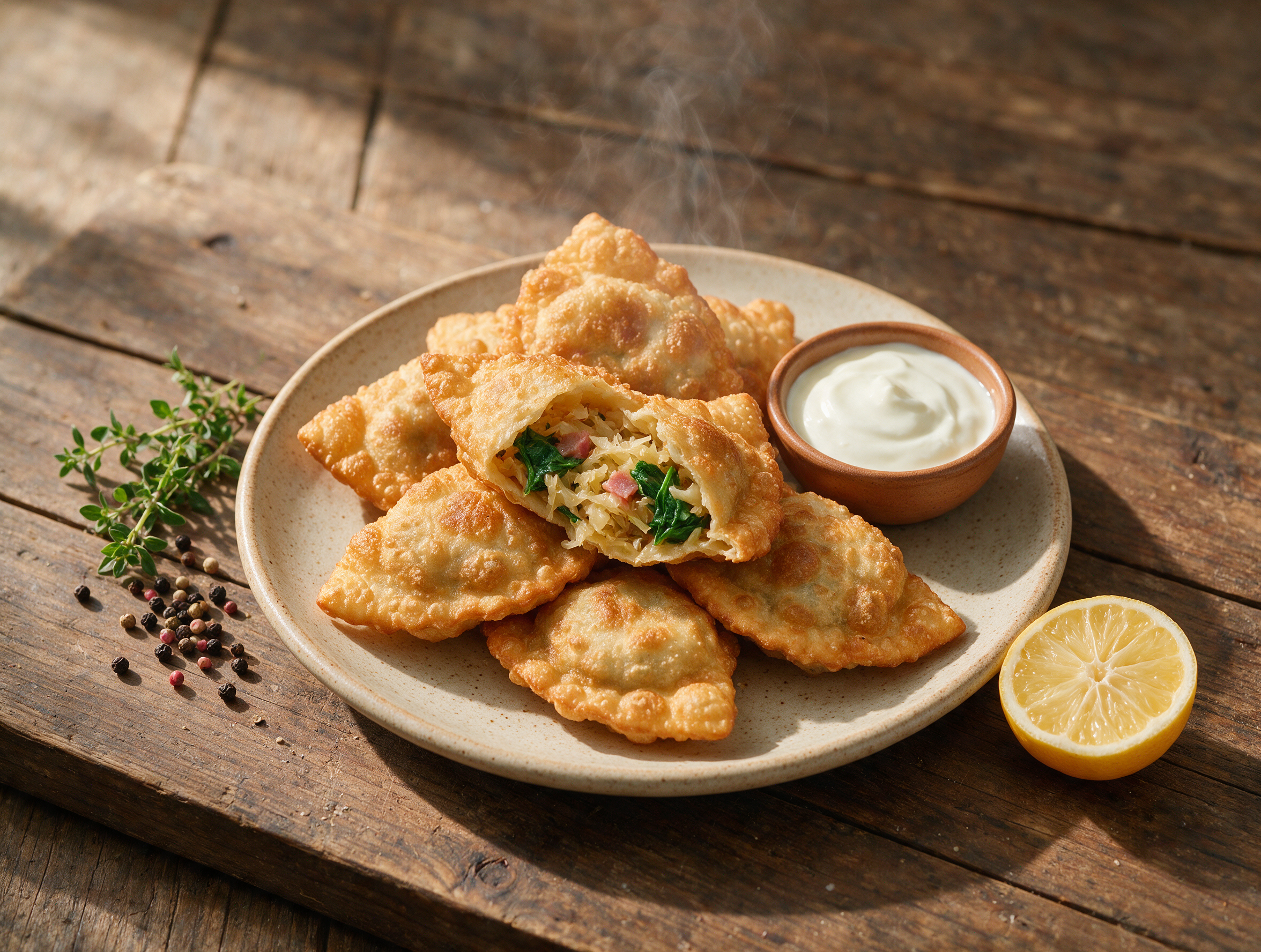
Deep-Fried Tirtlen Altoatesini with Sauerkraut and Spinach
Ingredients
Method
- Whisk the all-purpose flour, rye flour, and salt together in a mixing bowl. Add the warm water and 1 tbsp olive oil, and mix with a wooden spoon until a rough dough forms.
- Turn the dough onto a floured surface and knead for 8 to 10 minutes until smooth and elastic. Shape into a ball, cover with a damp towel, and rest at room temperature for 30 minutes.
- Heat 1 tbsp olive oil in a 26 cm / 10-inch skillet over medium heat. Add the speck and onion, and cook for 4 to 5 minutes until the onion softens and the speck starts to crisp.
- Stir in the garlic and caraway seeds and cook for 1 minute until fragrant.
- Add the sauerkraut and cook for 5 minutes, stirring often, until most of the liquid has evaporated.
- Add the spinach and cook for 3 to 4 minutes until wilted and any extra liquid has cooked off. Season with black pepper and set aside to cool to room temperature, about 15 minutes. Hot filling will tear the dough.
- Divide the rested dough into 10 to 12 pieces, about 50 g each. On a lightly floured surface, roll each piece into a thin round, roughly 12 cm / 5 inches across and 2 mm thick.
- Spoon about 1.5 tbsp of the cooled filling onto one half of each round. Fold the dough over into a half-moon shape and press the edges firmly with your fingers or a fork to seal.
- Pour the sunflower oil into a 2.8 L / 3-quart pot or dutch oven, about 5 cm / 2 inches deep. Heat to 175 C / 350 F on a candy or instant-read thermometer.
- Fry the tirtlen in batches of 2 to 3 so the oil temperature doesn't drop. Cook for 2 to 3 minutes per side, turning once, until deep golden brown and puffed.
- Lift out with a slotted spoon and drain on a wire rack lined with paper towels. Let the oil return to 175 C / 350 F between batches.
- Serve warm, on their own or with a small bowl of sour cream for dipping.
Notes
- Cool the filling fully before assembling; warm filling makes the dough tear.
- Keep oil at 175 C / 350 F; check with a thermometer between batches.
- Drain sauerkraut well and squeeze out excess brine before cooking.
- Seal edges firmly with a fork to prevent leaks during frying.
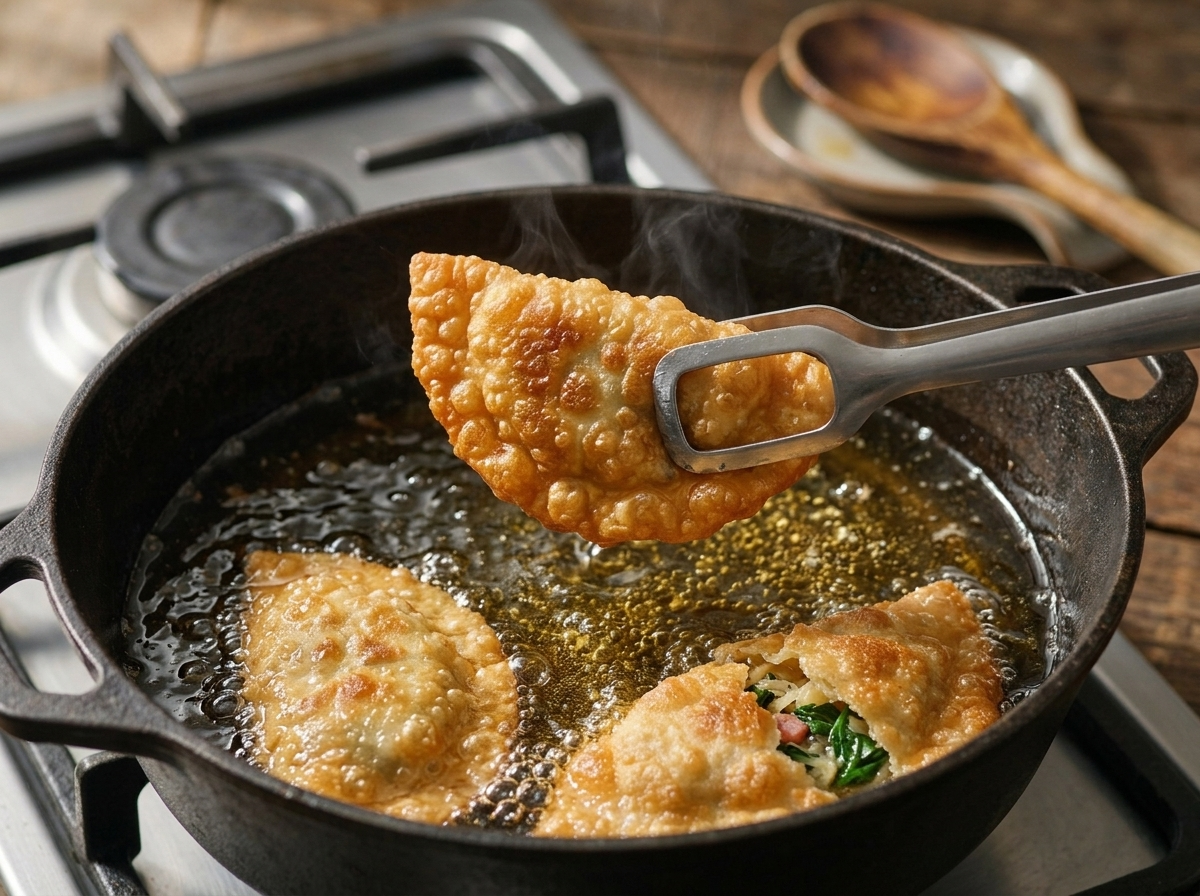
Tips for Success
- Let the sauerkraut filling cool completely before filling the dough, or steam will make the dough tear.
- Keep the fry oil at 175 C / 350 F with a thermometer, since cooler oil makes the dumplings greasy instead of crisp.
- Seal the edges firmly with a fork so the filling doesn’t leak out into the frying oil.
- Rest the dough for the full 30 minutes, since skipping this makes it spring back and hard to roll thin.
- Squeeze excess liquid from the sauerkraut and spinach before cooking to keep the filling from turning the dough soggy.
Variations
- Swap the speck for smoked pancetta or leave out the meat entirely for a vegetarian version of Tirtlen Altoatesini.
- Fill half the batch with mashed potato and melted cheese instead of sauerkraut for a milder, kid-friendly version.
- Use only rye flour in the dough for a denser, more rustic texture closer to old farmhouse recipes.
Storage and Reheating
Keep leftover fried tirtlen in an airtight container in the fridge for 3 to 4 days. The shell softens as it sits, so plan to re-crisp before eating.
Reheat in the oven at 190 C / 375 F for 8 to 10 minutes, turning once, until hot through and crisp again on the outside. Skip the microwave, since it turns the fried shell rubbery.
To freeze, shape and fill the dumplings, then freeze uncooked on a tray until solid before bagging them. They keep for up to 2 months. Fry straight from frozen at 175 C / 350 F, adding 1 to 2 extra minutes per side.
Serving Suggestions
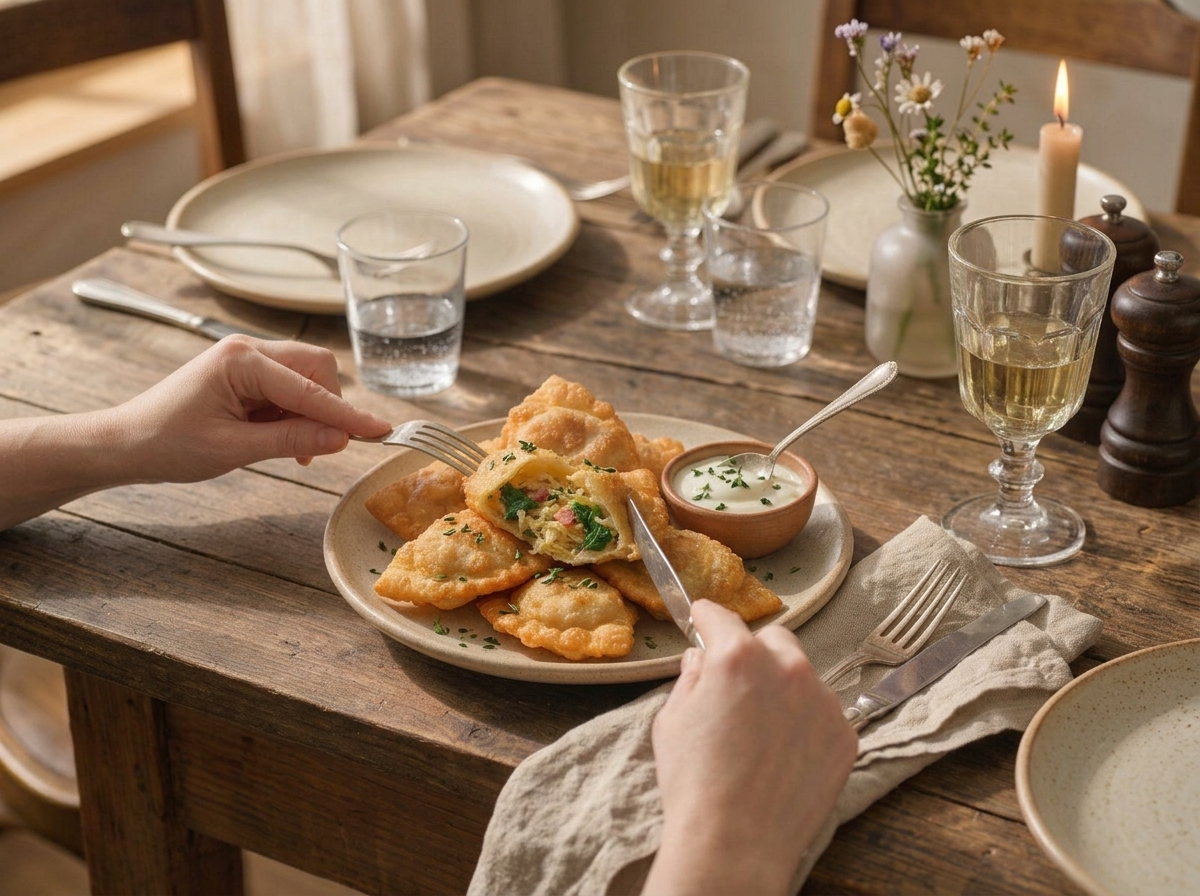
Serve Tirtlen Altoatesini warm, with a small bowl of sour cream for dipping. That sharp, cool dairy note balances the fried dough and salty filling.
A green salad with a vinegar-heavy dressing works as a side, cutting through the richness. Alongside speck, mountain cheese, and dark Alpine bread rings, they turn into a full South Tyrolean farmhouse spread.
A glass of Alto Adige white, like Kerner or Sylvaner, is the local pairing if you’re serving these for a sit-down meal rather than a snack.
FAQ
Why are my Tirtlen Altoatesini soggy instead of crisp?
Soggy tirtlen usually mean the oil wasn’t hot enough or the filling was too wet. Keep the oil at 175 C / 350 F with a thermometer, and squeeze extra liquid from the sauerkraut and spinach before cooking. Frying too many at once also drops the oil temperature fast, so stick to batches of 2 to 3.
Can I use bacon instead of speck in this recipe?
Yes, smoked bacon or pancetta works fine if you can’t find speck. Speck is an Alto Adige cured, smoked ham with a firmer texture, so bacon renders a bit more fat and tastes slightly sweeter. Cook it the same way, until it starts to crisp, before adding the onion.
Can I freeze Tirtlen Altoatesini before frying them?
Yes, shape and fill the dumplings, then freeze them uncooked on a tray until solid before transferring to a bag. They keep for up to 2 months. Fry straight from frozen at 175 C / 350 F, adding 1 to 2 extra minutes per side until golden and heated through.
What pairs well with Tirtlen Altoatesini besides sour cream?
Sour cream is the classic dip, but a green salad with a sharp vinaigrette cuts through the fried dough nicely. A glass of Alto Adige white wine like Kerner or Sylvaner works well too, along with cured meats and mountain cheese for a farmhouse-style spread.
Are Tirtlen Altoatesini vegetarian?
Not as written here, since the filling includes speck, but you can leave the meat out entirely. Increase the onion slightly and add a pinch more caraway to keep the filling flavorful. The dough itself has no animal products beyond a little olive oil, so it’s easy to adapt.
What’s the difference between Tirtlen and a calzone?
Tirtlen are smaller, thinner, and deep-fried like bomboloni rather than baked, with a South Tyrolean filling of sauerkraut, spinach, and speck instead of tomato and cheese. The dough is closer to a rustic bread-pasta hybrid than pizza dough. Both are folded and sealed the same way, but the method and filling set them apart.