
Jump to Recipe
Cassatelle siciliane are fried half-moon pastries from western Sicily, filled with sweetened ricotta filling and dark chocolate, then dusted with powdered sugar while still warm.
The dough is simple, just flour, a little sugar, lard or butter, egg, and a splash of white wine or Marsala. What matters is rolling it thin enough that it blisters and turns crisp in hot oil, but sturdy enough to hold the filling without splitting.
I learned the hard way that ricotta needs a night in the fridge over cheesecloth before it goes near a mixing bowl. Skip that step and the filling weeps, softens the dough, and you get soggy pastries instead of crisp ones.
This batch makes about 16 pieces, enough for 8 servings of two each, and keeps well in the freezer unfried for whenever the craving hits.
Why You’ll Love This Recipe
- Crisp fried shell contrasts with a soft, chocolate-flecked ricotta center
- Dough uses pantry basics, no special flours or equipment needed
- Shape ahead and freeze unfried for a quick fry later
- Traditional Sicilian carnival sweet that travels well for gatherings
Ingredient Notes
- Ricotta: Use sheep’s milk ricotta if you can find it, it’s drier and holds shape better. Cow’s milk ricotta works too, just drain it overnight so the filling isn’t loose.
- Lard: Traditional in Sicily and it gives the dough a shattery crumb. Unsalted butter, softened, is a fine substitute if you’d rather skip it.
- White wine or Marsala: Either works, Marsala adds a faint sweetness. Chill it first, cold liquid keeps the dough from getting sticky.
- Dark chocolate chips: Chopped dark chocolate (70% or so) melts into small pockets instead of clumping. Chocolate shavings from a bar work just as well.
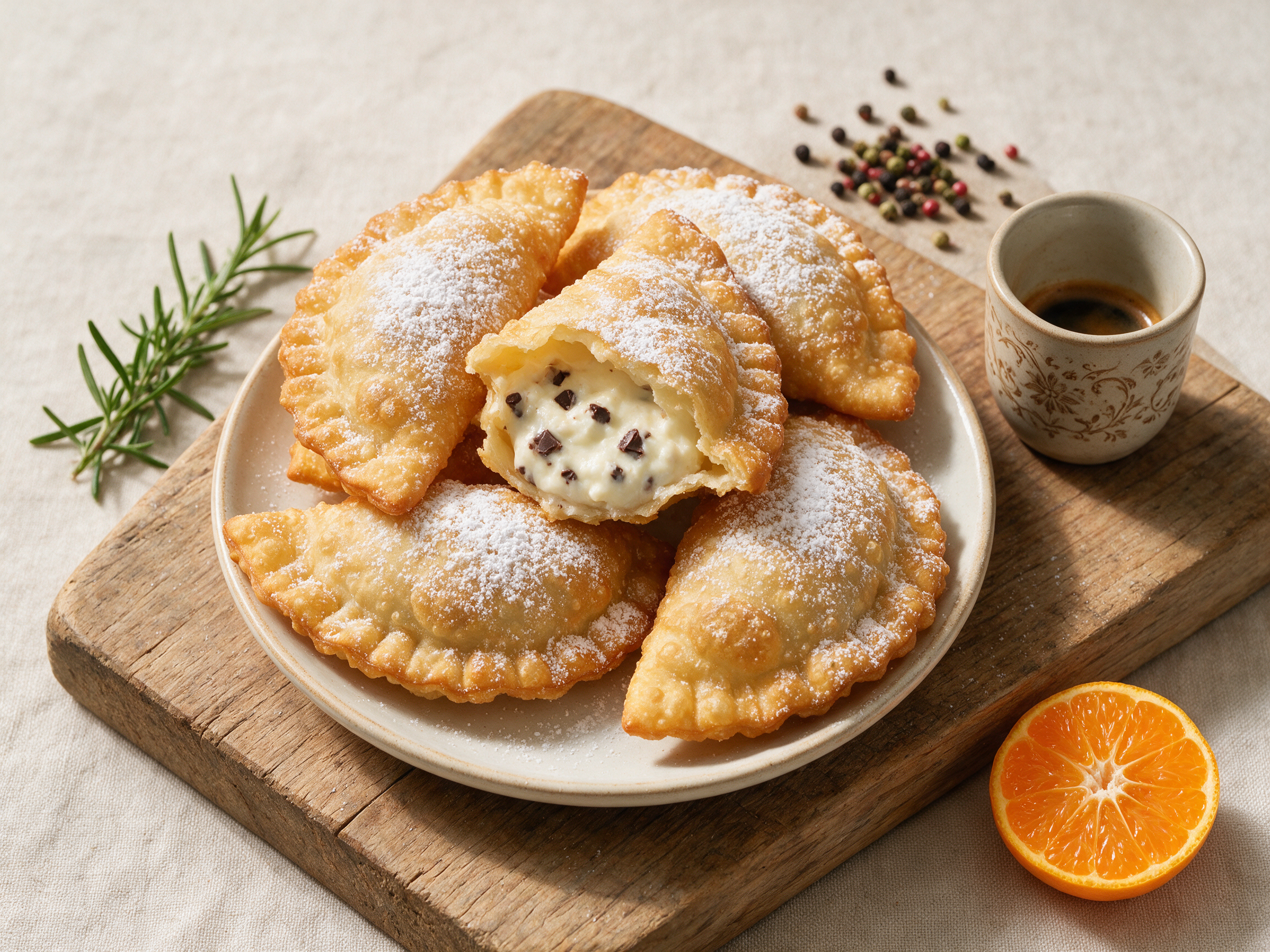
Cassatelle Siciliane: Fried Ricotta Half-Moons
Ingredients
Method
- In a large bowl, whisk the flour, sugar, and salt together. Rub in the lard with your fingertips until the mixture looks crumbly.
- Add the egg and chilled wine, mixing into a shaggy dough. Knead on a floured surface for 5 minutes until smooth. Wrap and rest at room temperature for 30 minutes.
- Whisk the drained ricotta with the sugar, cinnamon, and vanilla until smooth with no visible grains. Fold in the chopped chocolate and chill until you're ready to fill.
- Divide the rested dough in two. Roll each half on a floured surface to about 2 mm thickness. Cut rounds with a 12 cm / 4.7-inch cutter, rerolling scraps once.
- Place a heaping tablespoon of filling off-center on each round. Fold the dough over into a half-moon, press the edges to seal, then crimp with a fork dipped in flour.
- Keep shaped cassatelle covered on a floured tray while you finish the batch, so the dough doesn't dry out.
- Heat the oil in a 24 cm / 9.5-inch deep pot to 170 C / 340 F, checking with a deep-fry thermometer.
- Fry the cassatelle in batches of 4 to 5, don't crowd the pot, for 2 to 3 minutes per side until blistered and deep golden.
- Lift out with a slotted spoon onto a paper towel-lined tray to drain.
- Let cool for 5 minutes, then dust generously with powdered sugar. Serve warm or at room temperature.
Notes
- Drain ricotta overnight, this is the step that determines if the filling holds together.
- Roll dough thin, about 2 mm, for the characteristic blistered fried shell.
- Keep oil steady at 170 C / 340 F, use a thermometer rather than guessing.
- Fry in small batches of 4 to 5 so the oil temperature doesn't drop.
- Dust with powdered sugar only after they've cooled 5 minutes, or the sugar melts.
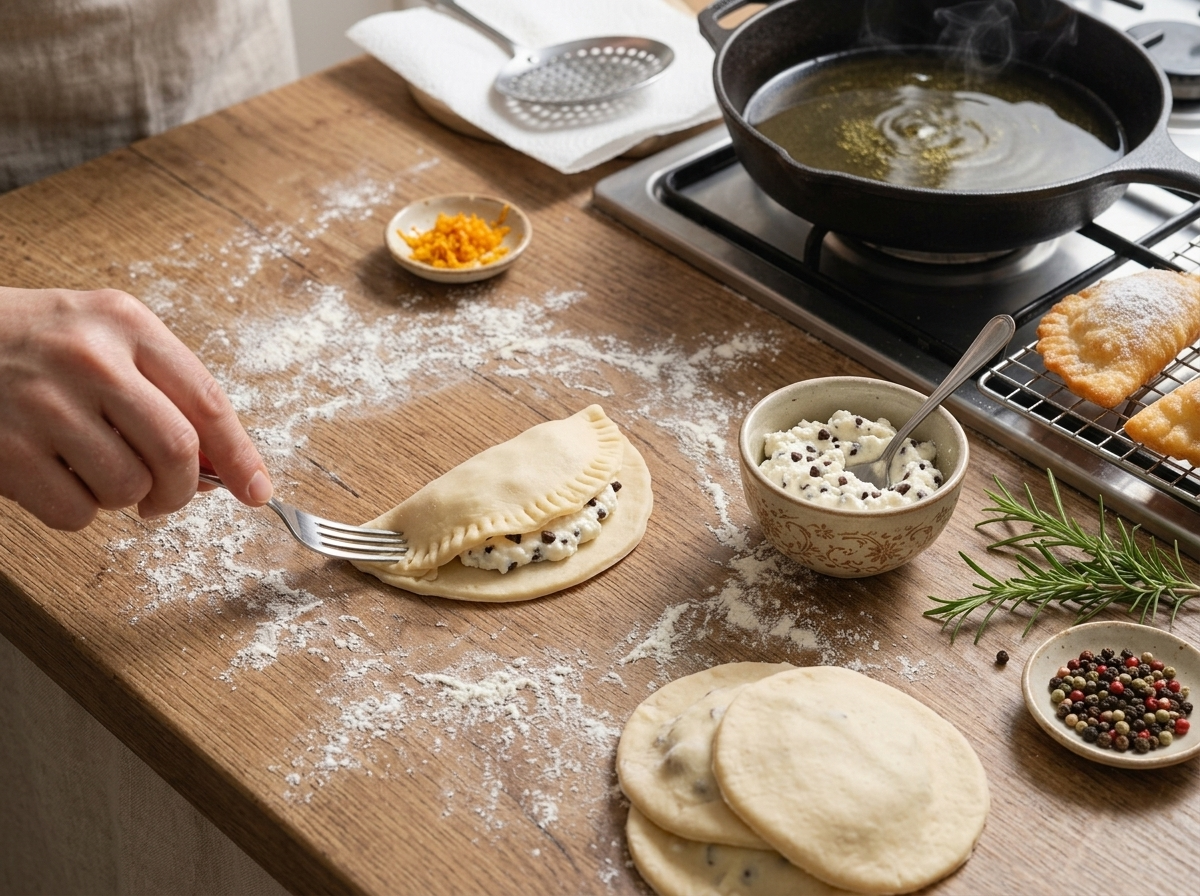
Tips for Success
- Drain the ricotta in cheesecloth over a sieve overnight, the same trick used for ricotta filling in crespelle, so it stays thick, not runny.
- Roll the dough to about 2 mm, thin dough is what gives the shell its blister and crunch.
- Seal edges with a fork dipped in flour so they don’t unstick in hot oil.
- Keep oil at 170 C / 340 F using a thermometer, cooler oil makes the pastries greasy and pale.
- Fry only 4 to 5 cassatelle at a time so the oil temperature doesn’t drop and pastries cook evenly.
Variations
- Swap chocolate chips for candied orange peel or chopped pistachios for a different filling texture.
- Add a pinch of grated lemon or orange zest to the ricotta filling for a brighter finish.
- Brush shaped cassatelle with egg and bake at 190 C / 375 F for 18 to 20 minutes instead of frying, for a lighter version.
Storage and Reheating
Cassatelle siciliane taste best within a few hours of frying, while the shell is still crisp. Once cool, they keep in an airtight container in the fridge for 2 to 3 days.
To bring back the crunch, warm them in the oven at 180 C / 356 F for 6 to 8 minutes, uncovered, then dust with fresh powdered sugar. Skip the microwave, it turns the shell soft and chewy instead of crisp.
For longer storage, freeze the shaped, unfried cassatelle on a tray, then bag them once solid. Fry straight from frozen at 170 C / 340 F, adding about 1 extra minute per side.
Serving Suggestions
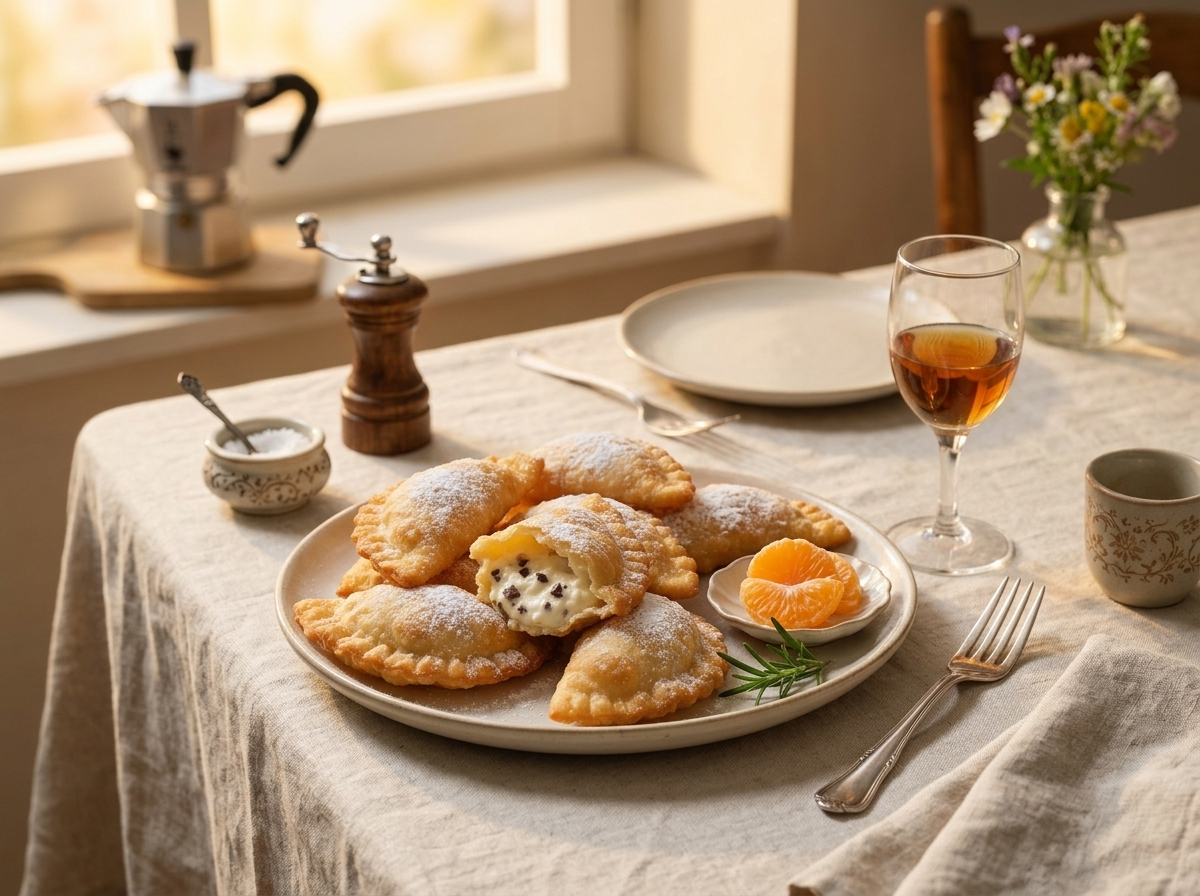
Serve cassatelle siciliane warm, dusted heavy with powdered sugar, alongside strong espresso. That contrast of bitter coffee and sweet fried pastry is how they’re eaten across western Sicily.
For a dessert table, set them next to a small glass of chilled Marsala or Passito di Pantelleria. The wine’s sweetness matches the ricotta filling without competing with it.
A plate of candied orange peel or a bowl of fresh cherries on the side adds color and cuts through the richness.
FAQ
Why did my cassatelle siciliane split open while frying?
Splitting usually means the filling was too wet or the edges weren’t sealed tight enough before frying. Drain the ricotta overnight so it’s thick, not loose, and press the fork crimp firmly around the whole edge. Steam builds up fast in hot oil, so any weak seam will pop open first.
Can I use cow’s milk ricotta instead of sheep’s milk ricotta for cassatelle?
Yes, cow’s milk ricotta works fine, though sheep’s milk ricotta is traditional and holds its shape a bit better. Drain cow’s milk ricotta overnight in cheesecloth over a sieve, since it tends to release more liquid. Skipping that step gives you a softer, wetter filling that can soak into the dough.
Can I freeze cassatelle siciliane before frying?
Yes, freeze them shaped but unfried on a tray until solid, then transfer to a freezer bag for up to 2 months. Fry straight from frozen in oil at 170 C / 340 F, adding about 1 extra minute per side. Don’t thaw first, the dough gets sticky and harder to handle.
What goes well with cassatelle siciliane?
Strong espresso is the classic pairing, cutting through the sweetness of the ricotta and powdered sugar. A small glass of chilled Marsala or Passito di Pantelleria also works well alongside them for a dessert spread. Fresh cherries or candied orange peel add a bit of color on the plate.
Are cassatelle siciliane gluten-free?
No, the dough is made with all-purpose wheat flour, so this recipe isn’t gluten-free as written. A 1:1 gluten-free flour blend can work for the dough, though the texture will be a bit more crumbly and less stretchy when rolling and sealing the edges.
What’s the difference between cassatelle and cassata siciliana?
Cassatelle are small fried half-moon pastries filled with ricotta and chocolate, eaten as individual sweets. Cassata siciliana is a large layered sponge cake covered in marzipan and candied fruit, served as a whole dessert, usually for Easter. They share the ricotta filling but nothing else about their shape or method.