
Jump to Recipe
Cardi fritti are parboiled cardoon stalks dipped in a light egg batter and fried until the crust turns golden and shatters at the first bite. The vegetable itself tastes like a cross between celery and artichoke heart, mild and slightly bitter before it hits hot oil.
Cardoons show up in Italian markets from late fall through winter, mostly around Piedmont where they’re a fixture at the aperitivo table next to bagna cauda. If you’ve never cooked one, treat it like a big celery stalk that needs peeling and a proper boil before it goes anywhere near batter.
The one thing that trips people up is oxidation. Cut cardoons go gray within minutes, so they need to land in lemon water the second the knife touches them, or you end up frying pieces that already look tired before the batter is even mixed.
Once boiled tender and dried well, they take about 3 to 4 minutes per batch in 175C / 350F oil, the same hot-oil method used for crispy fried Strauben Tirolesi. The batter puffs, the edges crisp, and the inside stays soft enough to eat with a fork or your fingers.
Why You’ll Love This Recipe
- Crisp shattering crust over a tender vegetable center
- Uses a vegetable most people never learn to cook
- Parboiling can be done a day ahead
- A classic Piedmont aperitivo snack ready in about an hour
Ingredient Notes
- cardoons: Look for firm, pale ribs with minimal browning, the outer stalks need more peeling than the inner ones. Celery works as a milder substitute in a pinch.
- lemon: Keeps the cut cardoons from turning gray in both the soaking water and the boil. Bottled lemon juice works if fresh isn’t on hand.
- all-purpose flour: A small amount in the boiling water keeps the cardoons pale, a larger amount goes into the batter for structure. 00 flour works too if that’s what you stock.
- eggs: Bind the batter and give it a light puff in the oil. Room temperature eggs blend in more smoothly than cold ones.
- sparkling water: The bubbles keep the batter light and crisp. Still water works but the crust bakes up a touch denser.
- parmesan: Adds a salty edge to the crust. Leave it out for a dairy-free version, the batter still fries up crisp.
- sunflower oil: Has a high smoke point and a clean taste that won’t compete with the cardoons. Peanut oil is a good swap if you have it.
- salt: Seasons the boiling water and the batter, then finishes the fried pieces. Go light in the batter since the finishing salt does most of the work.
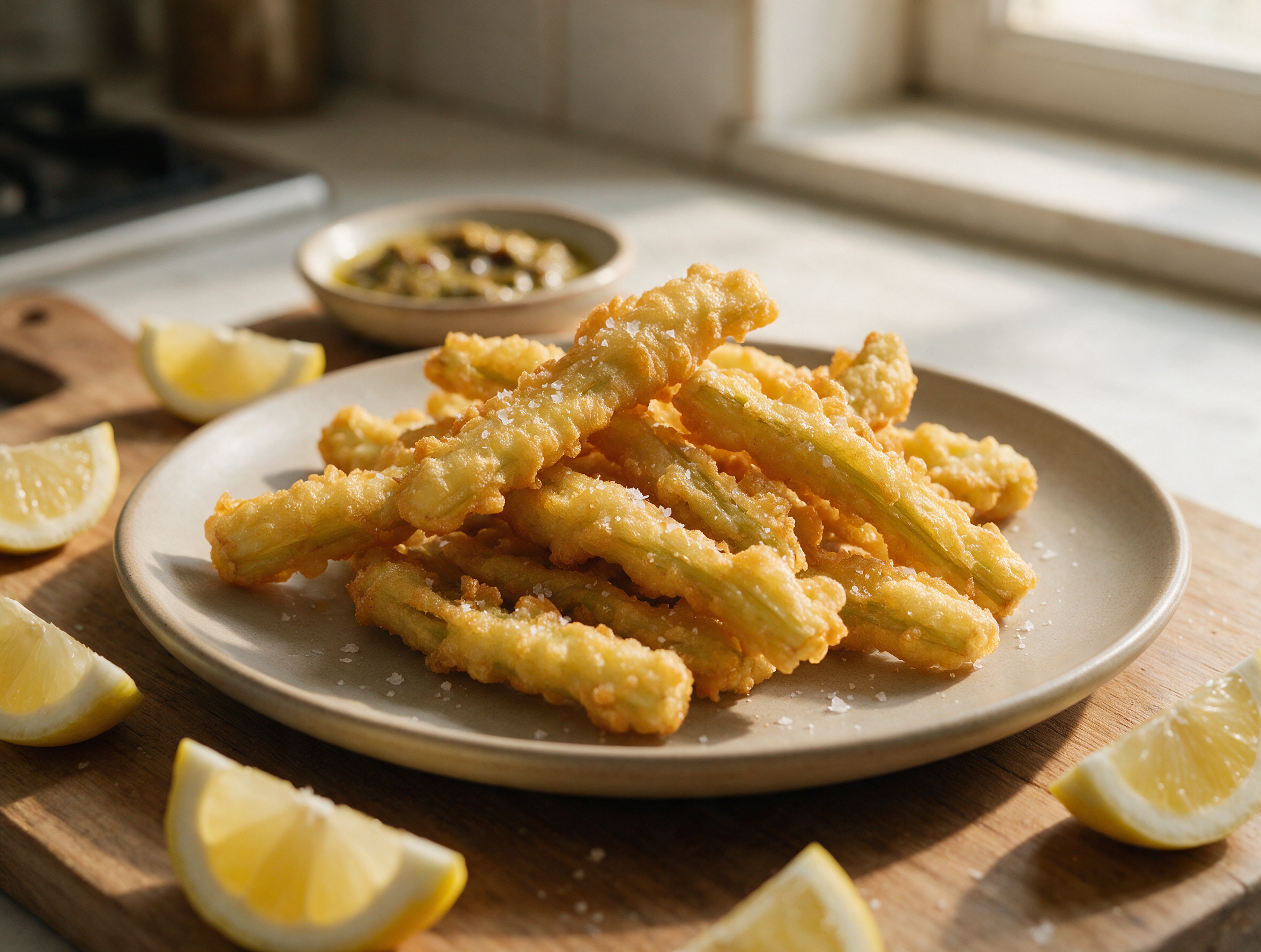
Cardi Fritti: Battered Fried Cardoons, Crisp and Golden
Ingredients
Method
- Trim the cardoon ribs, pulling away any tough strings with a vegetable peeler, then cut into 8 cm / 3-inch batons. Drop the pieces straight into a bowl of water mixed with the lemon juice as you work to stop browning.
- Bring a 24 cm / 9.5-inch stockpot of water to a boil with the 2 tbsp flour, 1 tsp salt, and the lemon water from the soaking bowl. Add the cardoons and simmer for 20 to 25 minutes until a knife slides in with no resistance but the pieces still hold their shape.
- Drain the cardoons and spread them on a clean kitchen towel. Pat dry and let sit for 10 minutes until completely cool and dry to the touch, this step keeps the batter from sliding off in the oil.
- Whisk the 150 g flour, eggs, sparkling water, 1/2 tsp salt, and pepper together in a mixing bowl until smooth and about the thickness of heavy cream. Fold in the parmesan if using.
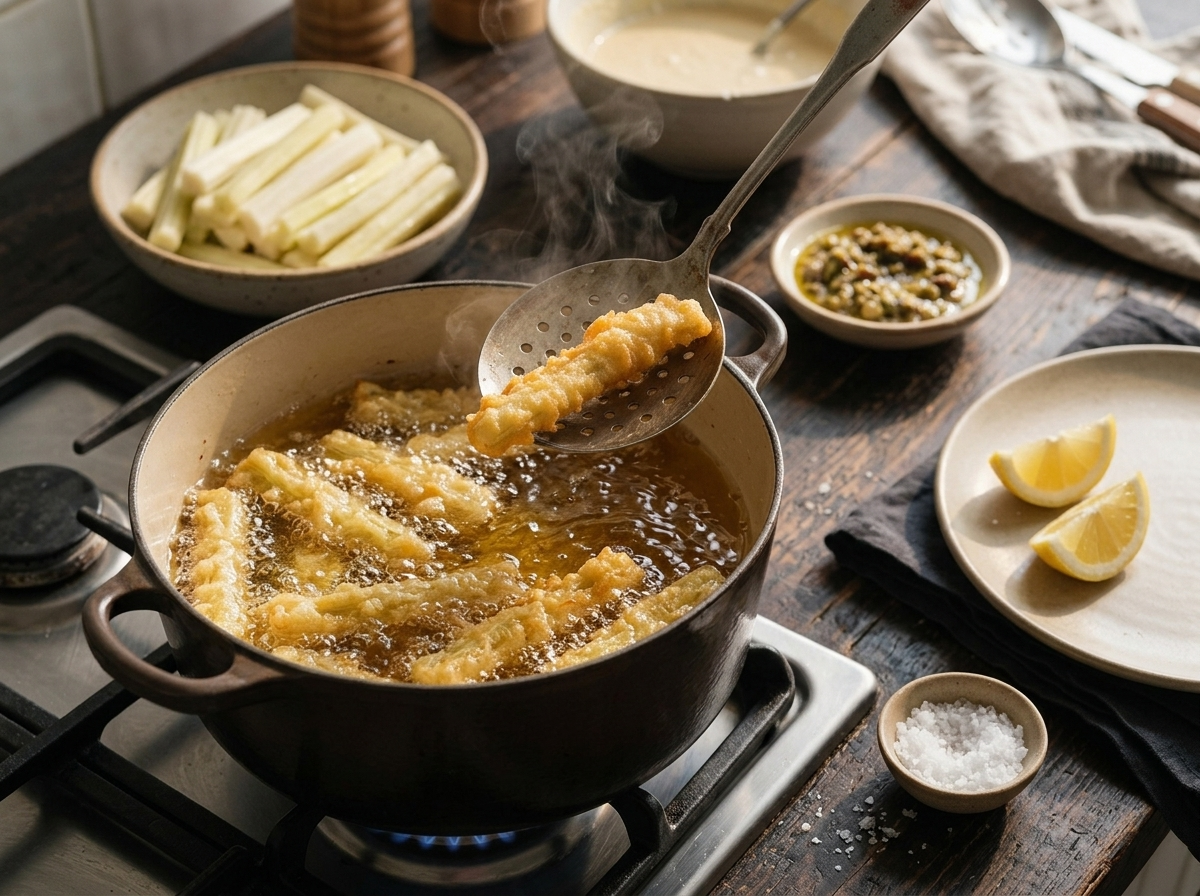
- Pour the oil into a 24 cm / 9.5-inch Dutch oven to a depth of 5 cm / 2 inches and heat to 175C / 350F on an instant-read or candy thermometer.
- Dip 6 to 8 cardoon pieces at a time into the batter, letting the excess drip off, then lower them into the hot oil. Fry in batches so the pieces have room to puff and the oil temperature doesn't drop.
- Fry for 3 to 4 minutes per batch, turning once, until the crust is deep golden and crisp. Lift out with a slotted spoon and drain on a wire rack.
- Season each batch with flaky salt the moment it comes out of the oil. Let the oil return to 175C / 350F between batches before frying the next one.
- Serve the cardi fritti hot with lemon wedges on the side.
Notes
- Peel strings from both sides of each rib before cutting
- Dry boiled cardoons on a towel for at least 10 minutes
- Keep oil at 175C / 350F, check with a thermometer between batches
- Salt straight out of the fryer for best adhesion
Tips for Success
- Peel the tough strings from both sides of each rib before cutting, or the cooked cardoons turn stringy and chewy.
- Dry the boiled cardoons on a towel for at least 10 minutes before battering, wet pieces shed their crust in the oil.
- Hold the oil at 175C / 350F with a thermometer, since a drop below 160C / 320F turns the crust greasy.
- Fry in batches of 6 to 8 pieces so the oil recovers heat quickly and the pieces don’t clump together.
- Salt the cardi fritti the second they leave the oil, since salt sticks to hot batter far better than cooled batter.
Variations
- Swap the parmesan for pecorino romano for a sharper, saltier crust on the fried cardoons.
- Stir a pinch of chili flake or ground fennel seed into the batter for a spiced version of cardi fritti.
- Skip the egg and use only sparkling water and flour for a lighter, egg-free batter that still fries up crisp.
Storage and Reheating
Cardi fritti hold in the fridge for 1 to 2 days in an airtight container, though the crust softens as it sits. Reheat in a 200C / 400F oven for 6 to 8 minutes on a wire rack set over a sheet pan, which brings back most of the crunch. Skip the microwave, it turns the batter rubbery instead of crisp.
For a genuine make-ahead shortcut, parboil the cardoons up to 2 days in advance and keep them dried and covered in the fridge. Batter and fry them fresh right before serving, since the fried crust never holds its texture as well the second day as it does straight from the oil.
Serving Suggestions
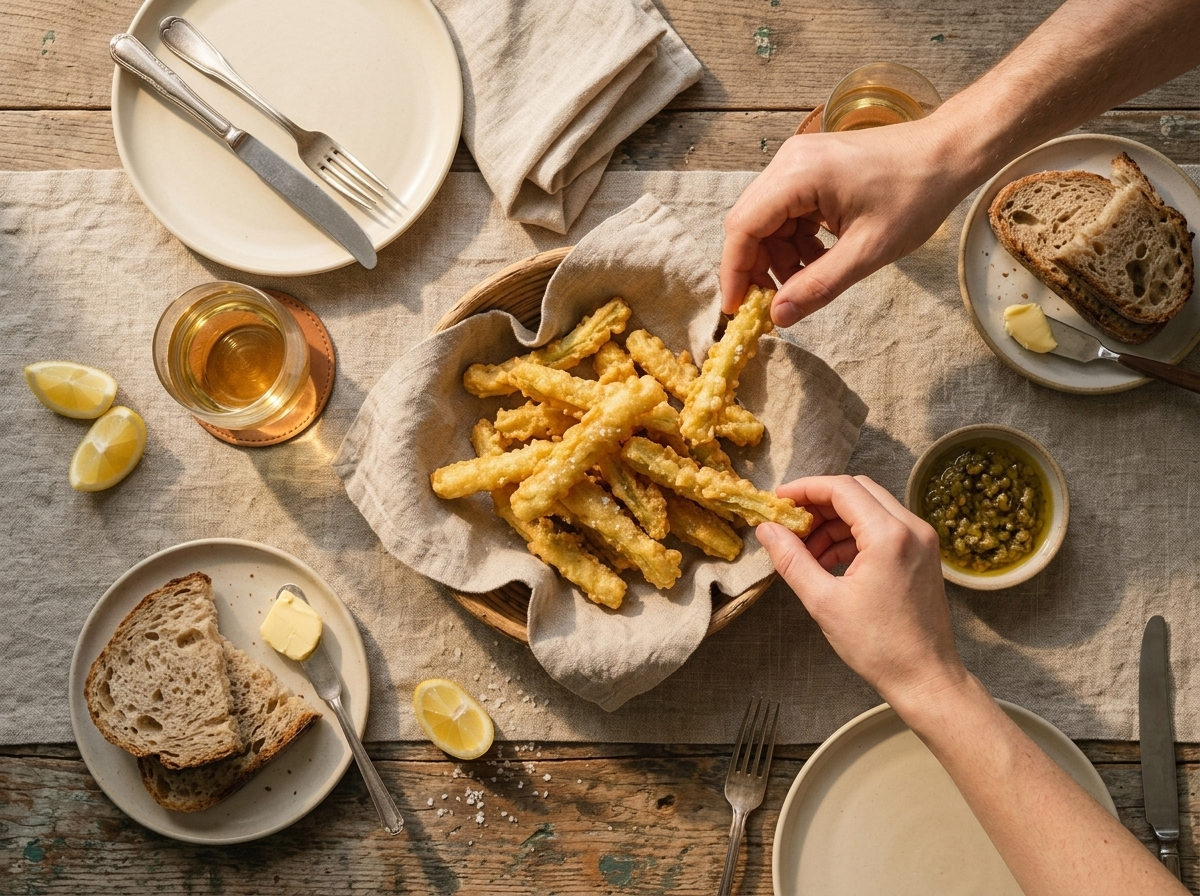
Cardi fritti work as a stand-alone antipasto with just lemon wedges and flaky salt, the classic way they’re served across Piedmont. A small bowl of bagna cauda on the side turns it into a fuller aperitivo spread.
For a heartier plate, serve them alongside other fritti misti, like fried zucchini blossoms or artichoke hearts, with a chilled white wine such as Gavi or Arneis.
FAQ
Why did my cardi fritti turn gray before frying?
Cut cardoons oxidize fast once the peel comes off, turning gray or brown within minutes. Drop the trimmed batons straight into water mixed with lemon juice as you work, then boil them in the same acidulated water. Skipping this step is the main reason home-fried cardoons look dull instead of pale and appetizing.
Can I use celery instead of cardoons for this recipe?
Celery works as a stand-in when cardoons aren’t available, though the flavor is milder and less artichoke-like. Use thick celery stalks, peel the strings the same way, and cut the parboil time to about 10 minutes since celery softens faster than cardoons. The batter and frying method stay identical.
Can I parboil the cardoons for cardi fritti a day ahead?
Yes, boiled cardoons keep well in the fridge for up to 2 days in an airtight container. Drain and pat them completely dry before battering, since leftover moisture is what makes the batter slide off in the fryer. Bring them to room temperature before dipping for the crispest crust.
What goes well with cardi fritti besides lemon wedges?
Cardi fritti pairs well with bagna cauda, a warm anchovy and garlic dip that’s traditional alongside fried and raw vegetables in Piedmont. A simple garlic aioli or just good olive oil and flaky salt also works if you want something lighter than a full dip.
Is cardi fritti gluten-free?
Not as written, since the batter uses wheat flour, but you can swap in rice flour or a 1:1 gluten-free flour blend with good results. The crust turns out slightly more brittle with rice flour, so fry it a touch shorter, closer to 3 minutes per batch.
What’s the difference between cardi fritti and carciofi fritti (fried artichokes)?
Cardi fritti use cardoon stalks, the crunchy ribs of a plant related to artichokes, while carciofi fritti use the artichoke heart itself. Cardoons need a longer parboil since the stalks are denser, and the cooked texture is closer to braised celery than to the tender bite of a fried artichoke heart.