Jump to Recipe
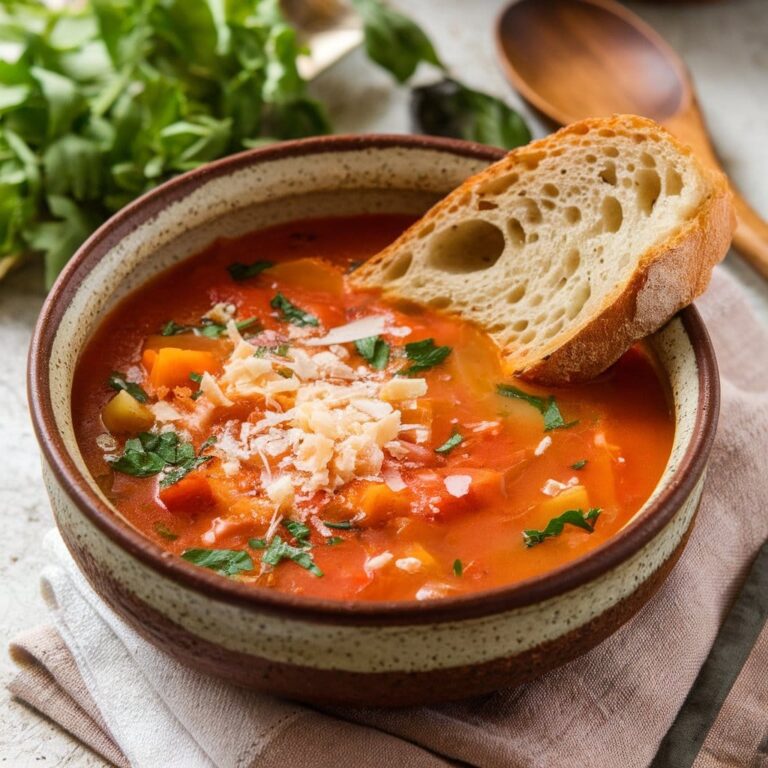
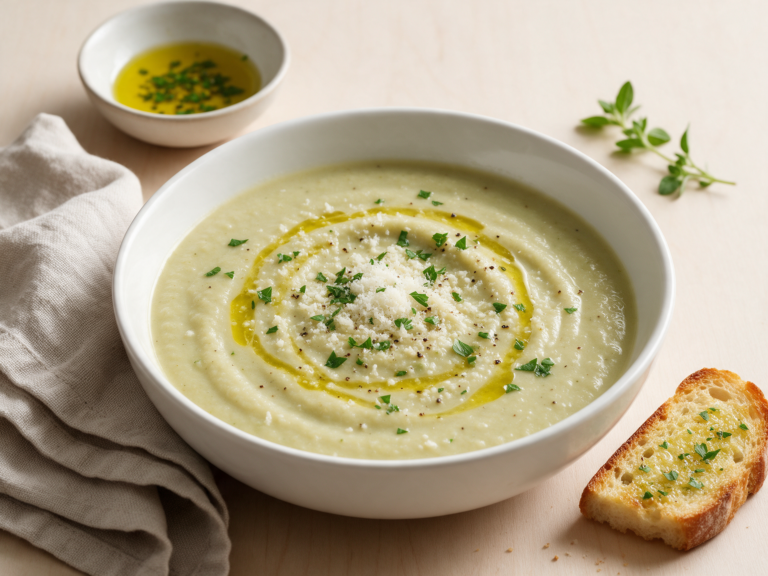
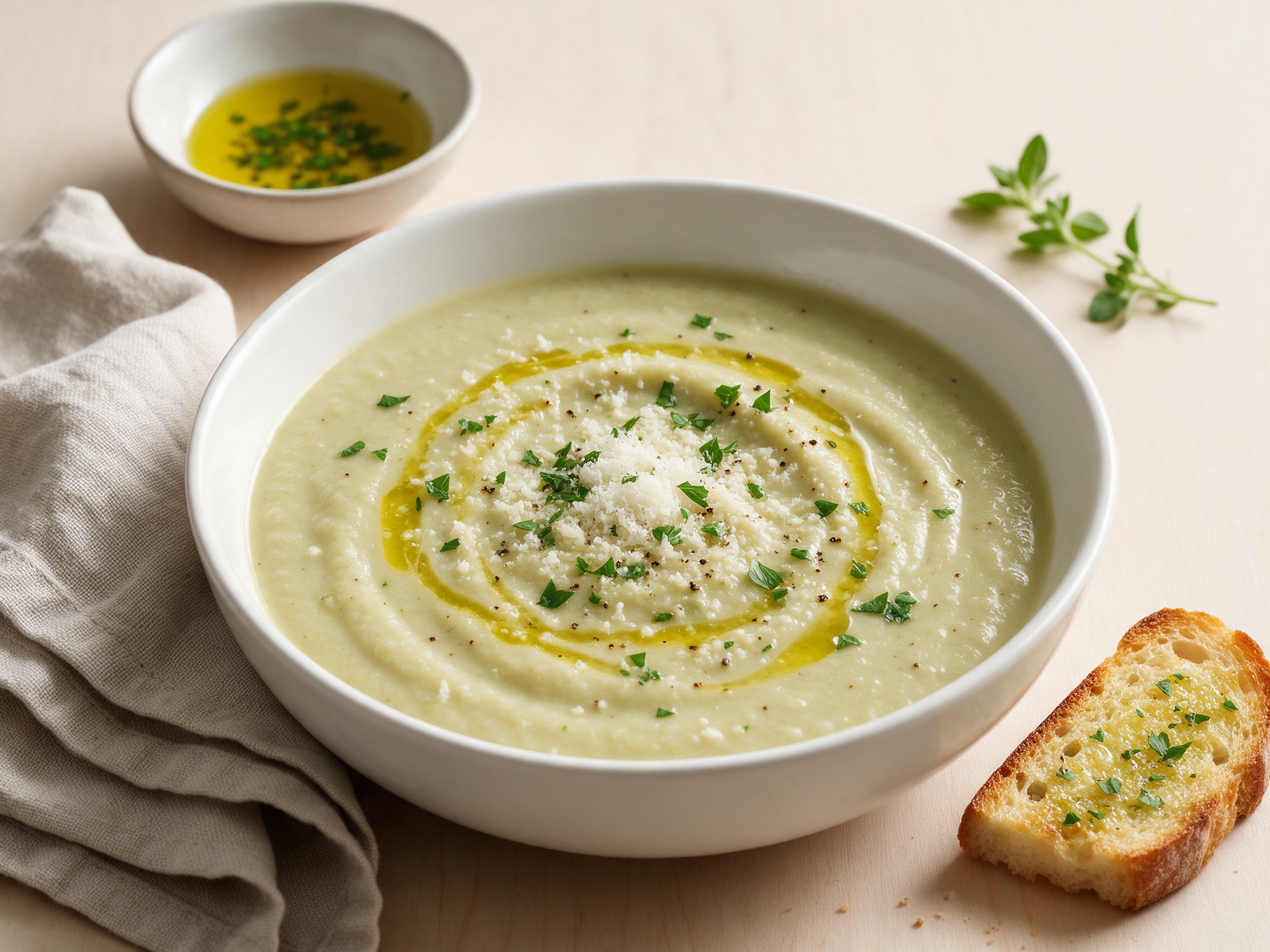
Zuppa di cardi is an Italian cardoon soup made from the pale ribs of the cardoon, a thistle related to the artichoke. Here they’re simmered with onion and potato and finished with Parmigiano. The flavor sits between artichoke heart and celery, with a mild bitter edge.
The texture defines the result, and there’s no cream involved. Potato carries the body: blend about half the pot and the soup turns silky while the rest stays in soft pieces.
Trimming is the only fussy part. If you skip peeling the strings off the ribs, you’ll get fibrous threads that no amount of simmering softens. Give it 25 minutes and keep the cut pieces in lemon water.
Total time is about 80 minutes, and most of it is hands-off. Practical note: the soup tastes better the next day, so it works well for make-ahead lunches.
Why You’ll Love This Recipe
- Creamy body from potato, with no cream or flour
- Mostly hands-off simmering after one short prep session
- Keeps 3 to 4 days in the fridge and reheats well
- Needs one bunch of cardoons and basic pantry staples
Ingredient Notes
- Cardoons: Buy about 1 kg to get 500 g of usable ribs. Choose pale, firm inner ribs and discard the leaves. Drained jarred cardoons (about 500 g) work if you skip the trimming and boiling.
- Lemon: The juice goes in the soaking water so cut cardoons stay pale. White vinegar, 2 tbsp, works in a pinch.
- Potatoes: Yukon gold gives the creamiest result when blended. Russets work too but break down faster and make a thicker soup.
- Parmigiano Reggiano rind: The rind adds savory depth as it simmers. Leave it out if you don’t have one and add a little more grated cheese at the end.
- Broth: Use low-sodium vegetable or chicken broth so you can control the salt, since the cheese adds plenty. Homemade is best, but good store-bought is fine.
Zuppa di Cardi: Italian Cardoon Soup with Parmigiano
Ingredients
Method
- Fill a 4 L / 4-quart bowl with the 2 L cold water and the lemon juice. Cut the leaves and base off the cardoons, separate the pale ribs, and peel the strings from the rounded side of each rib with a vegetable peeler. Cut the ribs into 2 cm pieces and drop them into the lemon water as you go. Peel and cube the potatoes, chop the onion, and slice the garlic.
- Bring the 1.5 L water and 1 tsp salt to a boil in a 22 cm / 4-quart saucepan. Drain the cardoons, add them, and boil gently for 30 minutes, until a knife slides in with no resistance and the pieces have no fibrous threads. Drain well.
- While the cardoons boil, warm the olive oil in a 26 cm / 5-quart Dutch oven over medium-low heat. Add the onion and a pinch of the 1/2 tsp salt and cook for 8 minutes, stirring, until soft and pale with no browning. Add the garlic and cook for 1 minute, until fragrant.
- Add the potatoes, drained cardoons, broth, and Parmigiano rind to the Dutch oven. Bring to a boil, lower to a steady simmer, partly cover, and cook for 20 minutes, until a potato cube crushes easily against the side of the pot.
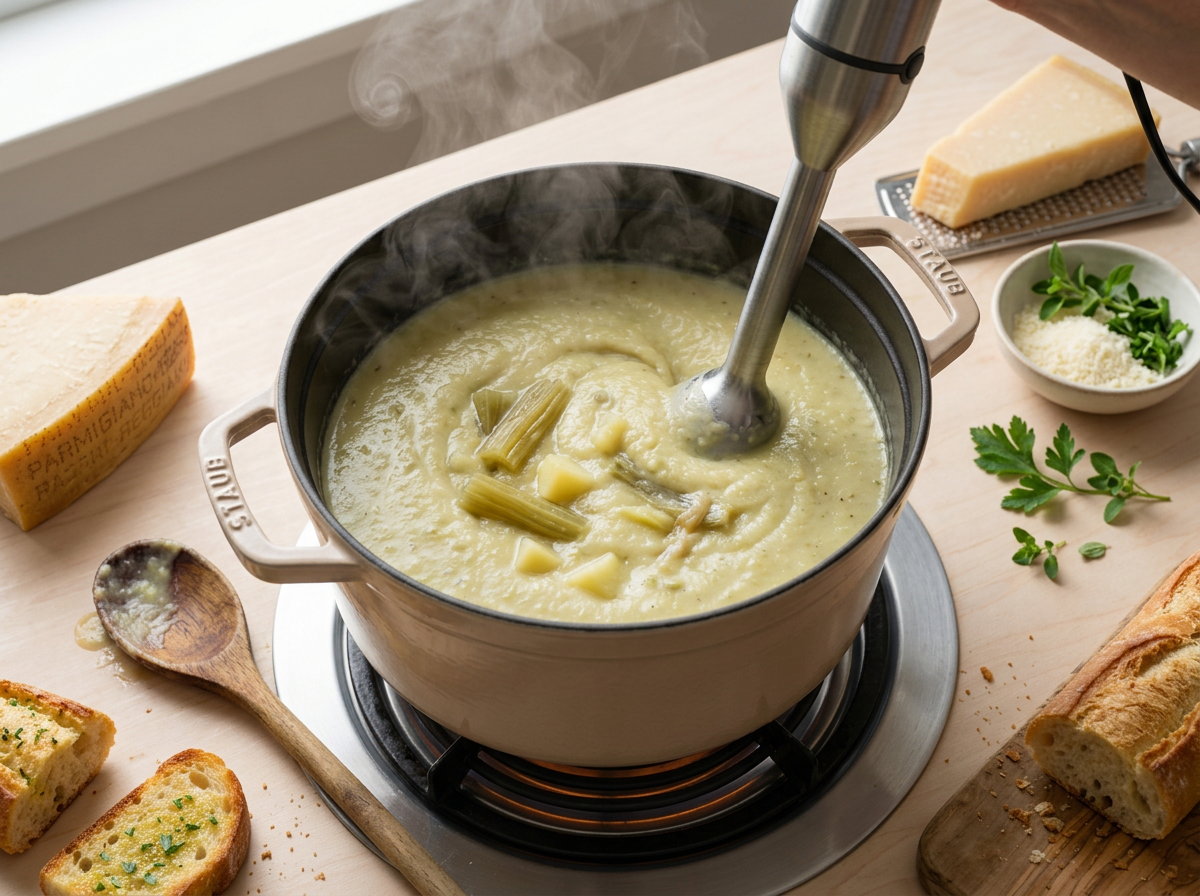
- Remove the rind. Blend about half the soup with an immersion blender in short pulses, leaving the rest chunky. Stir in the grated Parmigiano, parsley, pepper, and salt to taste, then thin with up to 60 ml hot water if it feels stiff. Serve hot with more cheese and olive oil.
Notes
- Cardoons lose about half their weight in trimming, so buy roughly 1 kg for 500 g of usable ribs.
- Prep the cardoons up to 24 hours ahead and keep them submerged in lemon water in the fridge.
- Taste the broth first and hold back added salt until the Parmigiano goes in.
- Loosen leftovers with hot water or broth, since the soup thickens in the fridge.
Tips for Success
- Choose pale, tender inner ribs and discard the leaves and dark outer stalks, which carry most of the bitterness.
- Peel the strings from the rounded side of each rib with a vegetable peeler, working from top to bottom, as you would with old celery.
- Drop cut pieces into lemon water immediately, because cardoons darken within minutes once exposed to air.
- Blend only about half the soup so you keep tender pieces of cardoon and potato against the silky base.
- Stir in the grated Parmigiano off the heat and taste before adding more salt, since the rind and cheese both season the pot.
Variations
- Drop in raw 15 g beef or pork meatballs for the last 10 minutes of simmering for a heartier pot.
- Swap the potato for 200 g cooked cannellini beans and blend half the soup for more protein and a creamier body.
- Top each bowl with a spoonful of fresh ricotta and extra olive oil instead of grated cheese for a milder finish.
Storage and Reheating
Zuppa di cardi keeps in an airtight container in the fridge for 3 to 4 days. Let it cool for 30 minutes at room temperature first, then refrigerate. The soup thickens as the potato sets.
Reheat it in a saucepan over medium-low heat for 8 to 10 minutes, stirring often, until steaming. Add 60 to 120 ml of water or broth to bring back the original consistency. In the microwave, use a covered bowl for 2 to 3 minutes, stirring halfway.
For the freezer, portion the soup without the grated Parmigiano and freeze for up to 3 months. Thaw overnight in the fridge, reheat as above, and stir in the cheese once it’s hot. Potato can turn slightly grainy, so a quick pulse with the immersion blender smooths it out.
Serving Suggestions
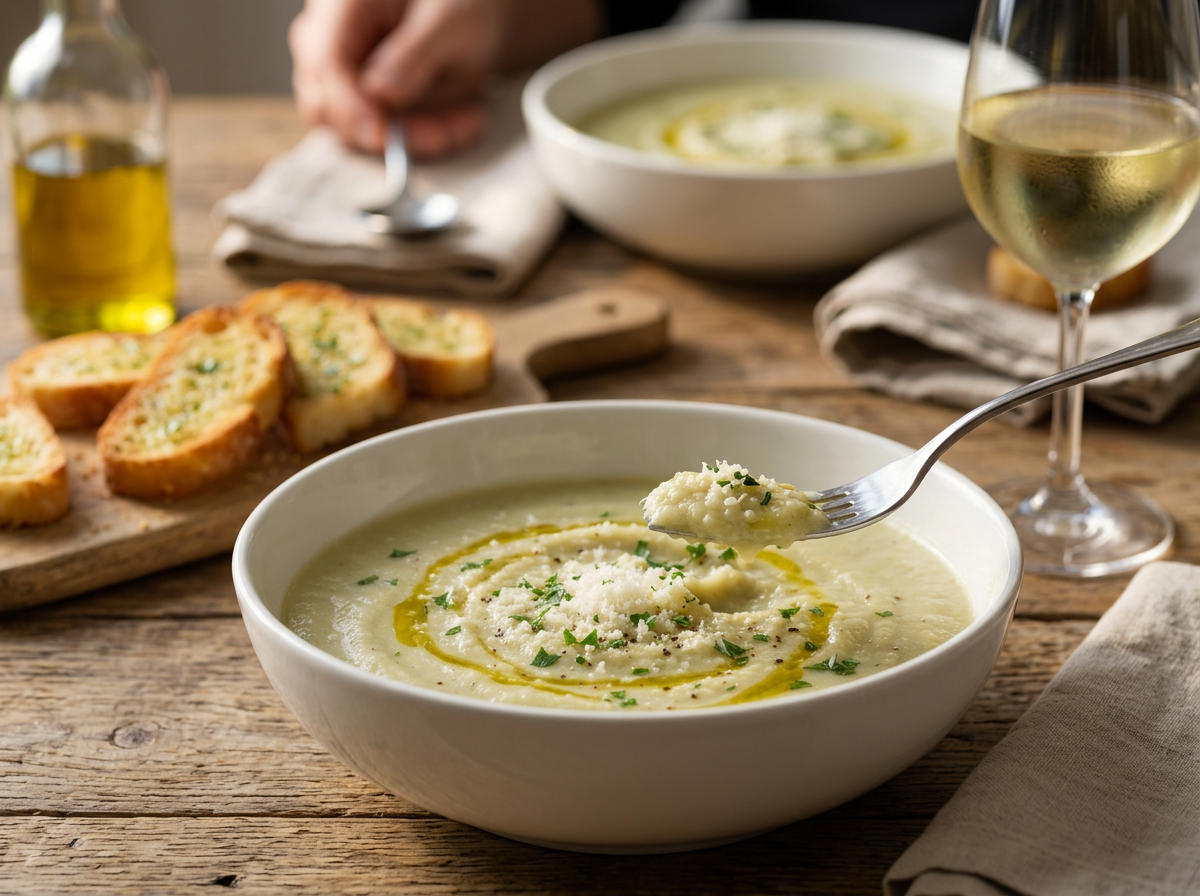
Zuppa di cardi is served hot in wide bowls with a spoonful of grated Parmigiano and a thread of good olive oil on top. Add a grind of black pepper and a few chopped parsley leaves.
Toast slices of country bread, rub each with a cut garlic clove, and set one in the bowl or on the side. The crisp edge contrasts with the soft, mellow soup.
For a light supper, add a salad of bitter leaves such as radicchio or escarole dressed with lemon and olive oil. A cold glass of Vermentino fits the soup’s gentle bitterness.
FAQ
How do I know when the cardoons for zuppa di cardi are done?
They’re done when the tip of a knife slides into a piece with no resistance, usually after 30 minutes at a gentle boil. Bite one to check: it should be soft with no fibrous threads. If you find strings, the outer rib wasn’t peeled enough, and more boiling won’t fix it.
Can I use jarred or canned cardoons instead of fresh in cardoon soup?
Yes. Drain and rinse about 500 g of jarred cardoons, skip the trimming and boiling, and add them with the potatoes and broth. They’re already cooked, so the soup takes about 35 minutes start to finish. The flavor is milder and slightly tangy from the brine, so rinse well and taste before salting.
Can I freeze cardoon soup that has potato in it?
Yes, for up to 3 months, though potato can turn slightly grainy after thawing. Freeze it without the grated Parmigiano, thaw overnight in the fridge, and reheat gently while whisking or give it a quick pulse with the immersion blender. Stir in the cheese once it’s hot.
What goes well with zuppa di cardi?
Toasted bread rubbed with a cut garlic clove is the simplest match, because the soup is soft and mellow and wants something crisp. A bitter-leaf salad dressed with lemon and olive oil makes a good second course. For a heartier supper, add a soft-boiled egg to each bowl.
Is zuppa di cardi gluten free or vegetarian?
The soup is naturally gluten-free as long as your broth is. It becomes vegetarian with vegetable broth, but Parmigiano Reggiano is made with animal rennet, so strict vegetarians should use a vegetarian hard cheese and skip the rind. Dairy-free works too if you leave out the cheese and add an extra pinch of salt.
Why does my cardoon soup taste bitter or turn grey?
Bitterness comes mostly from older, darker ribs, so use the pale inner ones and discard the leaves. Grey color means the cut cardoons oxidized before cooking, which lemon water prevents. The potato and Parmigiano also soften a mild bitter edge, which is part of the cardoon’s character.