Jump to Recipe
Fugasciòn di Castione Andevenno is a soft, butter-enriched flatbread from the Valtellina valley in Lombardy, named for the village of Castione Andevenno in the Sondrio province. My version is a sheet-pan loaf about 2 cm thick, studded with raisins and finished with a thin sugar crust.
The dough uses milk, an egg and 80 g of butter, so the crumb is closer to a light brioche than to a classic olive oil focaccia. Household recipes differ, and this is the one I bake.
One judgment call matters. The sugar on top darkens fast, and raisins sitting on the surface can scorch before the center reaches 93 C / 200 F. Tent the pan with foil at the 15-minute mark if the top is already deep brown.
Plan on about 2 hours 30 minutes. Hands-on work is around 25 minutes, and the rest is rising, baking and cooling.
Why You’ll Love This Recipe
- Tender, milky crumb that stays soft for two days
- One sheet pan, no shaping skills needed
- Uses pantry staples: flour, milk, butter, egg, raisins
- Slices freeze well for quick breakfasts
Ingredient Notes
- bread flour or 00 flour: Bread flour gives a slightly chewier crumb, while 00 gives a softer one. All-purpose flour works if you cut the milk to 235 ml.
- butter: Use unsalted butter, softened until a finger leaves a dent but it isn’t greasy. Cold butter won’t blend into the dough evenly.
- raisins: Soak them in warm water for 10 minutes, then drain and pat dry. Dry raisins pull moisture from the dough and scorch on the surface.
- whole milk: Warm it to about 35 C / 95 F, which feels barely warm on your wrist. Hot milk can kill the yeast.
- lemon: Only the zest goes in. Orange zest is a fair swap if that’s what you have.
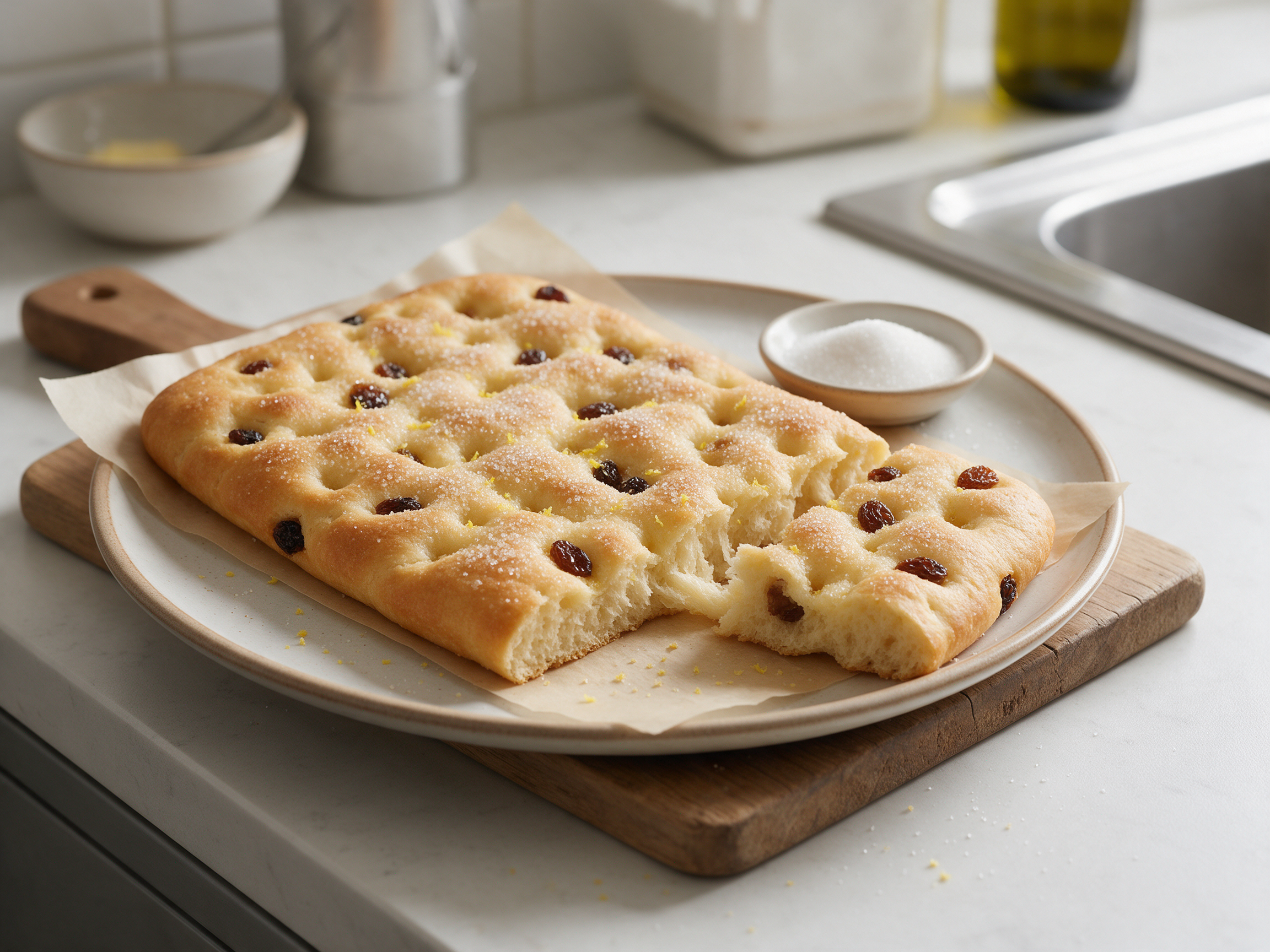
Fugasciòn di Castione Andevenno: Soft Valtellina Flatbread
Ingredients
Method
- Soak the raisins in warm water for 10 minutes, then drain and pat dry. Whisk the flour, yeast, sugar and salt in a 4-liter / 4-quart bowl, then add the milk, egg and lemon zest and mix until a shaggy dough forms.
- Add the softened butter in three additions, working each one in before the next. Knead for 10 minutes by hand, or 6 to 8 minutes in a stand mixer on medium-low, until the dough is smooth and slightly tacky. Knead in the raisins during the last minute.
- Shape the dough into a ball and place it in a lightly greased bowl. Cover and let it rise at room temperature (22 to 24 C / 72 to 75 F) for 60 minutes, until doubled.
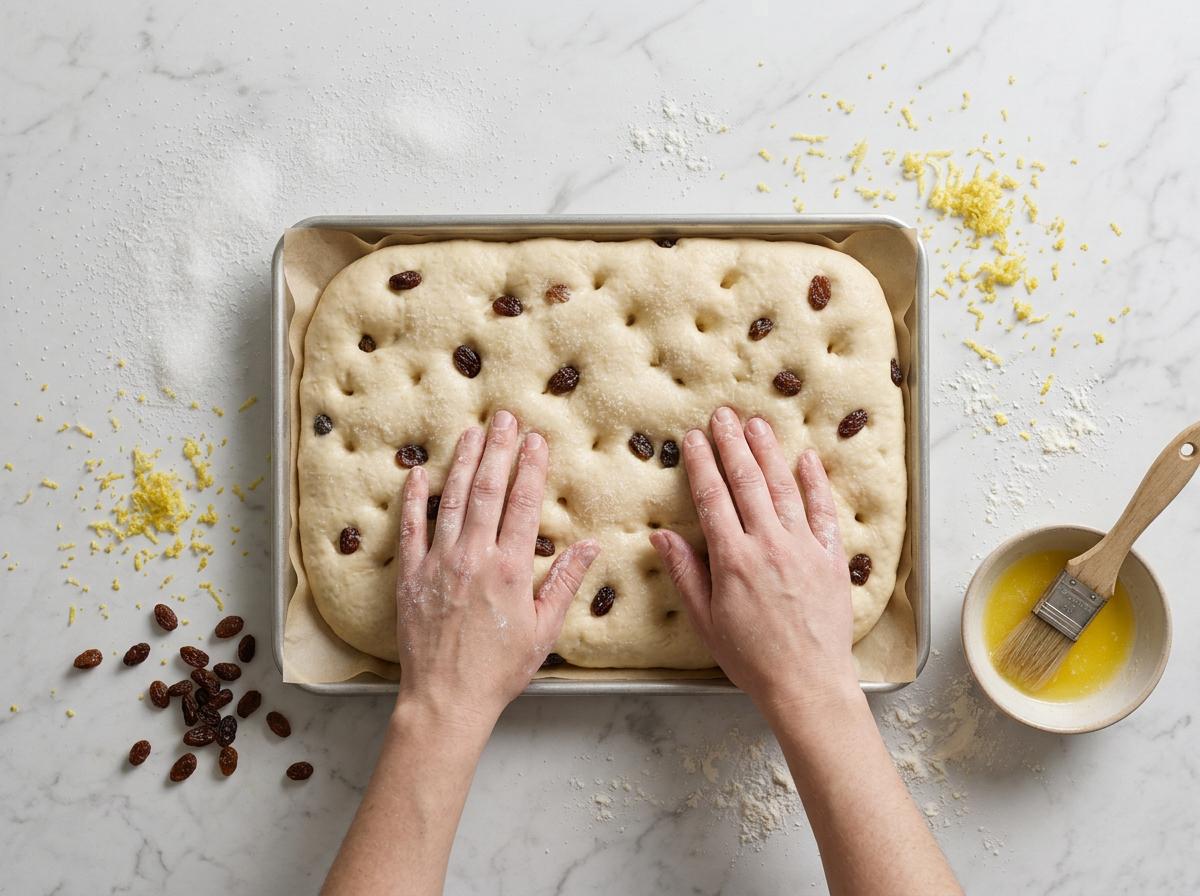
- Line a 33 x 46 cm / 13 x 18 inch sheet pan with parchment. Turn the dough onto the pan and stretch it gently to about 28 x 38 cm. If it springs back, rest it for 5 minutes and stretch again. Cover and let it rise for 30 minutes until puffy, and heat the oven to 180 C / 356 F during the last 15 minutes.
- Press your fingertips into the dough to make shallow dimples. Brush with 20 g of the melted butter and sprinkle with the 2 tbsp sugar.
- Bake for 28 minutes, rotating the pan once at 15 minutes, until the top is deep golden and the center reads 93 C / 200 F on an instant-read thermometer. If the sugar or raisins darken early, tent the pan loosely with foil.
- Brush the hot bread with the remaining 10 g melted butter. Slide it onto a rack and cool for 10 minutes before cutting into 10 rectangles.
Notes
- Soak the raisins for 10 minutes, then pat them dry before kneading them in.
- Cover the dough during both rises so the surface doesn't form a dry skin.
- Tent with foil at 15 minutes if the sugar topping browns too quickly.
- Bake until the center reads 93 C / 200 F, then cool 10 minutes before slicing.
Tips for Success
- Weigh the flour at 500 g on a scale, since a cup scoop can add 60 g and leave the dough stiff.
- Add the softened butter in three additions, waiting until each disappears into the dough so it doesn’t turn greasy.
- Drain the soaked raisins and pat them dry, then knead them in during the last minute so they don’t tear.
- Tent the pan loosely with foil after 15 minutes if the sugar on top darkens faster than the dough beneath.
- Brush the last 10 g of melted butter over the hot bread so it soaks in and keeps the top tender.
Variations
- Swap the raisins for chopped dried figs or sultanas, and use orange zest in place of lemon for a rounder aroma.
- Press 2 tbsp pearl sugar into the top instead of granulated sugar for a crunchier crust that holds its shape.
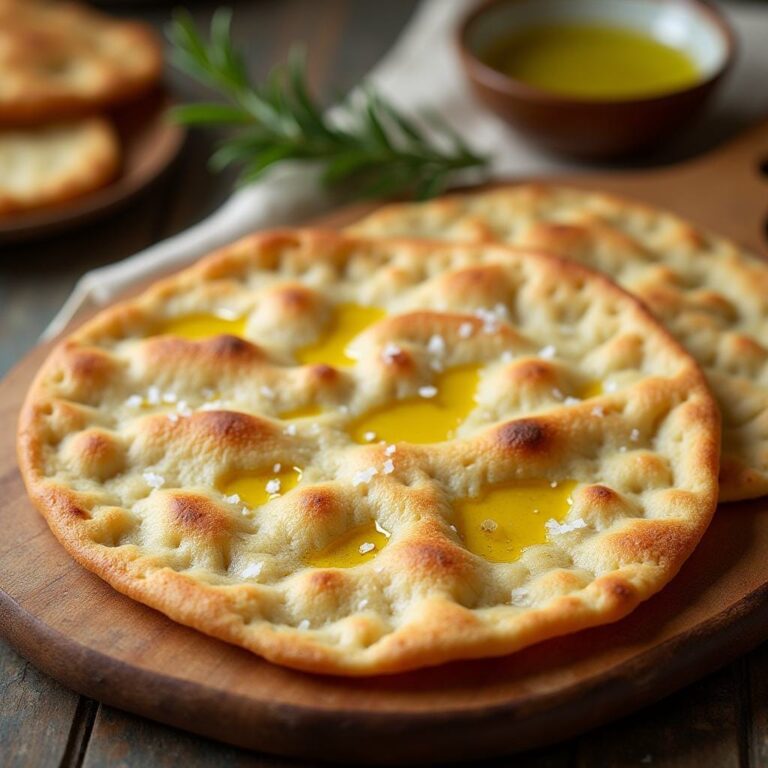
- Leave out the raisins and sugar, then top with olive oil, rosemary and flaky salt for a savory flatbread.
Storage and Reheating
Fugasciòn keeps for 2 days at room temperature, wrapped in a clean cloth or stored in an airtight container. I skip the fridge, because cold air dries out the crumb within hours.
To reheat, put slices on a tray and warm them in a 150 C / 300 F oven for 6 to 8 minutes. Cover loosely with foil if the sugar top is already dark.
For longer storage, wrap cooled slices individually and freeze them for up to 2 months. Thaw at room temperature for 1 hour, then reheat as above.
Serving Suggestions
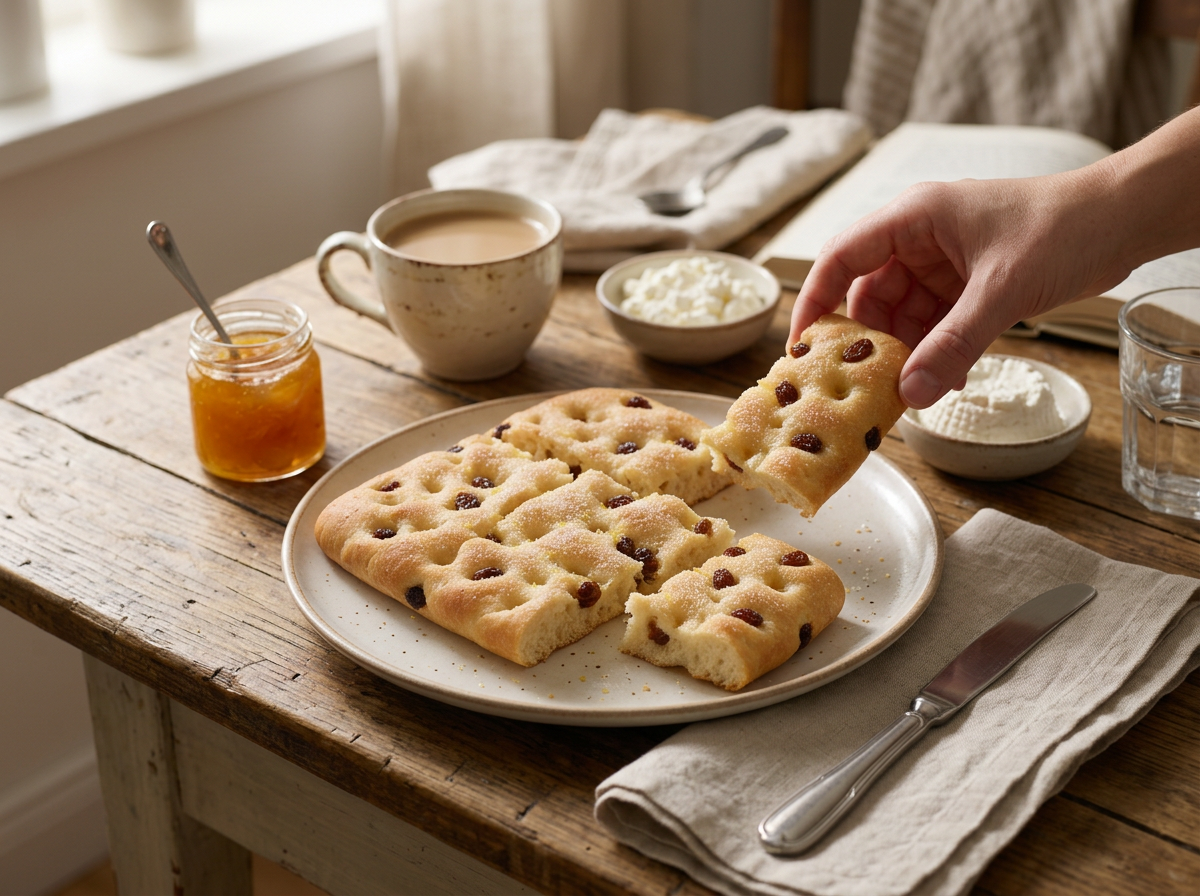
Serve fugasciòn warm, ideally the day it’s baked, with milky coffee, caffè d’orzo or a glass of warm milk. Cut it into rectangles of about 8 x 10 cm so each slice has some sugar crust.
For an afternoon plate, add a spoon of fresh ricotta and a thin layer of apricot jam. The mild dairy and tart fruit balance the sugar on top.
It also travels well. Wrap slices in parchment and pack them for a hike or a school snack.
FAQ
Why is my fugasciòn dense, and how do I know it’s baked through?
Dense fugasciòn usually means the dough didn’t double in the first rise or the second rise was cut short. Bake until the top is deep golden and an instant-read thermometer reads 93 C / 200 F in the center. If the top browns before then, tent the pan with foil.
Can I use olive oil instead of butter in fugasciòn?
Yes, but the result changes. Use 60 ml olive oil in the dough in place of the 80 g soft butter, and brush the top with oil instead of melted butter. The crumb stays tender, though you lose the buttery flavor and the sugar crust turns less crisp.
Can I freeze fugasciòn after baking, and how do I thaw it?
Yes, freeze cooled slices wrapped individually for up to 2 months. Thaw at room temperature for 1 hour, then warm the slices at 150 C / 300 F for 6 to 8 minutes. The sugar top softens in the freezer, and the oven brings back some of the crackle.
What goes well with fugasciòn for breakfast or an afternoon snack?
Milky coffee, caffè d’orzo or warm milk all work well. For a fuller plate, add a spoon of fresh ricotta and a little apricot jam. Skip aged or sharp cheeses, because they clash with the sugar crust and the lemon zest in the dough.
How do I make fugasciòn dairy free?
Replace the whole milk with unsweetened oat or soy milk, and use 70 g of neutral oil or a dairy-free baking block in place of the 80 g butter. Brush the top with the same fat. The recipe still contains egg, and the crust browns a little more slowly.
What is the difference between fugasciòn di Castione Andevenno and focaccia?
This fugasciòn is an enriched dough made with milk, butter, egg and sugar, while classic Ligurian focaccia is a lean dough built on olive oil and salt. The names are related, but the crumb here is closer to a soft brioche-style bread. Household versions in Valtellina vary, as they do for cotizza dolce di Berbenno.