Jump to Recipe
Fave e pecorino is a Roman spring dish that pairs fresh fava beans with shards of young pecorino, olive oil and mint. It’s traditionally eaten as an antipasto with the beans raw, straight from the pod, but a quick blanch softens the skins and makes the beans easier to eat once they’ve grown past the baby stage.
I make this in late April through May, whenever fava beans show up in tight, full pods at the market. The skins matter here: young beans barely need peeling, but older ones turn grey and starchy under the outer layer, so I peel a double layer once they’re blanched and cool enough to handle.
Beyond the pods and cheese, this recipe leans on good olive oil and a squeeze of lemon to keep everything bright. Pecorino brings the salt on its own, so I go light on extra seasoning until the end.
Why You’ll Love This Recipe
- Ready in about 30 minutes with minimal active cooking
- Built on 3 ingredients: fava beans, pecorino and olive oil
- Works warm, at room temp, or as part of an antipasto
- Naturally gluten free and easy to scale up for a crowd
Ingredient Notes
- fava beans: Buy about 1.5 kg of pods to get roughly 300 g of peeled, cooked beans. Pick pods that feel full and firm, not shriveled.
- pecorino romano: Young pecorino or pecorino fresco works best since it’s softer and milder than aged wheels. Feta isn’t a good swap here, it’s too sharp against the beans.
- olive oil: Use a good extra virgin olive oil since some of it goes on raw at the end, not just into the pan.
- mint: Fresh mint is traditional with fava beans in Roman kitchens. Flat-leaf parsley works if you don’t have mint on hand.
- lemon: A squeeze off the heat keeps the beans bright green and balances the richness of the cheese.
- spring onion: Thinly sliced scallions add a mild onion note without taking over. Regular onion works too, just use less and cook it a bit longer.
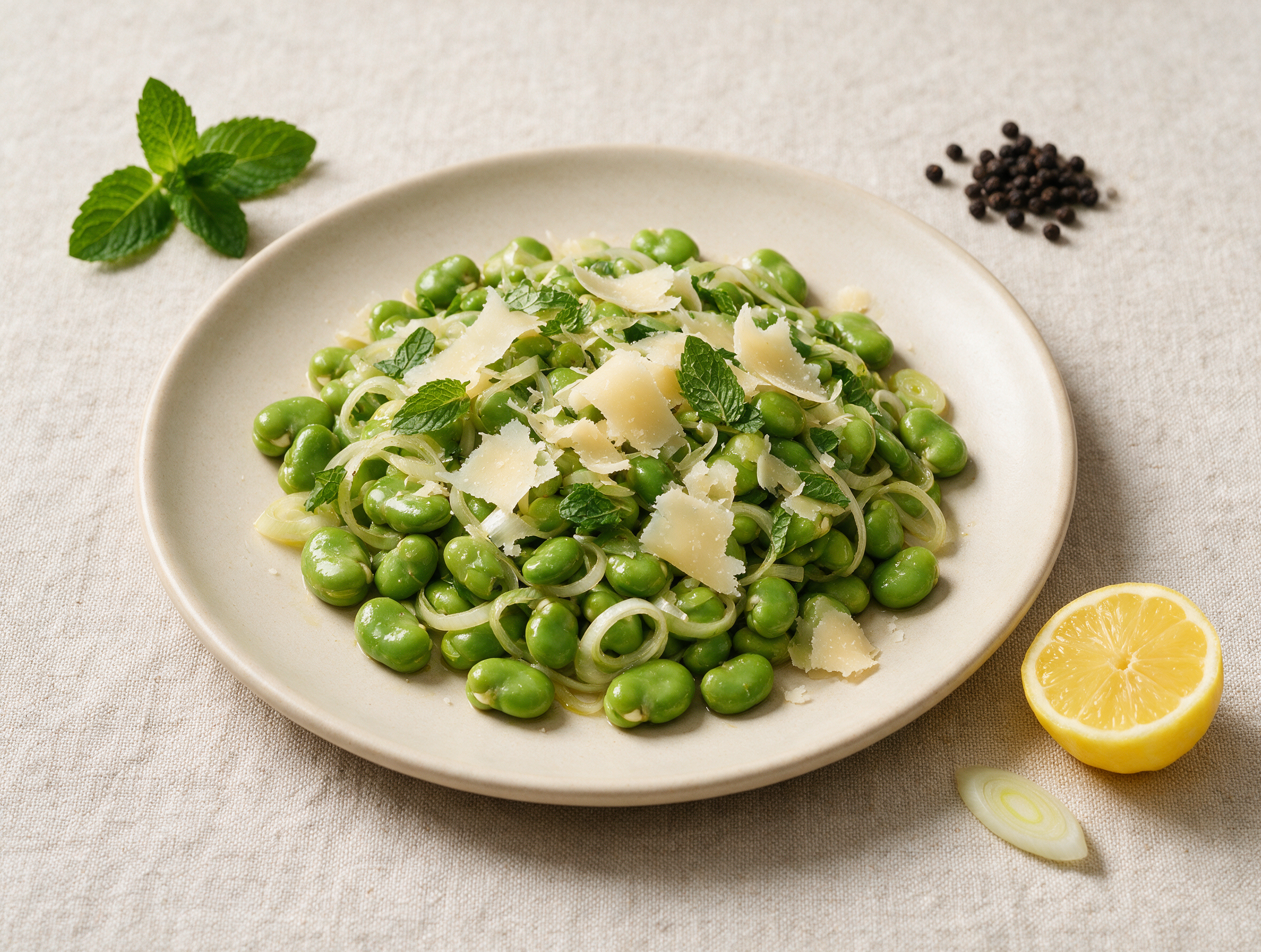
Fave e Pecorino: Blanched Spring Fava Beans
Ingredients
Method
- Shell the fava beans from their pods. You should end up with about 400 g of beans.
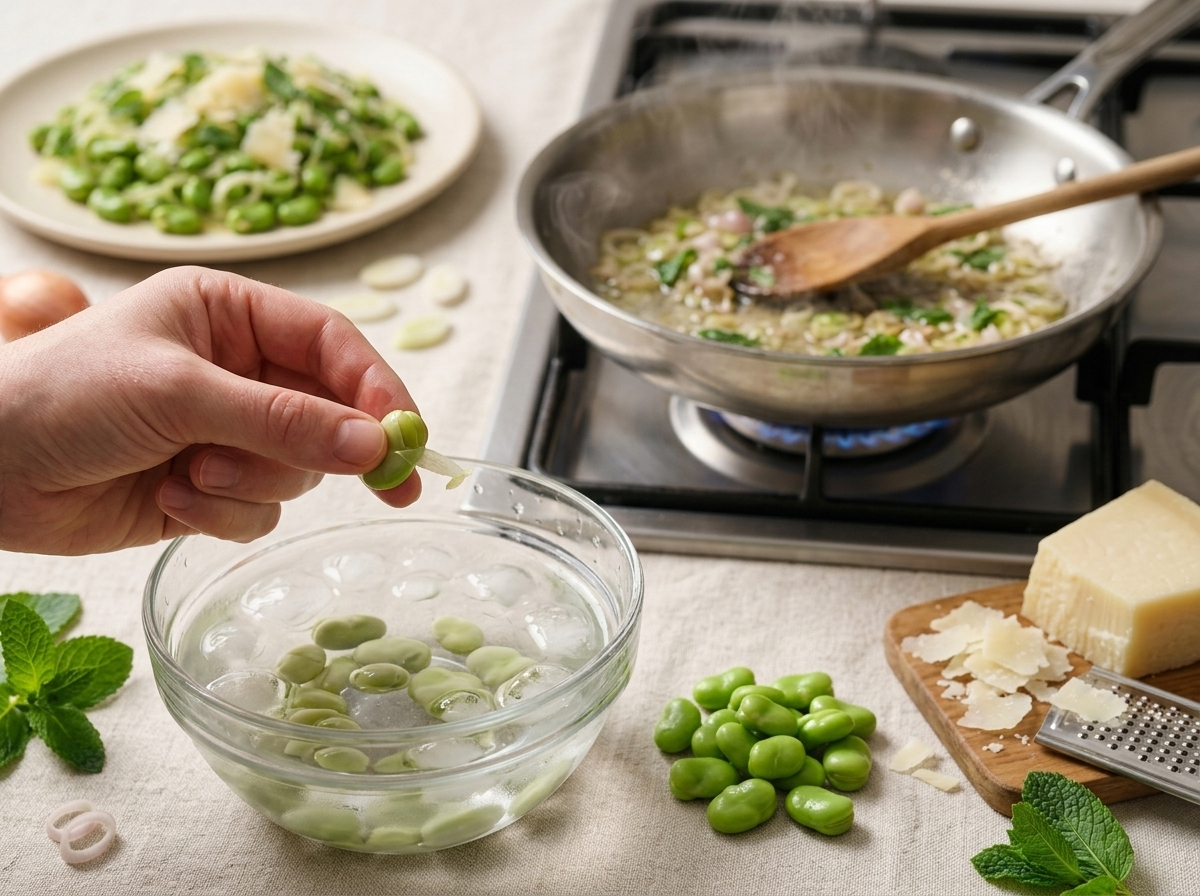
- Bring a 3-quart / 2.8L saucepan of well-salted water to a boil. Blanch the beans for 2 minutes, until the skins loosen and split slightly.
- Drain and plunge the beans into a bowl of ice water for 1 minute to stop the cooking and set the color.
- Once cool, pinch open each skin and pop out the bright green bean inside. Discard the skins. You should have about 300 g peeled beans. Skip this step if your beans are small and young, the skins will be tender enough to eat.
- Heat the olive oil in a 10-inch / 26cm skillet over medium heat. Add the spring onion and garlic and cook for 2 minutes, until soft but not browned.
- Add the peeled fava beans to the skillet and toss for 2 to 3 minutes, until warmed through and tender but still bright green.
- Remove from the heat. Squeeze in the lemon juice and season with salt and pepper, tossing to coat.
- Transfer to a platter, scatter the shaved pecorino and torn mint over the top, and finish with a drizzle of olive oil. Serve warm or at room temperature.
Notes
- Peel fava beans after blanching once they're cool enough to handle
- Don't skip the ice bath, it keeps the beans bright green
- Add pecorino and mint off heat so the cheese doesn't melt into the pan
- Use the freshest pecorino you can find, it makes the biggest difference here
Tips for Success
- Buy fava bean pods that feel plump and squeak slightly when squeezed, a sign the beans inside are still young
- Peel the outer skin off each bean after blanching if they’re larger than a thumbnail, or the dish turns starchy
- Use young pecorino romano rather than aged, since it’s softer and less salty against the sweet beans
- Shock the blanched beans in ice water right away to lock in the bright green color
- Add the lemon juice off the heat so the beans stay vivid green instead of turning dull olive
Variations
- Swap the pecorino for young ricotta salata for a milder, less salty version that still holds its shape when warm
- Add a few torn basil leaves along with the mint for a sweeter, more herbal finish
- Toss in thin ribbons of prosciutto crudo at the end for a version closer to a full antipasto plate
Storage and Reheating
Fave e pecorino is best eaten warm or at room temperature the day you make it, since the pecorino is freshest right after it’s added. Leftovers keep in an airtight container in the fridge for 2 to 3 days.
To reheat, warm the beans gently in a 26cm skillet over low heat for 2 to 3 minutes with a small splash of water, then scatter fresh pecorino and mint on top once it’s off the heat so the cheese doesn’t turn rubbery.
To get ahead, blanch and peel the beans up to a day in advance and store them separately from the cheese. Freezing isn’t worth it here, the beans lose their texture and the pecorino doesn’t freeze well.
Serving Suggestions
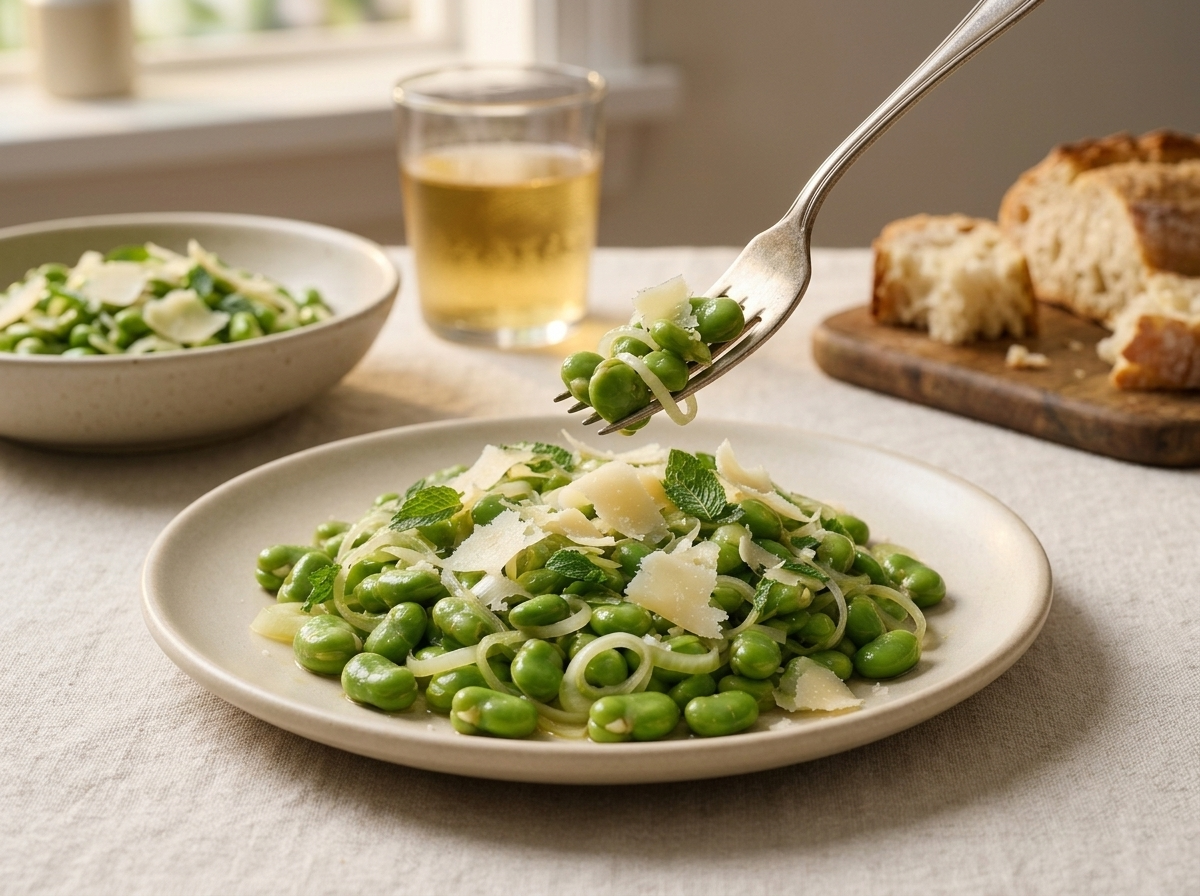
Serve fave e pecorino as a starter with crusty bread for scooping up the juices and stray bits of cheese.
It also works well next to grilled sausage or a simple roast chicken, since the bright, slightly bitter beans cut through richer meat.
For a full spring antipasto, set it out alongside cured meats, olives and a chilled glass of Frascati or another dry white wine.
FAQ
Why are my fave e pecorino beans tough or bitter?
Tough, bitter fava beans usually mean the outer skin wasn’t removed or the beans grew past their prime. Once fava beans get larger than a thumbnail, the skins turn starchy and grey, so peel them after blanching. Small, young beans in April can often skip peeling entirely.
Can I use frozen fava beans instead of fresh for fave e pecorino?
Yes, frozen shelled fava beans work when fresh pods aren’t in season. Skip the shelling step and blanch them for about 90 seconds straight from frozen, then peel the skins the same way. The flavor is milder than fresh spring beans, so add an extra squeeze of lemon.
Can I peel and store fava beans a day before making fave e pecorino?
Yes, blanch and peel the beans up to a day ahead and keep them in an airtight container in the fridge. Sauté them fresh with the spring onion and pecorino right before serving so the beans stay bright green and the cheese doesn’t weep. The full cooked dish keeps 2 days refrigerated.
What goes well with fave e pecorino besides bread?
Crusty bread is classic, but this dish also works alongside grilled sausage, prosciutto, or a simple roast chicken. A chilled glass of Frascati or another dry white wine matches the beans’ grassy, slightly bitter edge. It also holds up well as one dish in a larger antipasto spread.
Is fave e pecorino gluten free?
Yes, fave e pecorino is naturally gluten free since it’s just fava beans, olive oil, pecorino, mint and lemon. Double check any bread you serve alongside it if gluten is a concern, since that’s usually the only non-gluten-free element on the plate.
What’s the difference between fave e pecorino and fave al guanciale?
Fave e pecorino is the raw or lightly cooked spring version built around cheese and fresh beans, usually served as antipasto. Fave al guanciale is a heartier, fully cooked dish where the beans simmer with cured pork jowl and often tomato, closer to a side dish or light stew.