
Jump to Recipe
Busecca milanese is a Milanese tripe and white bean stew, simmered slowly with cannellini beans, savoy cabbage, and a soffritto of onion, carrot, and celery until the tripe is fork-tender and the broth thickens on its own from the beans and a parmesan rind.
This is old-school Lombard cooking. Tripe was cheap, beans stretched a meal, and the parmesan rind meant nothing went to waste. I still drop a rind in every batch I make, it does more for the broth than any bouillon cube.
The one thing that trips people up is timing. If the tripe still has a rubbery bite after 90 minutes, it just needs more time in the pot, not more heat. Low and slow gets you there, rushing it doesn’t.
Serve it in wide bowls with grated parmesan and something to mop up the broth. It reheats well too, which makes it a good one to cook on a Sunday and eat through the week.
Why You’ll Love This Recipe
- One pot feeds a crowd and tastes better the next day
- Parmesan rind builds a savory broth with no extra work
- Budget cut of meat turns tender and satisfying
- Freezes well for easy weeknight reheats
Ingredient Notes
- Honeycomb tripe: Buy it already cleaned and parboiled from the butcher, most US tripe is sold this way. It still needs a full simmer here to turn tender, not just a reheat.
- Dried cannellini beans: Soak overnight so they cook in the same window as the tripe. Swap in 2 cans (400 g each) drained if you’re short on time, add them in the last 30 minutes instead.
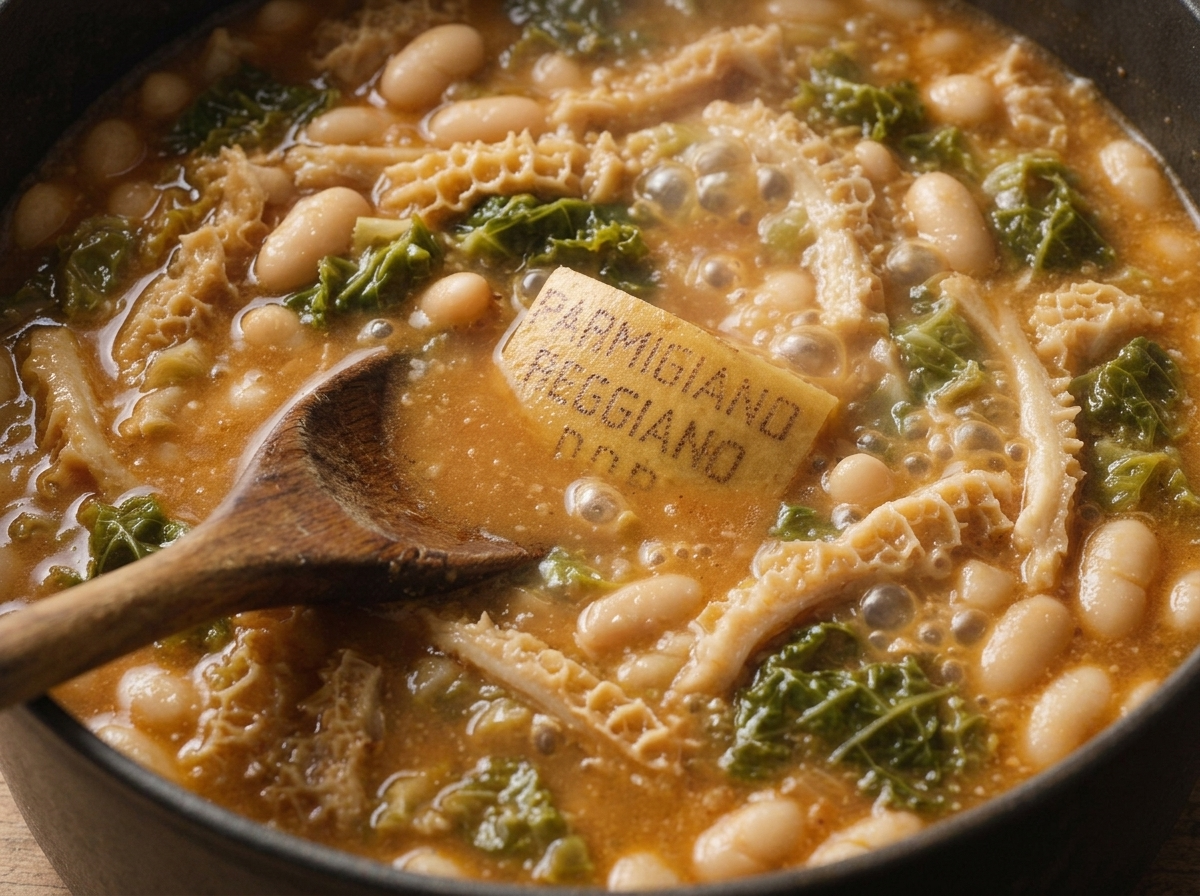
- Parmesan rind: This is the ingredient that makes the broth taste built, not thin. Save rinds in the freezer any time you finish a wedge of parmesan.
- Pancetta: Adds fat and salt to start the soffritto. Diced bacon works if that’s what you have, though it brings a smokier edge.
- Savoy cabbage: Its crinkled leaves hold their shape better than flat green cabbage after a long simmer. Green cabbage works too, just expect it to soften more.
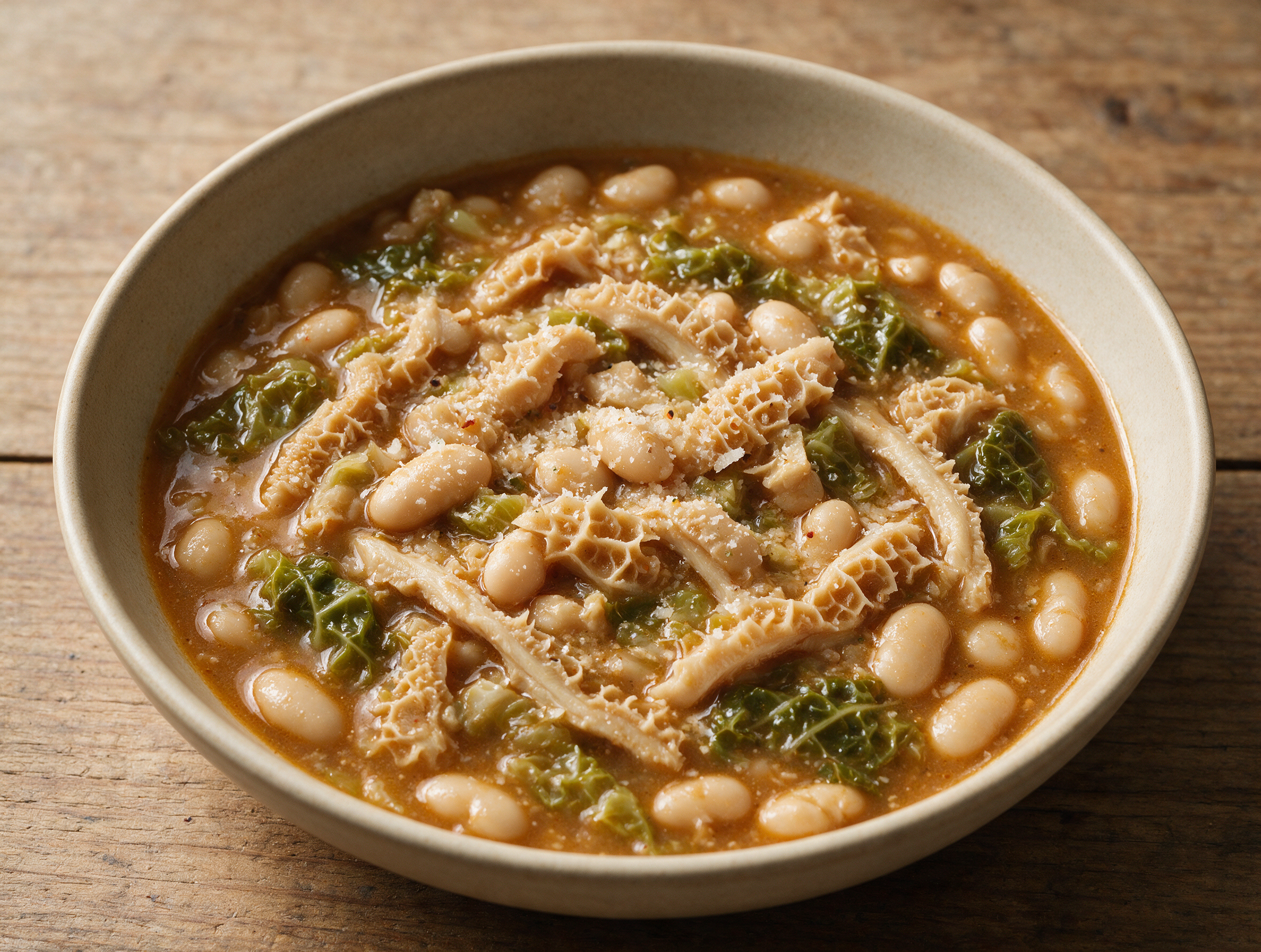
Busecca Milanese: Slow-Simmered Tripe and Bean Stew
Ingredients
Method
- The night before, soak the dried cannellini beans in a large bowl of cold water. Drain before cooking.
- Rinse the parboiled tripe under cold water and cut into 2.5 cm / 1-inch strips.
- Heat the olive oil in a 5-quart / 4.7 L Dutch oven over medium heat. Add the pancetta and cook for 4 to 5 minutes until the fat renders and the edges crisp.
- Add the onion, carrot, and celery. Cook for 6 to 8 minutes, stirring often, until the soffritto turns soft and pale gold.
- Stir in the garlic, sage, bay leaf, and tomato paste. Cook for 1 to 2 minutes until the tomato paste darkens slightly and smells toasted.
- Add the tripe, drained beans, parmesan rind, and broth. Bring to a simmer over medium-high heat.
- Reduce the heat to low and partially cover the pot. Simmer for 1 hour 45 minutes to 2 hours, stirring occasionally, until the tripe is fork-tender and the beans are creamy.
- Stir in the shredded cabbage during the last 20 to 25 minutes of cooking, until wilted but still holding its shape.
- Remove the bay leaf and parmesan rind. Season with salt and pepper to taste.
- Ladle into bowls, top with grated parmesan and a drizzle of olive oil, and serve with crusty bread.
Notes
- Buy pre-cleaned, parboiled honeycomb tripe to skip the long initial cooking most raw tripe requires.
- Don't skip the parmesan rind, it's doing most of the work in the broth.
- Add cabbage late so it keeps some bite instead of turning to mush.
- Simmer time varies by tripe thickness, start checking at 90 minutes.
Tips for Success
- Rinse the parboiled tripe well before cutting, it can carry a strong smell straight from the package.
- Cut tripe into 2.5 cm / 1-inch strips so every spoonful gets a mix of tripe, beans, and cabbage.
- Add the cabbage in the last 20 to 25 minutes only, earlier and it turns to mush.
- Keep the lid partly off during the simmer so the broth reduces and thickens naturally.
- Taste and adjust salt only at the end, the parmesan rind and pancetta both add a good amount on their own.
Variations
- Stir in a spoonful of tomato passata instead of paste for a lighter, redder broth with a brighter acidity.
- Add a pinch of ground cinnamon or cloves with the sage for the older, spice-forward version some Milanese families still make.
- Skip the pancetta and use extra olive oil for a lighter version that leans more toward the bean and vegetable flavors.
Storage and Reheating
Busecca milanese keeps 4 to 5 days in the fridge in a sealed container, and the flavor actually improves by day two once the beans finish absorbing the broth.
Reheat it gently in a saucepan over medium-low heat for 8 to 10 minutes, stirring occasionally, adding a splash of broth or water if it’s thickened too much in the fridge. A microwave works too, in 1-minute bursts, stirred between each.
It freezes well for up to 3 months. Cool it completely, portion into freezer bags or containers, and thaw overnight in the fridge before reheating on the stove.
Serving Suggestions
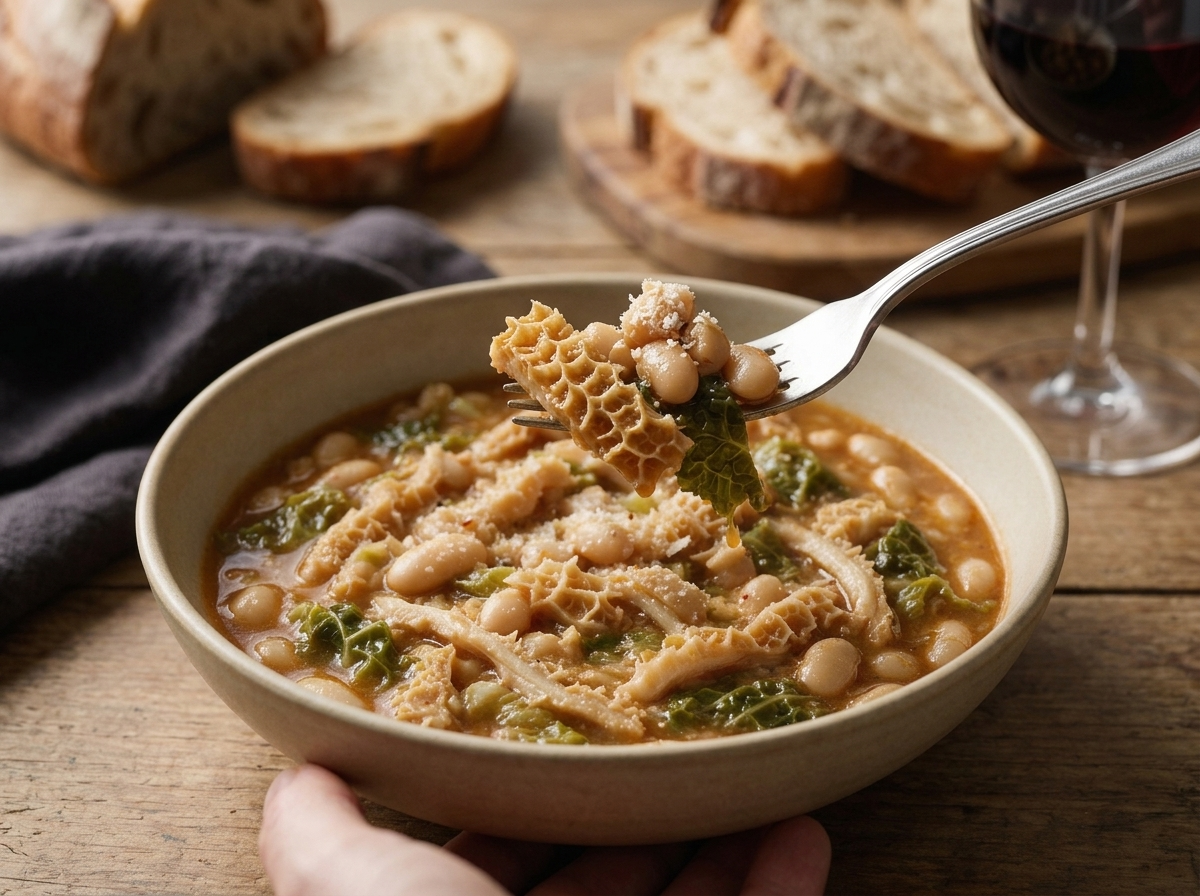
Ladle busecca milanese into wide, shallow bowls so the tripe, beans, and cabbage sit visible in the broth. Finish each bowl with a good handful of grated parmesan and a drizzle of raw olive oil.
Serve with crusty bread or creamy buckwheat polenta taragna on the side for mopping up the broth. A simple green salad with a sharp vinaigrette cuts through the richness if you want something fresh alongside.
A glass of dry Lombard red, like a young Valtellina, sits well next to this. It’s a stew that doesn’t need much dressing up.
FAQ
Why is my busecca milanese tripe still chewy after an hour of simmering?
It just needs more time. Parboiled tripe still takes 1 hour 45 minutes to 2 hours of low simmering in the stew to turn fork-tender, and an hour usually isn’t enough. Keep it at a gentle simmer, not a hard boil, and check again every 20 minutes until it gives easily when pressed with a spoon.
Can I use canned cannellini beans instead of dried in busecca milanese?
Yes, canned beans work fine. Drain and rinse 2 cans (400 g each) and stir them in during the last 30 minutes of cooking instead of simmering them from the start, since they’re already soft and will break down if cooked the full time.
Can I make busecca milanese a day ahead?
Yes, and it’s better that way. The beans keep absorbing broth overnight, so the stew tastes deeper and thicker by the second day. Cool it, refrigerate in a sealed container, and reheat gently on the stove with a splash of extra broth before serving.
What goes well with busecca milanese besides bread?
Grilled polenta is a common Lombard pairing, and it soaks up the broth the same way a loaf of Valtellina rye sourdough bread does. A sharp green salad on the side balances the richness of the tripe and pancetta, and grated parmesan on top is close to non-negotiable.
Is busecca milanese gluten-free?
The stew itself is gluten-free as long as your broth doesn’t contain gluten fillers, which some store-bought stocks do. Check the label on your broth and pancetta, and skip the crusty bread on the side or swap in a gluten-free loaf.
What’s the difference between busecca and trippa alla romana?
Busecca milanese is built with cannellini beans, savoy cabbage, and a parmesan rind for a thick, clean-tasting broth, while trippa alla romana leans on a tomato-heavy sauce with mint and pecorino. Both use tripe as the base but land in very different flavor territory.