Jump to Recipe
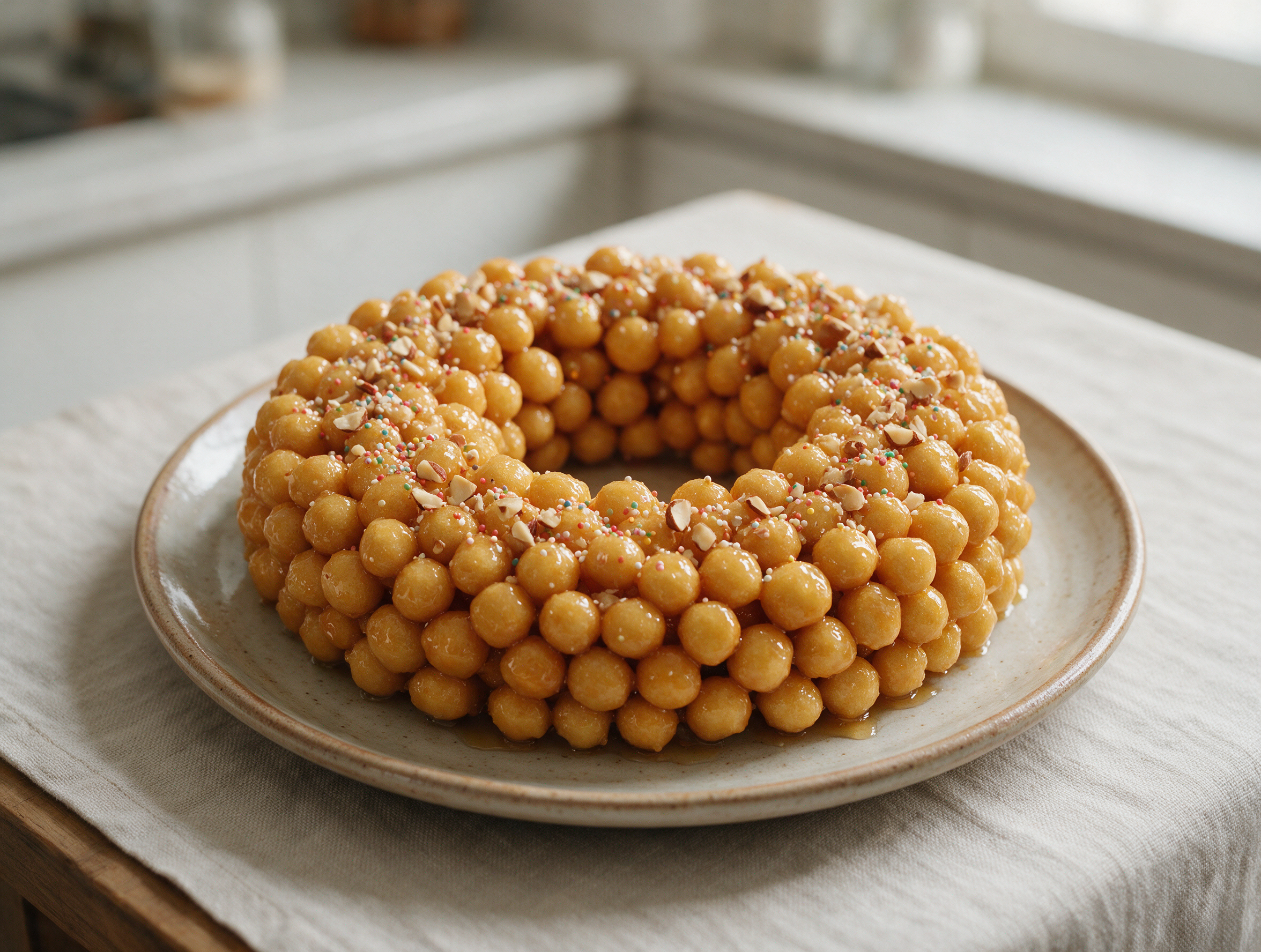
Cicerchiata is Abruzzo’s Christmas dessert of small fried dough balls, tossed warm in honey, and piled into a wreath or mound for the table. The name comes from cicerchia, a small legume the dough balls are shaped to resemble, about the size of a chickpea.
I make this every December with my grandmother’s ratio, a plain egg dough with no butter, just olive oil and orange zest. Frying at 175 C / 350 F, the same temperature used for crispy fried Strauben Tirolesi, keeps the outside golden without drying out the inside.
The honey coating is where people get nervous. Warm it too long and it turns hard and glassy once it cools. Keep the heat low, toss the fried balls in fast, and it stays sticky and pulls apart in soft clumps.
Most of the work goes into rolling ropes and cutting small pieces, not into anything technical.
Why You’ll Love This Recipe
- No butter needed, just olive oil and orange zest
- Small dough balls fry fast, about 3 minutes a batch
- Honey coating keeps everything soft for up to two weeks
- Makes a shareable centerpiece for the holiday table
Ingredient Notes
- all-purpose flour: Italian 00 flour works too and gives a slightly finer crumb.
- large eggs: Use room temperature eggs, they bind the dough without any butter.
- anise liqueur (Mistrà, Sambuca, or dark rum): Optional but traditional, swap with 1 tsp vanilla extract if you skip alcohol.
- honey: A lighter wildflower or acacia honey keeps the flavor from overpowering the dough.
- almonds: Toasted hazelnuts or walnuts work as a swap for a different crunch.
- colored sprinkles (diavolini): Traditional in Abruzzo, find them at Italian grocers or online.
Cicerchiata: Abruzzo’s Classic Honey Fried Dough Balls
Ingredients
Method
- In a large bowl, whisk together the flour, sugar, salt, and baking powder. Make a well in the center and add the eggs, orange zest, olive oil, and anise liqueur.
- Mix with a fork, then knead by hand on a lightly floured counter for 6 to 8 minutes until the dough is smooth and only slightly tacky. Wrap in plastic and rest at room temperature for 30 minutes.
- Cut the dough into 4 pieces. Roll each piece into a rope about 1 cm / 0.4 inch thick, then cut the rope into pea-sized pieces, roughly 1 cm each.
- Roll each piece briefly between your palms into a small ball. You should end up with about 180 to 200 dough balls, roughly the size of chickpeas, which is where cicerchiata gets its name.
- Pour the frying oil into a 3-quart / 2.8 L heavy pot to a depth of 5 cm / 2 inches and heat to 175 C / 350 F. Fry the dough balls in batches of 30 to 40 so they have room to color evenly, for 2 to 3 minutes, turning once, until golden brown all over.
- Lift the fried balls out with a slotted spoon and drain on paper towels. Repeat until all the dough is fried, letting the oil come back to 175 C / 350 F between batches.
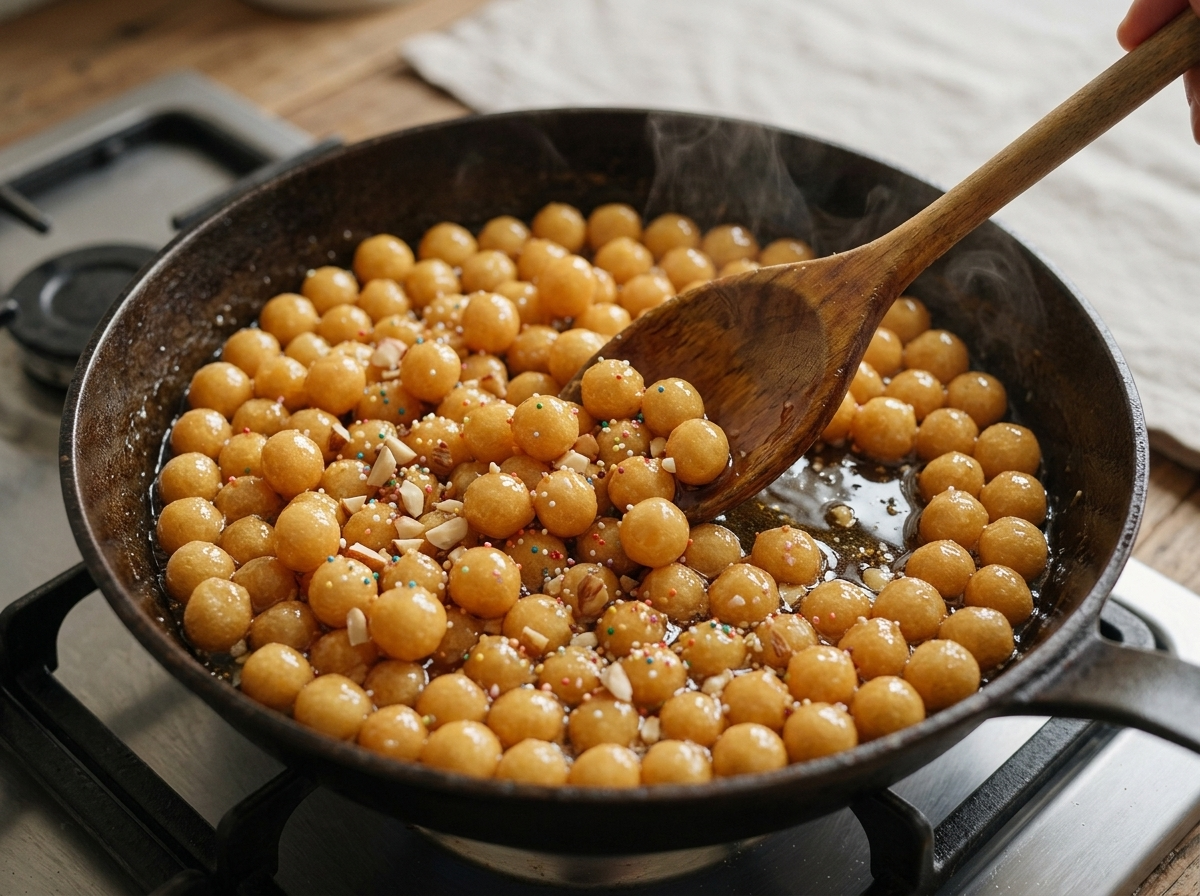
- Warm the honey, sugar, and water in a 26 cm / 10-inch skillet over low heat, stirring until the sugar dissolves and the honey is loose and runny, about 3 minutes. Do not let it boil hard or it will turn brittle once cooled.
- Add the fried dough balls to the skillet and toss gently with a wooden spoon until every ball is glazed, about 2 minutes.
- Tip the coated balls onto a serving platter and shape into a ring or low mound while still warm and sticky.
- Scatter the toasted almonds, colored sprinkles, and candied orange peel over the top, pressing lightly so they stick to the honey.
- Let the cicerchiata sit at room temperature for at least 1 hour so the honey sets slightly before pulling apart to serve.
Notes
- Keep dough balls close to 1 cm so they fry evenly.
- Fry in batches of 30 to 40 pieces to keep oil at 175 C / 350 F.
- Pull honey off the heat as soon as it's loose and runny.
- Shape the mound while everything is still warm and sticky.
Tips for Success
- Keep dough balls uniform, about 1 cm each, so they fry and color at the same rate.
- Fry in batches of 30 to 40 pieces so the oil temperature doesn’t drop below 175 C / 350 F.
- Warm the honey gently and stop as soon as it loosens, boiling it hard makes it brittle once cooled.
- Shape the mound while the honey is still warm and sticky, it hardens fast once it cools.
- Toast the almonds in a dry skillet for 3 minutes before scattering, this deepens their flavor without added fat.
Variations
- Swap almonds for chopped toasted hazelnuts or walnuts, both classic in different Abruzzo households.
- Add 1 tsp ground cinnamon or clove to the dough for a spiced version served around the holidays.
- Shape the coated dough balls into a wreath ring instead of a mound and set a candle in the center for serving.
Storage and Reheating
Cicerchiata keeps well at room temperature because the honey coating acts as a natural preservative. Store it covered with plastic wrap or in a tin for up to 2 weeks, away from direct sun or heat.
Skip the fridge. Cold temperatures make the dough balls dense and can cause the honey to crystallize and turn grainy instead of staying glossy.
This dessert isn’t reheated. If you want a fresh batch for a second gathering, fry new dough a day ahead and toss it in warm honey right before serving.
Serving Suggestions
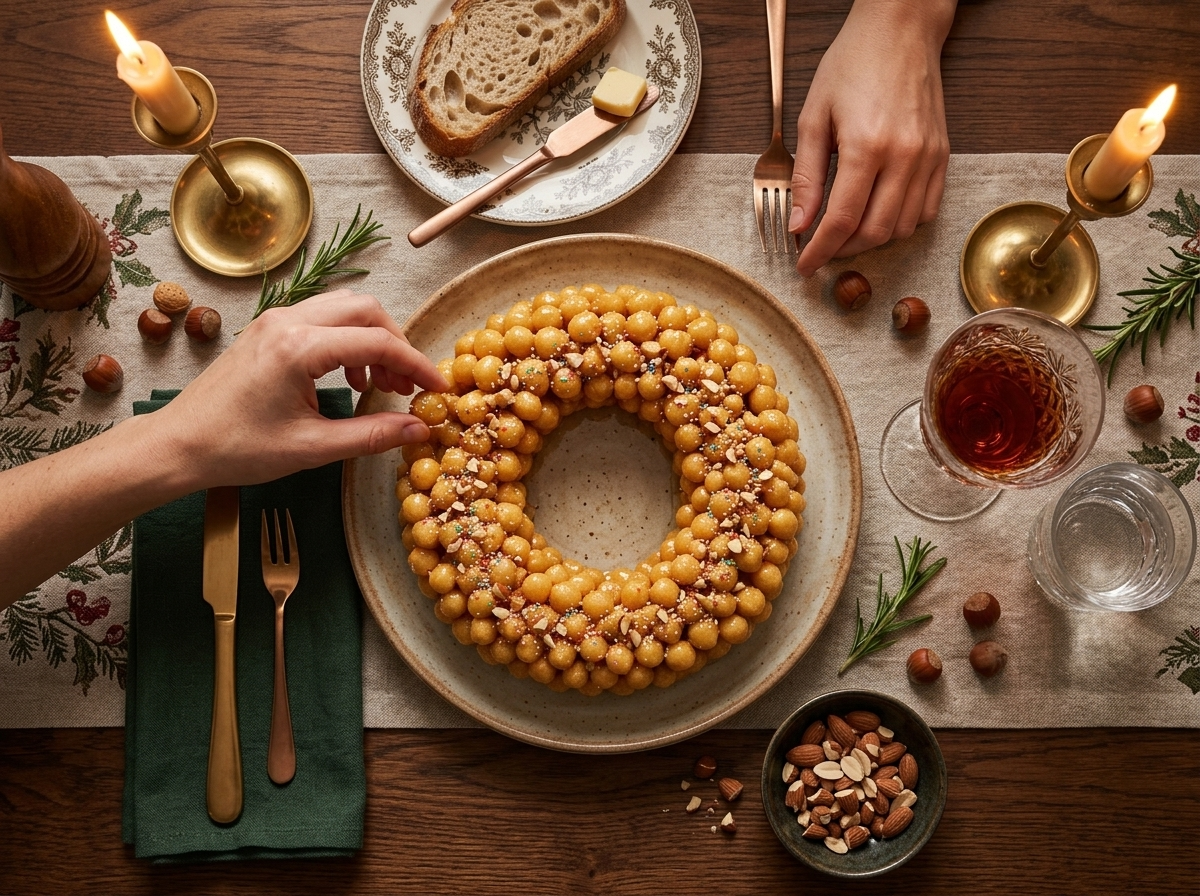
Cicerchiata works as the centerpiece of an Italian Christmas dessert table, alongside homemade pandoro star bread or panettone. Set it out on a flat plate so guests can pull off small clumps with their fingers.
Pour small glasses of Vin Santo or a dark, sweet Marsala alongside it, the wine cuts through the honey. A short espresso works just as well if you want something plainer.
Leftover pieces are good chopped over vanilla gelato or plain yogurt the next morning, honey and all.
FAQ
Why did my cicerchiata honey turn hard instead of staying sticky?
The honey cooked too long or too hot before you added the dough balls, so it caramelized and set hard once it cooled. Warm the honey and sugar over low heat just until loose and runny, then pull it off the heat right after tossing in the fried dough. A hard batch usually means the syrup boiled past the soft, pourable stage.
Can I use rum instead of Mistrà in cicerchiata dough?
Yes, dark rum or Sambuca both work in place of Mistrà, the traditional anise liqueur from Abruzzo. Use the same 1 tablespoon amount so the dough doesn’t get too wet. If you’d rather skip alcohol, swap in 1 teaspoon of vanilla extract for a similar warm background flavor.
How long does cicerchiata actually stay fresh once it’s coated in honey?
Cicerchiata keeps for about 2 weeks at room temperature, covered in a tin or under plastic wrap, since the honey coating acts as a natural preservative. Skip the fridge, cold temperatures make the dough balls dense and can cause the honey to crystallize into a grainy texture instead of staying glossy.
What goes well with cicerchiata besides panettone?
Vin Santo or a dark Marsala pairs well, the sweet wine cuts through the honey glaze. A short espresso works too if you’d rather keep things plain. Both are standard at an Abruzzese Christmas table alongside the cicerchiata mound and other treats like no-bake salame di cioccolato.
Is cicerchiata dairy-free?
Yes, the traditional dough uses olive oil instead of butter, so cicerchiata is dairy-free as written here. Double check any store-bought sprinkles or candied orange peel if you’re strict about dairy, since some brands process them on shared lines. Flour, eggs, honey, and almonds contain no dairy.
What’s the difference between cicerchiata and Neapolitan struffoli?
Cicerchiata and struffoli are both honey-glazed fried dough desserts, but cicerchiata’s balls are cut pea-sized, named for the cicerchia legume they resemble, while struffoli pieces run slightly larger. Cicerchiata is native to Abruzzo and Molise, struffoli to Naples, though both get piled into a ring and topped with sprinkles and candied fruit.