
Jump to Recipe
Sciatt valtellinesi are small buckwheat fritters from Valtellina, in the Alps of Lombardy, the same mountain kitchen behind dishes like braised trippa alla Valtellinese, filled with melted local cheese and fried until the outside turns dark gold. The name comes from the local dialect for ‘toad,’ a nod to their round, bumpy shape once they hit hot oil.
I make the batter with buckwheat flour and a splash of grappa, which keeps the crust light instead of doughy. The cheese, usually Casera or a similar semi-soft alpine wheel, needs to ooze just slightly at the edges without spilling out completely, that’s the balance you’re working toward.
Sciatt come together fast once the batter has rested. Thirty minutes is enough for the buckwheat to hydrate and the flavor to settle, and after that it’s just dipping, frying, and draining in batches.
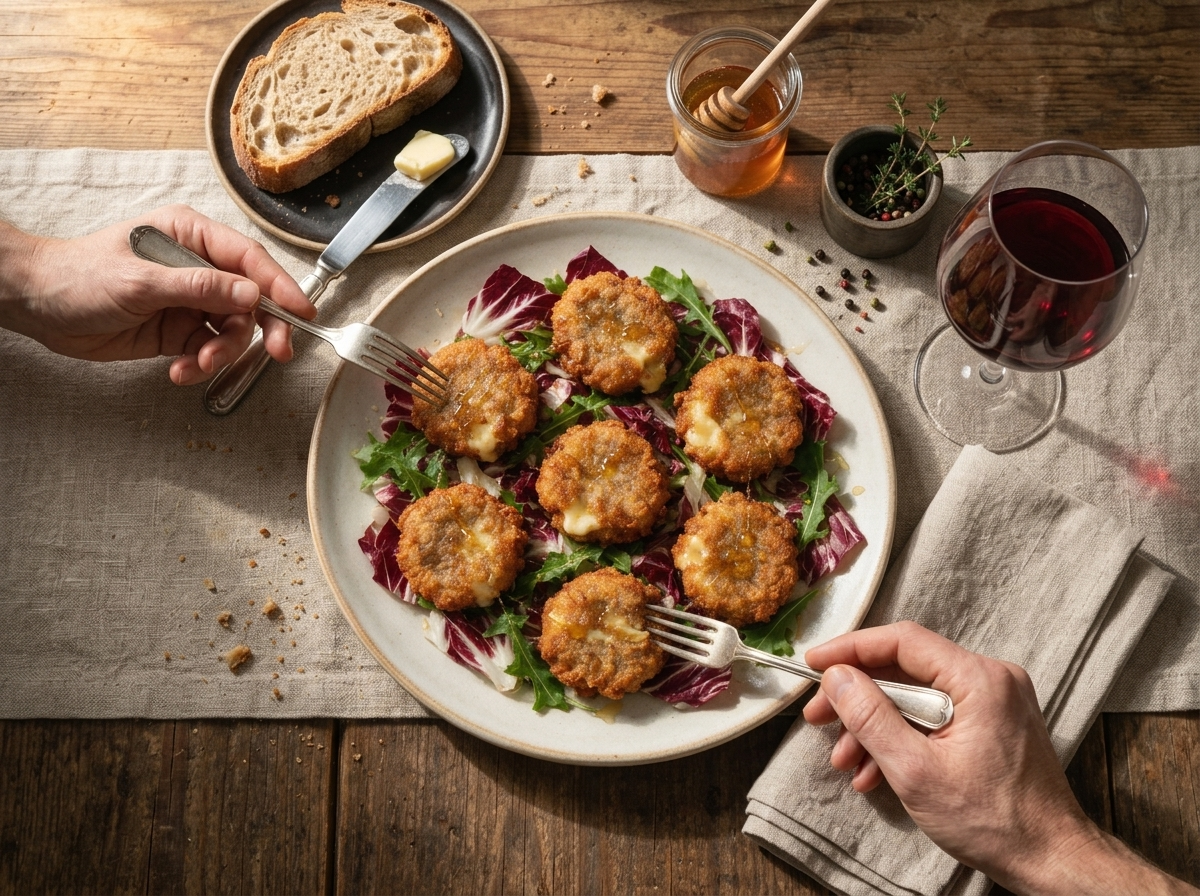
Serve them warm over a pile of bitter greens with a drizzle of honey. The bitterness and sweetness cut through the fried cheese so the plate doesn’t feel heavy.
Why You’ll Love This Recipe
- Crisp buckwheat shell hides warm, melting alpine cheese
- Batter rests just 30 minutes, no long wait
- Bitter greens and honey balance the fried richness
- A genuine Alpine antipasto that scales up easily
Ingredient Notes
- buckwheat flour: Gives sciatt their nutty flavor and dark color. Look for a fine grind so the batter stays smooth.
- all-purpose flour: Balances buckwheat’s dense texture so the crust fries up light instead of heavy.
- cheese: Casera Valtellina DOP is traditional. Taleggio or a young fontina melt in a similar way if you can’t find it.
- sparkling water: Keeps the batter light and reduces oil absorption. A pale lager works too and adds a faint malt note.
- grappa: Adds fragrance and helps the crust crisp. Leave it out and add a splash more water if you don’t keep it around.
- chicory or radicchio: The bitterness balances the fried cheese and honey. Frisée or peppery arugula work as a substitute.
- honey: Chestnut honey is traditional in the valley and has a slightly bitter edge that plain honey lacks.

Sciatt Valtellinesi: Fried Buckwheat Cheese Fritters
Ingredients
Method
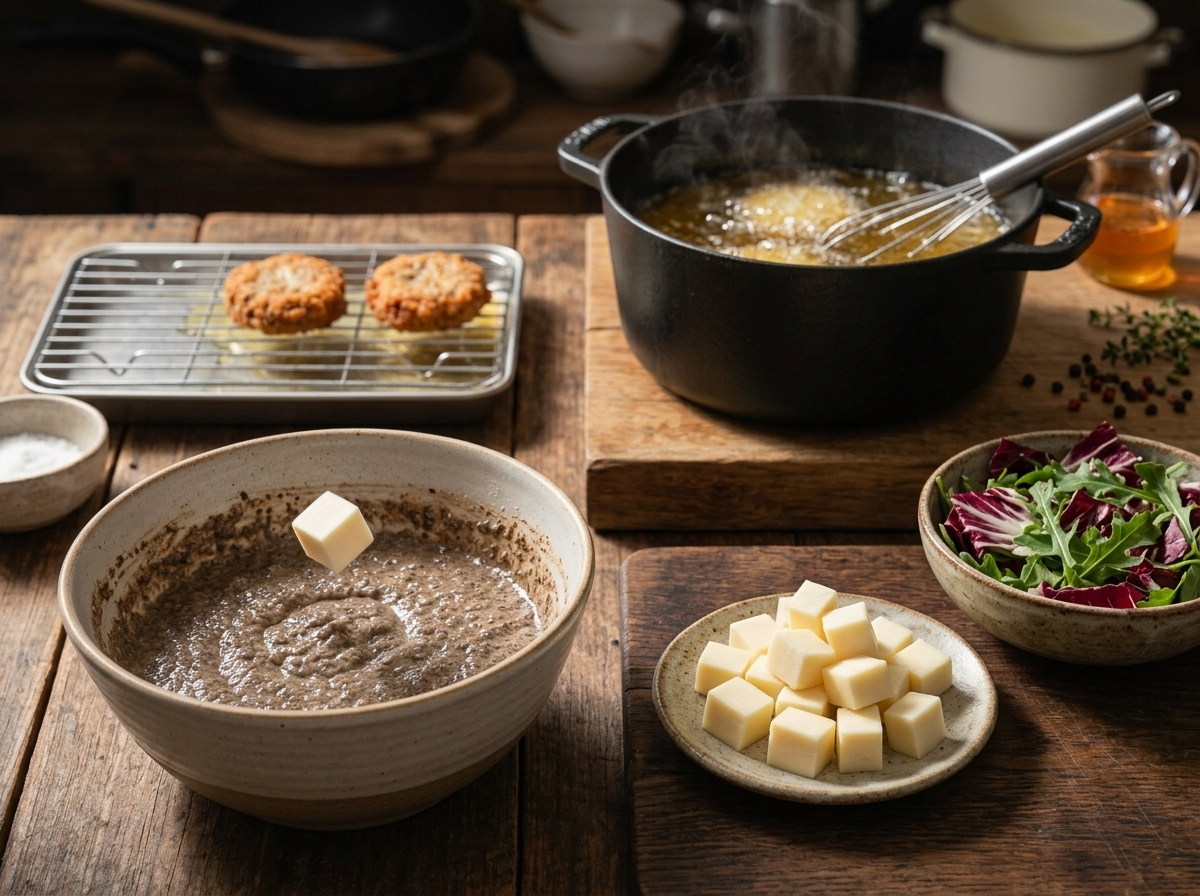
- Whisk buckwheat flour, all-purpose flour, and salt together in a mixing bowl. Slowly whisk in the sparkling water and grappa until the batter is smooth and coats the back of a spoon.
- Cover the bowl and let the batter rest at room temperature for 30 minutes so the buckwheat hydrates fully.
- While the batter rests, cut the cheese into roughly 2.5 cm cubes and pat them dry with paper towels so the batter sticks evenly.
- Pour the oil into a 24 cm / 9.5-inch deep pot or dutch oven to a depth of about 6 cm and heat to 170C / 340F, checking with a thermometer.
- Dip 5 to 6 cheese cubes into the batter at a time, letting the excess drip off, and lower them into the hot oil.
- Fry in batches of 5 to 6 so the oil doesn't cool down, turning once, for 2 to 3 minutes until the crust is deep gold and the cheese feels soft when pressed gently.
- Lift the sciatt out with a slotted spoon and drain them upright on paper towels. Season with a pinch of salt while they're still hot.
- Repeat with the remaining cheese and batter, letting the oil come back to 170C / 340F between batches.
- Toss the chicory or radicchio with the olive oil, a pinch of salt, and black pepper, then divide between plates.
- Arrange the warm sciatt over the greens and drizzle with honey. Serve right away while the crust is still crisp.
Notes
- Rest batter 30 minutes so buckwheat hydrates and clings better to the cheese.
- Keep oil at 170C/340F; check with a thermometer, don't guess by eye.
- Fry in batches of 5 to 6 to keep oil temperature steady.
- Serve within minutes of frying while the shell is still crisp.
Tips for Success
- Keep the oil steady at 170C/340F with a thermometer, the same target used for golden frittelle di baccalà; hotter browns the batter before the cheese softens inside.
- Cut cheese cubes to about 2.5 cm so they stay intact through frying instead of melting out early.
- Fry sciatt in batches of 5 to 6, the same trick that keeps a fritto misto di mare crisp, so the oil temperature doesn’t drop and the shell stays crisp.
- Pat cheese cubes dry before dipping so the batter clings evenly and doesn’t slide off in the oil.
- Drain fried sciatt standing upright on paper towels for a few seconds so grease doesn’t pool underneath.
Variations
- Swap Casera for Taleggio if you want a stronger, funkier filling that still melts well inside the batter.
- Use dark beer instead of sparkling water for a maltier crust with a slightly deeper color.
- Drizzle with local honey and a few drops of aged balsamic instead of plain honey for extra depth.
Storage and Reheating
Sciatt taste best within minutes of frying, while the shell is still audibly crisp and the cheese inside is soft.
You can mix the batter up to a day ahead and keep it covered in the fridge, giving it a quick whisk before dipping since buckwheat settles. Cut the cheese cubes ahead too and keep them chilled, but don’t batter and fry until you’re ready to serve.
Leftover sciatt keep in the fridge for 1-2 days. Reheat them in a 200C/400F oven on a wire rack for 6 to 8 minutes to bring back some crunch. Skip the microwave, it turns the crust rubbery and leaves the cheese either cold or blown out.
Serving Suggestions
Sciatt valtellinesi traditionally sit on a bed of bitter greens like chicory or radicchio tardivo, dressed simply with olive oil and salt.
A short glass of grappa or a glass of Nebbiolo from the Valtellina hillsides suits the fried cheese well, since both cut through the richness.
For a bigger spread, add a plate of bresaola and a few slices of rye bread alongside, keeping the rest of the table light since the fritters carry most of the weight.
FAQ
Why did my sciatt valtellinesi burst open and leak cheese while frying?
This usually means the oil was too hot or the batter coating was too thin. Fry at 170C/340F and dip cheese cubes twice if the first layer looks patchy, so the crust seals completely before the cheese has a chance to melt through.
Can I use taleggio or fontina instead of Casera cheese?
Yes, both melt in a similar way and work well in sciatt valtellinesi. Taleggio brings a stronger, slightly funky edge, while a young fontina stays milder and closer to the original Casera Valtellina flavor.
Can I make the batter for sciatt valtellinesi the night before?
Yes, mix the batter and keep it covered in the fridge for up to a day. Whisk it again before dipping since buckwheat flour settles, and cut the cheese cubes ahead too, but fry everything fresh right before serving for the best crust.
What wine goes with sciatt valtellinesi?
A Nebbiolo-based red from the Valtellina hills, like a Rosso di Valtellina, pairs well with the fried cheese and bitter greens. A glass of grappa on the side is also traditional in the valley and cuts through the richness.
Are sciatt valtellinesi gluten free?
No, this recipe isn’t gluten free since it mixes buckwheat flour with all-purpose wheat flour for structure. You could try an all-buckwheat batter with a bit more resting time, though the crust will be denser and slightly harder to keep intact while frying.
What does ‘sciatt’ mean and where does the dish come from?
Sciatt means ‘toad’ in the local Valtellinese dialect, describing the fritters’ round, bumpy shape once fried. The dish comes from Valtellina in the Lombardy Alps, where buckwheat and alpine cheese are both local staples, traditionally served with radicchio or chicory.