
Jump to Recipe
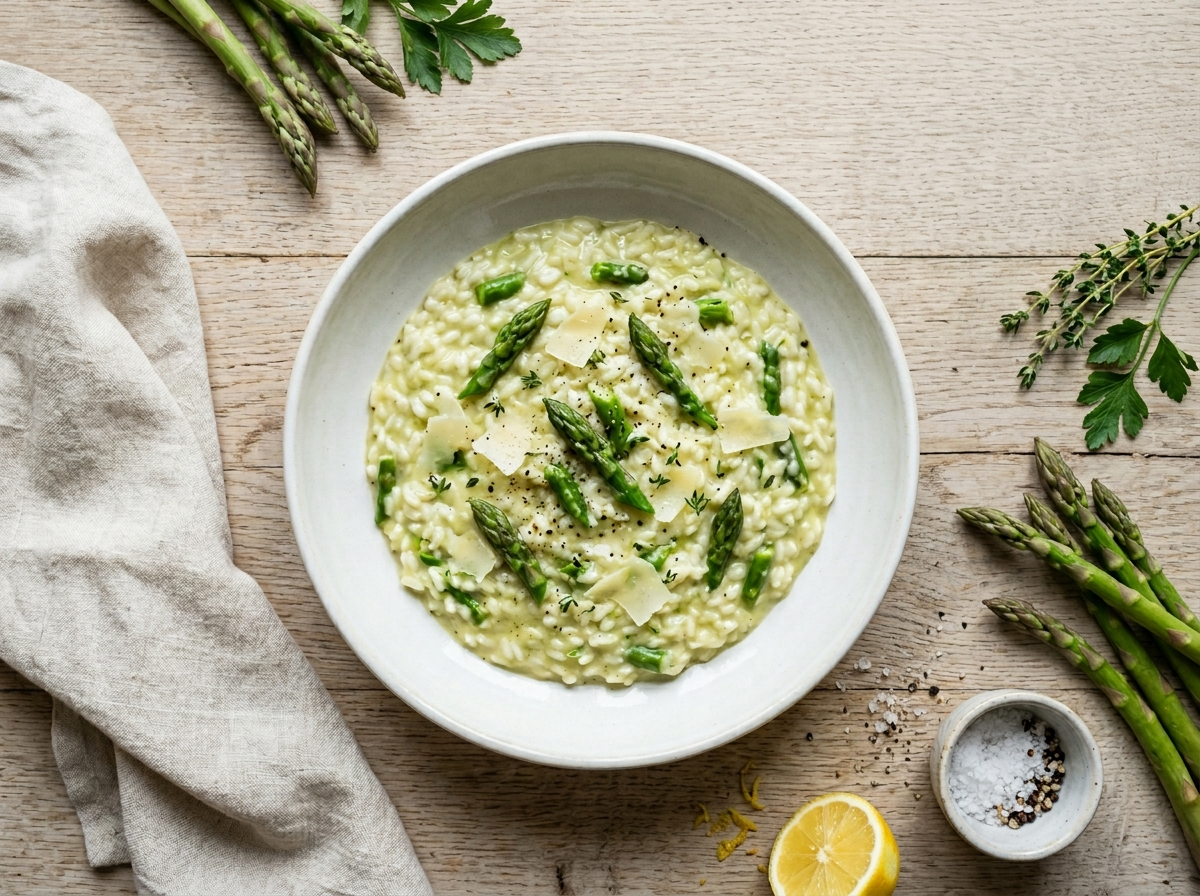
Risotto agli asparagi is a classic Northern Italian primo that earns its place on the spring table. The rice is creamy from slow starch release, not from added cream, and the asparagus flavor runs through every bite because the cooking liquid is made from the vegetable itself.
The method is straightforward once you understand one thing: asparagus has two useful parts. The woody ends make a clean, grassy broth. The tips cook in under three minutes and go in at the very end.
This version follows the Veneto and Lombardy approach — the same northern Italian instinct behind Piedmontese gnocchi with Fontina — no cream, a generous knob of cold butter for the mantecatura, and Parmigiano stirred off the heat. The result is pale green, silky, and clean-tasting.
Fresh asparagus in spring is the right call. Thin stalks work better than fat ones here because they cook faster and their flavor is more concentrated.
Why You’ll Love This Recipe
- Asparagus broth built from the stems, zero waste
- No cream needed – butter and starch do the work
- Tips added last so they stay vivid and tender
- One pot of broth, one wide pan, minimal cleanup
Ingredient Notes
- Asparagus: Fresh thin stalks give the cleanest flavor. Snap or cut off the woody bottom third, simmer those ends in water for 20 minutes to make the broth, then discard them.
- Arborio rice: Arborio is the most widely available option and works well here. Carnaroli holds its shape slightly better if you can find it, but the difference is minor.
- Dry white wine: A light Pinot Grigio or Soave is ideal. Avoid anything oaked. If you skip the wine, add an extra ladleful of broth and a small squeeze of lemon juice at the end.
- Parmigiano-Reggiano: Grate it fine and use it cold from the fridge so it melts smoothly into the mantecatura. Grana Padano works as a budget substitute.
- Cold unsalted butter: Butter must be cold and cut into cubes before the mantecatura. Cold butter emulsifies into the rice rather than pooling on top.
- Shallot: One medium shallot gives a softer base than onion. Yellow onion is a fine substitute, just dice it finer so it cooks through at the same rate.
Risotto agli Asparagi (Italian Asparagus Risotto)
Ingredients
Method
- Snap or cut the woody bottom third off each asparagus stalk. Set the tender stalks and tips aside. Place the woody ends in a medium saucepan with 1.2 liters of cold water and 1 tsp salt.
- Bring to a boil, then reduce to a steady simmer for 20 minutes. Strain the broth through a fine-mesh sieve, discard the spent ends, and return the broth to the pan over low heat. Keep it hot throughout cooking.
- Cut the tender asparagus stalks into 1 cm rounds. Leave the top 5 cm tips whole. Keep the tips separate - they go in later.
- Heat the olive oil and 20 g butter in a wide saute pan over medium heat. Add the shallot and garlic clove and cook, stirring often, for 3 to 4 minutes until the shallot is soft and pale.
- Add the asparagus rounds (not the tips) and cook for 2 minutes, stirring, until they start to soften slightly.
- Add the dry rice and stir constantly for 2 minutes until the edges of each grain turn translucent and the pan smells faintly nutty. Remove and discard the garlic clove.
- Pour in the white wine and stir steadily until it has fully absorbed and the sharp alcohol smell is gone, about 1 to 2 minutes.
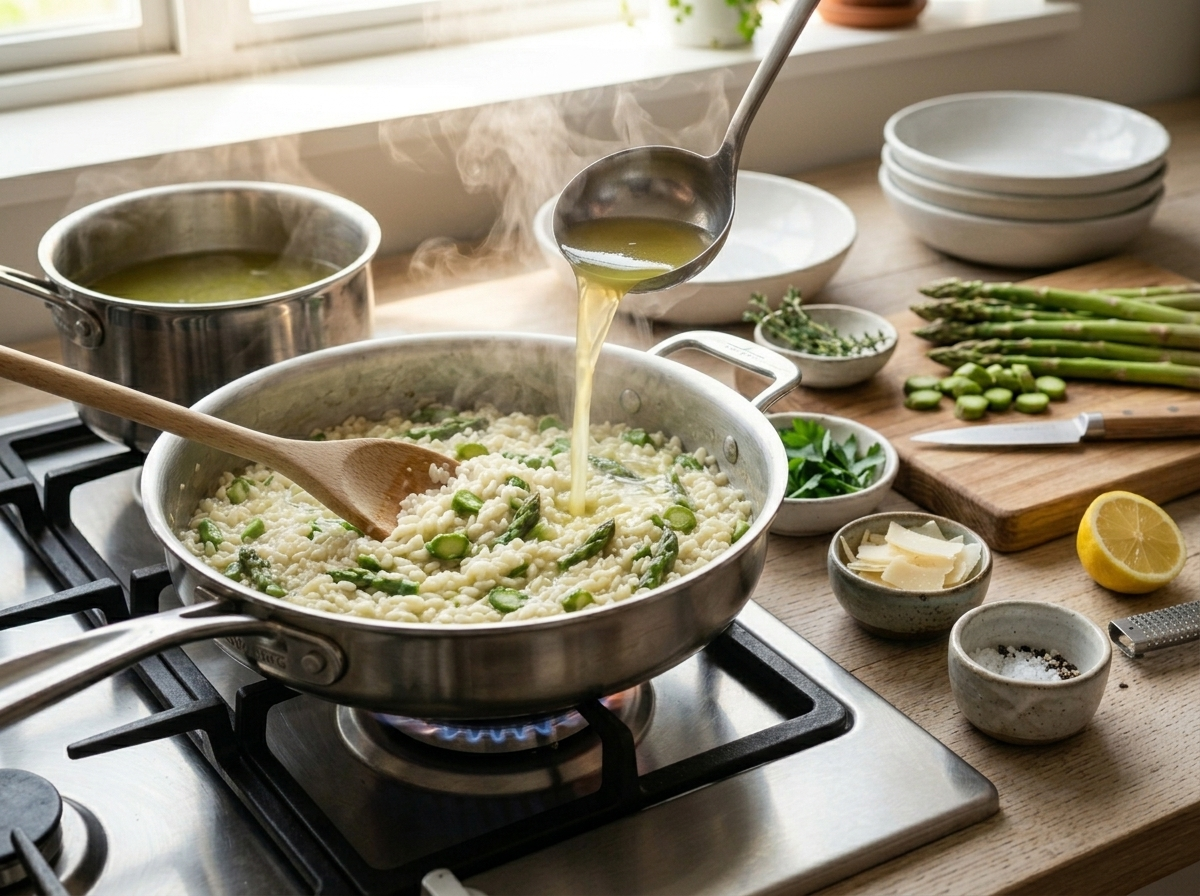
- Add one ladle of hot asparagus broth and stir until absorbed. Continue adding broth one ladle at a time, stirring every minute or so and waiting until each ladle is mostly absorbed before adding the next. This process takes about 16 to 18 minutes.
- When the rice has 3 minutes left and is nearly al dente, add the asparagus tips. Stir gently and add one more ladle of broth. The tips should be bright green and just tender when the rice is ready.
- Taste and adjust salt. The consistency should be loose and flow slowly when you tilt the pan - all'onda.
- Pull the pan off the heat completely. Add the cold butter cubes and grated Parmigiano all at once.
- Stir vigorously in a folding motion for 60 seconds until the butter and cheese melt into a silky, creamy sauce around the rice. Add lemon zest if using.
- Cover the pan and rest for 90 seconds. The risotto will tighten slightly. Spoon into warm bowls and serve immediately with extra Parmigiano on the side.
Notes
Tips for Success
- Simmer the asparagus broth on a separate burner so it stays hot when you add it, ladle by ladle.
- Toast the dry rice in the soffritto for 2 minutes until the edges turn translucent before adding wine.
- Add the asparagus tips in the last 3 minutes of cooking so they stay bright green and slightly firm.
- Pull the pan off the heat before the mantecatura – residual heat melts the butter and cheese without breaking the emulsion.
- Rest the finished risotto for 90 seconds with the lid on before plating so it tightens to the right consistency.
Variations
- Add 100 g of diced speck or pancetta to the soffritto for a smoky, Trentino-style version.
- Stir in 60 g of soft goat cheese instead of Parmigiano for a tangy, slightly richer finish.
- Replace half the asparagus with fresh or frozen peas for a primavera-style risotto that works beyond asparagus season.
Storage and Reheating
Store leftover risotto in an airtight container in the fridge for up to 2 days. It will thicken considerably as it cools, which is normal.
To reheat, add 2 to 3 tablespoons of warm water or light broth per portion to a small saucepan and stir over medium-low heat until loose and hot. Don’t microwave it dry or the texture turns gluey.
Risotto agli asparagi doesn’t freeze well. The asparagus tips go soft and the rice texture suffers. Make what you’ll eat within two days.
Serving Suggestions
Serve it as a primo before a simple secondi of grilled fish or Italian spicy grilled chicken. The asparagus flavor is delicate, so pair it with something that doesn’t compete.
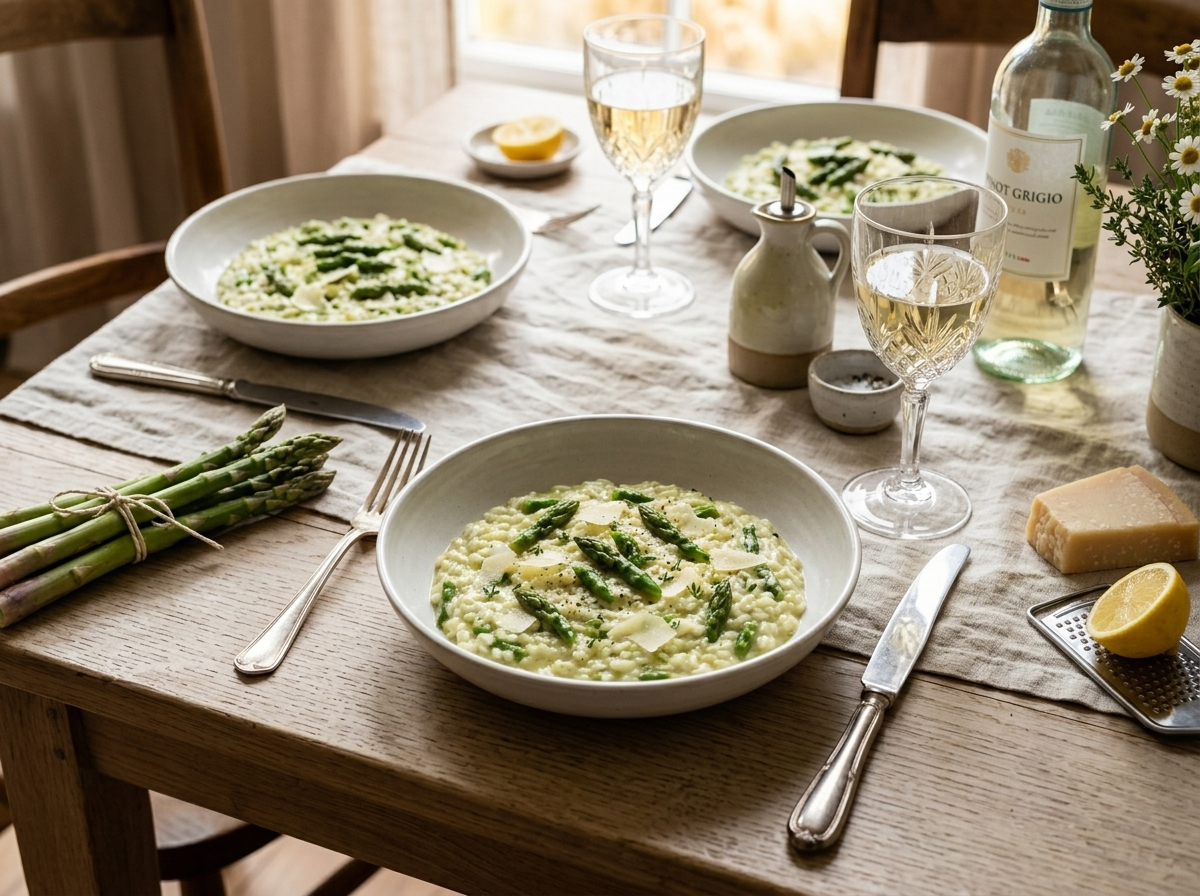
For a standalone lunch, finish each plate with a thin drizzle of good olive oil and a few shavings of Parmigiano. A glass of Soave or Pinot Grigio alongside works well, or open with a classic three-ingredient Negroni before sitting down.
If you’re feeding guests, you can plate the risotto slightly firmer than usual because it will continue to relax on the warm plate by the time it reaches the table.
FAQ
Why did my asparagus risotto turn grey or brown?
The tips oxidize when they’re added too early and cook too long. Add them only in the last 3 minutes so they stay bright green. A tiny squeeze of lemon juice just before serving also helps hold the color.
Can I use frozen asparagus instead of fresh in risotto agli asparagi?
You can use frozen asparagus for the body of the risotto, but the broth won’t be as bright since frozen stems don’t release as much flavor. Thaw first, pat dry, and still add the tips at the very end.
How do I know when the risotto is ready to come off the heat?
The rice should be al dente at the center with a loose, flowing consistency – called all’onda in Italian. When you tilt the pan, the risotto should ripple like a slow wave, not sit in a stiff mound.
Can I make risotto agli asparagi without wine?
Yes. Skip the wine and deglaze with an extra ladle of hot asparagus broth instead. Add a small squeeze of lemon juice at the mantecatura stage to replace the acidity the wine would have provided.
Is risotto agli asparagi gluten-free?
Yes, the recipe as written is gluten-free. Arborio rice, asparagus, butter, wine, and Parmigiano-Reggiano all contain no gluten. Just check that your broth or any stock cubes used are certified gluten-free.
What is the difference between risotto agli asparagi and risotto primavera?
Risotto agli asparagi uses only asparagus and builds its broth from the stems, so the flavor is focused and clean. Risotto primavera mixes several spring vegetables like peas, zucchini, and carrots, giving a lighter, more varied flavor profile.