
Jump to Recipe
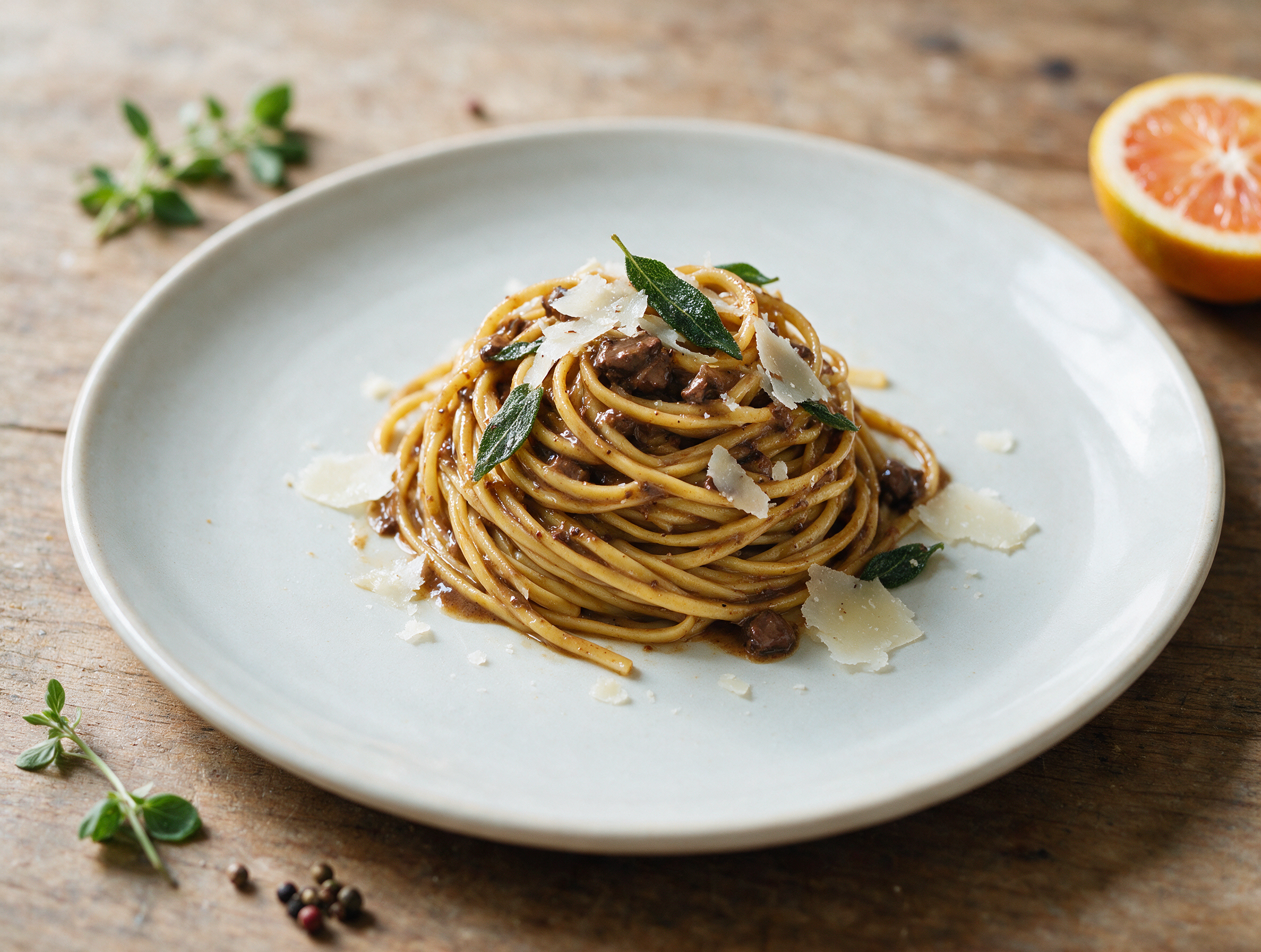
Tagliolini ai fegatini turns chicken livers into a Tuscan-style pasta sauce, built on a small soffritto, a splash of Vin Santo, and a short simmer that keeps the livers tender instead of chalky.
This isn’t the crostini spread you’ve maybe had before dinner in a Florence trattoria. Here the same base, sage, wine, tomato paste, gets loosened with pasta water and tossed straight into tagliolini so every strand carries a coating of sauce.
I trim the livers carefully and cook them fast at first, then let them finish at a gentle simmer until they hit 165 F / 74 C internal temp. Rush that step and the sauce turns grainy, give it patience and the texture stays silky and clean-tasting.
Dried tagliolini works fine if fresh isn’t available. The technique matters more than the pasta shape, and this comes together fast once you’ve made the sauce once and know the timing.
Why You’ll Love This Recipe
- Ready in 50 minutes with pantry staples and one skillet
- Livers stay tender, not grainy, when you watch the internal temp
- Cheaper protein than most pasta sauces, big flavor payoff
- Sauce holds in the fridge for a quick weeknight remake
Ingredient Notes
- chicken livers: Trim off any connective tissue and green-tinged spots (bile stains) before cutting, they turn bitter if left on.
- Vin Santo: Dry Marsala or a dry white wine both work if you don’t have Vin Santo on hand.
- tagliolini: Fresh egg tagliolini cooks in 2 to 3 minutes; dried takes 6 to 7. Tonnarelli or pappardelle work as a substitute.
- tomato paste: Just enough to round out the color and add a little sweetness, this isn’t a tomato sauce.
- fresh sage: Use fresh leaves, not dried, they hold their aroma against the wine’s acidity better.
Silky Tagliolini ai Fegatini (Chicken Liver Sauce)
Ingredients
Method
- Trim the chicken livers of any connective tissue or green-tinged spots, pat dry, and cut into 1 cm pieces. Set aside.
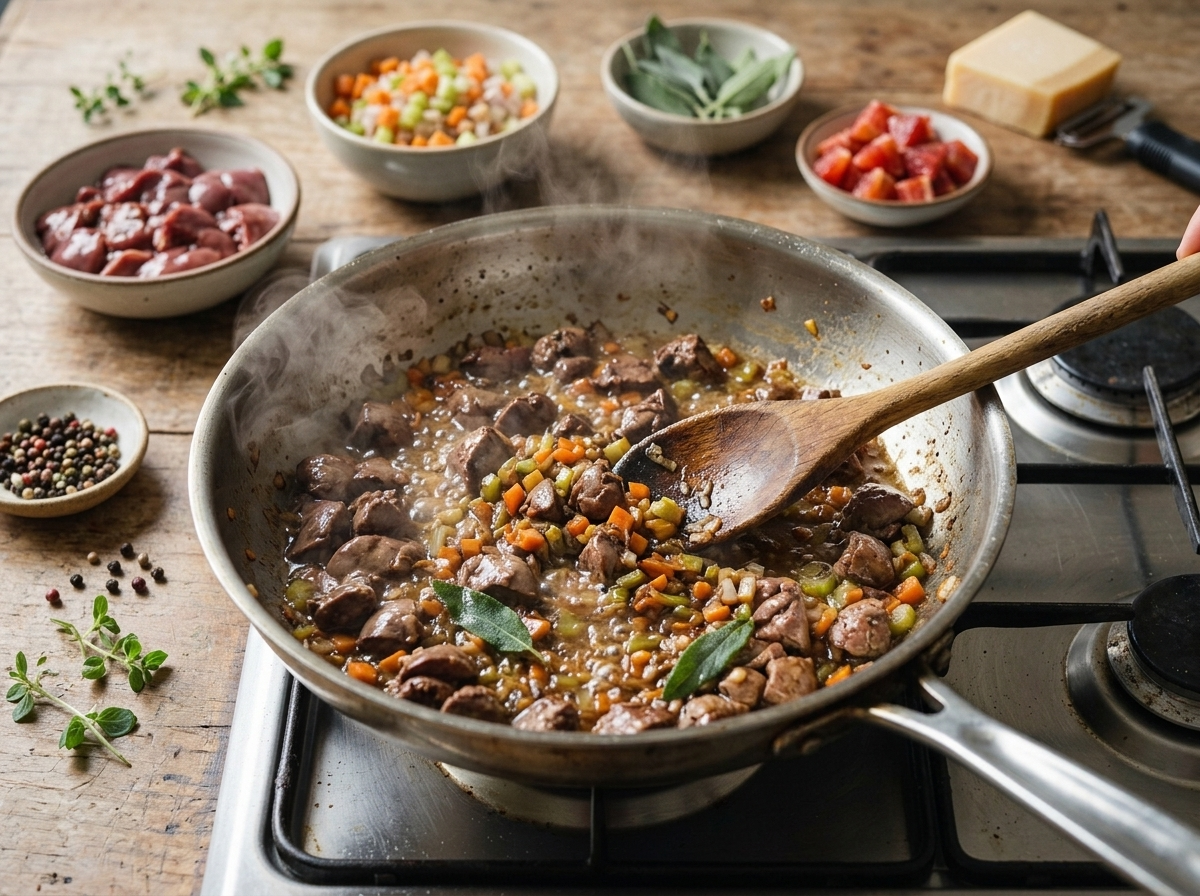
- Heat the olive oil and half the butter (20 g) in a 12-inch / 30 cm skillet over medium heat. Add the shallot, carrot, and celery, and cook 6 to 8 minutes until soft and pale gold.
- Add the garlic and half the sage leaves, and cook 1 minute until fragrant.
- Raise the heat to medium-high and add the liver pieces in one layer. Sear 3 to 4 minutes, turning once, until browned on the outside.
- Pour in the wine, scrape up any browned bits from the pan, and let it bubble 2 to 3 minutes until reduced by about half.
- Stir in the tomato paste and stock. Lower the heat and simmer 8 to 10 minutes, until the livers reach an internal temperature of 165 F / 74 C and are no longer pink at the center, and the sauce coats the back of a spoon.
- Season with salt and pepper, then stir in the remaining 20 g butter until glossy. Keep the sauce warm over the lowest heat.
- Bring the pasta pot of water to a boil and salt it generously. Cook the tagliolini until al dente, 2 to 3 minutes for fresh or 6 to 7 minutes for dried, reserving 1 cup of pasta water before draining.
- Add the drained tagliolini directly into the skillet with the sauce. Toss over low heat for 1 to 2 minutes, adding a splash of pasta water if the sauce needs loosening.
- Stir in the Parmigiano Reggiano. Plate immediately, topping with the remaining sage and more grated parmesan.
Notes
- Trim livers over a bowl of cold water to spot any green bile-stained bits easily
- Don't skip the pasta water, it's what keeps the sauce from tightening up
- Sauce should coat the back of a spoon before you add the pasta
- Keep leftover sauce and pasta stored separately for best texture
Tips for Success
- Trim livers of connective tissue and green-tinged spots before cooking to avoid bitterness.
- Sear the liver pieces hot and fast so they brown outside before they overcook through.
- Reserve at least 1 cup of pasta water before draining, you’ll need it to loosen the sauce.
- Use fresh sage rather than dried, it holds up better against the wine’s acidity.
- Check liver doneness with an instant-read thermometer rather than guessing by color alone.
Variations
- Swap tagliolini for pappardelle if you want a wider noodle to hold more sauce.
- Add a spoon of capers and a splash of red wine vinegar for a brighter, more piquant sauce.
- Use half chicken livers and half chicken hearts for a firmer bite and milder flavor.
Storage and Reheating
Store the finished sauce on its own in an airtight container for 2 to 3 days in the fridge. Keep any leftover cooked pasta separate so it doesn’t turn mushy sitting in sauce.
To reheat, warm the sauce in a 10-inch skillet over low heat with a splash of stock or water, stirring until it loosens back to a spoon-coating consistency, about 3 to 4 minutes. Cook fresh tagliolini and toss it into the reheated sauce rather than reheating already-tossed pasta.
This sauce freezes reasonably well on its own for up to 2 months. Thaw overnight in the fridge before reheating.
Serving Suggestions
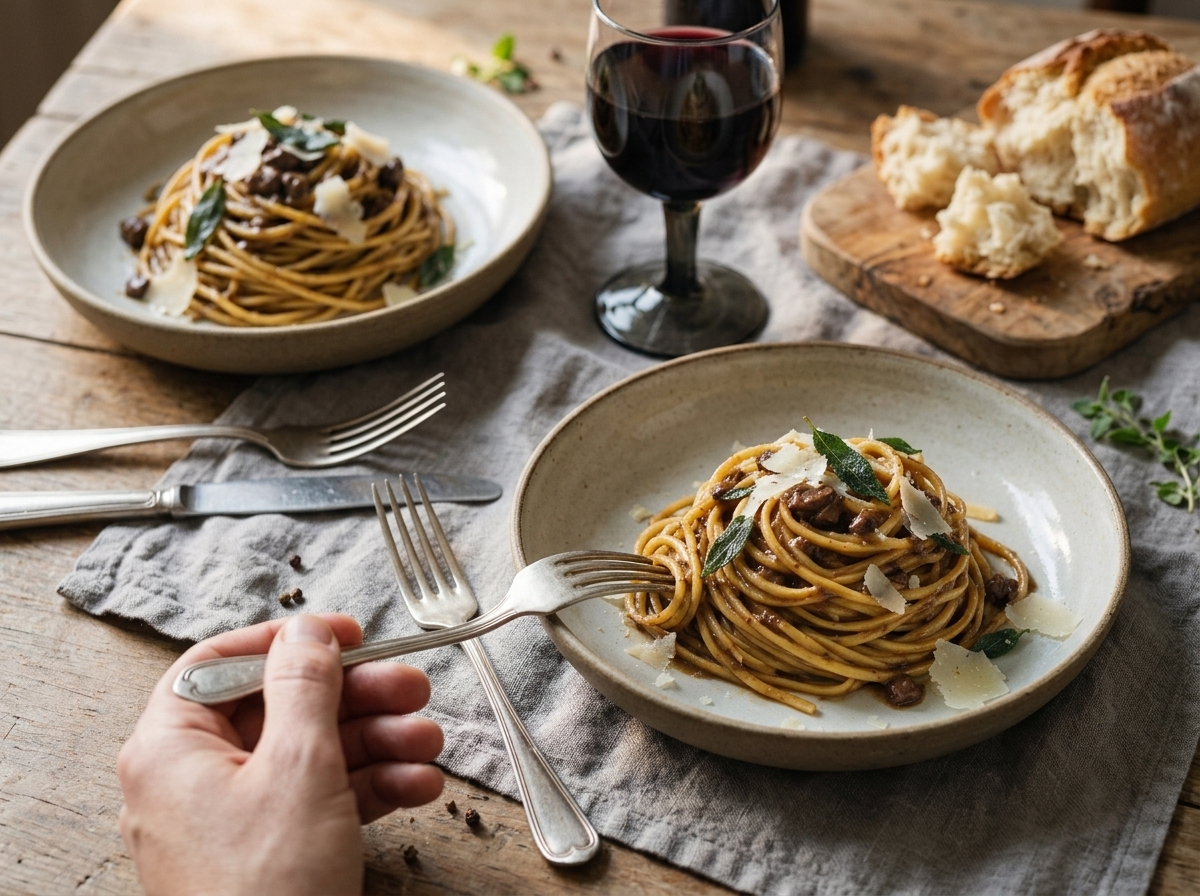
Tagliolini ai fegatini is rich enough to stand alone with just extra parmesan and black pepper on top. A simple green salad with lemon and olive oil cuts through the richness well.
Serve crusty bread on the side, useful for the last bit of sauce in the bowl. A glass of Chianti Classico or a cold Vin Santo matches the dish’s savory, slightly sweet-wine notes.
For a Tuscan-style spread, keep a small extra portion of the sauce unthinned by pasta water and serve it warm over grilled bread as a starter.
FAQ
Why does my tagliolini ai fegatini sauce turn grainy instead of silky?
Grainy texture almost always means the livers overcooked. Once they pass 165 F / 74 C by much, the proteins tighten and the sauce loses its smooth texture. Sear hot and fast for color, then drop to a gentle simmer and pull the pan off heat as soon as the center is no longer pink.
Can I use Marsala instead of Vin Santo in this chicken liver sauce?
Yes, dry Marsala works well and is easier to find than Vin Santo. A dry white wine also works if you want a lighter, less sweet base. Avoid sweet Marsala or dessert wine, it throws off the balance of the sauce.
Can I make the fegatini sauce ahead for tagliolini ai fegatini?
Yes, the sauce keeps 2 to 3 days in the fridge in an airtight container. Reheat it gently in a skillet with a splash of stock, then toss it with freshly cooked pasta rather than reheating pasta that’s already been sauced. It also freezes well on its own for up to 2 months.
What wine goes well with tagliolini ai fegatini?
Chianti Classico is the classic match, its acidity cuts through the richness of the liver and butter. A cold Vin Santo also works, echoing the wine used in the sauce itself. Both are Tuscan pairings that suit the dish’s origin.
Is tagliolini ai fegatini gluten-free?
Not as written, since tagliolini is a wheat pasta. Swap in a gluten-free tagliolini or tonnarelli and double-check your stock and tomato paste labels, some brands add wheat-based thickeners. The sauce itself, minus the pasta, is naturally gluten-free.
What’s the difference between tagliolini ai fegatini and crostini di fegatini?
Crostini di fegatini is a Tuscan spread, the same base of liver, soffritto, and wine cooked down longer with capers and anchovy until pate-like, then served on toast. Tagliolini ai fegatini keeps the sauce looser and saucier so it coats pasta instead of spreading on bread.