
Jump to Recipe
Spaghetti con le telline is a coastal Italian pasta built on tiny wedge clams, garlic, olive oil, white wine, and a handful of parsley. The clams are smaller than vongole, so the sauce stays thin and briny instead of thick and heavy.
The active cooking here is under 30 minutes; the extra time comes from soaking the clams beforehand to purge the sand, which is mostly hands-off. So plan the soak, not the cooking, around your schedule.
The one real risk with this dish is grit. Telline burrow in sand, so a poor purge means a gritty bite no amount of garlic fixes. Soak them properly and the sauce comes out clean-tasting.
This is a Naples and Campania coastline staple, traditionally made when telline season peaks in spring and early summer.
Why You’ll Love This Recipe
- Ready in under 30 minutes of active cooking time
- Uses one skillet plus a pasta pot, minimal cleanup
- Sauce stays light and briny, not creamy or heavy
- Vongole or cockles work as a swap if telline aren’t sold locally
Ingredient Notes
- telline (wedge clams): Small, sweet clams common on the Campania coast. Swap in vongole veraci or small cockles if telline aren’t sold near you, adding a minute to the steaming time.
- spaghetti: Standard 320 g works for 4 servings. Bucatini or linguine both hold the thin sauce just as well.
- dry white wine: Use something you’d drink, like Vermentino or a dry Pinot Grigio. Skip cooking wine, it tastes flat once reduced.
- chili flakes: Optional, just enough to warm the background without turning the dish spicy. Leave out for a milder sauce.
- flat-leaf parsley: Adds color and a grassy note at the end. Curly parsley works but has a stronger, slightly bitter bite.
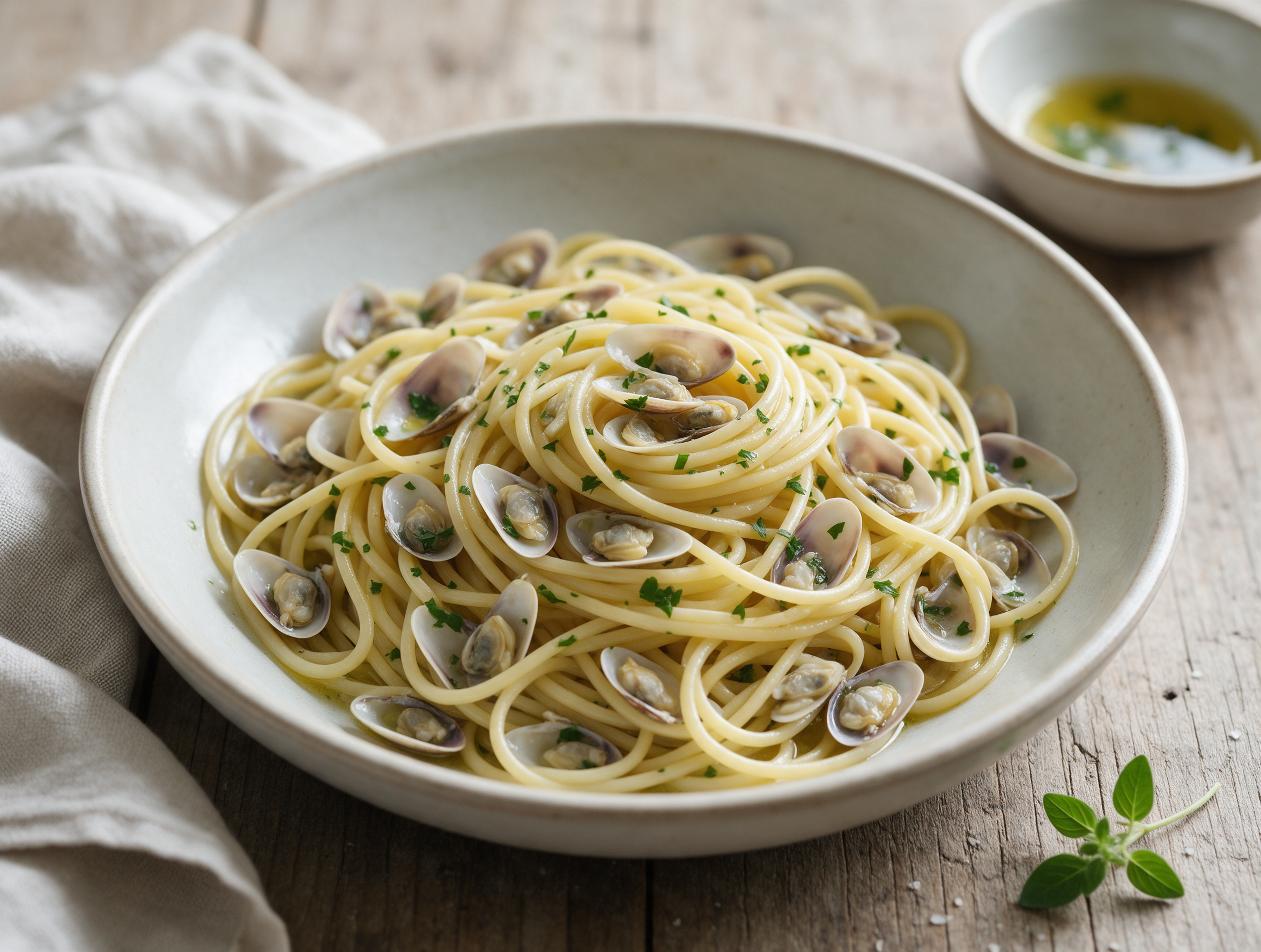
Spaghetti con le Telline: Italian Wedge Clam Pasta
Ingredients
Method
- Rinse the telline under cold water, discarding any that are broken or that won't close when tapped.
- Submerge the clams in the salted water (30 g salt per 1 liter water) for 1 to 2 hours to purge sand, changing the water once halfway through.
- Drain and rinse the clams again just before cooking.
- Heat the olive oil in a 30 cm / 12-inch skillet over medium heat. Add the garlic and chili flakes, and cook for 1 minute until fragrant but not browned.
- Add the clams and white wine, raise the heat to medium-high, cover, and cook 4 to 6 minutes, shaking the pan occasionally, until the shells open. Discard any that stay shut.
- Remove the clams with a slotted spoon to a bowl, leaving the broth in the pan. Simmer the broth uncovered for 2 minutes to reduce slightly.
- Meanwhile, bring the pasta pot of water to a boil, salting it lightly since the clam broth is already briny. Cook the spaghetti 1 minute less than the package instructions, until just shy of al dente.
- Transfer the pasta to the skillet with tongs, along with a ladle of pasta water. Toss over medium heat for 1 to 2 minutes until the pasta finishes cooking and the sauce clings to the strands.
- Return the clams to the pan, add the parsley, and toss to combine. Add more pasta water if the sauce looks dry.
- Plate immediately with a drizzle of olive oil and extra parsley.
Notes
- Purge telline for at least 1 hour before cooking to avoid grit.
- Undercook spaghetti by 1 minute; it finishes in the clam broth.
- Discard clams that don't open after steaming.
- Go easy on salt in the pasta water since clams add salinity.
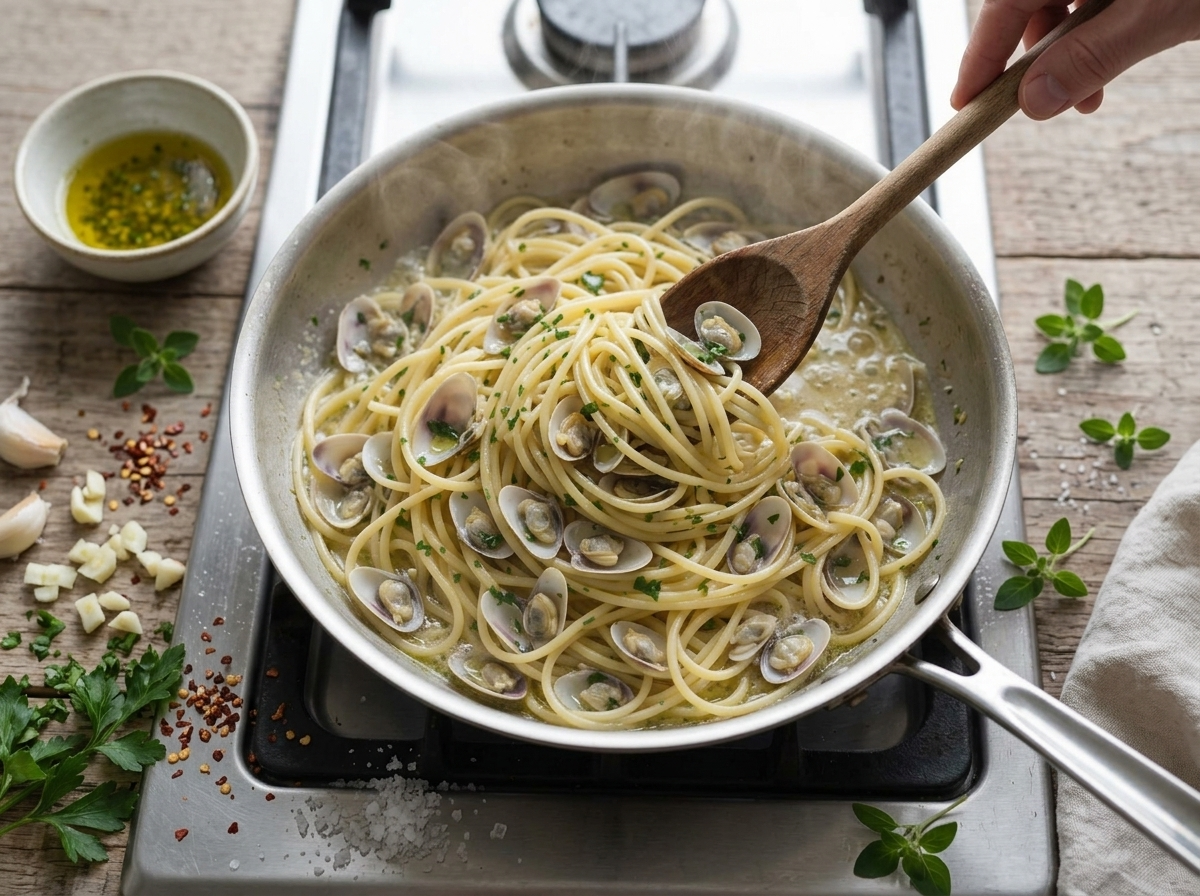
Tips for Success
- Purge clams in salted water for at least 1 hour, changing the water once, so the sauce stays free of grit.
- Undercook the pasta by a full minute in the pot since it finishes cooking in the clam broth.
- Skip extra salt in the pasta water; clams add plenty of salinity to the finished dish.
- Discard any clam that stays closed after cooking, since it means it died before it opened.
- Toss pasta and clams over medium heat, not high, so the shells don’t overcook and turn rubbery.
Variations
- Swap telline for small clams (vongole veraci) or cockles if wedge clams aren’t available at your fishmonger.
- Add halved cherry tomatoes with the garlic for a rosier, slightly sweeter version of the sauce.
- Finish with a squeeze of lemon juice and zest for a brighter, more acidic edge to the broth.
Storage and Reheating
Spaghetti con le telline is best eaten right away, within minutes of finishing the pan. The clams turn rubbery and the pasta keeps soaking up broth if it sits, so this isn’t a dish that holds well on the stove or in the fridge.
If you want to prep ahead, purge the clams the night before and keep them in the fridge, still in the shell, covered with a damp cloth, for up to 24 hours. Chop the garlic and parsley ahead of time too, so cooking is just 15 minutes of active work.
I don’t recommend saving leftovers past a single day, and I’d skip reheating altogether. Eat what you make in one sitting, and size the recipe to your table instead.
Serving Suggestions
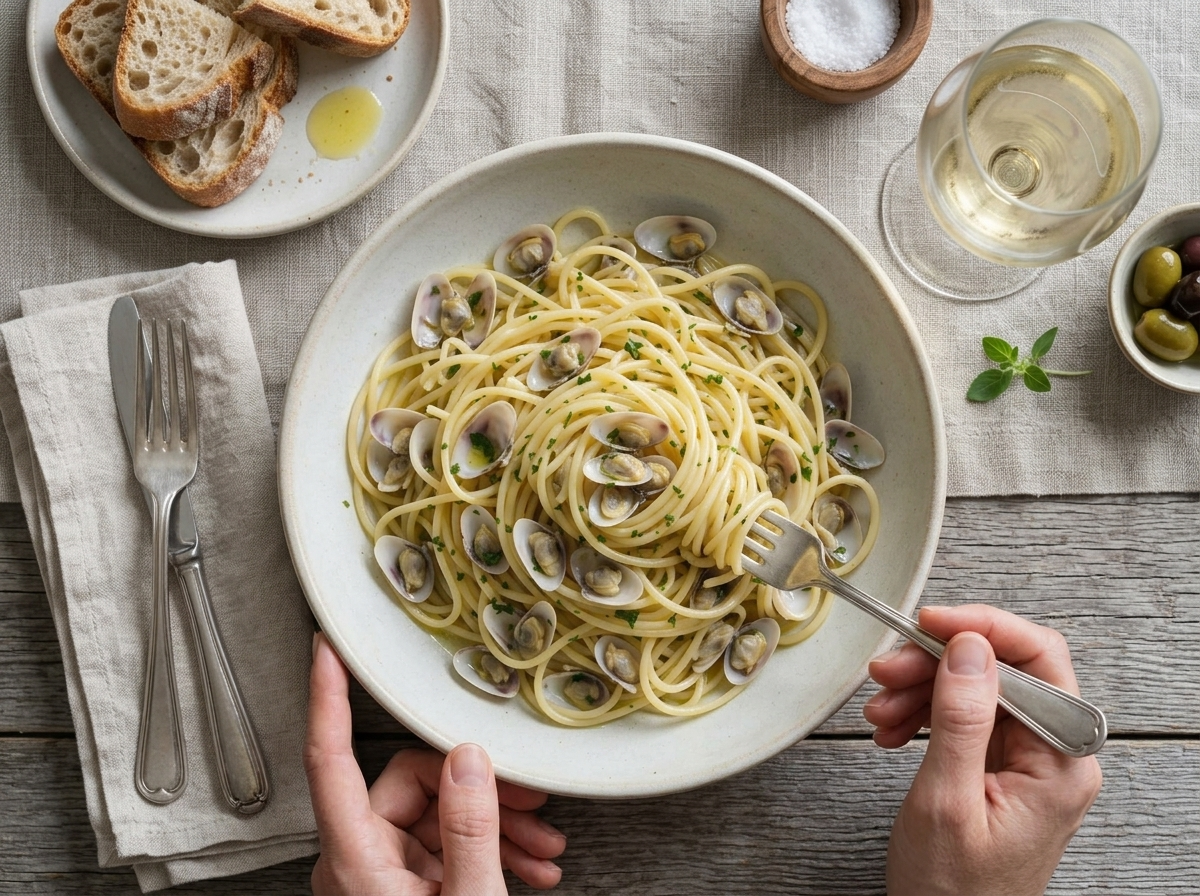
Spaghetti con le telline works well as a light main on its own, since the pasta is already rich with garlic and briny clam broth. A simple green salad with lemon vinaigrette on the side cuts through the richness without competing.
Pour a chilled Vermentino or Falanghina alongside it, both dry whites common on the Campania coast where this dish comes from. Crusty bread at the table is useful too, for mopping up the last of the broth.
Keep the rest of the meal light: grilled vegetables or a simple bruschetta before the pasta rounds things out without weighing it down.
FAQ
Why are my telline clams still gritty after cooking?
Grit usually means the clams weren’t purged long enough. Telline burrow in sand, so give them at least 1 hour in salted water (30 g salt per liter), changing the water once halfway through. If a batch still tastes gritty, purge a second round before your next cook.
Can I use vongole or cockles instead of telline?
Yes, vongole veraci or small cockles work as a substitute in this recipe. They’re larger, so the broth tastes slightly less sweet and the sauce may need an extra minute of simmering. Adjust the steaming time down if the clams you’re using are smaller than telline.
Can I purge the wedge clams a day ahead of cooking spaghetti con le telline?
Yes, purge them the night before, then store the clams in the fridge, still in the shell, covered with a damp cloth for up to 24 hours. Don’t leave them submerged in water overnight though, since they can suffocate. Cook the pasta fresh once you’re ready to eat.
What wine goes with spaghetti con le telline?
A dry white like Vermentino or Falanghina works well, since both have the acidity to match the briny sauce. A crisp Pinot Grigio is a reasonable stand-in if you can’t find either one. Avoid oaked whites, which tend to fight with the clam broth.
Is it safe to eat a clam that stays closed after cooking?
No, discard any clam that stays shut after cooking since it likely died before it opened and isn’t safe to eat. Live clams should open within 4 to 6 minutes of steaming in the wine and broth. Toss shells that don’t open rather than forcing them.
What’s the difference between spaghetti con le telline and spaghetti alle vongole?
Spaghetti con le telline uses wedge clams, smaller and sweeter than the vongole veraci used in spaghetti alle vongole. The telline sauce is thinner and lighter because the clams release less liquid. Vongole are more common outside Italy, while telline are a regional Campania specialty.