Jump to Recipe
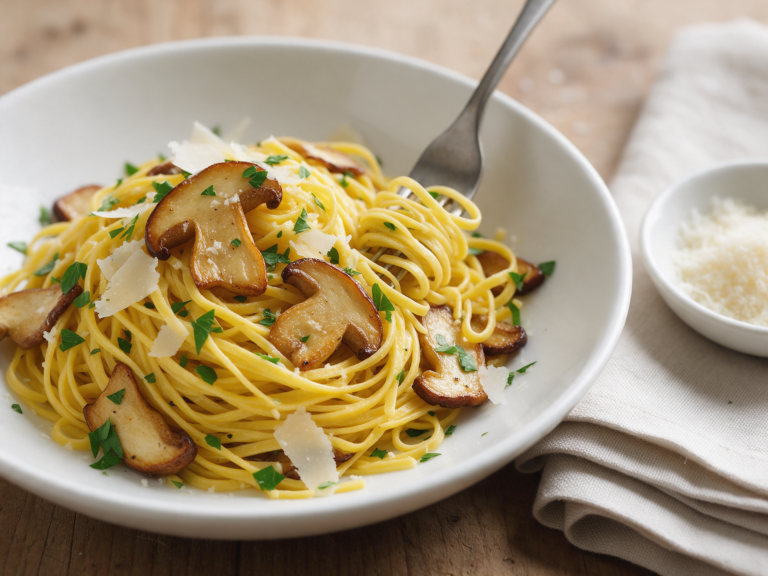
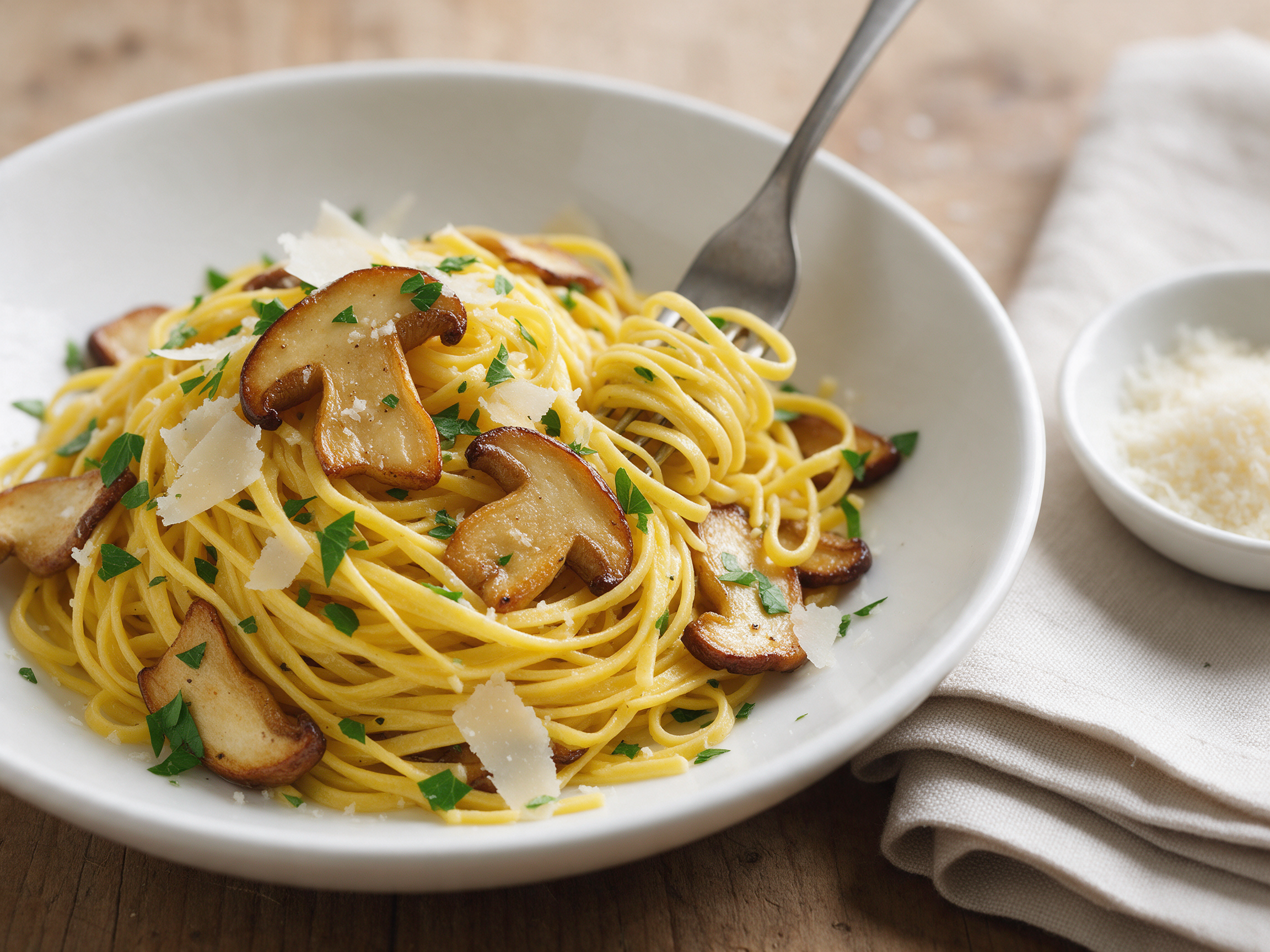
Tagliolini ai funghi porcini is a dish of thin egg pasta ribbons tossed with seared porcini, garlic, parsley and a splash of white wine. This version uses fresh egg dough you roll and cut yourself, and it takes 80 minutes from flour to table, including a 30-minute dough rest.
The texture defines the result here, not cream. Starchy pasta water, a little butter and the reduced porcini liquor bind into a silky coat that clings to each ribbon.
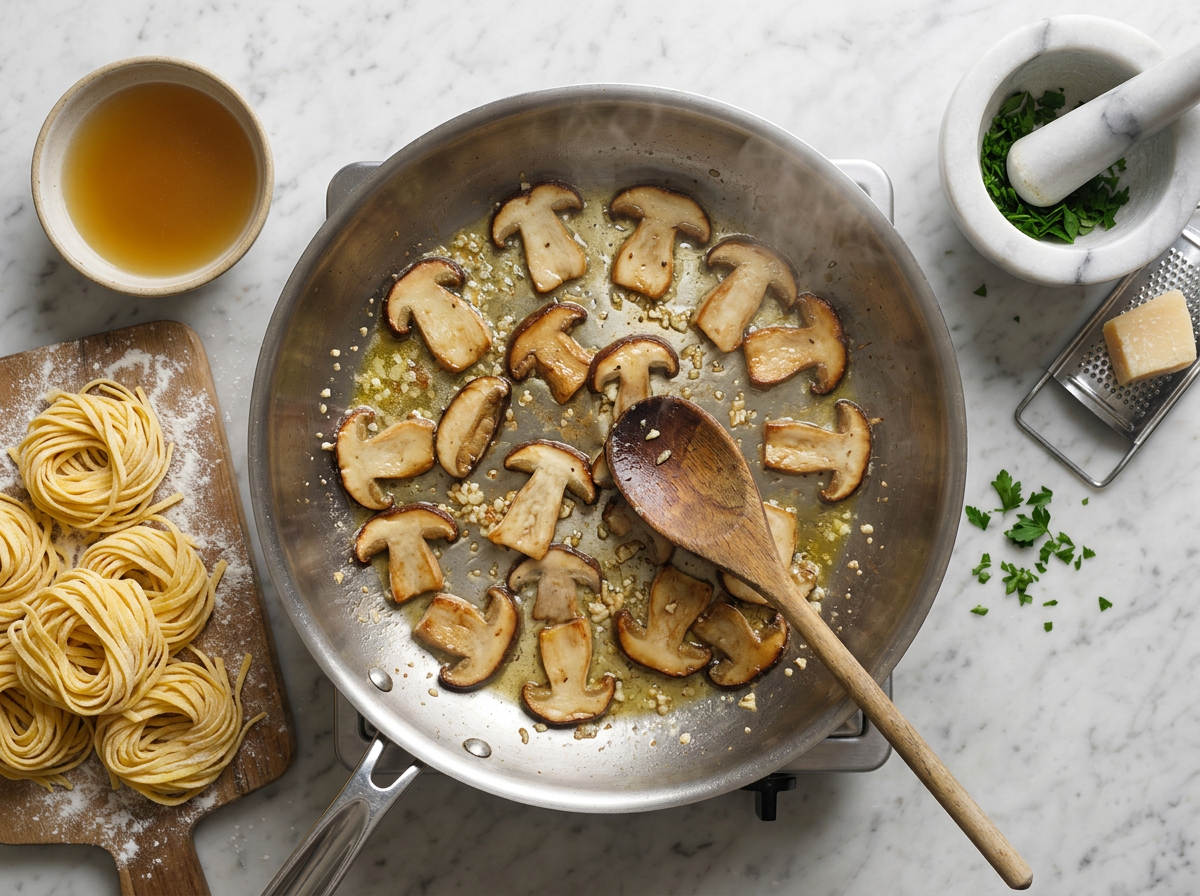
One thing goes wrong more than any other: crowded mushrooms. Pile all 300 g into the pan and they steam, turn gray and taste flat, so I sear them in two batches until the edges are deep brown.
Practical pantry note: fresh porcini are a late-summer and autumn ingredient. Outside the season, cremini plus a little extra dried porcini gets you close.
Why You’ll Love This Recipe
- Silky sauce built from pasta water, not cream
- Dough needs only flour, eggs, yolks and salt
- Raw pasta nests freeze well for later
- Dried and fresh porcini layer deep mushroom flavor
Ingredient Notes
- fresh porcini: Choose firm caps with no soft spots and brush off dirt instead of rinsing. Outside the season, use 300 g cremini and raise the dried porcini to 25 g.
- 00 flour: It gives a smooth, tender ribbon. All-purpose flour works, but the dough is a little chewier and needs a longer rest.
- egg yolks: The two extra yolks give the pasta its pale gold color and silky bite. Use 4 whole eggs and no yolks if you’d rather skip separating.
- dried porcini: They add depth and give you the soaking liquid that flavors the sauce. Strain it well, since the grit settles at the bottom of the bowl.
- dry white wine: Use something crisp you’d drink, like Pinot Grigio or Vermentino. Chicken or vegetable stock is a fine swap, with a squeeze of lemon at the end.
- semolina: It keeps cut tagliolini from sticking better than flour does. Extra 00 flour works if that’s all you have.
Homemade Tagliolini ai Funghi Porcini with Egg Pasta
Ingredients
Method
- Mound the flour on a clean work surface and make a well in the center. Add the eggs, yolks and salt, break the yolks with a fork, then draw in the flour until a shaggy dough forms. Knead for 8 to 10 minutes until smooth and slow to spring back when pressed. Wrap tightly and rest at room temperature for 30 minutes.
- While the dough rests, soak the dried porcini in 200 ml hot water for 20 minutes. Brush the fresh porcini clean and slice them 1 cm thick. Lift the soaked porcini out, chop them finely, and strain the liquid through a fine-mesh sieve into a bowl.
- Cut the rested dough into 4 pieces and keep the rest covered. Roll each piece with a pasta machine, or a long rolling pin, to a sheet about 1 mm thick that you can almost see your hand through. Dust with semolina, fold loosely, and cut into 2 mm ribbons. Shake into loose nests on a semolina-dusted tray.
- Put 3 L water and 2 tbsp coarse salt in a 6-quart / 5.7 L stockpot over high heat. Heat 1 tbsp oil and 15 g butter in a 30 cm / 12-inch skillet over medium-high. Add half the sliced porcini in a single layer and sear for 3 to 4 minutes without stirring, then stir until the edges are deep brown. Move to a plate and repeat with the remaining oil, butter and porcini.
- Return the first batch to the skillet with the garlic and chopped soaked porcini. Cook for 1 minute until fragrant, then add the wine and cook for 1 to 2 minutes until nearly gone. Add 100 ml of the strained porcini liquid and a pinch of salt, and simmer for 4 to 5 minutes until reduced to a few glossy spoonfuls. Remove the garlic.
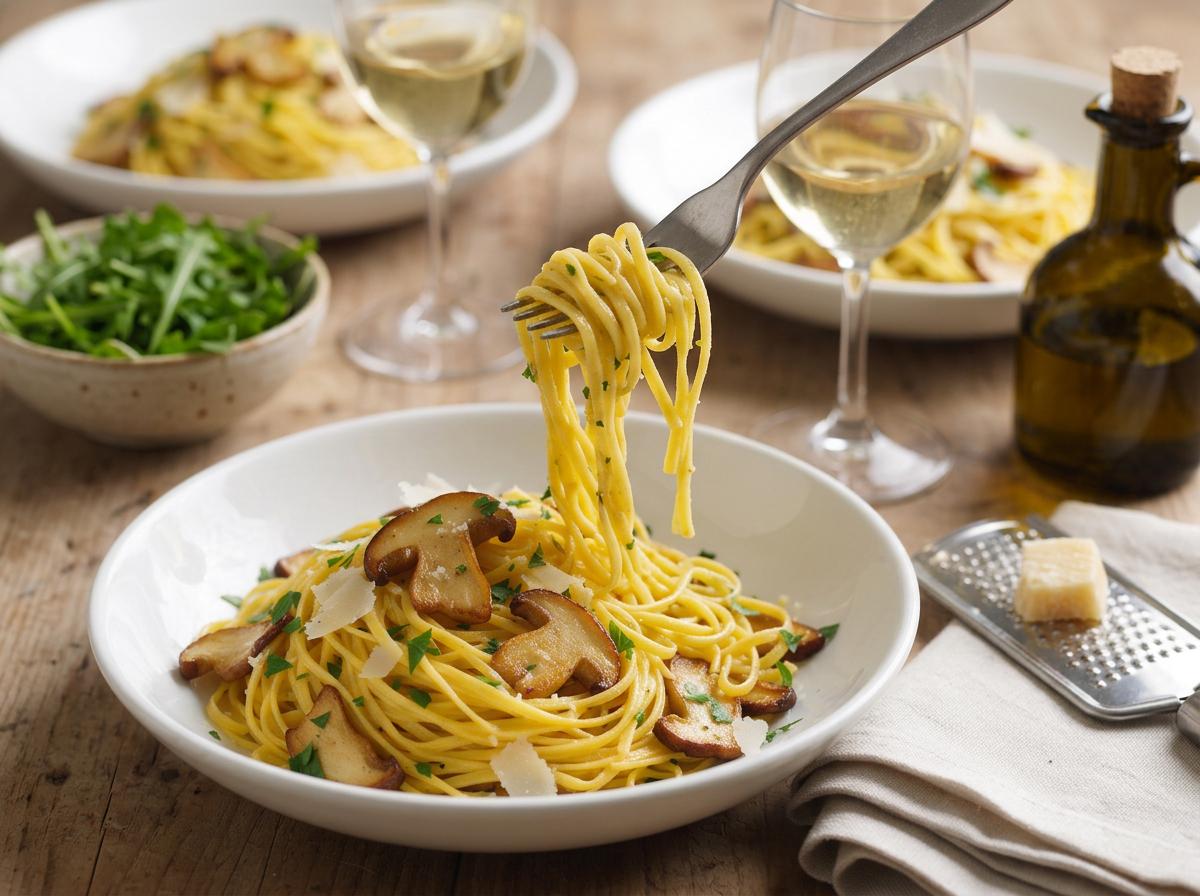
- Boil the tagliolini for 1 to 2 minutes until al dente and scoop out 120 ml pasta water. Lift the pasta into the skillet with tongs and toss over medium heat with 60 ml pasta water, the parsley, half the Parmigiano and plenty of pepper. Toss for 1 minute until the sauce clings, adding more pasta water by the spoonful if it tightens. Serve at once with the remaining Parmigiano.
Notes
- Rest the dough for the full 30 minutes so it rolls thin without snapping back.
- Sear porcini in two batches, never all at once.
- Roll the sheets thin enough to see your hand through them.
- Cook fresh tagliolini for 1 to 2 minutes only, then finish in the sauce.
- Keep the pasta water, since its starch is what makes the sauce silky.
Tips for Success
- Knead the dough for a full 8 to 10 minutes until it springs back slowly when pressed, because weak gluten tears when rolled thin.
- Brush porcini clean instead of washing them, since wet mushrooms release steam and refuse to brown in the skillet.
- Strain the soaking liquid through a fine-mesh sieve to leave the grit in the bowl, and keep the rest for soup or risotto.
- Salt the porcini only after they have browned, because early salt pulls out water and delays color.
- Lift the pasta out of the water the moment it’s al dente and add pasta water to the skillet a tablespoon at a time.
Variations
- Swap the white wine for dry Marsala and add a thyme sprig for a darker, slightly sweeter sauce.
- Add a pinch of nepitella or fresh thyme with the garlic for the Tuscan way of cooking mushrooms.
- Replace the fresh porcini with 300 g mixed cremini and chestnut mushrooms plus 25 g dried porcini for a year-round version.
Storage and Reheating
Tagliolini ai funghi porcini keeps in an airtight container in the refrigerator for 2 days. The pasta keeps absorbing sauce, so it looks drier the next day. Reheat in a 26 cm / 10-inch skillet over medium-low heat with 2 to 3 tablespoons of water, covered, for 3 to 4 minutes, stirring once.
For make-ahead, shape the cut tagliolini into loose nests on a semolina-dusted tray, cover, and refrigerate for up to 24 hours. To freeze, firm the nests on the tray for 1 hour, then bag them for up to 1 month and cook straight from frozen for 2 to 3 minutes.
The porcini sauce on its own, without pasta, keeps 3 days in the fridge. Warm it gently and loosen it with a splash of pasta water when you toss in freshly boiled tagliolini.
Serving Suggestions
Serve tagliolini ai funghi porcini straight from the skillet on warm plates, with extra Parmigiano and black pepper at the table. The pasta tightens as it cools, so don’t let it wait.
A bitter green salad, such as arugula or radicchio with lemon and olive oil, cuts through the butter and cheese. A dry white like Gavi or a light red like Dolcetto matches the earthiness of the mushrooms.
As a primo, follow it with roast chicken or sliced slow roasted veal. As a main, a larger portion and the salad are enough.
FAQ
Why are my porcini turning gray and rubbery in the pan?
Porcini turn gray and rubbery when the pan is crowded or not hot enough, because the water they release steams them instead of evaporating. Sear them in two batches in a 30 cm / 12-inch skillet over medium-high heat. Leave each batch alone for 3 to 4 minutes until the edges are deep brown before stirring.
Can I use only dried porcini instead of fresh for tagliolini ai funghi porcini?
Yes, but the result is deeper and chewier. Soak 40 g dried porcini in 300 ml hot water for 20 minutes, chop them, sear them in the butter and oil, and use the strained liquid for the sauce. For a texture closer to fresh, replace half with sliced cremini, which sear well and stay tender.
Can I freeze the egg tagliolini before cooking?
Yes, raw tagliolini freezes well. Dust the nests with semolina, freeze them on a tray for 1 hour, then bag them for up to 1 month. Cook straight from frozen in boiling salted water for 2 to 3 minutes. Thawing first makes the ribbons stick together into a gummy block.
What goes well with tagliolini ai funghi porcini?
A bitter green salad of arugula or radicchio dressed with lemon and olive oil goes well, because it cuts the butter and cheese. Pour a dry Piedmont white like Gavi or a light red like Dolcetto. If you serve the pasta as a primo, roast chicken or sliced veal makes a simple second course.
Is tagliolini ai funghi porcini dairy free?
No, it isn’t dairy free as written, because it uses 30 g butter and 40 g Parmigiano Reggiano. Use an extra 2 tablespoons of olive oil instead of the butter, skip the cheese, and finish with a squeeze of lemon. The pasta still contains eggs and wheat gluten.
What is the difference between tagliolini and tagliatelle?
Tagliolini are thinner, cut about 2 mm wide, while tagliatelle run 6 to 8 mm. Both are egg pastas from northern Italy. The thin ribbons cook in 1 to 2 minutes and suit light sauces like this porcini one, while wider tagliatelle hold up better to ragù.