Jump to Recipe
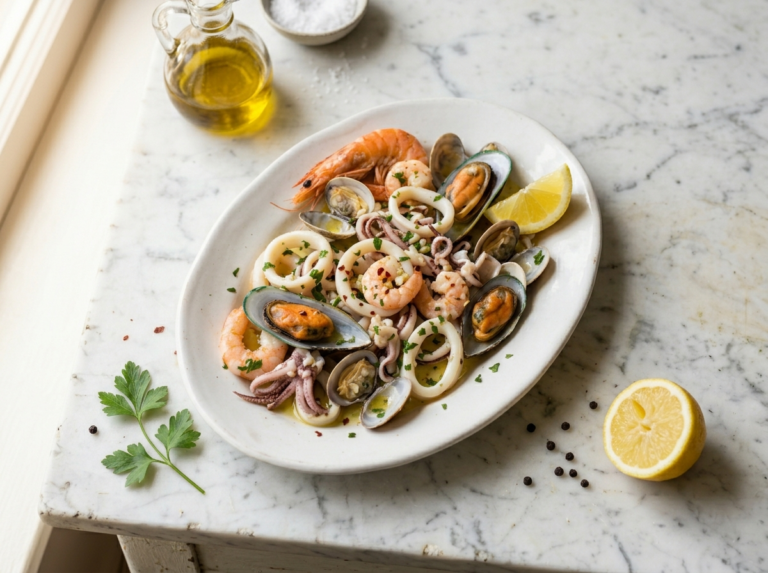
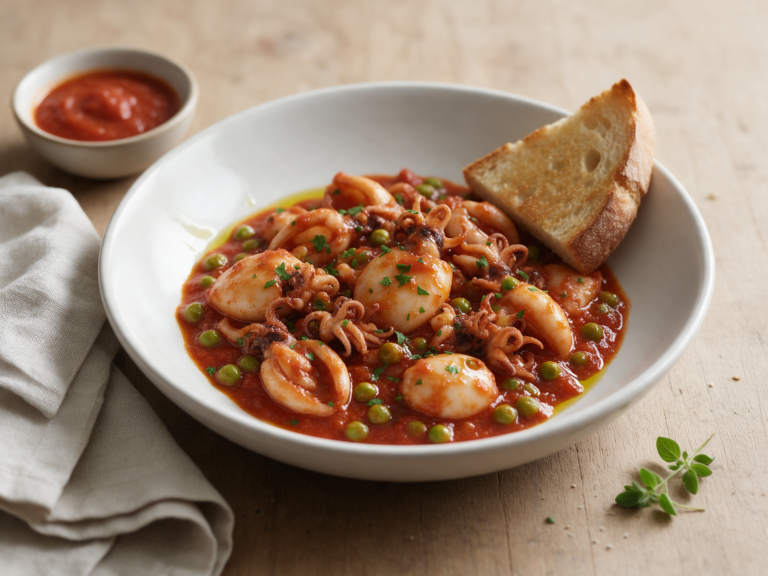
Guazzetto di seppie with tomato and peas is a loose Italian cuttlefish stew. The cuttlefish simmers for about 40 minutes in white wine and crushed tomato until fork-tender, then frozen peas go in for the last 8 minutes.
The texture defines the result here. Cuttlefish is chewy when it’s rushed and silky when it’s given time, and the sauce turns from thin and pink to glossy and brick-red as it reduces.
The one thing that goes wrong is heat. If the pot boils hard, the cuttlefish tightens and stays rubbery no matter how long you cook it, so keep the surface at a slow, lazy bubble.
It’s a good make-ahead pot too. It tastes better on day two, and a spoon of polenta or a slice of toasted bread is all it needs to catch the sauce.
Why You’ll Love This Recipe
- One pan and mostly pantry ingredients, including frozen peas
- Tender cuttlefish in a clean-tasting, wine-bright tomato sauce
- Tastes better on day two and keeps well in the fridge
- Naturally gluten-free and dairy-free, with 34 g protein per serving
Ingredient Notes
- cleaned cuttlefish: Frozen, cleaned cuttlefish works year-round, so thaw it overnight in the fridge. If you buy it whole, have the fishmonger remove the cuttlebone, beak, eyes and innards. Large squid also works, but simmer it for 30 minutes.
- canned whole peeled tomatoes: Crush them by hand so you keep some texture. Passata is a fine substitute, though the sauce will be smoother and a little thinner.
- frozen peas: Use them straight from the freezer, no thawing needed. Fresh shelled spring peas also work, but give them about 12 minutes instead of 8.
- dry white wine: Choose something crisp that you’d drink, like Vermentino or Pinot Grigio. Without wine, use 120 ml water plus 1 tsp white wine vinegar.
- soffritto vegetables: Onion, celery and carrot, chopped fine, dissolve into the sauce and give it body. Cut them small, about 3 mm, so they don’t show up as chunks.
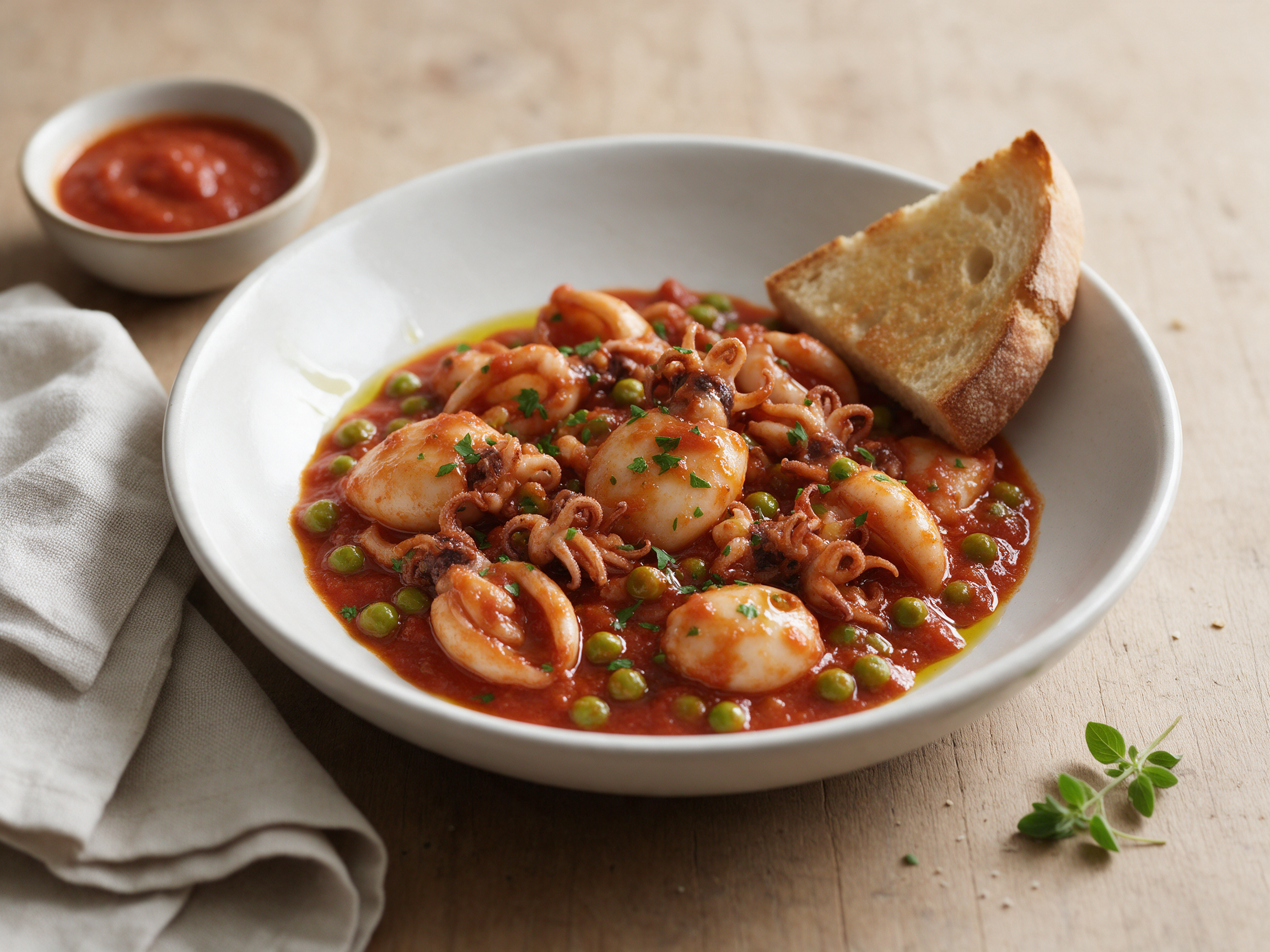
Simmered Guazzetto di Seppie with Tomatoes and Peas
Ingredients
Method
- Rinse the cuttlefish and pat it dry with paper towels. Cut the bodies into strips about 1 cm / 1/2 inch wide and 4 cm / 1.5 inches long, and halve any large tentacle clusters.
- Heat 2 tbsp of the olive oil in a 28 cm / 11-inch deep sauté pan over medium-low heat. Add the onion, celery, carrot and garlic and cook for 6 minutes, stirring, until soft and pale gold but not browned.
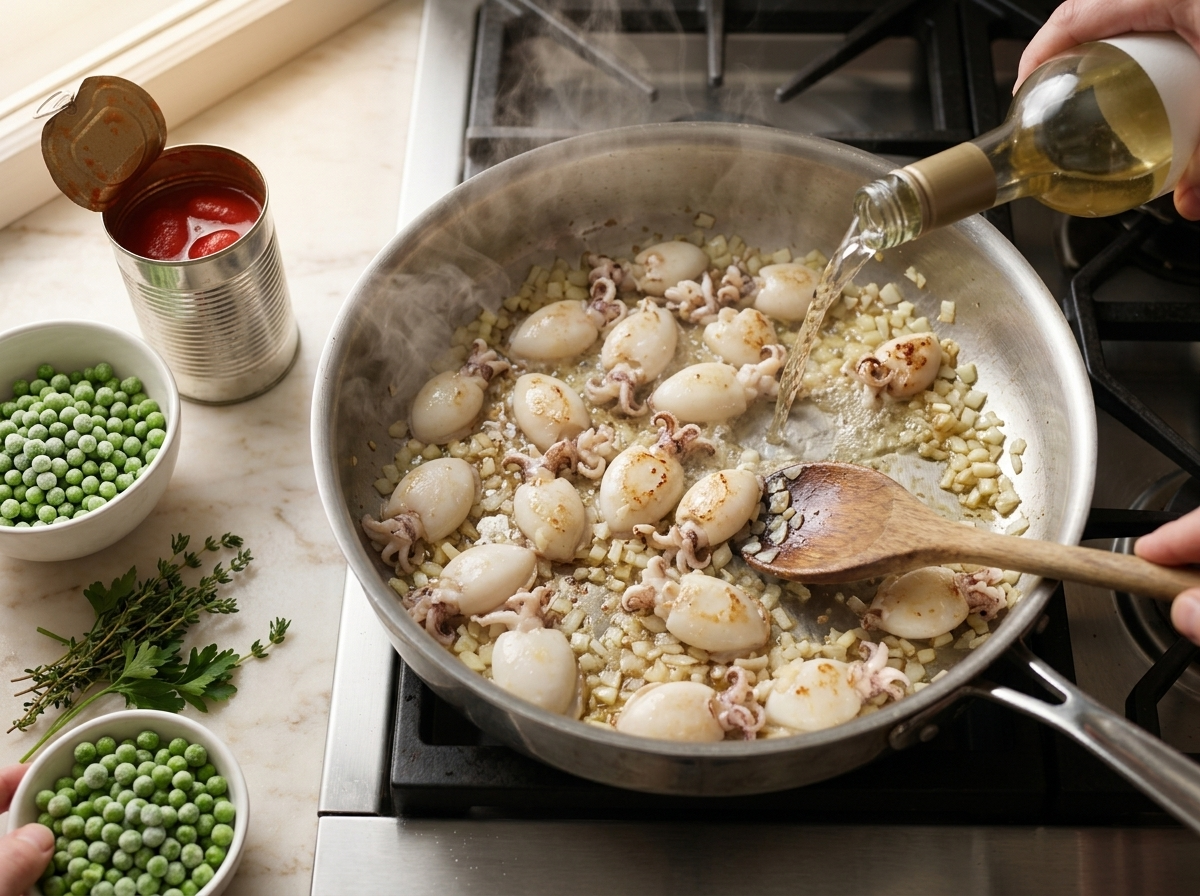
- Raise the heat to medium-high and add the cuttlefish and chili flakes. Cook for 4 minutes, stirring, until the pieces turn opaque and curl slightly, adding the tomato paste in the last minute.
- Pour in the wine and let it bubble for 2 minutes, scraping up any bits from the bottom of the pan, until the sharp smell of alcohol fades.
- Add the crushed tomatoes with their juice, the hot water, 1/2 tsp salt and the pepper. Bring to a bare simmer, then lower the heat and set the lid slightly ajar. Cook for 40 minutes, stirring every 10 minutes, until a piece of cuttlefish yields to a fork with light pressure. If the sauce looks dry before then, add a splash of hot water.
- Stir in the frozen peas straight from the freezer and simmer, uncovered, for 8 minutes until bright green and tender. Taste and adjust the salt, then stir in the parsley. Ladle into warm bowls, drizzle with the remaining 1 tbsp olive oil, and serve with polenta or toasted bread.
Notes
- Buy cleaned cuttlefish, or ask the fishmonger to remove the cuttlebone, beak and innards.
- Keep the simmer gentle, with the lid slightly ajar, for the full 40 minutes.
- Add frozen peas straight from the freezer, no thawing needed.
- The stew thickens as it cools, so loosen it with a splash of water when reheating.
Tips for Success
- Pat the cuttlefish dry with paper towels before it hits the pan so less water pools around the soffritto.
- Keep the simmer so gentle that only one or two bubbles break the surface at a time, with the lid slightly ajar.
- Check a piece at 40 minutes. It should yield to a fork with light pressure, and if it bounces back, give it 5 to 10 minutes more.
- Add the peas straight from the freezer for the final 8 minutes so they stay bright green and keep their shape.
- Taste for salt only after the peas go in, since the cuttlefish releases briny liquid and the sauce concentrates as it reduces.
Variations
- Stir in 1 or 2 cuttlefish ink sacs with the wine and skip the tomato paste for a black, sea-dark version.
- Swap the peas for 300 g chopped Swiss chard added 10 minutes before the end, in the style of seppie in inzimino.
- Add 1 tsp fennel seeds with the soffritto and finish with grated lemon zest for a brighter, more aromatic pot.
Storage and Reheating
Guazzetto di seppie keeps in an airtight container in the fridge for 3 to 4 days. Let it cool for no more than 2 hours at room temperature first, and store it with the sauce covering the cuttlefish.
Reheat it in a saucepan over low heat with 2 to 3 tbsp water for 8 to 10 minutes, until steaming. Don’t let it boil, since a hard boil tightens cuttlefish that’s already tender. The peas look duller than on day one, but the flavor holds.
Freeze portions for up to 2 months and thaw them overnight in the fridge. Reheat the same way, adding a splash of water if the sauce has thickened.
Serving Suggestions
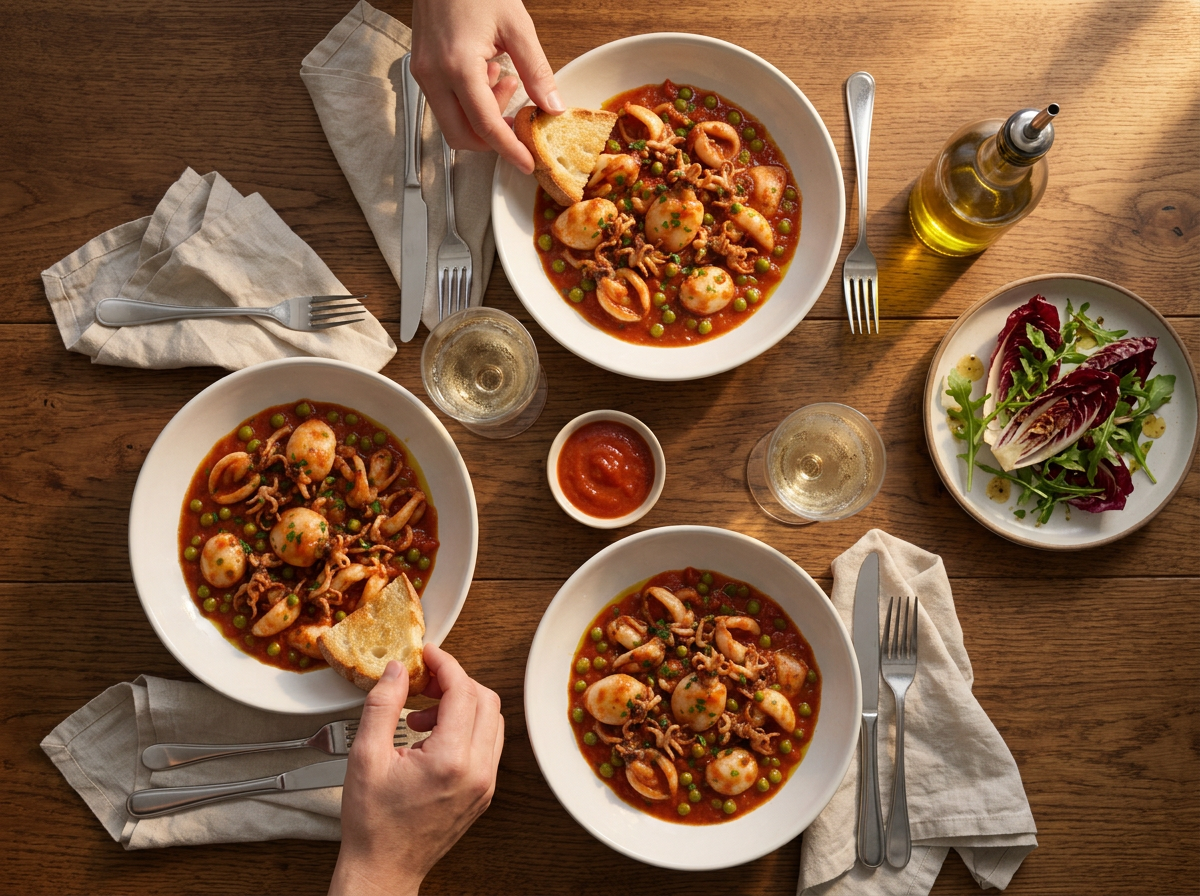
Serve the guazzetto in warm shallow bowls over a spoonful of soft polenta. The polenta soaks up the loose tomato sauce and balances the briny cuttlefish.
On a weeknight, toast thick slices of country bread, rub them with a cut garlic clove and set them on the side for scooping.
A bitter salad of radicchio or arugula with lemon and olive oil works well alongside. Pour a chilled Vermentino or Soave to match the wine in the pot.
FAQ
Why is my guazzetto di seppie still rubbery after 40 minutes?
Rubbery cuttlefish usually means the pot boiled too hard or the stew needs more time. Lower the heat until only a few bubbles break the surface, keep the lid slightly ajar, and cook 10 to 15 minutes more. A piece is ready when it yields to a fork with light pressure and no bounce.
Can I use squid instead of cuttlefish in this tomato and peas stew?
Yes, squid works, but it cooks faster. Simmer squid rings for about 30 minutes instead of 40 and test one at 25. The pieces end up softer and less meaty than cuttlefish. Use the same weight, 700 g, and add the peas at the same point.
Can I freeze guazzetto di seppie with the peas already in it?
Yes, it freezes well for up to 2 months, peas included. The cuttlefish is already tender from simmering in liquid, so it holds up, though the peas soften slightly. Cool the stew completely, freeze it in portions with sauce covering the pieces, thaw overnight in the fridge, and reheat gently over low heat.
Does guazzetto di seppie go better with polenta or bread?
Soft polenta is the best match because it soaks up the loose tomato sauce and balances the briny cuttlefish. On weeknights, thick slices of toasted country bread rubbed with a cut garlic clove work just as well. A bitter salad of radicchio or arugula with lemon cuts through the olive oil.
Is cuttlefish tomato and peas stew gluten free?
Yes, the stew itself is gluten-free, since it uses only cuttlefish, vegetables, wine, tomatoes and olive oil. Serve it with polenta or gluten-free bread and check the labels on canned tomatoes and tomato paste. Cuttlefish is a mollusc, so anyone with a shellfish allergy should check with their doctor first.
What is the difference between guazzetto di seppie and seppie in umido?
Guazzetto describes a loose, brothy stew served in a bowl, while in umido simply means stewed in sauce and is often thicker. In practice the line is blurry, and many cooks use the names interchangeably. This version stays brothy enough that you’ll want bread or polenta for the sauce.