Jump to Recipe
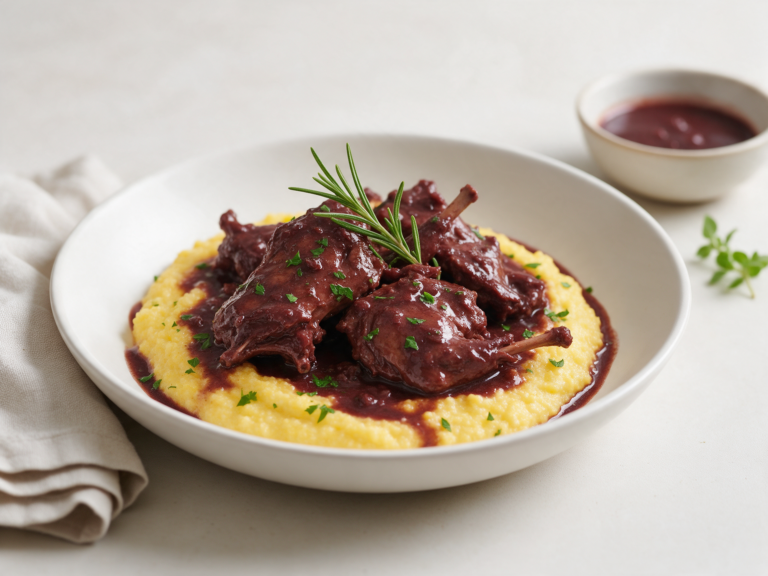
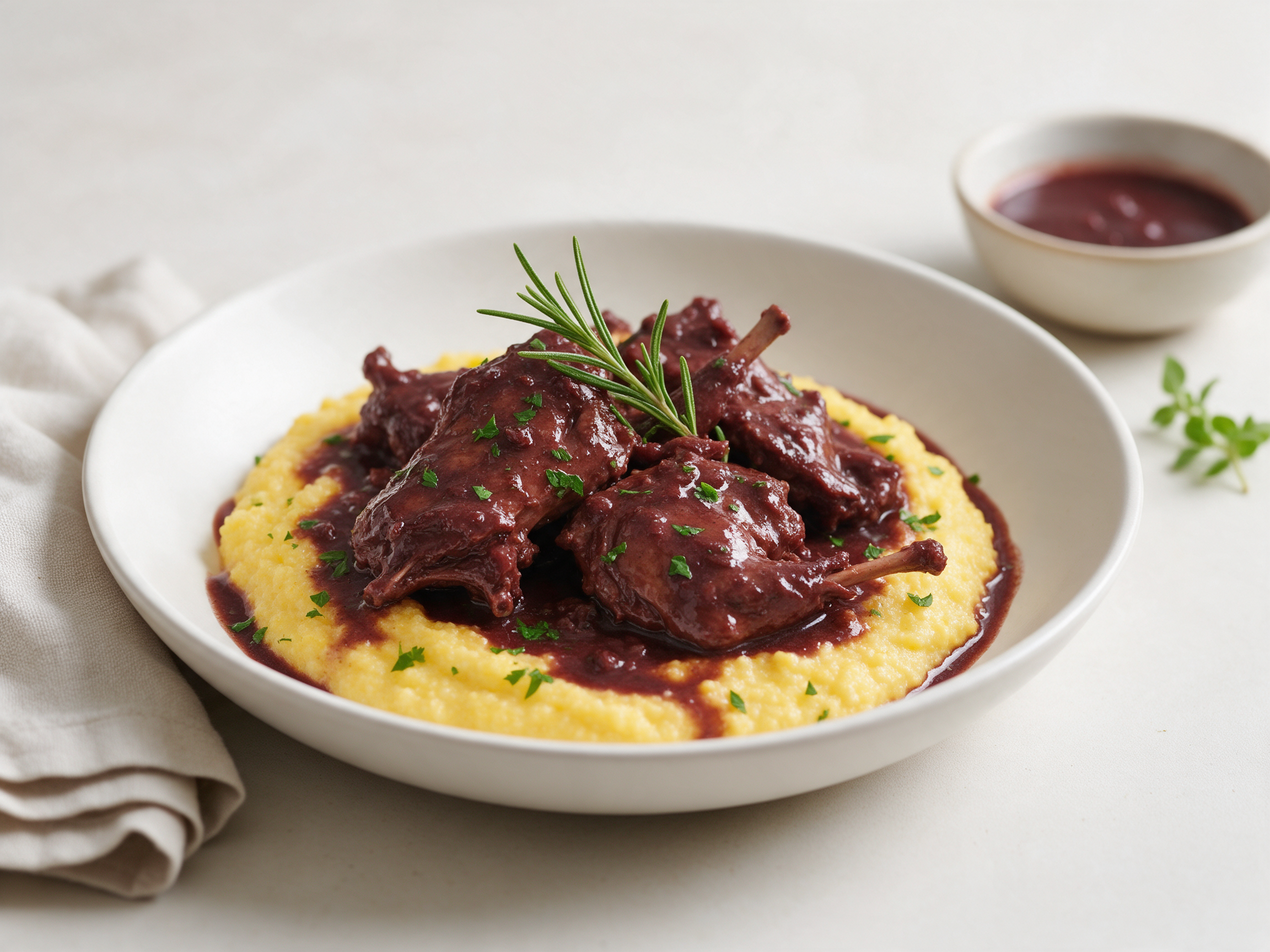
Lepre in salmi is a Northern Italian braise of hare, marinated overnight in red wine and juniper, then cooked slowly with pancetta and soffritto until the meat pulls from the bone. The sauce ends up dark and glossy, with a gentle sweetness from the reduced wine.
The marinade does the heavy work. Twelve hours in wine and aromatics softens the gamey edge and seasons the meat through, so the braise itself is mostly waiting.
One judgment call matters here. The saddle is lean and turns dry if it braises as long as the legs, so it goes into the pot after the first hour.
Make it a day ahead if you can. The sauce settles overnight, and the leftovers are even better over polenta.
Why You’ll Love This Recipe
- Overnight marinade removes the gamey edge without masking the meat
- Tastes better after a day in the fridge
- About an hour of active work, the oven does the rest
- Pantry ingredients, so the hare is the only splurge
Ingredient Notes
- hare: Ask your butcher to skin and joint it into 8 to 10 pieces. Wild hare tastes stronger than farmed, and rabbit works as a milder substitute.
- red wine: Use a dry, medium-bodied red you’d drink, such as Barbera, Chianti or a young Nebbiolo. Oaky, heavily extracted bottles turn bitter once reduced.
- juniper berries: They give the resinous note typical of game. Crush them lightly so they release their oils. If you can’t find them, add one extra rosemary sprig and a few more peppercorns.
- pancetta: Lean hare needs the fat and salt. Unsmoked bacon is a fine swap if you can’t find pancetta.
- dark chocolate: A small amount rounds off the wine’s acidity and deepens the color. Use 70% cocoa or higher. Leave it out if you prefer a sharper sauce.
Lepre in Salmi: Hare Braised in Red Wine and Juniper
Ingredients
Method
- Put the hare pieces in a 3-liter / 3-quart non-reactive lidded container with the onion, carrot, celery, garlic, juniper, bay, rosemary, cloves and peppercorns. Pour over the wine so the meat is mostly submerged, then cover and refrigerate for 12 hours, turning the pieces once halfway.
- Heat the oven to 150 C / 300 F. Lift the hare out of the marinade and pat each piece very dry with paper towels. Strain the marinade over a bowl, keeping the liquid and the solids, and pick the bay and rosemary out of the solids for later.
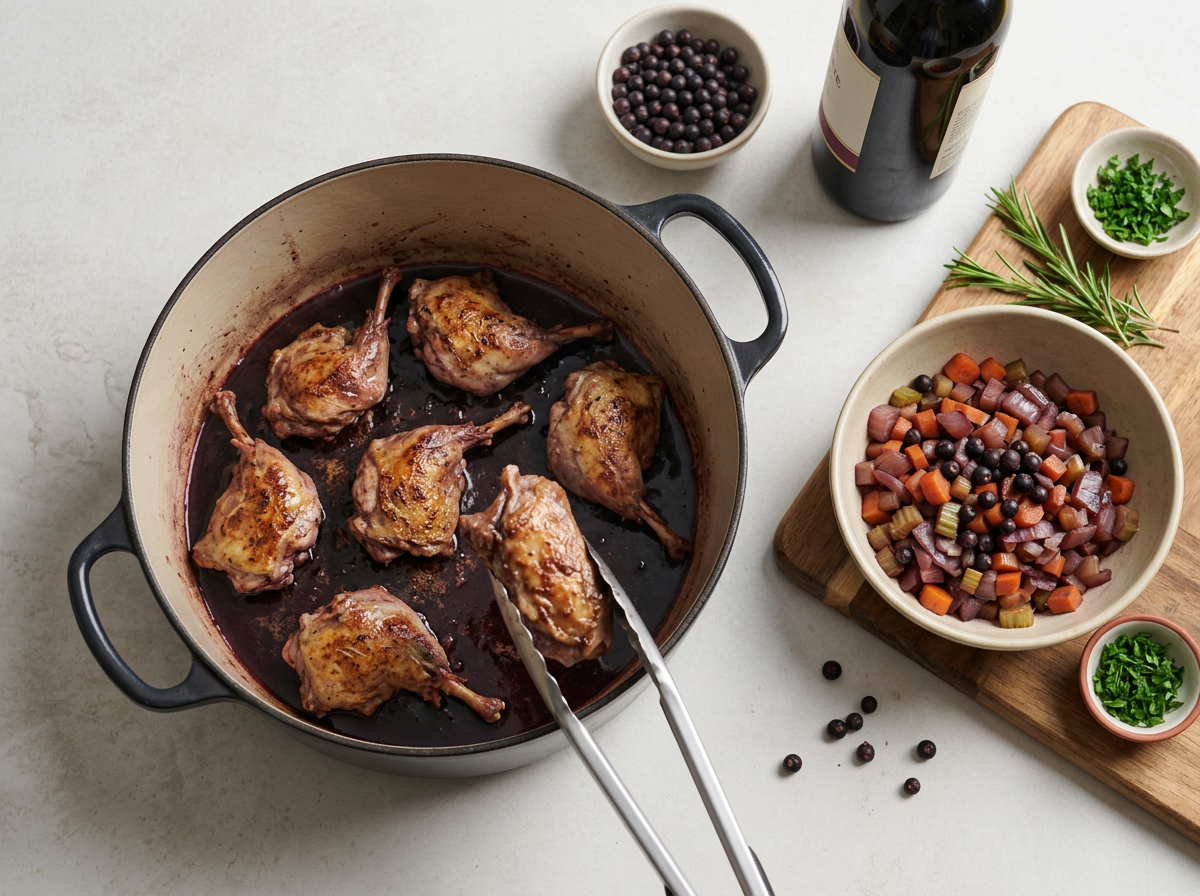
- Toss the dry hare with the flour and 1 tsp salt, shaking off the excess. Heat the olive oil and butter in a 28 cm / 11-inch (5-quart / 4.7 L) Dutch oven over medium-high heat. Brown the hind legs and forelegs first, 3 to 4 minutes per side, until deeply golden, then transfer to a plate. Brown the saddle pieces and ribs as a second batch and set them aside separately.
- Lower the heat to medium and add the pancetta. Cook for 4 minutes until the fat renders, then add the drained vegetables and cook for 6 minutes until softened and browned at the edges. Stir in the tomato paste for 1 minute.
- Pour in the strained marinade liquid, scraping up the browned bits from the base. Simmer for 4 minutes to cook off some of the alcohol, then add the stock, bay and rosemary. Return the legs and forelegs to the pot, bring to a bare simmer, cover and bake for 60 minutes.
- Add the saddle pieces and ribs, pushing them under the liquid. Cover and bake for another 60 minutes, until a fork slides into the thickest part of a leg with no resistance.
- Lift the hare onto a plate and cover with foil. Skim the fat from the surface, discard the bay and rosemary, and simmer the sauce on the stovetop over medium heat for 8 minutes until it coats the back of a spoon. Stir in the chocolate, then taste and add the remaining salt.
- Return the hare to the pot, spoon the sauce over and warm through for 2 minutes. Serve hot over polenta.
Notes
- Marinate for 12 hours. Past 24 hours the meat can turn soft at the surface.
- Brown in two batches so the pan stays hot and a crust forms.
- Add the saddle and ribs after the first hour of braising.
- Make it a day ahead and reheat gently for a deeper sauce.
Tips for Success
- Pat the marinated pieces completely dry before flouring, or they steam in the pot instead of browning.
- Brown the hare in two batches in the 28 cm Dutch oven so the pan stays hot and the crust forms.
- Add the saddle and ribs after the first hour of braising so the lean meat stays moist while the legs finish.
- Reduce the sauce uncovered after the braise, with the meat resting aside, so you control thickness without overcooking the hare.
- Taste the sauce before adding the last salt, since the reduced wine and pancetta already carry plenty.
Variations
- Swap the hare for one 1.4 kg rabbit, marinate 8 hours, and shorten the oven time to 90 minutes in total.
- Add 15 g dried porcini soaked in warm water, and pour the strained soaking liquid in with the stock.
- Replace 150 ml of the stock with water and add two strips of orange peel for a lighter, brighter sauce.
Storage and Reheating
Lepre in salmi keeps in the fridge for 3 to 4 days in an airtight container, with the meat submerged in sauce. Cool it for no more than 2 hours at room temperature before refrigerating.
Reheat it gently in a covered pot over low heat for 15 to 20 minutes, adding a splash of stock or water if the sauce has tightened. You can also warm it covered in a 150 C / 300 F oven for 25 minutes.
It freezes for up to 3 months. Portion it with plenty of sauce, thaw overnight in the fridge, and reheat the same way.
Serving Suggestions
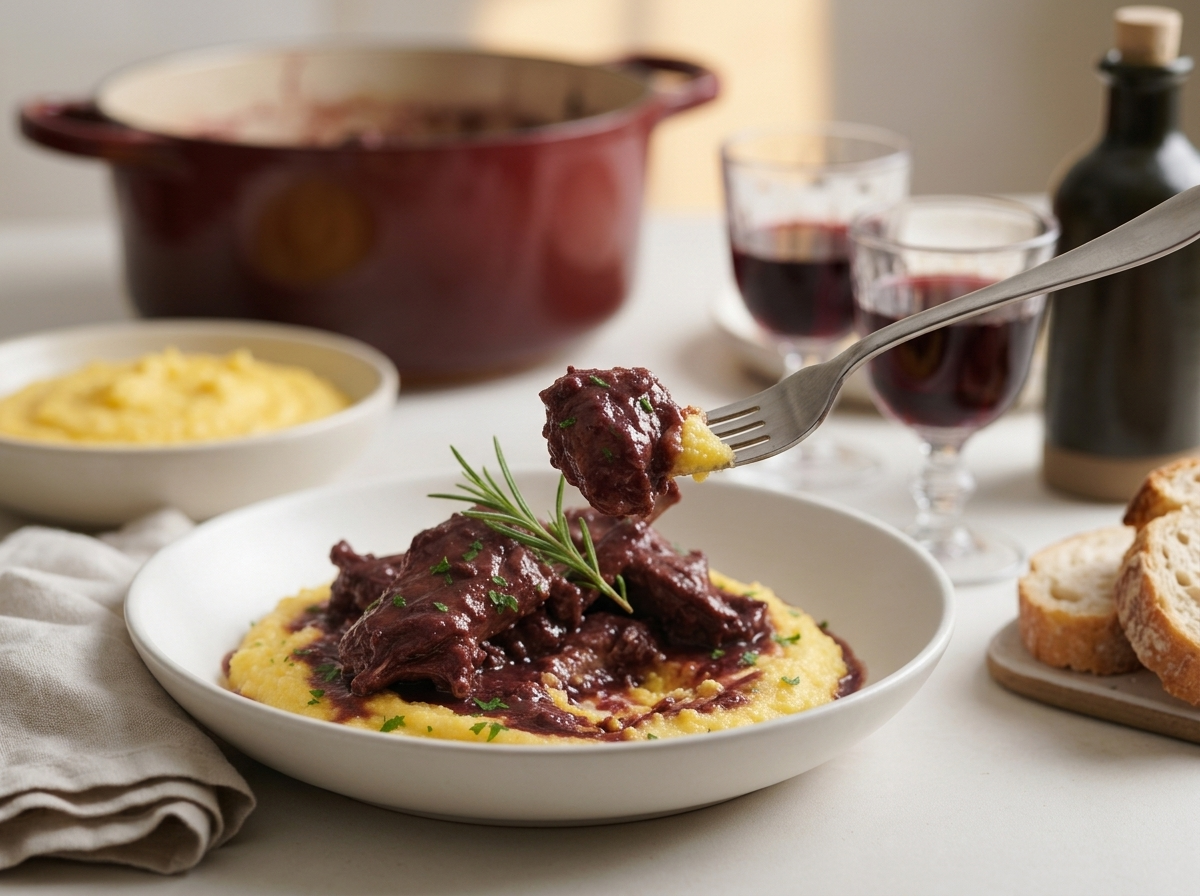
Spoon lepre in salmi over soft polenta, which catches the sauce and balances the richness of the wine. Let each person pull the meat off the bone at the table.
For a pasta course, shred the meat off the bones first and toss it with the sauce and wide pappardelle. Mashed potatoes and braised red cabbage also work, and the cabbage adds a sweet-sour edge.
Pour the same red you cooked with, a Barbera or a Nebbiolo. A handful of chopped parsley on top is enough garnish.
FAQ
Why is my hare dry and stringy after braising?
Dry hare usually means the saddle cooked as long as the legs, or the oven ran hotter than 150 C / 300 F. The saddle is lean and needs only about 60 minutes in the sauce. Legs and forelegs take the full 2 hours. Check by pressing a fork into the thickest part of a leg, it should slide in with no resistance.
Can I use rabbit instead of hare for lepre in salmi?
Yes, use one 1.4 kg rabbit cut into 8 pieces. Rabbit is milder and leaner, so marinate for 8 hours and shorten the oven time to 90 minutes, adding the saddle after the first 45 minutes. The sauce will taste lighter and less gamey than the hare version.
Can I freeze lepre in salmi, and does the sauce split?
Yes, it freezes well for up to 3 months. The flour-thickened sauce holds together, and the meat stays moist because it’s covered in liquid. Cool it completely, freeze in portions with sauce covering the meat, then thaw overnight in the fridge and reheat gently, covered, with a splash of stock.
What goes with lepre in salmi besides polenta?
Pappardelle, mashed potatoes, or braised red cabbage all work. Pasta turns the sauce into a ragu-style first course, while cabbage adds a sweet-sour edge against the rich wine. Pour the same red you cooked with, a Barbera or Nebbiolo, at the table.
What is the difference between lepre in salmi and French civet de lièvre?
Lepre in salmi is the Italian cousin of French civet de lièvre. Both marinate hare in red wine, but civet is traditionally thickened with the animal’s blood. This version thickens with a light flour dusting and reduction, and I finish it with a little dark chocolate for depth.
Is lepre in salmi gluten free, and can I make it dairy free?
Not as written, because 30 g of flour dusts the hare. Skip the flour and reduce the sauce 10 minutes longer, or stir 1 tbsp cornstarch into cold stock. For dairy free, replace the 30 g butter with 2 more tbsp olive oil. Check that your stock is gluten free too.