
Jump to Recipe
Krumiri di Casale are curved, C-shaped cookies from Casale Monferrato in Piedmont, made with fine cornmeal and butter for a sandy, crumbly bite. They’re pale on the surface with barely golden edges, and the curve isn’t just decoration. It comes from piping the dough by hand before it has a chance to soften.
The traditional trick is boiling a couple of eggs, sieving the cooked yolks into the butter and sugar, and saving the raw yolk for the dough. That step gives krumiri their dry, short texture instead of a soft, cakey one. Skip it and you’ll still get a good cookie, just closer to shortbread.
I make these when I want something to dunk in coffee or vin santo without it turning to mush halfway down. The dough pipes best when it’s soft but not warm, so I chill it for 20 minutes before shaping.
One thing that trips people up: if the dough is too soft when it hits the oven, the cookies spread flat instead of holding their curve. Chilled dough and a quick hand at the piping bag fix that.
Why You’ll Love This Recipe
- Crumbly, sandy texture comes from sieved hard-boiled egg yolks
- Keeps two weeks in a tin without going stale
- No special equipment beyond a piping bag and star tip
- A traditional Piedmont shape that’s simpler than it looks
Ingredient Notes
- 00 flour: Gives the dough enough structure to hold the piped curve. All-purpose flour works as a straight substitute.
- fine cornmeal: Use fine cornmeal, sometimes labeled fioretto, not coarse polenta. Coarse grains make the dough gritty and hard to pipe.
- unsalted butter: Soften at room temperature before creaming. Cold butter won’t cream smoothly with the sugar and leaves lumps in the dough.
- hard-boiled egg yolks: The traditional texture trick. Push them through a fine-mesh sieve or a potato ricer while still warm for the finest crumb.
- vanilla extract: Vanilla bean seeds work if you have a pod on hand. Vanilla sugar is a common Italian substitute if that’s what’s in your pantry.
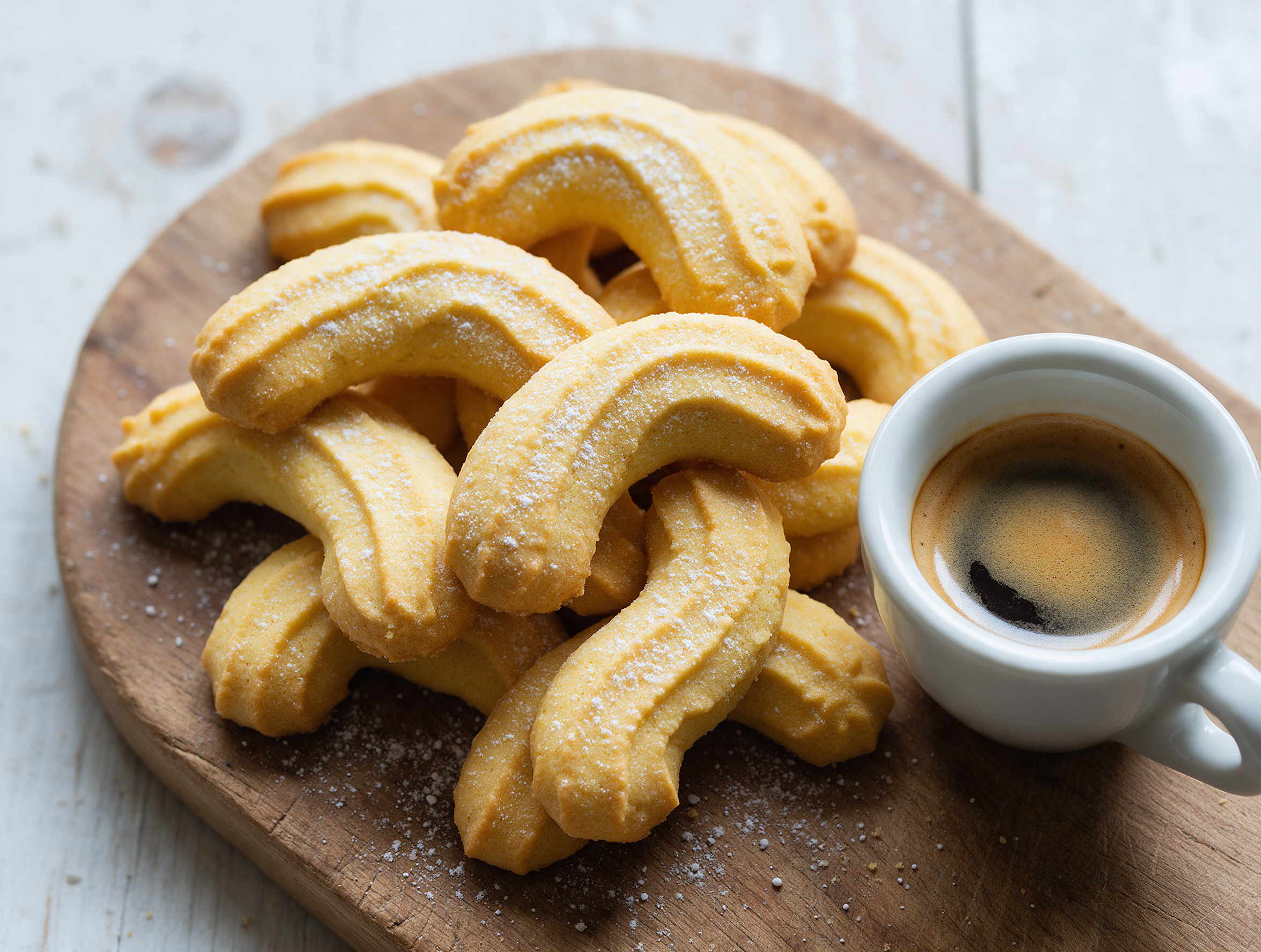
Krumiri di Casale: Curved Italian Cornmeal Cookies
Ingredients
Method
- Boil 2 eggs in a small saucepan of water for 9 to 10 minutes for firm yolks. Cool under cold water, peel, and separate yolks from whites, saving the whites for another use.
- Push the cooked yolks through a fine-mesh sieve into a small bowl while still warm, breaking them into a fine, sandy crumb.
- Heat the oven to 170 C / 340 F and line a 33 x 46 cm / 13 x 18 inch sheet pan with parchment.
- In a large bowl, beat the softened butter and sugar together for 2 to 3 minutes until pale and light.
- Add the sieved hard-boiled yolks, the raw egg yolk, vanilla, and salt. Beat until smooth and no streaks remain.
- Sift the flour and cornmeal together, then fold into the butter mixture in two additions until a soft, cohesive dough forms.
- Cover and chill the dough for 20 minutes, until it's firm enough to hold shape but still soft enough to pipe.
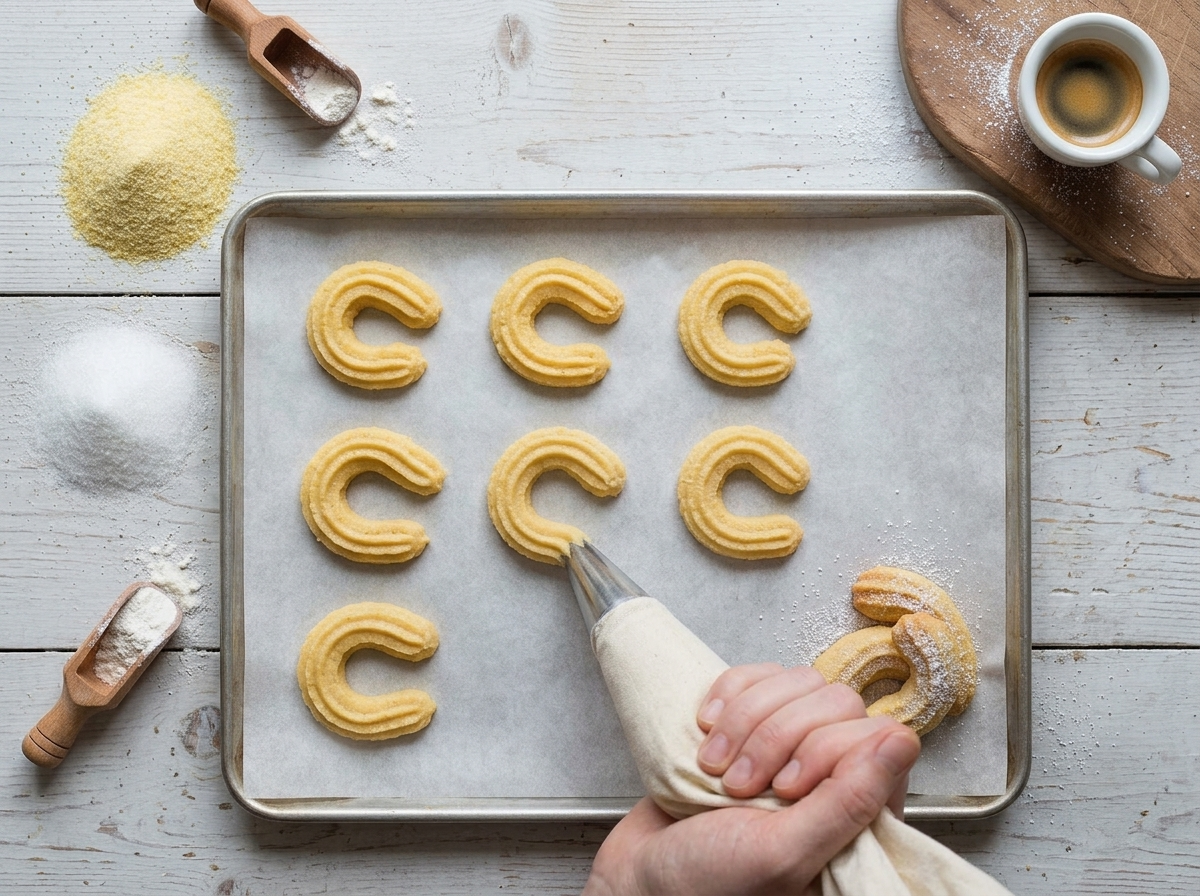
- Spoon the dough into a piping bag fitted with a large star tip. Pipe 8 cm strips onto the sheet pan, curving each into a C shape and spacing them 3 cm apart.
- Bake for 13 to 15 minutes, until the edges are light gold and the centers stay pale.
- Cool on the pan for 5 minutes, then transfer to a wire rack to cool completely. Dust with powdered sugar once fully cool, if using.
Notes
- Sieve yolks while warm for the finest, most even crumb.
- Chill dough exactly 20 minutes, not longer, or it stiffens too much to pipe.
- Use a large closed star tip for the classic ridged surface.
- Pull cookies at first sign of gold at the edges, not the center.
Tips for Success
- Sieve the hard-boiled yolks while they’re still warm so they break into fine crumbs instead of clumps.
- Chill the dough for 20 minutes before piping so it holds its ridged shape once it hits the oven.
- Pipe each cookie in one continuous motion directly onto the lined sheet pan to keep the curve even.
- Watch the edges, not the centers. Pull the cookies when the edges turn light gold, around 13 to 15 minutes.
- Let the cookies cool fully on the pan before moving them. Warm krumiri break easily at the curve.
Variations
- Swap half the cornmeal for finely ground almond flour for a nuttier, slightly softer krumiro.
- Dip one end of each cooled cookie in melted dark chocolate and let it set on parchment.
- Add finely grated lemon zest to the dough for a brighter, less sweet finish.
Storage and Reheating
Krumiri di Casale keep well because they’re baked dry with no fresh egg or cream in the finished cookie. Store them in an airtight tin at room temperature for up to 2 weeks.
Layer with parchment if stacking, since the ridged surface can chip against other cookies. Keep the tin away from humidity or the cookies soften and lose their crumbly bite.
The baked cookies also freeze well for up to 2 months in a sealed container. Thaw at room temperature for about 20 minutes before serving. No reheating needed since these are meant to stay dry and crisp, not warmed through.
Serving Suggestions
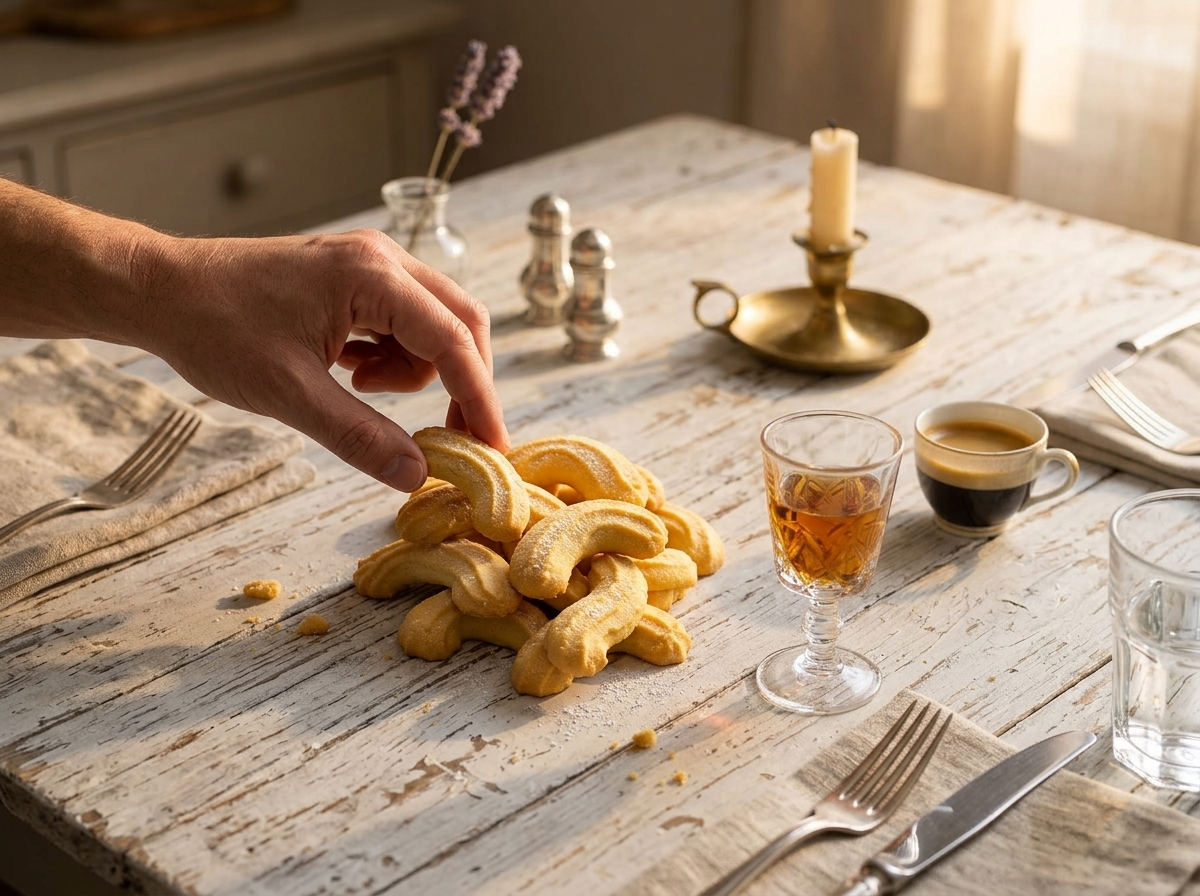
Krumiri di Casale are made for dunking. Serve them alongside espresso, a milky cappuccino, or a small glass of vin santo after dinner.
For a simple dessert plate, set a few cookies next to soft mascarpone or a bowl of stewed fruit. The plain, corn-forward flavor doesn’t compete with much, which is why it works well with other flavors.
They also travel well in a gift tin lined with parchment, since they don’t need refrigeration and hold their shape for weeks.
FAQ
Why did my krumiri di Casale spread flat instead of holding their curve?
This usually means the dough was too warm or too soft when piped. Chill the dough for at least 20 minutes before shaping, and work quickly once it’s piped so the butter doesn’t soften back down before it hits the oven.
Can I use regular polenta instead of fine cornmeal for krumiri?
Not really, coarse polenta makes the dough gritty and hard to push through a piping tip. Look for fine cornmeal, sometimes labeled fioretto or corn flour, which gives the dough a smoother texture and the classic sandy bite once baked.
Can I make the krumiri dough ahead of time?
Yes, the dough keeps covered in the fridge for up to 2 days. Let it sit at room temperature for 10 to 15 minutes before piping, since cold dough straight from the fridge cracks instead of holding a smooth curve.
What goes well with krumiri di Casale besides coffee?
Vin santo or a glass of moscato pairs well, since the cookies are dry enough to dunk without falling apart. A small pour of zabaione or a scoop of vanilla gelato also works if you want something closer to dessert.
Are krumiri di Casale gluten free?
No, the classic recipe uses wheat flour along with cornmeal, so it isn’t gluten free as written. Swapping in a 1:1 gluten-free flour blend for the wheat flour usually works, though the dough may need slightly less chilling time to pipe well.
What’s the difference between krumiri and paste di meliga?
Both are Piedmontese cornmeal cookies, but paste di meliga are usually flat, ridged rounds pressed with a fork, while krumiri are piped into a curved C shape and rely on sieved hard-boiled egg yolks for a drier, sandier crumb.