Jump to Recipe
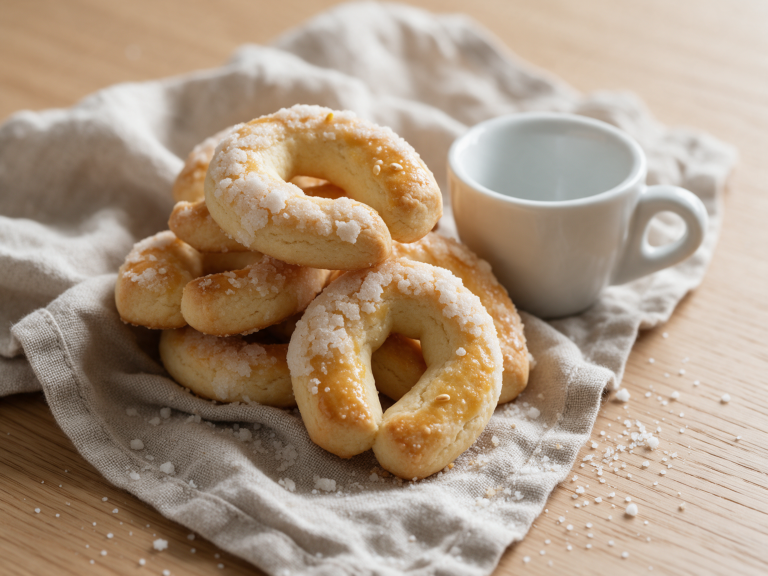
Torcetti piemontesi are sugar glazed butter cookies from Piedmont, shaped by hand into small loops from a lightly yeasted dough. The name means “little twists,” and the best-known versions come from Agliano Terme in the Asti hills.
A brush of egg white and a press into granulated sugar gives each cookie a thin, crackly crust. Inside, the crumb is short and dry in the good way, and it tastes mostly of butter. They’re built for dunking in coffee.
The dough rests for 45 minutes, so the hands-on work is about 30 minutes. You bake two trays at 170 C / 340 F for 20 minutes and end up with about 30 cookies.
Pull them when the bottoms are light gold, not when the tops color. Pale tops are correct here. A browned top means the sugar has gone bitter.
Why You’ll Love This Recipe
- Pantry ingredients and one bowl, no special molds
- Crackly sugar crust over a short, buttery crumb
- Keeps in a tin for up to two weeks
- Shaping is simple and easy for kids to help with
Ingredient Notes
- All-purpose flour: Italian 00 or plain all-purpose both work. Avoid bread flour, which makes the crumb chewy instead of short.
- Unsalted butter: Use real butter, softened for about 20 minutes. It should dent under a finger without looking greasy or shiny.
- Instant yeast: A small amount gives the dough a dry, slightly snappy bite. Swap in 9 g fresh yeast or 1/2 tsp baking powder if that’s what you have.
- Granulated sugar for coating: Fine granulated sugar gives a thin glaze. Coarse pearl sugar works too and gives a crunchier, more visible crust.
- Eggs: One whole egg and one yolk go in the dough. The second egg’s white becomes the glaze that holds the sugar on.
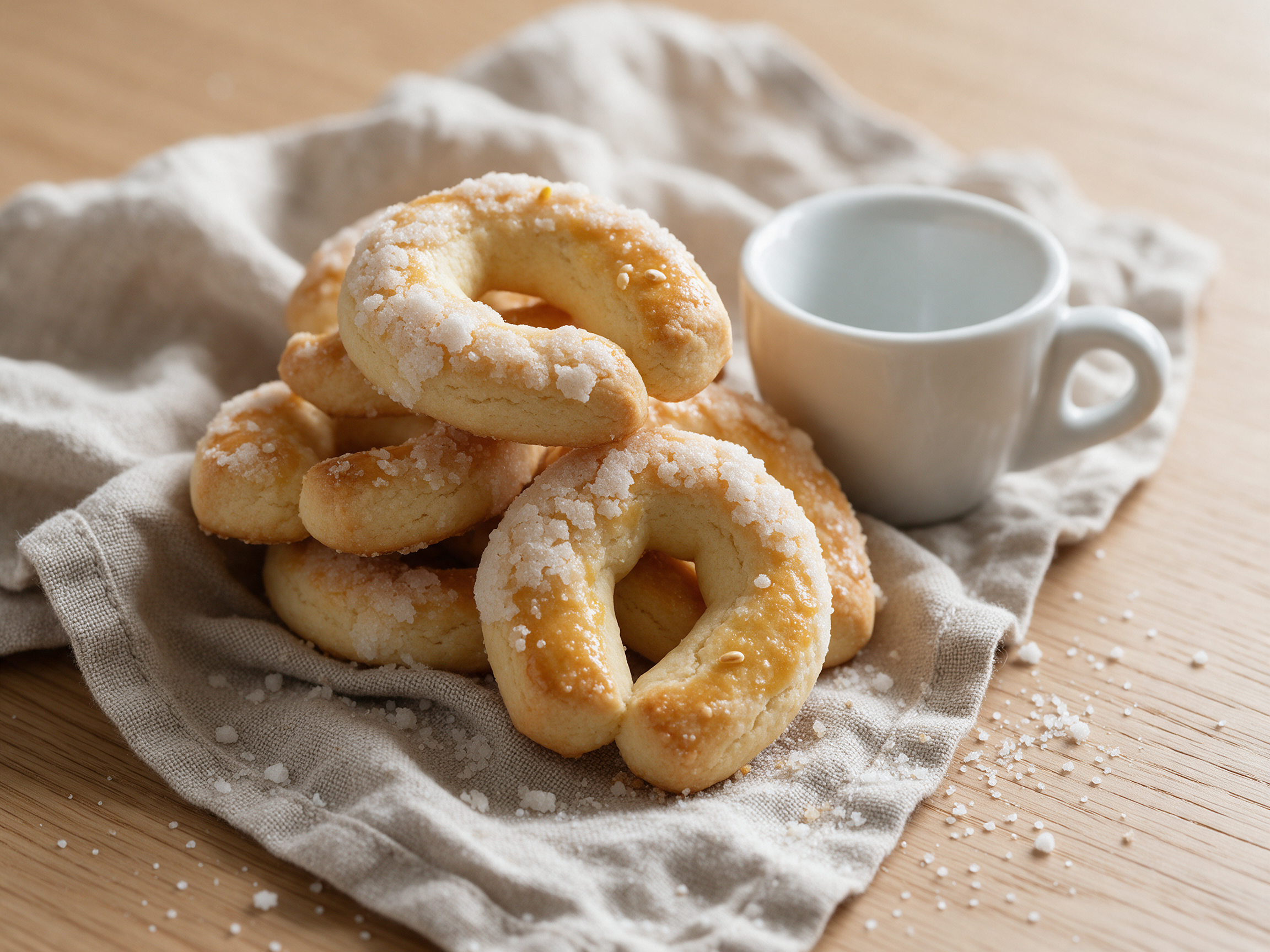
Torcetti Piemontesi: Crisp Sugar Glazed Butter Cookies
Ingredients
Method
- In a 3-quart / 3 L bowl, beat the softened butter and 60 g sugar with a hand mixer for 2 minutes, until pale and fluffy. Beat in the whole egg, egg yolk, milk, and lemon zest. The mixture may look slightly curdled, which is fine.
- Whisk the flour, yeast, and salt together, then add to the bowl and mix on low until a soft dough forms. Knead on the counter for 1 minute until smooth. Cover and rest at room temperature for 45 minutes, until the dough feels relaxed and slightly puffy.
- Heat the oven to 170 C / 340 F and line two 33 x 46 cm / 13 x 18 inch sheet pans with parchment. Cut the dough into 20 g pieces, about 30 in all, and keep them under a towel.
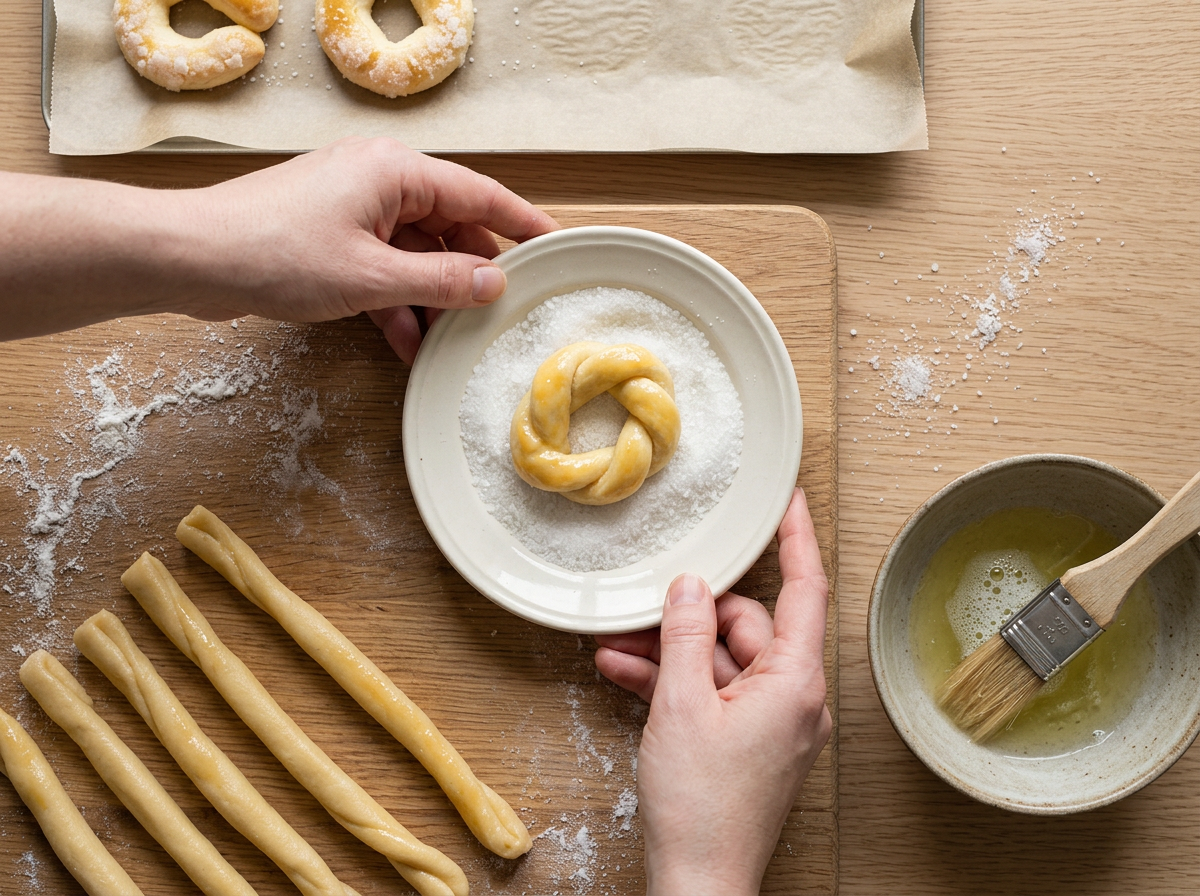
- Roll each piece into a rope about 20 cm long and 1 cm thick. Bend it into a loop, cross the ends, and press them together lightly.
- Spread 80 g sugar on a plate and lightly whisk the egg white in a shallow bowl. Brush each loop with a thin coat of egg white, then press it into the sugar to coat. Arrange 15 loops per tray, 3 cm apart.
- Bake both trays for 20 minutes, swapping shelves and rotating the pans at the 10-minute mark. They're done when the bottoms are light gold and the sugar crust looks dry and set. The tops stay pale.
- Cool on the pans for 5 minutes, then move to a wire rack for 10 minutes more, until fully crisp.
Notes
- Cover the dough pieces with a towel while you shape, so they don't form a dry skin.
- Space loops 3 cm apart on the tray because they puff slightly in the oven.
- Pale tops are normal, so judge doneness by light gold bottoms and a dry sugar crust.
- Cool the cookies for a full 15 minutes before tinning them.
Tips for Success
- Weigh each dough piece at 20 g on a kitchen scale so every loop finishes baking in the same 20 minutes.
- Soften the butter for about 20 minutes at room temperature, and stop when it dents easily but still holds its shape.
- Brush the egg white on lightly, since pooled white makes the sugar clump and slide off during baking.
- Press the loops into the sugar instead of rolling them, so the shape stays round and the crossed ends stay sealed.
- Swap and rotate the two sheet pans at the 10-minute mark, because the lower rack browns bottoms faster.
Variations
- Swap the lemon zest for orange zest and add 1/2 tsp vanilla paste for a softer citrus note.
- Press the loops into coarse pearl sugar instead of granulated for a crunchier crust with visible grains.
- Replace the milk with 30 ml of Moscato d’Asti for a faint grape note. The dough handles exactly the same.
Storage and Reheating
Torcetti piemontesi keep in an airtight tin at room temperature for 10 to 14 days. Layer them with parchment so the sugar crust doesn’t scuff. Cool them fully first, because trapped steam softens the glaze.
Baked cookies also freeze for up to 2 months in a rigid container. Thaw them uncovered at room temperature for 30 minutes.
If a cookie softens in humid weather, set it on a sheet pan in a 150 C / 300 F oven for 5 minutes. Then cool it on a wire rack for 10 minutes. It crisps back up as it cools.
Serving Suggestions
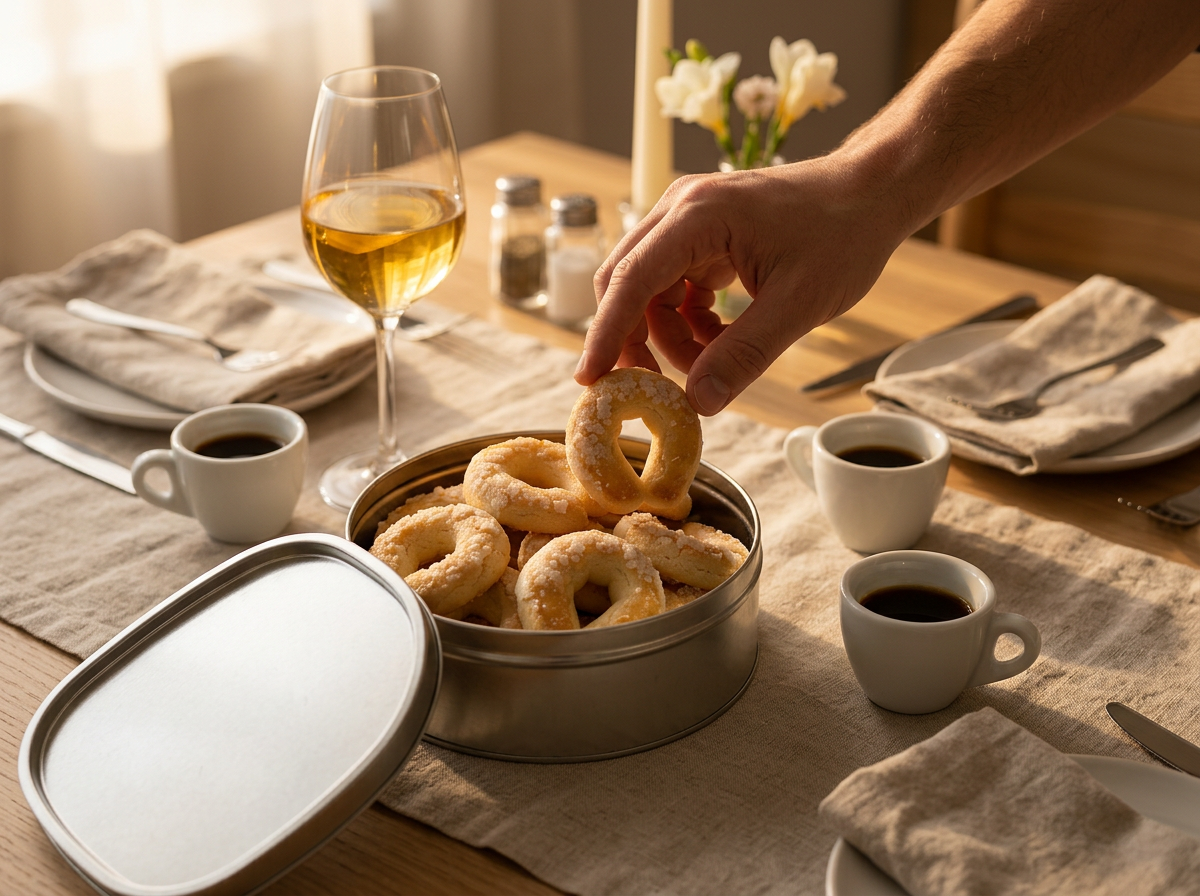
Serve torcetti with espresso, a caffe macchiato, or a small glass of Moscato d’Asti. The cookies are dry enough to dunk without falling apart, which is half the point.
They also sit well next to a bowl of zabaglione or a scoop of hazelnut gelato, where the crisp crust gives some contrast.
For gifting, stack them in a tin with parchment between layers. They travel well and stay crisp for the full 10 to 14 days.
FAQ
Why are my torcetti piemontesi soft instead of crisp?
They were pulled too early or tinned while still warm. The bottoms should be light gold and the sugar crust dry to the touch before you take them out. Cool the cookies fully on a rack, about 15 minutes, then store them, because trapped steam softens the crust overnight.
Can I use fresh yeast or baking powder instead of instant yeast in torcetti?
Yes. Use 9 g crumbled fresh yeast dissolved in lukewarm milk, or swap in 1/2 tsp baking powder. Yeast gives a drier, snappier bite, while baking powder gives a more tender, shortbread-like one. Keep the 45-minute rest either way so the dough relaxes for shaping.
Can I freeze torcetti piemontesi, and how do I thaw them?
Yes, baked torcetti freeze for up to 2 months in a rigid container with parchment between layers. Thaw them uncovered at room temperature for 30 minutes. If the glaze feels slightly soft, crisp them in a 150 C / 300 F oven for 5 minutes and cool on a rack.
What goes well with torcetti piemontesi besides coffee?
Moscato d’Asti is the classic match, since its light sweetness suits the dry, buttery crumb. They also work next to zabaglione or hazelnut gelato. The cookies are sturdy enough to dunk, and two cookies per person is the portion used in this recipe.
How are torcetti different from biscotti?
Torcetti are shaped as individual loops and baked once at 170 C / 340 F, while biscotti are baked as a log, sliced, and baked again. Torcetti also carry a sugar glaze and use a lightly yeasted butter dough, so the crumb is short and tender rather than hard.
Can I make torcetti piemontesi dairy free?
Yes, replace the butter with 150 g firm plant-based butter sold in a block, and the milk with oat or soy milk. Avoid tub spreads, which carry extra water and make the ropes sticky. The flavor is less buttery, and the cookies still contain eggs and gluten.