Jump to Recipe
Mulum Bormino con farina di castagne e panna is a silky Alpine-style soup built on chestnut flour, a gentle soffritto, and a splash of cream. It takes 55 minutes and one pot, with croutons and sage butter on top.
The name points to Bormio in the Lombard Alps. I can’t tie this to one fixed traditional recipe, so treat it as my home version, written for weeknights.
Chestnut flour tastes sweet and nutty, and it does the thickening for you. The texture, not the cream, defines the result. Cream only softens the edges.
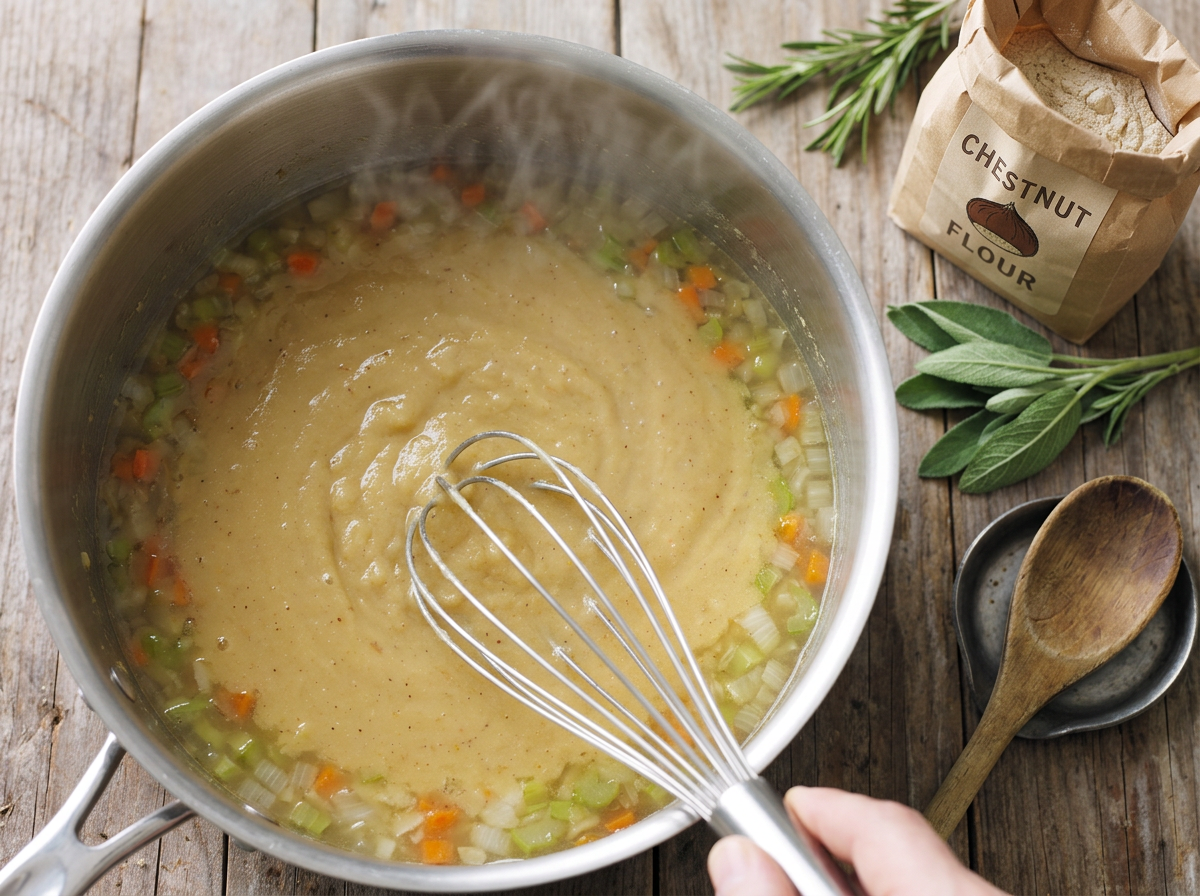
One judgment call matters here: chestnut flour clumps the moment it hits hot liquid. Whisk it into cold broth first, and blend at the end if a few lumps remain.
Why You’ll Love This Recipe
- Chestnut flour thickens the soup, so no roux or potato
- One pot, 55 minutes, mostly hands-off simmering
- Reheats well with a splash of broth to loosen it
- Gluten-free base, with croutons you can swap or skip
Ingredient Notes
- chestnut flour (farina di castagne): Look for a pale, fine flour that smells sweet. Old flour turns bitter, so check the date. There’s no good substitute, since chickpea or wheat flour changes the flavor completely.
- heavy cream (panna): Panna da cucina or US heavy cream both work. Whole milk gives a lighter soup, and mascarpone (2 tbsp) adds extra body.
- vegetable broth: Use low-sodium broth or a homemade one so you control the salt. Chicken broth works if you don’t need it vegetarian.
- sage and rosemary: Rosemary perfumes the pot and sage is for the butter. If you only have thyme, use 4 sprigs in the pot and skip the sage leaves.
- rustic bread: Day-old bread cubes toast faster and stay crisp longer. Use gluten-free bread to keep the whole bowl gluten-free.

Creamy Mulum Bormino with Chestnut Flour and Sage Butter
Ingredients
Method
- Whisk the chestnut flour with 300 ml of the cold broth in a bowl until no dry pockets remain. Melt 40 g butter in a 4-quart / 3.8 L heavy-bottomed pot over medium-low heat. Add the onion, celery, carrot, and 1/4 tsp of the salt, and cook for 8 to 10 minutes, stirring, until soft and pale but not browned.
- Pour the remaining 900 ml broth into the pot and add the bay leaf and rosemary. Bring to a gentle simmer, then whisk in the flour mixture and keep whisking for 2 to 3 minutes as it thickens. Lower the heat and simmer for 20 minutes, stirring every few minutes, until the soup tastes sweet and nutty with no chalky note and coats the back of a spoon.
- While the soup simmers, heat the olive oil in a 20 cm / 8-inch skillet over medium heat. Toast the bread cubes for 6 to 8 minutes, turning often, until golden, then tip them onto a plate. Wipe the skillet, melt 20 g butter over medium-low heat, and fry the sage leaves for 1 to 2 minutes until crisp and the butter smells nutty.
- Remove the bay leaf and rosemary from the pot. Blend the soup with an immersion blender until smooth, or work in batches in a countertop blender with the lid vented. Stir in the cream, nutmeg, remaining salt, and pepper, and warm for 3 to 4 minutes without boiling. Taste and adjust the salt, and thin with a splash of warm broth or water if it doesn't pour in a ribbon.
- Ladle the soup into warm bowls. Spoon over the sage butter, add the crisp sage leaves, and scatter the croutons on top at the table.
Notes
- Always whisk chestnut flour into cold broth first to prevent clumps.
- Use a 4-quart pot so the soup has room to bubble without scorching.
- Blend the soup before adding cream for the smoothest texture.
- Thin leftovers with broth, since the soup thickens as it rests.
- Add croutons at the table and eat within 5 minutes.
Tips for Success
- Whisk the chestnut flour into cold broth before it meets heat, then keep whisking for the first 2 to 3 minutes of simmering.
- Cook the soffritto 8 to 10 minutes over medium-low until soft and pale, because browning adds a bitter edge that fights the chestnut’s sweetness.
- Taste the soup after 20 minutes of simmering and keep cooking if it still feels chalky on the tongue.
- Stir in the cream off a hard boil and warm it only 3 to 4 minutes so it stays smooth.
- Season in two rounds, once with the soffritto and once at the end, since broth saltiness varies a lot between brands.
Variations
- Fold in 150 g of sauteed chestnut or cremini mushrooms after blending for an earthier bowl with more texture.
- Make it dairy-free by using 150 ml unsweetened oat cooking cream and swapping both butters for olive oil.
- Top with 60 g of crisped pancetta cubes instead of croutons for a salty contrast, which makes it no longer vegetarian.
Storage and Reheating
Mulum Bormino keeps in the fridge for 3 to 4 days in an airtight container. Cool it for 30 minutes at room temperature first, then refrigerate.
Reheat in a saucepan over low heat, stirring often, and do not let it boil. Chestnut flour keeps absorbing liquid as it sits, so whisk in 50 to 100 ml of broth or water until it pours in a ribbon again.
To freeze, portion off the soup before stirring in the cream and freeze for up to 3 months. Thaw overnight in the fridge, reheat, then add 2 tbsp cream per portion. Make the croutons and sage butter fresh each time, or keep spare croutons in an airtight container for up to 2 days.
Serving Suggestions
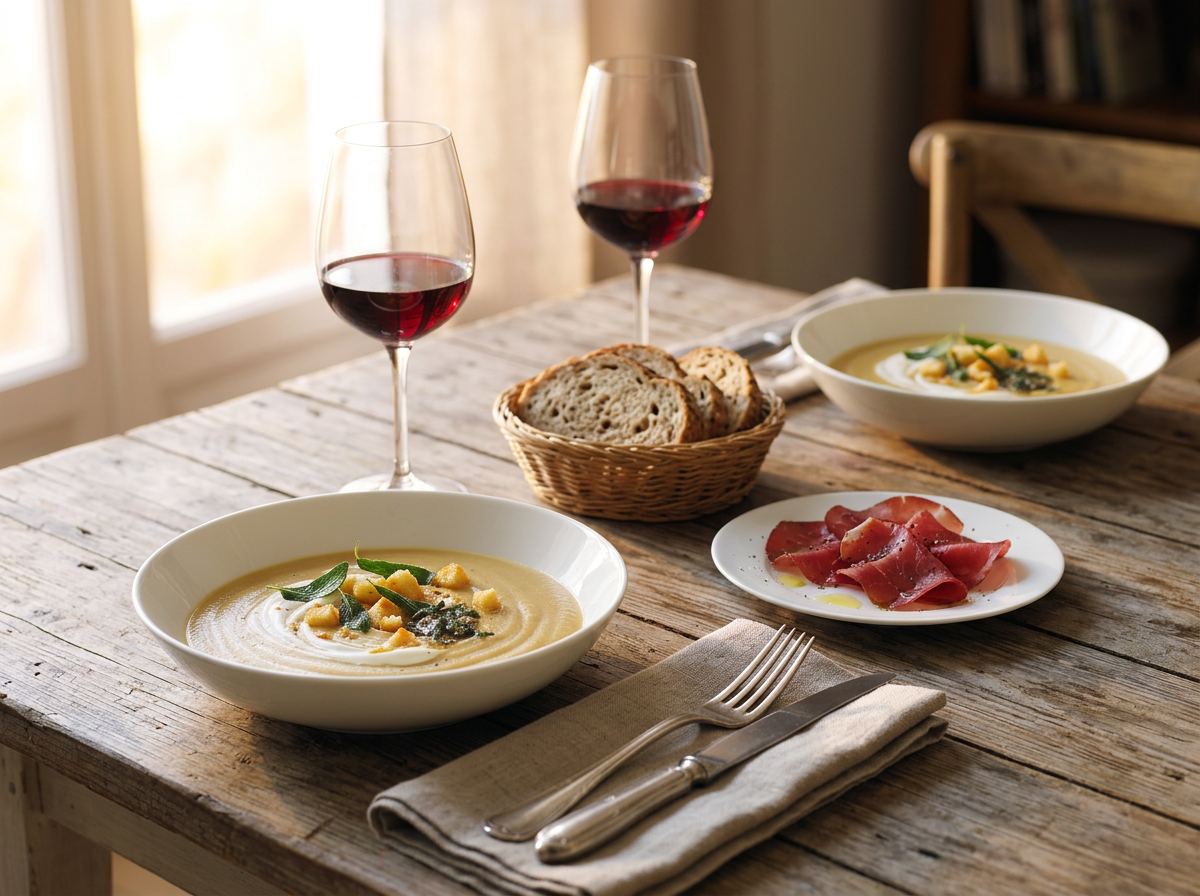
Ladle the soup into warm bowls and top with croutons, crisp sage leaves, and a spoonful of the sage butter, as on polenta. Add the croutons at the table and eat within 5 minutes, while they’re still crisp.
A salad of radicchio or arugula with lemon and olive oil cuts the sweetness well. Thin slices of bresaola on the side suit the Alpine theme.
For a drink, a light red such as Rosso di Valtellina matches the nutty flavor without overpowering it.
FAQ
How do I know when the chestnut flour in Mulum Bormino is cooked?
Taste it after 20 minutes of simmering. Cooked chestnut flour tastes sweet and nutty with no chalky or raw-starch note, and the soup coats the back of a spoon. If it still tastes dusty, keep simmering on low for 5 more minutes, stirring so the bottom doesn’t catch.
Can I use whole milk instead of cream in Mulum Bormino?
Yes, use 150 ml whole milk and stir in 1 tbsp cold butter at the end. The soup will be lighter and a little thinner, but the chestnut flour still gives it body. For dairy-free, use unsweetened oat cooking cream and replace the butter with olive oil.
Why did my chestnut flour soup turn thick as paste in the fridge?
Chestnut flour keeps absorbing liquid as it cools, so the soup sets to a spoonable, almost polenta-like texture overnight. That’s normal. Reheat over low heat and whisk in 50 to 100 ml of broth or water until it pours in a ribbon again.
What do you serve with chestnut flour and cream soup besides croutons?
Serve it with a sharp salad of radicchio or arugula dressed with lemon and olive oil, which cuts the sweetness. Thin slices of bresaola on the side also work well. A light red such as Rosso di Valtellina suits the nutty flavor.
Is Mulum Bormino gluten free?
The soup itself is naturally gluten-free, since chestnut flour contains no gluten. The croutons are the issue, so skip them or use gluten-free bread. Check the labels on your broth and flour as well, because chestnut flour is sometimes milled in facilities that also handle wheat.
What is the difference between Mulum Bormino and a classic vellutata?
A vellutata is a velvety pureed soup, usually vegetables thickened by blending and finished with cream or butter. Here chestnut flour does the thickening and supplies the main flavor, while the soffritto stays in the background. The result is sweeter and denser than a typical vegetable vellutata.